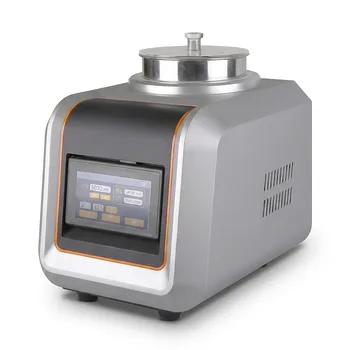
Why are wire woven test sieves essential for HTL? Optimize Biomass Kinetics & Reaction Uniformity
Updated 4 months ago
Wire woven test sieves are the primary tool for achieving particle size uniformity, a prerequisite for controlled hydrothermal liquefaction (HTL). By precisely grading biomass particles into specific ranges—typically between 0.5mm and 5mm—these sieves ensure that heat and mass transfer remain consistent across every sample. This precision allows water to penetrate the biomass structure uniformly, accelerating chemical degradation and ensuring that experimental results are repeatable rather than random.
Core Takeaway: Test sieves eliminate particle size as a chaotic variable in HTL experiments. By ensuring a uniform surface-area-to-mass ratio, they allow researchers to isolate chemical reaction kinetics from physical transfer limitations, leading to accurate predictive models and high-quality bio-crude.
Optimizing Reaction Kinetics in HTL
Enhancing Heat and Mass Transfer
In hydrothermal liquefaction, water acts as both a solvent and a reactant at high temperatures and pressures. Wire woven test sieves ensure that particles have a consistent surface-area-to-mass ratio, which is critical for simultaneous heating and water penetration.
If particles vary significantly in size, smaller fragments may over-react or char while larger cores remain unreacted. Precise sieving prevents this imbalance, ensuring the degradation of the biomass structure occurs at a predictable and synchronized rate throughout the reactor.
Eliminating Kinetic Variability
Researchers rely on sieves to isolate specific diameter ranges, such as 0.425 mm to 2.36 mm, to remove the influence of size on thermal decomposition kinetics. This control is a prerequisite for calculating accurate reaction rate constants.
Without this uniformity, any mass loss prediction models or kinetic data would be skewed by the physical geometry of the feedstock. Standardizing the particle size ensures that the observed data reflects the intrinsic chemical reactivity of the biomass waste.
Ensuring Experimental Accuracy and Reproducibility
Improving Analytical Reliability
Standard test sieves remove oversized components that can cause significant analysis errors in fiber analyzers or calorific value instruments. By ensuring the sample meets strict experimental specifications, sieves improve the repeatability of the entire test suite.
Consistency in the feedstock distribution is also vital for advanced optimization techniques like Response Surface Methodology (RSM). When particle size is used as an independent variable, the precision of the sieve directly dictates the integrity of the resulting process model.
Facilitating Homogeneous Blending
In experiments involving biomass blends or additives, achieving a uniform micro-scale mixture is essential. Sieving ground biomass to specific fractions (such as 250 microns) prevents component segregation during the reaction.
Homogenization ensures that the biomass and any catalysts or co-reactants maintain consistent contact. This level of detail is necessary to avoid "hot spots" or localized concentration gradients that can compromise the representativeness of combustion or liquefaction tests.
Understanding the Trade-offs
The Challenge of Particle Shape
While wire woven sieves are excellent for grading by "least dimension," they may not account for the aspect ratio of needle-like biomass particles. Long, thin fibers can sometimes pass through a mesh intended for much smaller spherical particles, potentially introducing slight variability in surface area.
Material Loss and Processing Time
Achieving extreme uniformity often requires multiple stages of grinding and sieving, leading to material loss of the ultra-fine or oversized fractions. Researchers must balance the need for high-precision fractions with the practical availability of the biomass waste source.
Mesh Blinding and Maintenance
Fine meshes are susceptible to blinding, where resinous or moist biomass particles clog the apertures. This requires frequent cleaning and standardized sieving durations to ensure that the grading remains accurate and the mesh is not damaged during the process.
How to Apply This to Your Research
Implementing Precise Particle Control
To ensure the success of hydrothermal liquefaction experiments, the selection of your sieving protocol should align with your specific analytical goals.
- If your primary focus is kinetic modeling: Use high-precision sieves to isolate a very narrow fraction (e.g., < 0.5mm) to minimize internal mass transfer resistance and ensure accurate rate constant calculation.
- If your primary focus is bio-crude yield optimization: Standardize your feedstock to a 1mm–2mm range to balance the energy costs of grinding with the need for efficient water penetration and reaction uniformity.
- If your primary focus is downstream briquetting of residues: Focus on identifying the mass proportion of specific size fractions that facilitate interlocking and structural reinforcement during pressure forming.
Precise particle grading via wire woven sieves transforms biomass waste from a variable raw material into a standardized technical feedstock for HTL processing.
Summary Table:
| Key Function | Impact on HTL Process | Research Outcome |
|---|---|---|
| Particle Grading | Ensures uniform heat & mass transfer | Reliable reaction kinetics |
| Fraction Isolation | Eliminates size as a chaotic variable | Accurate predictive models |
| Sample Homogenization | Prevents component segregation | Consistent bio-crude quality |
| Oversize Removal | Reduces analytical instrument error | Improved reproducibility |
Elevate Your Biomass Research with Precision Sample Preparation
To achieve repeatable results in hydrothermal liquefaction, your feedstock must be standardized. At [Brand Name], we provide complete laboratory sample preparation solutions tailored for material science and biomass processing.
From initial size reduction using our high-performance crushers (jaw/roll) and mills (planetary ball, jet, and rotor) to achieving the perfect particle distribution with our vibratory and air-jet sieve shakers, we ensure your samples meet the strictest experimental specifications. Our expertise also covers powder mixers for homogeneous blending and a full spectrum of hydraulic presses—including Cold/Warm Isostatic Presses (CIP/WIP) and vacuum hot presses—for downstream residue analysis.
Transform your raw material into a technical feedstock. Contact us today to optimize your lab workflow!
References
- Alejandra Sophia Lozano Pérez, Carlos Alberto Guerrero Fajardo. Analysis of the Impact of Biomass/Water Ratio, Particle Size, Stirring, and Catalysts on the Production of Chemical Platforms and Biochar in the Hydrothermal Valorization of Coffee Cherry Waste. DOI: 10.3390/su16177415
Mentioned Products
- Stainless Steel Laboratory Vibratory Test Sieve Shaker
- Laboratory Vibratory Test Sieve Shaker for Precision Particle Size Analysis and Powder Grading
- Small Laboratory Vibrating Sieve Shaker for Precise Particle Size Analysis
- 三维电磁微量振动筛分仪
- Small Laboratory Vibratory Sieve Shaker for Powder Gradation and Particle Size Analysis
People Also Ask
- What function does a laboratory vibratory sieve shaker serve in the production process of metakaolin? Optimize Reactivity
- Why is a precision laboratory vibratory sieve shaker necessary for particle size control? Optimize Biomass Carbonization
- What is the function of a laboratory vibratory sieve shaker? Enhance Coal Particle Size Distribution (PSD) Analysis
- What role do laboratory vibratory sieve shakers and test sieves play before the molding of Nb-Cu composite powders?
- What is the primary function of a laboratory vibratory sieve shaker in the evaluation of sand liquefaction potential?

Tech Team · PowderPreparation
Last updated on May 14, 2026
Related Products
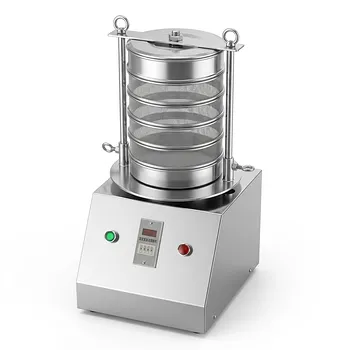
Stainless Steel Laboratory Vibratory Test Sieve Shaker
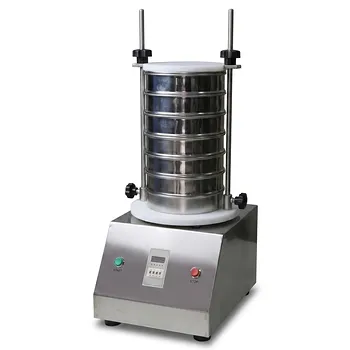
Laboratory Vibratory Test Sieve Shaker for Precision Particle Size Analysis and Powder Grading
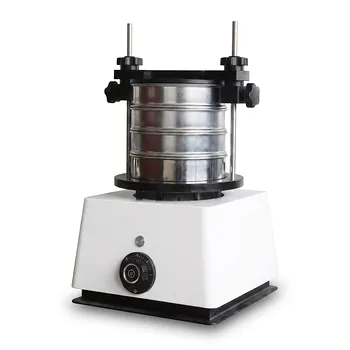
Small Laboratory Vibrating Sieve Shaker for Precise Particle Size Analysis
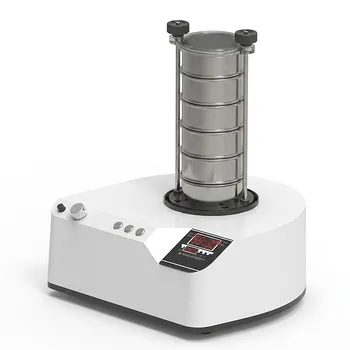
三维电磁微量振动筛分仪
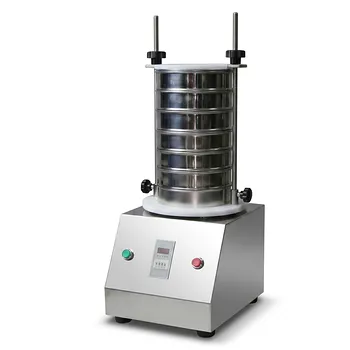
Small Laboratory Vibratory Sieve Shaker for Powder Gradation and Particle Size Analysis
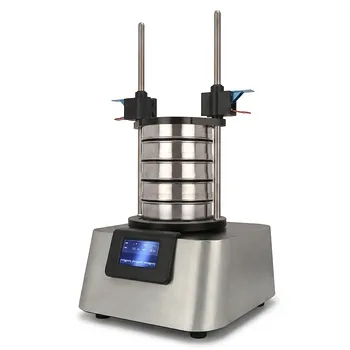
Vibratory Sieve Shaker Electromagnetic 3D Motion Powder Particle Size Analyzer for Dry and Wet Sieving
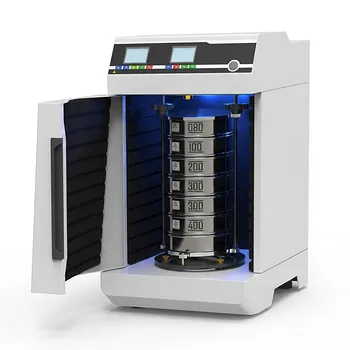
Laboratory Dry and Wet Three Dimensional Vibratory Sieve Shaker for Particle Analysis
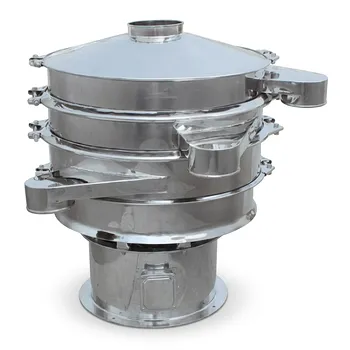
Stainless Steel Rotary Vibrating Sieve High Precision Circular Vibratory Separator Industrial Powder Grading Machine Multi Layer Sifting Equipment
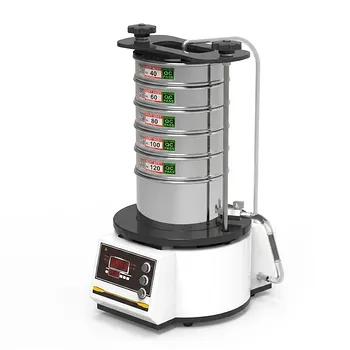
High Frequency Wet Three-Dimensional Vibrating Sieve Shaker for Dry and Wet Particle Size Analysis