What is the significance of using high-precision 150 µm sieves for granulated alumina? Ensure Quality and Uniformity
Updated 5 months ago
High-precision industrial standard sieves, specifically those with a 150 µm mesh, are critical for ensuring the uniform classification and quality control of granulated alumina. By removing oversized aggregates and secondary agglomerates, these sieves create a narrow, controllable particle size distribution that mimics industrial spray-drying results. This uniformity is the foundational requirement for optimizing powder flowability, maximizing packing density, and preventing structural defects in the final ceramic product.
Using high-precision sieves is not merely a filtration step; it is a vital calibration process that ensures alumina powders possess the flow characteristics and packing efficiency necessary for predictable molding and sintering.
Ensuring Structural Integrity through Classification
Removal of Oversized Aggregates
The primary function of a 150 µm sieve is the elimination of secondary agglomerates and large-particle impurities that form during the drying process. These oversized particles create inconsistencies in the powder bed, leading to structural weak points.
By screening the powder, technicians ensure that only particles within a specific size range proceed to the molding stage. This produces a "clean" starting material that is free from the irregularities of unrefined alumina.
Achieving Narrow Size Distribution
High-precision sieving ensures a narrow and controllable size distribution, which is essential for consistent material behavior. This process allows laboratory-scale granulation to achieve results comparable to industrial-scale spray drying.
When the particle size is uniform, the behavior of the powder becomes predictable. This reliability is critical for moving a project from the experimental phase to repeatable production.
Optimizing Powder Dynamics and Flowability
Enhancing Powder Flowability
The 150 µm mesh size is strategically selected to enhance powder flowability. Particles in this range are large enough to flow easily into molds or through 3D printing equipment without the "clumping" associated with finer powders.
Excellent flowability ensures that the powder spreads evenly across a surface or fills a die completely. This is a prerequisite for formulating high-solid-loading UV-curable slurries used in advanced additive manufacturing.
Improving Packing Density
Uniformly sized particles fill space more efficiently than a random mixture of sizes and shapes. By using a standard sieve, you ensure a higher filling density within the ceramic "green body" (the unsintered form).
A higher packing density reduces the presence of internal voids. This uniformity directly translates to a homogenous density distribution, which prevents warping or cracking during the high-temperature sintering process.
Analytical Precision and Process Monitoring
Quantitative Fineness Analysis
High-precision sieves are used to determine sieve residue, a critical indicator of grinding efficiency. In industrial alumina processing, measuring the proportion of particles remaining on the mesh allows for the optimization of grinding parameters.
This quantitative data helps technicians verify if the alumina meets specific industry standards. It provides a measurable benchmark for quality that goes beyond visual inspection.
Consistency for Phase Analysis
For advanced diagnostics like X-ray diffraction (XRD), particle consistency is mandatory. While some analyses require even finer meshes (like 200 mesh), the principle remains: uniform particles provide better diffraction signal intensity.
Using a standardized sieve ensures that the sample prepared for analysis is representative of the entire batch. This leads to more accurate identification of mineral phases and chemical compositions.
Understanding the Trade-offs and Pitfalls
The Risk of Sieve Clogging
While smaller mesh sizes provide higher precision, they are more susceptible to sieve clogging (also known as blinding). If the alumina is damp or highly electrostatic, particles can lodge in the 150 µm apertures, skewing the classification results.
Non-Linear Surface Area Relationships
It is a common mistake to assume that sieve residue correlates directly with the specific surface area of alumina. Because alumina particles often have complex polygonal shapes and deep cracks, two samples with the same sieve residue may have very different chemical reactivities.
Maintenance of High-Precision Mesh
High-precision sieves are sensitive instruments. Any physical deformation of the mesh or wear on the wire diameter will result in an "out-of-spec" particle distribution, which can lead to catastrophic failures in the sintering stage.
How to Apply This to Your Project
Making the Right Choice for Your Goal
- If your primary focus is dry pressing or molding: Use a 150 µm sieve to ensure the powder fills the die uniformly and achieves maximum green body density.
- If your primary focus is additive manufacturing (3D Printing): Rely on high-precision sieving to ensure smooth powder spreading and to prevent nozzle or layer defects caused by agglomerates.
- If your primary focus is industrial process scaling: Utilize these sieves to calibrate your laboratory granulation process so it accurately mirrors the output of industrial spray dryers.
- If your primary focus is material characterization: Ensure your sieving process is standardized to provide the consistent particle sizes required for high-resolution XRD and chemical analysis.
Precise particle classification via high-standard sieving is the most effective way to eliminate microscopic defects and ensure the reliability of high-performance alumina ceramics.
Summary Table:
| Key Benefit | Description | Impact on Final Product |
|---|---|---|
| Aggregate Removal | Eliminates secondary agglomerates and impurities | Prevents structural weak points and internal voids |
| Narrow Distribution | Creates a controllable, uniform particle size | Ensures consistent sintering behavior and density |
| Enhanced Flowability | Optimizes powder movement for molds/3D printing | Facilitates even die filling and smooth layers |
| Packing Density | Increases filling density of the ceramic green body | Reduces warping and cracking during high-temp firing |
| Analytical Precision | Provides consistent samples for XRD and residue tests | Guarantees accurate material phase and chemical analysis |
Elevate Your Material Preparation with Expert Solutions
Achieving precise particle size distribution is the foundation of high-performance material science. At our facility, we provide complete laboratory sample preparation solutions tailored for powder processing and compaction.
Whether you are refining alumina or developing new composites, our extensive product line supports every stage of your workflow:
- Powder Processing: High-precision test sieves, vibratory/air-jet sieve shakers, planetary ball mills, jet mills, and crushers (jaw/roll).
- Mixing & Homogenization: Advanced powder mixers and defoaming mixers for consistent slurries.
- Advanced Compaction: A full spectrum of hydraulic presses, including Cold/Warm Isostatic Presses (CIP/WIP), standard lab presses, XRF pellet presses, and vacuum hot presses.
Ready to eliminate microscopic defects and scale your production?
Contact our technical experts today to find the perfect equipment for your laboratory needs and ensure the reliability of your high-performance materials.
References
- Naoki Kondo, Mikinori Hotta. Preparation and characterization of alumina granules via tumbling and agitation granulation. DOI: 10.2109/jcersj2.25139
Mentioned Products
- 150x250mm Custom Laboratory Jaw Crusher for Coal Ore Mineral Crushing
- 150x250mm Laboratory Jaw Crusher for Medium Hard Material Crushing and Sample Preparation
- Small Laboratory Jaw Crusher 150x200mm Feed Opening for Sample Preparation and Medium Fine Crushing
- 三维电磁微量振动筛分仪
- Stainless Steel Rotary Vibrating Sieve High Precision Circular Vibratory Separator Industrial Powder Grading Machine Multi Layer Sifting Equipment
People Also Ask
- What is the primary function of a laboratory jaw crusher? Master Initial Hard Rock Ore Preparation & Feed Sizing
- What is the role of a laboratory jaw crusher in the initial preparation of silicate-type low-grade copper ore?
- What is the primary role of a laboratory jaw crusher in the initial stages of tin and tantalum ore reprocessing? Explained
- What is the primary function of a laboratory jaw crusher when processing low-grade copper ore? Expert Guide
- What is the primary function of a laboratory jaw crusher in the pretreatment process of galena ore? Initial Prep Guide

Tech Team · PowderPreparation
Last updated on May 14, 2026
Related Products
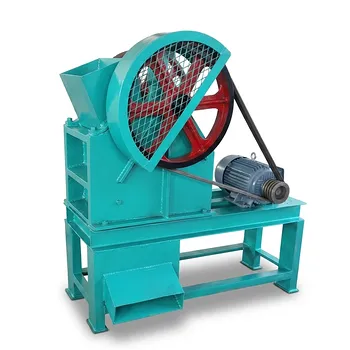
150x250mm Custom Laboratory Jaw Crusher for Coal Ore Mineral Crushing
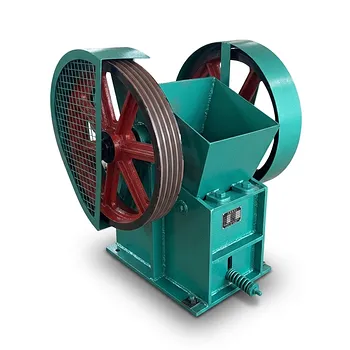
150x250mm Laboratory Jaw Crusher for Medium Hard Material Crushing and Sample Preparation
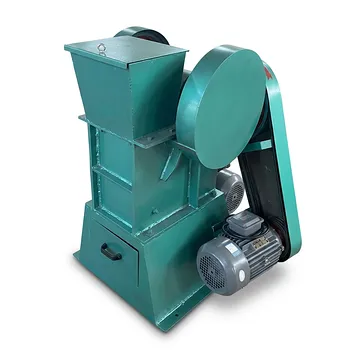
Small Laboratory Jaw Crusher 150x200mm Feed Opening for Sample Preparation and Medium Fine Crushing

三维电磁微量振动筛分仪

Stainless Steel Rotary Vibrating Sieve High Precision Circular Vibratory Separator Industrial Powder Grading Machine Multi Layer Sifting Equipment
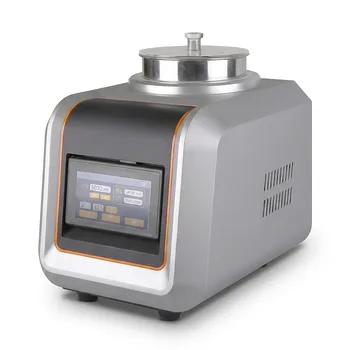
Laboratory Air Jet Sieving Machine for Fine Powder Particle Size Analysis and Deagglomeration

Vibratory Sieve Shaker Electromagnetic 3D Motion Powder Particle Size Analyzer for Dry and Wet Sieving

Small Laboratory Vibrating Sieve Shaker for Precise Particle Size Analysis

Three Dimensional Rotary Vibrating Sieve

Laboratory Vibratory Test Sieve Shaker for Precision Particle Size Analysis and Powder Grading

Dry Three Dimensional Vibratory Sieve Shaker

Heavy Duty Dry Three Dimensional Vibratory Sieve Shaker for Particle Separation
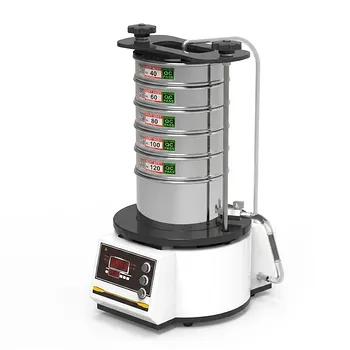
High Frequency Wet Three-Dimensional Vibrating Sieve Shaker for Dry and Wet Particle Size Analysis
