Why is a 75μm aperture test sieve necessary for wet sieve analysis of shale? Achieve Precise Soil Classification
Updated 5 months ago
The 75μm aperture sieve is the industry-standard benchmark for defining the boundary between coarse and fine-grained soil particles. In the wet sieve analysis of shale, it is used to wash and isolate the portion of the sample that passes through the No. 200 mesh. This precise separation is essential for calculating fine-grain content, which serves as the primary data point for standard engineering classification systems like AASHTO.
The 75μm sieve acts as a critical filter that separates silt and clay from larger sand and gravel components. By isolating these fine particles, engineers can accurately predict soil behavior, plasticity, and its suitability for construction or chemical stabilization.
Engineering Classification and Soil Behavior
Defining the Fine-Grain Threshold
The 75μm aperture (No. 200 sieve) is the globally recognized line of demarcation between coarse-grained and fine-grained materials. For shale samples, determining exactly what percentage of the material falls below this threshold is the first step in any geotechnical assessment.
Compliance with AASHTO Standards
Standardized systems, such as the AASHTO classification, rely on the 75μm measurement to categorize materials like high-plasticity clay. Without this specific data point, it is impossible to objectively determine the engineering properties or the load-bearing capacity of the soil.
Enhancing Material Reactivity and Density
Maximizing Specific Surface Area
Reducing or isolating particles to the sub-75μm level significantly increases the specific surface area of the material. In applications where shale or ash is used as an additive, this increased surface area allows for more effective chemical interactions, such as the pozzolanic reaction.
Optimizing Pore-Filling Capabilities
Ultra-fine particles passing through a 75μm sieve are small enough to enter the microscopic pores within a soil or concrete structure. This "filler effect" increases the overall density of the mixture, leading to improved cementation and higher structural strength.
Ensuring Uniform Heat Conduction
When shale or clay is processed through calcination, a uniform fineness distribution is required to ensure consistent heat conduction. A 75μm sieve ensures that no oversized particles remain, which prevents issues like unreacted cores or surface over-burning during thermal treatment.
Structural Integrity and Impurity Removal
Eliminating Internal Structural Defects
Using a 75μm sieve allows for the removal of oversized unburnt particles and impurities that can compromise the matrix of a material. By ensuring only fine, uniform micro-powder is used, engineers can prevent internal defects that often lead to cracking or instability.
Controlling Erosion and Hydraulic Impact
In sediment analysis, the 75μm sieve helps identify the fine particles most likely to bypass civil engineering facilities like desilting basins. Quantifying these fines is critical for predicting the erosion rates of hydraulic turbines and other sensitive infrastructure.
Understanding the Trade-offs
Wet vs. Dry Sieving
While a 75μm sieve is precise, dry sieving shale often fails because fine clay particles adhere to larger grains. Wet sieve analysis is necessary to physically wash these fines through the mesh, though it requires more time for subsequent drying and weighing.
Precision vs. Mesh Durability
The 75μm mesh is extremely delicate and prone to blinding (clogging) or tearing if handled roughly. Maintaining the accuracy of the aperture requires frequent calibration and gentle cleaning, which can increase the operational overhead of the testing process.
How to Apply This to Your Project
Making the Right Choice for Your Goal
- If your primary focus is Geotechnical Classification: Use the 75μm sieve specifically to satisfy AASHTO or USCS requirements for determining silt and clay percentages.
- If your primary focus is Chemical Stabilization: Ensure 100% of your additive passes through the 75μm sieve to maximize the pozzolanic reaction and bonding strength.
- If your primary focus is Infrastructure Longevity: Utilize the 75μm sieve to filter out impurities and oversized particles that could cause internal structural voids or "hot spots" in the material.
By strictly adhering to the 75μm standard, you ensure that your shale analysis is both scientifically valid and industrially compliant.
Summary Table:
| Key Aspect | Role of 75μm (No. 200) Sieve | Engineering Benefit |
|---|---|---|
| Soil Classification | Defines the boundary between coarse and fine grains | Essential for AASHTO & USCS geotechnical standards |
| Material Reactivity | Increases specific surface area for sub-75μm particles | Enhances pozzolanic reactions and chemical bonding |
| Structural Density | Isolates fine "fillers" for microscopic pore-filling | Increases overall density and structural cementation |
| Quality Control | Removes oversized unburnt particles and impurities | Prevents internal defects, cracking, and structural voids |
| Erosion Analysis | Identifies particles prone to bypassing desilting basins | Protects hydraulic infrastructure from sediment damage |
Elevate Your Material Analysis with Precision Equipment
Achieving accurate particle separation is the first step toward reliable geotechnical data and superior material performance. At [Company Name], we provide complete laboratory sample preparation solutions tailored for material science research.
Whether you are performing wet sieve analysis or advanced powder processing, our extensive range of equipment ensures industrial compliance and scientific validity:
- Particle Size Analysis: High-precision vibratory and air-jet sieve shakers with a full range of standard test sieves.
- Powder Processing: Advanced planetary ball mills, jet mills, and cryogenic grinders for achieving sub-micron fineness.
- Sample Compaction: A full spectrum of hydraulic presses, including Cold/Warm Isostatic Presses (CIP/WIP), vacuum hot presses, and XRF pellet presses.
- Mixing Solutions: High-efficiency powder mixers and vacuum defoaming mixers for uniform material distribution.
Ready to optimize your laboratory workflow? Contact our experts today to find the perfect equipment solution for your shale analysis and material development needs.
References
- H. U. IJOH, S. A. JAGBA. Stabilization of Makurdi Shale Using Bagasse Ash. DOI: 10.5281/zenodo.3334298
Mentioned Products
- Stainless Steel Laboratory Vibratory Test Sieve Shaker
- Laboratory Vibratory Test Sieve Shaker for Precision Particle Size Analysis and Powder Grading
- Small Laboratory Vibrating Sieve Shaker for Precise Particle Size Analysis
- 三维电磁微量振动筛分仪
- Small Laboratory Vibratory Sieve Shaker for Powder Gradation and Particle Size Analysis
People Also Ask
- What function does a laboratory vibratory sieve shaker serve in the production process of metakaolin? Optimize Reactivity
- Why is a precision laboratory vibratory sieve shaker necessary for particle size control? Optimize Biomass Carbonization
- What is the function of a laboratory vibratory sieve shaker? Enhance Coal Particle Size Distribution (PSD) Analysis
- What role do laboratory vibratory sieve shakers and test sieves play before the molding of Nb-Cu composite powders?
- What is the primary function of a laboratory vibratory sieve shaker in the evaluation of sand liquefaction potential?

Tech Team · PowderPreparation
Last updated on May 14, 2026
Related Products
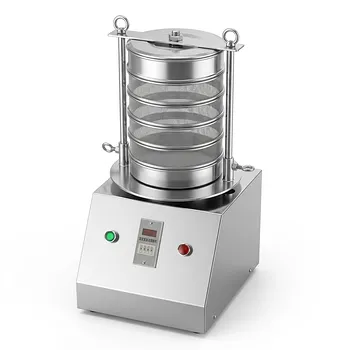
Stainless Steel Laboratory Vibratory Test Sieve Shaker

Laboratory Vibratory Test Sieve Shaker for Precision Particle Size Analysis and Powder Grading

Small Laboratory Vibrating Sieve Shaker for Precise Particle Size Analysis

三维电磁微量振动筛分仪

Small Laboratory Vibratory Sieve Shaker for Powder Gradation and Particle Size Analysis

Vibratory Sieve Shaker Electromagnetic 3D Motion Powder Particle Size Analyzer for Dry and Wet Sieving
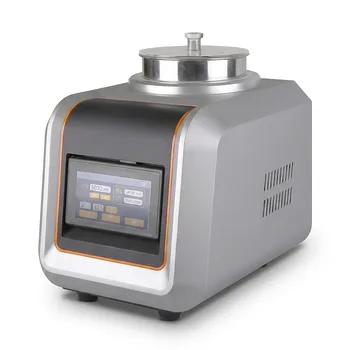
Laboratory Air Jet Sieving Machine for Fine Powder Particle Size Analysis and Deagglomeration
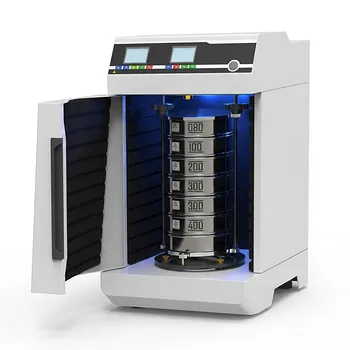
Laboratory Dry and Wet Three Dimensional Vibratory Sieve Shaker for Particle Analysis

Tapping Oscillating Sieve Shaker for Dry and Wet Particle Size Analysis
