Why is a standard test sieve required for basalt-based mullite ceramics? Ensure Precise Grading and Material Integrity
Updated 5 months ago
Standard test sieves are the primary tool for ensuring precise particle size distribution in ceramic precursors. Using a sieve, typically a 325-mesh, limits basalt powder to specific micrometer ranges, which is fundamental for achieving high green body density. This physical classification ensures that the powder mixes homogeneously and reacts predictably during high-temperature sintering to form a stable mullite phase.
A standard test sieve transforms raw basalt into a controlled technical material by establishing a uniform particle size that dictates the efficiency of solid-phase reactions. This process is essential for ensuring the ultimate mechanical stability and performance consistency of the final ceramic product.
Optimization of Green Body Densification
Enhancing Powder Packing Efficiency
Controlling basalt powder within a specific micrometer scale is critical for the densification of ceramic green bodies. A narrow particle size distribution allows for better filling performance during dry pressing, reducing the presence of large voids.
Achieving Homogeneous Distribution
Uniform particles facilitate a highly homogeneous distribution of powder during the mixing of raw materials like basalt, feldspar, and bentonite. This uniformity prevents the localized clustering of specific minerals, ensuring the final chemical composition is stable across the entire component.
Promoting Reaction Kinetics During Sintering
Facilitating Solid-Phase Reactions
Smaller, uniform particles increase the available surface area, which promotes particle diffusion during the sintering stage. This leads to synchronized reaction activity, allowing the different mineral components to react at the same rate during high-temperature melting.
Stabilizing the Mullite Crystalline Phase
The precise control provided by sieving ensures that the mullite crystalline phase develops consistently throughout the material. Without this control, irregular reactions could lead to an unstable phase, resulting in unpredictable mechanical or thermal performance.
Mitigation of Structural Defects
Identifying Weak Points and Residues
Sieve analysis is required to detect and quantify large particle residues that sophisticated equipment, like laser particle size analyzers, might overlook. Oversized particles act as structural weak points, significantly reducing the mechanical strength of the final mullite composite.
Removal of Unground Impurities
Standard sieves, such as a 30-mesh or 20-mesh, are used to filter ball-milled slurries and granulated powders. This process removes unground impurities and loose agglomerates, ensuring the physical foundation of the ceramic is free from contaminants.
Understanding the Trade-offs
Physical Screening vs. Instrumental Analysis
While laser diffraction provides rapid data, it cannot physically separate material for further processing. Sieving is a mechanical partitioning method that allows researchers to isolate specific fractions (like 64 to 125 microns) for specialized applications like spray granulation.
Maintenance and Blinding Challenges
Sieves require constant calibration and cleaning to prevent mesh blinding, where particles become stuck in the apertures. If a sieve is worn or clogged, it will provide inaccurate grading data, leading to a "well-graded" status that does not reflect the actual powder quality.
Applying Particle Classification to Your Project
Recommendations for Material Preparation
- If your primary focus is maximizing mechanical strength: Use a 325-mesh sieve or finer to eliminate oversized particles that create internal stress concentrations.
- If your primary focus is controlling porosity: Utilize a set of standard sieves to grade pore-forming agents (like sawdust), ensuring consistent dimensions for the macro-pores.
- If your primary focus is process efficiency: Establish a sieve curve to calculate the efficiency of your crushing equipment and determine the optimal D80 value for your basalt powder.
Precise particle size classification is the technical foundation that ensures basalt-based ceramics achieve the chemical stability and structural integrity required for industrial performance.
Summary Table:
| Key Benefit | Function in Ceramic Prep | Impact on Final Product |
|---|---|---|
| Densification | Enhances powder packing efficiency | Higher green body density and less shrinkage |
| Homogeneity | Ensures uniform mineral distribution | Stable chemical composition and phase formation |
| Reaction Kinetics | Increases surface area for diffusion | Synchronized sintering and stable mullite phase |
| Defect Mitigation | Removes oversized residues and impurities | Improved mechanical strength and structural integrity |
| Process Control | Mechanical partitioning of fractions | Predictable spray granulation and pore control |
Elevate Your Material Research with Precision Equipment
At [Your Brand Name], we provide complete laboratory sample preparation solutions tailored for material science. Whether you are developing advanced basalt-based mullite ceramics or specialized powder composites, our equipment ensures accuracy at every stage.
Our specialized range includes:
- Classification & Analysis: High-precision sieve shakers (vibratory/air-jet) and a full array of test sieves.
- Size Reduction: Jaw/roll crushers and advanced mills (planetary ball, jet, sand, and rotor).
- Mixing: Powder mixers and vacuum defoaming mixers for homogeneous precursors.
- Compaction: A full spectrum of hydraulic presses, including Cold/Warm Isostatic Presses (CIP/WIP), XRF pellet presses, and vacuum hot presses.
Ready to optimize your powder processing workflow and achieve superior mechanical performance? Contact our expert team today for a customized solution!
References
- Tumpal Ojahan Rajagukguk, Yusup Hendronursito. Optimizing the Composition of Basalt and Heat Treatment of Fly Ash-Based Mullite Ceramics Using the Taguchi Method. DOI: 10.13057/ijap.v14i1.76472
Mentioned Products
- Stainless Steel Laboratory Vibratory Test Sieve Shaker
- Laboratory Vibratory Test Sieve Shaker for Precision Particle Size Analysis and Powder Grading
- Small Laboratory Vibrating Sieve Shaker for Precise Particle Size Analysis
- 三维电磁微量振动筛分仪
- Small Laboratory Vibratory Sieve Shaker for Powder Gradation and Particle Size Analysis
People Also Ask
- What function does a laboratory vibratory sieve shaker serve in the production process of metakaolin? Optimize Reactivity
- Why is a precision laboratory vibratory sieve shaker necessary for particle size control? Optimize Biomass Carbonization
- What is the function of a laboratory vibratory sieve shaker? Enhance Coal Particle Size Distribution (PSD) Analysis
- What role do laboratory vibratory sieve shakers and test sieves play before the molding of Nb-Cu composite powders?
- What is the primary function of a laboratory vibratory sieve shaker in the evaluation of sand liquefaction potential?

Tech Team · PowderPreparation
Last updated on May 14, 2026
Related Products

Stainless Steel Laboratory Vibratory Test Sieve Shaker

Laboratory Vibratory Test Sieve Shaker for Precision Particle Size Analysis and Powder Grading

Small Laboratory Vibrating Sieve Shaker for Precise Particle Size Analysis

三维电磁微量振动筛分仪

Small Laboratory Vibratory Sieve Shaker for Powder Gradation and Particle Size Analysis

Vibratory Sieve Shaker Electromagnetic 3D Motion Powder Particle Size Analyzer for Dry and Wet Sieving
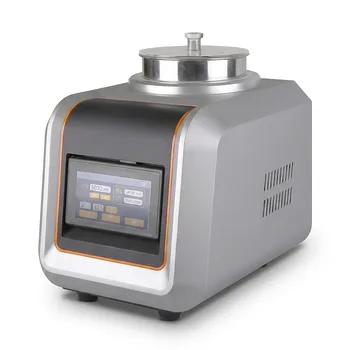
Laboratory Air Jet Sieving Machine for Fine Powder Particle Size Analysis and Deagglomeration
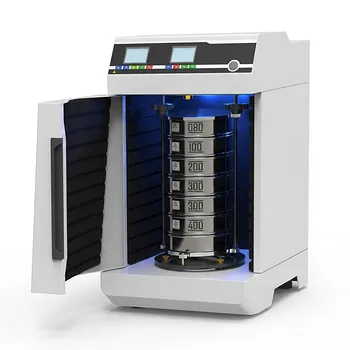
Laboratory Dry and Wet Three Dimensional Vibratory Sieve Shaker for Particle Analysis

Stainless Steel Rotary Vibrating Sieve High Precision Circular Vibratory Separator Industrial Powder Grading Machine Multi Layer Sifting Equipment

High Frequency Wet Three-Dimensional Vibrating Sieve Shaker for Dry and Wet Particle Size Analysis
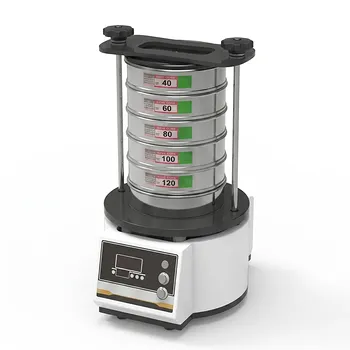
Dry Three Dimensional Vibratory Sieve Shaker
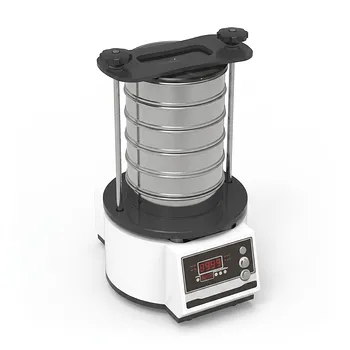
Tapping Oscillating Sieve Shaker for Dry and Wet Particle Size Analysis

Heavy Duty Dry Three Dimensional Vibratory Sieve Shaker for Particle Separation

Three Dimensional Rotary Vibrating Sieve
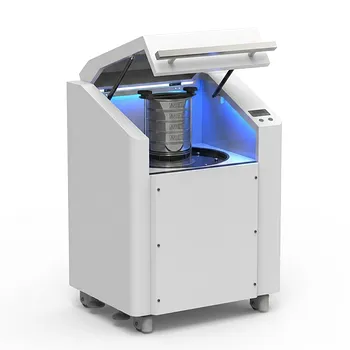
High Frequency Cabinet Type Three-Dimensional Rotary Vibrating Sieve Shaker for Dry Sieving and Particle Classification