Why is a comprehensive set of standard test sieves required for Bond ball mill testing? Key to Bond Work Index Accuracy
Updated 4 months ago
A comprehensive set of standard test sieves is essential for Bond ball mill testing to accurately simulate industrial closed-circuit grinding environments. This specific range of #28 to #325 Tyler mesh provides the necessary precision to establish a 250% circulating load, which is the standard requirement for calculating the Bond Work Index. By precisely classifying the product after each cycle, the test ensures that only the required fines are removed while coarse particles are returned to the mill for further processing.
The core function of these sieves is to facilitate the reach of an equilibrium state by mimicking real-world industrial classification. This allows for the definitive determination of production rates and energy requirements for specific material mixtures.
Simulating Industrial Closed-Circuit Grinding
Achieving the 250% Circulating Load
Industrial grinding rarely occurs in a single pass; instead, it relies on a circulating load where oversize material is constantly returned to the mill. The #28 to #325 sieve range allows technicians to select the exact "cut-off" mesh required to maintain a ratio where the material being returned is exactly 2.5 times the weight of the new feed.
Acting as the Mechanical Classifier
In a full-scale plant, a cyclone or screen acts as the classifier; in the laboratory, the standard test sieves perform this role. Using a complete range ensures that regardless of the target product size, the transition between "undersize" (final product) and "oversize" (circulating load) is sharp and measurable.
Reaching the State of Equilibrium
Defining the Equilibrium State
A Bond ball mill test is only considered valid once the system reaches equilibrium, meaning the mass of the undersize produced per mill revolution remains constant over successive cycles. The comprehensive sieve set allows for the meticulous tracking of these mass distributions until the system stabilizes.
Accuracy in Production Rate Calculation
Once equilibrium is reached, the data extracted from the sieving process is used to calculate the grindability (Gbp) of the material. This measurement is critical for determining the production rate of specific mixtures, such as quartz-marble blends, and scaling those results to industrial-sized equipment.
Understanding the Trade-offs and Pitfalls
Limitations of Sieve Wear and Calibration
Over time, sieves—especially finer meshes like #325—can become blinded or experience wire displacement, leading to inaccurate classification. If the sieve does not perform to its exact Tyler specification, the 250% circulating load will be skewed, resulting in an incorrect Bond Work Index calculation.
Human Error in Manual Sieving
The process requires rigorous consistency; inconsistent shaking time or force can lead to incomplete separation of fines. This "near-mesh" particle retention can artificially inflate the circulating load, leading to an overestimation of the energy required for grinding.
Applying These Principles to Your Project
Implementation Recommendations
Selecting and maintaining your sieve set is as important as the grinding process itself to ensure data integrity.
- If your primary focus is industrial scaling: Use the full range of sieves to ensure the 250% circulating load is perfectly maintained, as this is the foundation of the Bond equation.
- If your primary focus is material-specific testing (e.g., Quartz-Marble): Ensure your sieve selection includes several sizes above and below your target mesh to accurately map the particle size distribution curve.
- If your primary focus is quality control: Regularly calibrate your #200 and #325 sieves against a standard reference material to prevent "drift" in your grindability data.
Reliable grinding data begins with the precise classification of every gram of material through a standardized, high-quality sieve set.
Summary Table:
| Key Aspect | Role in Bond Ball Mill Testing | Impact on Data Accuracy |
|---|---|---|
| #28 - #325 Mesh Range | Defines the precise 'cut-off' for product fines | Ensures valid 250% circulating load simulation |
| Mechanical Classification | Replaces industrial cyclones/screens in the lab | Sharp separation of undersize vs. oversize material |
| Equilibrium State | Tracks mass distribution across successive cycles | Validates the consistency of grindability (Gbp) results |
| Sieve Calibration | Prevents blinding or wire displacement errors | Maintains integrity of the Bond Work Index calculation |
Optimize Your Material Grinding with Precision Solutions
Reliable Bond Work Index data starts with high-quality classification and preparation equipment. As specialists in complete laboratory sample preparation solutions for material science, we provide the tools you need to reach the state of equilibrium faster and with greater accuracy.
Our extensive product line includes:
- Sieve Excellence: Vibratory and air-jet sieve shakers with a full range of high-precision test sieves and meshes.
- Advanced Milling: Planetary ball, jet, sand/bead, disc, and rotor mills, plus liquid nitrogen cryogenic grinders.
- Crushing & Mixing: Jaw/roll crushers, powder mixers, and defoaming mixers.
- Compaction Equipment: A full spectrum of hydraulic presses, including Cold/Warm Isostatic Presses (CIP/WIP), XRF pellet presses, and vacuum hot presses.
Whether you are scaling to industrial production or performing material-specific quality control, our equipment ensures your laboratory results are repeatable and precise. Contact us today to discuss your specific testing requirements and let our experts help you select the perfect configuration for your project!
References
- Sebastián Pérez, Pamela Jara. Comparison of Statistical versus Stochastic Models for Work Index Determination in Quartz-Marble Mixtures. DOI: 10.37190/msc212810
Mentioned Products
- Laboratory Vibratory Test Sieve Shaker for Precision Particle Size Analysis and Powder Grading
- 三维电磁微量振动筛分仪
- Laboratory Air Jet Sieving Machine for Fine Powder Particle Size Analysis and Deagglomeration
- Tapping Oscillating Sieve Shaker for Dry and Wet Particle Size Analysis
- Dry Three Dimensional Vibratory Sieve Shaker
People Also Ask
- What role does a laboratory sieve shaker play in determining PDI? Achieve Precision in Biomass Quality Testing
- What are the functions of sieve shakers for coconut shell powder? Achieve Precise Particle Size & Quality Control.
- What function does a laboratory sieve shaker perform in the PSD analysis of residual soil? Ensure Precise Grading
- What is the role of a laboratory sieve shaker in the preparation of plantain peel adsorbents? Standardize Particle Size
- What is the function of a laboratory vibratory sieve shaker? Enhance Coal Particle Size Distribution (PSD) Analysis

Tech Team · PowderPreparation
Last updated on May 14, 2026
Related Products
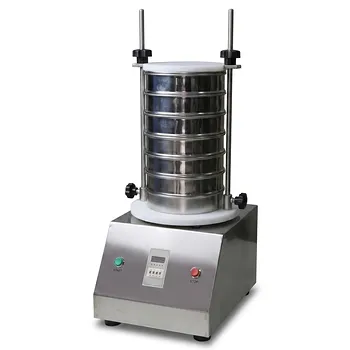
Laboratory Vibratory Test Sieve Shaker for Precision Particle Size Analysis and Powder Grading
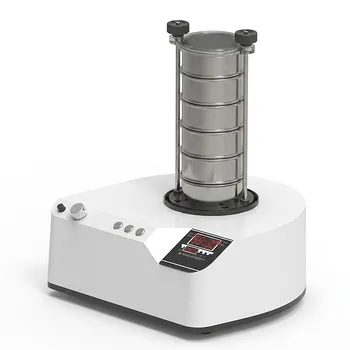
三维电磁微量振动筛分仪
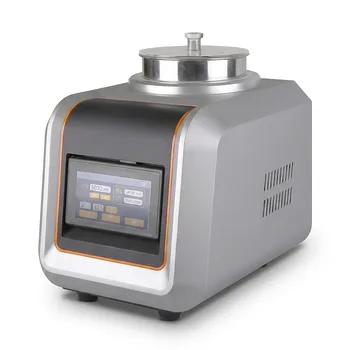
Laboratory Air Jet Sieving Machine for Fine Powder Particle Size Analysis and Deagglomeration
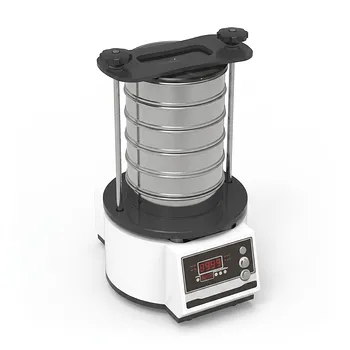
Tapping Oscillating Sieve Shaker for Dry and Wet Particle Size Analysis
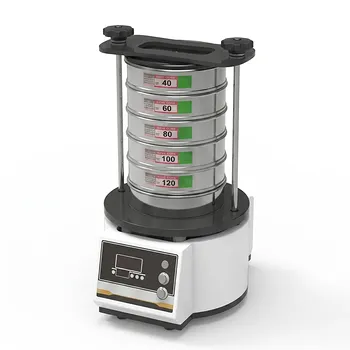
Dry Three Dimensional Vibratory Sieve Shaker
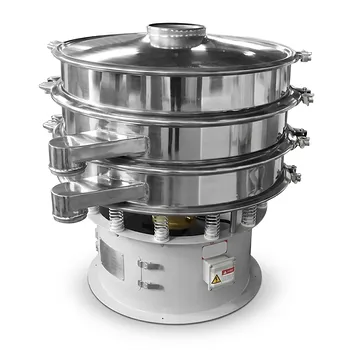
Three Dimensional Rotary Vibrating Sieve
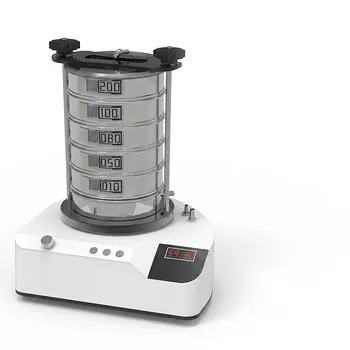
Heavy Duty Dry Three Dimensional Vibratory Sieve Shaker for Particle Separation
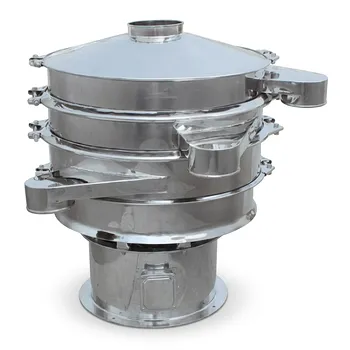
Stainless Steel Rotary Vibrating Sieve High Precision Circular Vibratory Separator Industrial Powder Grading Machine Multi Layer Sifting Equipment
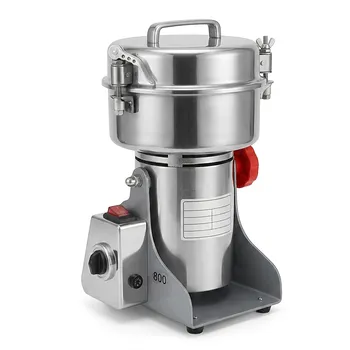
Small High-Speed Laboratory Grinder for Rapid Sample Preparation
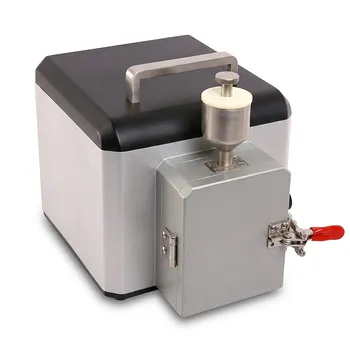
Portable Cutting Mill for Laboratory Sample Preparation and RoHS WEEE Compliance Testing
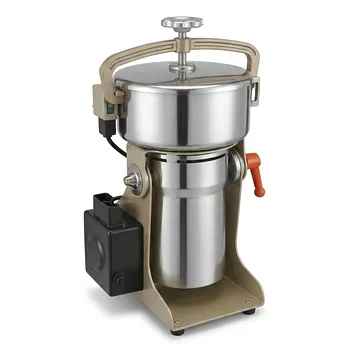
Multifunctional High Efficiency High Speed Laboratory Grinder
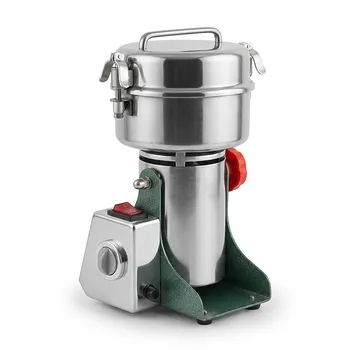
Small High-Speed Swing Grinder for Laboratory Sample Preparation
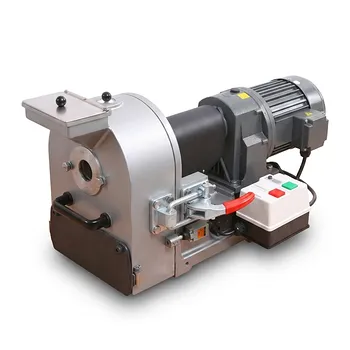
Laboratory Disc Mill for Fine Sample Preparation of Hard and Brittle Materials