Why is the use of standard test sieves with different apertures necessary for road dust particulate matter analysis? Guide
Updated 5 months ago
The necessity of standard test sieves in road dust analysis stems from the requirement to construct precise particle size distribution curves. By partitioning bulk road dust into discrete mass intervals—ranging from coarse 10mm particles down to fine 0.063mm (63μm) fractions—researchers can accurately quantify the specific components that contribute to non-exhaust traffic emissions.
Core Takeaway: Standard test sieves provide a standardized, physical method to isolate fine particulate matter from complex road dust mixtures. This classification is essential for identifying pollution sources, such as tire wear and asphalt degradation, and for assessing the environmental risks associated with heavy metal accumulation in fine dust.
Quantifying Particle Size Distribution (PSD)
Building Accurate Distribution Curves
The primary role of a sieve stack is to divide a heterogeneous road dust sample into continuous particle size fractions. By weighing the material retained on each sieve, technicians can calculate cumulative passing and retention rates. This data is the foundation for plotting particle size distribution curves, which are used to determine critical metrics like the mean particle size and the D80 value.
Identifying Fine PM Fractions
Road dust is a complex mixture, but the most significant environmental risks are found in the fine fractions, typically those smaller than 0.1mm (100μm). Standard sieves allow for the isolation of these fine components, which are directly proportional to the mass contribution of non-exhaust source particulate matter (PM) in traffic emissions.
Source Attribution and Chemical Fingerprinting
Distinguishing Between Wear Particles
Different components of traffic-related pollution exhibit specific size characteristics. For example, Tire-Road Wear Particles (TRWPs) are primarily distributed below 500μm, whereas Asphalt Pavement Wear Particles (APWPs) may be found across all size segments. Using a multi-level sieve configuration (e.g., from 1,000μm down to 20μm) allows researchers to "cut" the sample at precise intervals to identify the frequency of these specific pollutants.
Heavy Metal Enrichment Analysis
Heavy metals and trace elements do not distribute evenly across all particle sizes; they tend to accumulate in the finest particles, particularly those in the PM10 range. Precision sieving excludes large debris and impurities, yielding high-purity fine powders. This ensures that subsequent energy-dispersive or chemical analysis accurately reflects the high-risk pollutants that are most likely to impact human health.
Assessing Environmental and Structural Risks
Atmospheric Resuspension Potential
Fine particles isolated via sieving (down to 28μm or lower) are the most likely to undergo atmospheric resuspension. By quantifying these fractions, environmental scientists can predict how much road dust will contribute to air pollution. This classification helps in modeling the movement of dust from the road surface into the breathing zone of local populations.
Roadbed Integrity and Stabilization
In a structural context, sieves with larger apertures (such as 20mm and 5mm) are used to evaluate roadbed soil. This determines if the material meets grading standards for road bases or sub-bases. It also dictates the necessary volume of stabilizers, such as cement or lime, required to ensure the road's structural integrity.
Understanding the Trade-offs
Physical Partitioning vs. Laser Diffraction
While sieving is a definitive, physical method for partitioning bulk mass, it can be labor-intensive and may be limited by the physical mesh size. For particles smaller than 20μm, standard dry sieving becomes less effective due to particle agglomeration and electrostatic forces. In these cases, high-precision sieves must be used in conjunction with vibratory sieve shakers to maintain consistency and repeatability.
Material Loss and Experimental Error
Every sieving stage carries a risk of minimal material loss or "blinding" (clogging) of the mesh. To minimize experimental error and ensure sample representativeness, researchers must use high-quality, standardized sieves. Failure to do so can result in an inaccurate distribution curve, leading to incorrect conclusions regarding the environmental impact of the dust.
How to Apply This to Your Project
Selecting the Right Sieve Configuration
- If your primary focus is non-exhaust emission source identification: Utilize a stack that emphasizes the 500μm to 63μm range to capture tire and brake wear particles effectively.
- If your primary focus is heavy metal toxicity research: Prioritize high-precision sieves capable of isolating fractions below 28μm, as these contain the highest concentrations of trace elements.
- If your primary focus is roadbed structural compliance: Configure a coarse sieve set (up to 20mm) to ensure the aggregate grading meets civil engineering standards for load-bearing capacity.
The systematic use of various sieve apertures transforms a raw dust sample into a structured dataset, enabling precise environmental and structural risk assessments.
Summary Table:
| Application Category | Target Particle Size | Key Analysis Objective |
|---|---|---|
| Non-Exhaust Emissions | < 500μm | Identifying tire and brake wear particles (TRWPs). |
| Environmental Toxicity | < 63μm (PM10) | Analyzing heavy metal enrichment and health risks. |
| Atmospheric Research | < 28μm | Modeling dust resuspension and air quality impact. |
| Civil Engineering | 5mm - 20mm | Grading roadbed soil for structural load capacity. |
| Pollution Source ID | Full Range | Constructing accurate Particle Size Distribution curves. |
Optimize Your Particulate Analysis with Expert Solutions
Precision in road dust analysis starts with high-quality sample preparation. We provide complete laboratory solutions tailored for material science, specializing in advanced powder processing and compaction equipment. Whether you are isolating fine PM10 fractions or grading coarse aggregates, our extensive line of vibratory and air-jet sieve shakers, paired with high-precision test sieves, ensures repeatable and accurate results.
Beyond sieving, we offer a full suite of equipment including:
- Size Reduction: Jaw/roll crushers, liquid nitrogen cryogenic grinders, and mills (planetary ball, jet, sand, and rotor).
- Mixing: Specialized powder and defoaming mixers for sample homogeneity.
- Compaction: A full spectrum of hydraulic presses, including Cold/Warm Isostatic Presses (CIP/WIP), standard lab presses, and vacuum hot presses for material testing.
Ready to enhance your lab's efficiency and data precision? Contact our technical team today to find the perfect equipment configuration for your research goals.
References
- Magdalena Penkała, Natalia Iwanicka. Exploring the Relationship between Particulate Matter Emission and the Construction Material of Road Surface: Case Study of Highways and Motorways in Poland. DOI: 10.3390/ma16031200
Mentioned Products
- Laboratory Vibratory Test Sieve Shaker for Precision Particle Size Analysis and Powder Grading
- Stainless Steel Laboratory Vibratory Test Sieve Shaker
- Small Laboratory Vibrating Sieve Shaker for Precise Particle Size Analysis
- 三维电磁微量振动筛分仪
- Small Laboratory Vibratory Sieve Shaker for Powder Gradation and Particle Size Analysis
People Also Ask
- What role does a laboratory sieve shaker play in determining PDI? Achieve Precision in Biomass Quality Testing
- What are the functions of sieve shakers for coconut shell powder? Achieve Precise Particle Size & Quality Control.
- What function does a laboratory sieve shaker perform in the PSD analysis of residual soil? Ensure Precise Grading
- What is the role of a laboratory sieve shaker in the preparation of plantain peel adsorbents? Standardize Particle Size
- What is the function of a laboratory vibratory sieve shaker? Enhance Coal Particle Size Distribution (PSD) Analysis

Tech Team · PowderPreparation
Last updated on May 14, 2026
Related Products

Laboratory Vibratory Test Sieve Shaker for Precision Particle Size Analysis and Powder Grading
Stainless Steel Laboratory Vibratory Test Sieve Shaker

Small Laboratory Vibrating Sieve Shaker for Precise Particle Size Analysis
三维电磁微量振动筛分仪
Small Laboratory Vibratory Sieve Shaker for Powder Gradation and Particle Size Analysis
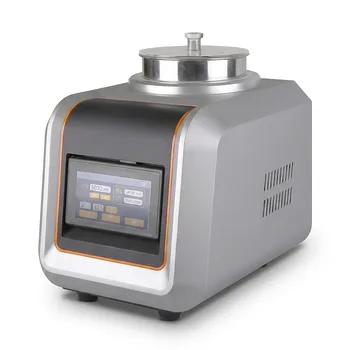
Laboratory Air Jet Sieving Machine for Fine Powder Particle Size Analysis and Deagglomeration
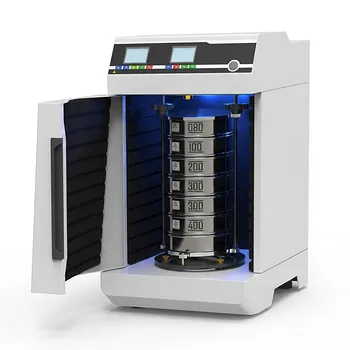
Laboratory Dry and Wet Three Dimensional Vibratory Sieve Shaker for Particle Analysis

Stainless Steel Rotary Vibrating Sieve High Precision Circular Vibratory Separator Industrial Powder Grading Machine Multi Layer Sifting Equipment
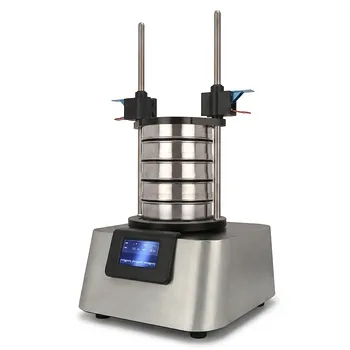
Vibratory Sieve Shaker Electromagnetic 3D Motion Powder Particle Size Analyzer for Dry and Wet Sieving
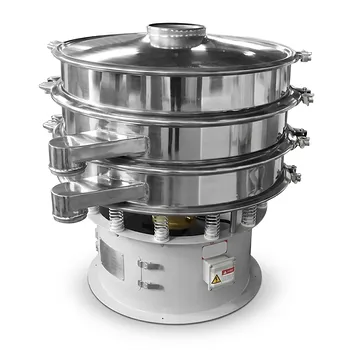
Three Dimensional Rotary Vibrating Sieve
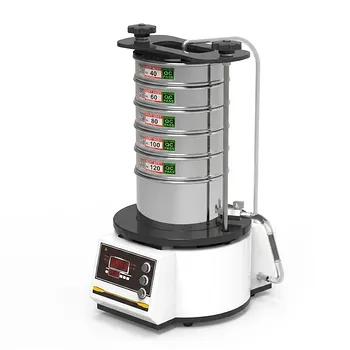
High Frequency Wet Three-Dimensional Vibrating Sieve Shaker for Dry and Wet Particle Size Analysis
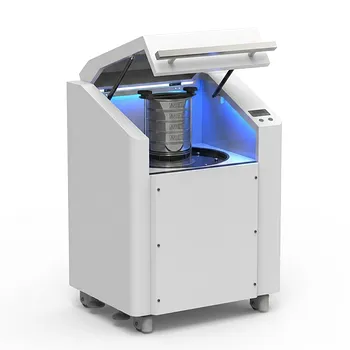
High Frequency Cabinet Type Three-Dimensional Rotary Vibrating Sieve Shaker for Dry Sieving and Particle Classification
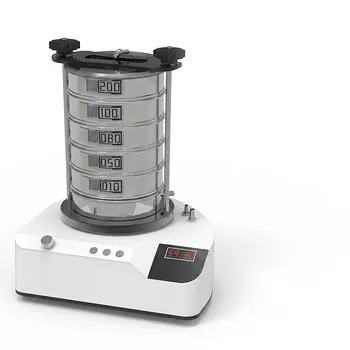
Heavy Duty Dry Three Dimensional Vibratory Sieve Shaker for Particle Separation
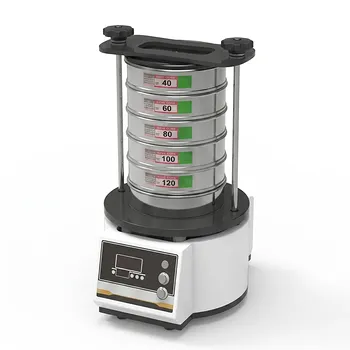
Dry Three Dimensional Vibratory Sieve Shaker
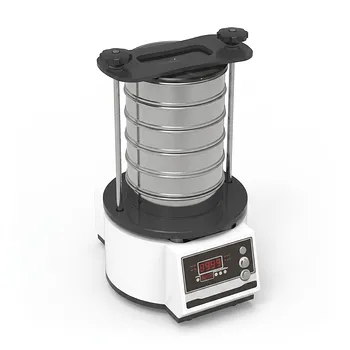
Tapping Oscillating Sieve Shaker for Dry and Wet Particle Size Analysis
Small High-Speed Laboratory Grinder for Rapid Sample Preparation
Small High-Speed Grinder for Efficient Laboratory Sample Preparation
Portable Cutting Mill for Laboratory Sample Preparation and RoHS WEEE Compliance Testing
Continuous Feeding Grinder High Efficiency Pulverizer for Lab Sample Preparation