Why use #6 Tyler sieves in quartz grinding? Key for Bond Work Index Accuracy & Lab Safety
Updated 4 months ago
Standardizing feed particle size is the critical first step in grinding experiments. Screening through a #6 Tyler standard sieve (3.327 mm aperture) ensures that both quartz and marble enter the mill with identical dimensions. This control is mandatory for calculating an accurate Bond Work Index and ensuring that experimental results are repeatable and scientifically valid.
Using a #6 Tyler sieve eliminates feed size as a variable, allowing researchers to isolate the mechanical properties of materials. This adherence to the Bond ball mill protocol is essential for objective comparisons and the protection of precision laboratory equipment.
The Role of Particle Size in Grinding Kinematics
Adherence to the Bond Ball Mill Protocol
The #6 Tyler sieve is specifically required by the Bond ball mill test protocol. This standard ensures that the feed material is prepared according to a globally recognized benchmark for mineral processing.
By using a 3.327 mm aperture, researchers guarantee that the initial state of the material is consistent across different laboratory environments. Without this standardization, comparing data from different studies would be impossible.
Standardizing the Work Index Measurement
The Work Index measures how much energy is required to reduce a material from "infinite" size to a specific product size. If the feed size varies between quartz and marble, the energy readings will reflect initial size differences rather than the materials' inherent hardness.
Screening ensures that any difference in grinding time or energy consumption is strictly due to the mechanical property differences of the minerals. This allows for an objective assessment of grindability.
Ensuring Experimental Integrity and Equipment Safety
Removing Impurities and Excess Dust
Crushing processes often create a wide range of "fines" or dust that can skew results. Screening removes these inconsistent sub-particles, which might otherwise bypass certain stages of the grinding mechanism.
Removing dust and impurities ensures that the mill is working on a homogenous feed. This leads to higher repeatability in laboratory experiments and cleaner data sets.
Protecting Mill Internals from Irregular Impact
Irregularly large pieces of material can cause abnormal impacts inside laboratory-scale mills. These impacts can damage the grinding media or the internal lining of the equipment.
By enforcing a maximum particle size via the #6 sieve, you ensure dimensional consistency. This protects the precision equipment and maintains the longevity of the grinding environment.
Understanding the Trade-offs
The Risk of Material Loss
Strict screening can result in a significant amount of "oversize" material that must be discarded or re-crushed. This increases the preparation time and labor required before the actual experiment begins.
Potential for Sampling Bias
If the material is not crushed uniformly, screening may inadvertently remove certain mineral phases that are harder to break. This can lead to a representative sample error, where the material being tested does not perfectly reflect the bulk source.
How to Apply This to Your Grinding Research
Making the Right Choice for Your Goal
- If your primary focus is Benchmarking: Strictly adhere to the #6 Tyler sieve requirement to ensure your results can be compared to historical Bond Work Index data.
- If your primary focus is Equipment Longevity: Use screening as a mandatory pre-treatment to prevent oversized, irregular fragments from causing mechanical stress on your mill.
- If your primary focus is Data Repeatability: Ensure the screening process is thorough to remove excess dust, which often introduces noise into grinding energy calculations.
By mastering feed size control, you transform a simple grinding task into a precise and scientifically defensible measurement of material resistance.
Summary Table:
| Key Factor | Role in Grinding Experiments | Primary Benefit |
|---|---|---|
| Bond Protocol | Adherence to 3.327 mm aperture standard | Global data comparability |
| Work Index | Standardizing energy/grindability input | Accurate hardness measurement |
| Equipment Care | Removing oversized/irregular fragments | Prevents mill internal damage |
| Data Quality | Eliminating fines and dust variables | Higher repeatability & clean data |
Optimize Your Material Preparation with Professional Lab Solutions
Achieve precise and repeatable results in your grinding experiments with high-performance laboratory equipment from KINTEK. We specialize in providing complete laboratory sample preparation solutions for material science, focusing on powder processing and compaction excellence.
Whether you are conducting Bond Work Index tests or advanced mineral research, our extensive product lines ensure dimensional consistency and experimental integrity:
- Crushing & Grinding: Jaw/roll crushers, liquid nitrogen cryogenic grinders, and precision mills (planetary ball, jet, sand, disc, and rotor).
- Sizing & Mixing: Vibratory and air-jet sieve shakers with various test sieves, plus advanced powder and defoaming mixers.
- Compaction: A full spectrum of hydraulic presses, including Cold/Warm Isostatic Presses (CIP/WIP), XRF pellet presses, and vacuum hot presses.
Ready to elevate your lab's efficiency and data accuracy? Contact our experts today to find the perfect equipment for your specific material science applications.
References
- Sebastián Pérez, Pamela Jara. Comparison of Statistical versus Stochastic Models for Work Index Determination in Quartz-Marble Mixtures. DOI: 10.37190/msc212810
Mentioned Products
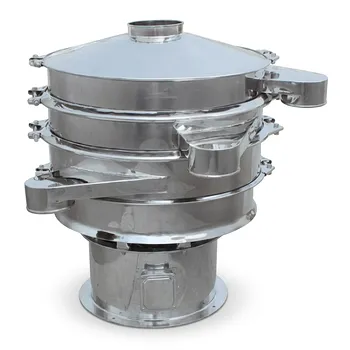
- Stainless Steel Rotary Vibrating Sieve High Precision Circular Vibratory Separator Industrial Powder Grading Machine Multi Layer Sifting Equipment
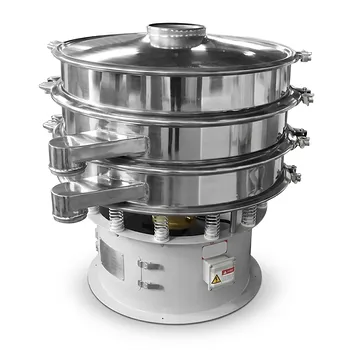
- Three Dimensional Rotary Vibrating Sieve
People Also Ask
- What is the significance of high-precision vibratory sieve machines for SMA? Optimize Aggregate Gradation & Durability
- What is the role of a laboratory-grade high-precision sieve in CPC-PCL? Ensure uniform powder distribution and stability.
- Why is high-precision sieving equipment necessary for aviation-grade composites? Optimize Fiber Strength & Consistency
- What is the function of high-precision vibratory sieve shakers in the analysis of brown rice particle size distribution?
- Why is a high-precision vibratory sieve shaker necessary for wood-polystyrene particles? Maximize composite strength.

Tech Team · PowderPreparation
Last updated on May 14, 2026