Why is a 0.425mm standard sieve required when preparing soil samples? Key to Accurate Atterberg Limits Testing
Updated 5 months ago
The 0.425mm sieve is the universal threshold for isolating the active components of soil. Using this specific aperture ensures that only the fine-grained fraction—silt and clay—is tested for liquid and plastic limits. Because plasticity is a property inherent to these fine particles and their mineral chemistry, removing coarse sand and gravel is essential to obtain accurate, reproducible results that align with geotechnical classification standards.
The 0.425mm sieve (No. 40) isolates the fine-grained soil fraction where physical and chemical activity dictates plasticity. By removing non-plastic coarse particles, engineers can accurately measure how a soil's consistency changes with moisture without mechanical interference from gravel or sand.
Isolating the Active Soil Fraction
The Role of Fine-Grained Particles
Soil plasticity and cohesion are governed almost exclusively by clay minerals and silts. These fine particles have a high surface-area-to-volume ratio, allowing them to interact chemically with water to change consistency.
Removing Coarse Interference
Coarse sand and gravel (particles larger than 0.425mm) are physically inert regarding plasticity. If left in a sample, these particles would act as non-plastic fillers, skewing the moisture content readings and physically obstructing the test apparatus.
Ensuring Sample Uniformity
A 0.425mm sieve ensures that the specimen used in the Casagrande cup or fall cone test is highly uniform. This uniformity is critical for simulating how materials, such as dam cores, will behave under saturated conditions.
Compliance with Engineering Standards
Global Testing Protocols
The use of the 0.425mm (or 425 μm) sieve is a strict requirement in major geotechnical standards, including BS 1377 and ASTM D4318. This standardization allows engineers worldwide to compare soil properties on a "like-for-like" basis.
Defining the Plasticity Index (PI)
The Plasticity Index is the range of moisture over which soil remains plastic. By using the #40 sieve, the resulting PI strictly reflects the engineering properties of the soil's matrix rather than the random distribution of larger stones.
Accuracy in Soil Classification
Proper sieving is the prerequisite for accurate soil classification. Without it, the stabilization effects of additives like lime or cement kiln dust cannot be measured precisely, as the coarse fraction would mask the chemical reactions occurring in the fines.
Understanding the Trade-offs
The Risk of Sample Bias
While sieving isolates the plastic fraction, it also means the test results describe only a portion of the total soil mass. In well-graded soils, the behavior of the "whole" soil may differ slightly from the "sieved" fraction due to the interlocking of coarse grains.
Wet vs. Dry Sieving Pitfalls
Dry sieving can sometimes fail to remove fine clay particles that are adhered to larger grains. In these cases, wet sieving is often necessary to ensure all "active" material passes through the 0.425mm mesh, though this is more time-consuming.
Mechanical Wear of the Sieve
Because Atterberg testing requires precise results, any deformation or clogging of the 0.425mm mesh can lead to the inclusion of oversized particles. This seemingly small error can significantly reduce the measured liquid limit of a sample.
How to Apply This to Your Project
Making the Right Choice for Your Goal
- If your primary focus is Dam or Reservoir Seepage: Prioritize wet sieving through the 0.425mm mesh to ensure all fine particles are captured, as these dictate the soil's hydraulic conductivity.
- If your primary focus is Road Subgrade Stabilization: Use the 0.425mm sieve to evaluate how the plastic fines will react with chemical stabilizers like lime or fly ash.
- If your primary focus is Rapid Field Classification: Ensure your #40 sieve is clean and undamaged, as even minor mesh variations can lead to inconsistent soil consistency data.
By strictly adhering to the 0.425mm sieving protocol, you ensure that your geotechnical data is both scientifically valid and compliant with international safety standards.
Summary Table:
| Feature | Specification / Detail |
|---|---|
| Sieve Aperture | 0.425 mm |
| Standard Mesh No. | No. 40 (ASTM) |
| Primary Purpose | Isolate active fines (silt & clay) |
| Removed Materials | Coarse sand and gravel (inert fillers) |
| Compliance Standards | ASTM D4318, BS 1377 |
| Key Outcome | Accurate Liquid & Plastic Limit results |
Optimize Your Soil Analysis with Precision Equipment
Achieving accurate geotechnical data starts with high-quality sample preparation. We provide complete laboratory sample preparation solutions for material science, specializing in the equipment you need for consistent results. Our extensive range includes:
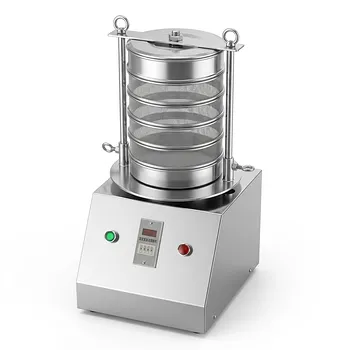
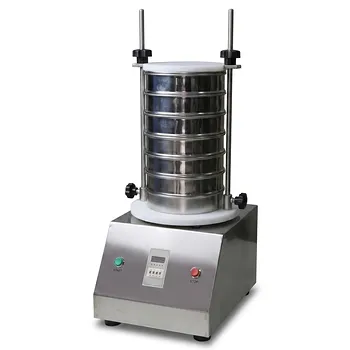
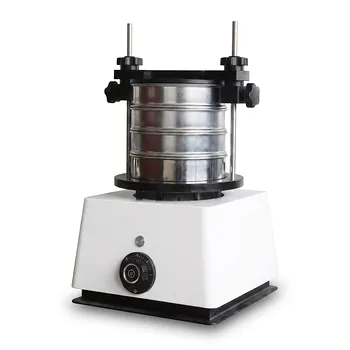
- Sieving & Particle Analysis: Precision 0.425mm test sieves, meshes, and high-efficiency sieve shakers (vibratory/air-jet).
- Milling & Grinding: Jaw/roll crushers, liquid nitrogen cryogenic grinders, and planetary ball, jet, and disc mills.
- Mixing & Compaction: Powder and defoaming mixers, plus a full spectrum of hydraulic presses, including Cold/Warm Isostatic Presses (CIP/WIP), vacuum hot presses, and XRF pellet presses.
Whether you are isolating fine-grained fractions or preparing advanced material specimens, our tools ensure compliance and durability. Contact us today to find the right solution for your lab!
References
- Ibrahim Adewuyi Oyediran, Oladunni Olufunmi Ayeni. Comparative effect of microbial induced calcite precipitate, cement and rice husk ash on the geotechnical properties of soils. DOI: 10.1007/s42452-020-2956-0
Mentioned Products
- Stainless Steel Laboratory Vibratory Test Sieve Shaker
- Laboratory Vibratory Test Sieve Shaker for Precision Particle Size Analysis and Powder Grading
- Small Laboratory Vibrating Sieve Shaker for Precise Particle Size Analysis
People Also Ask
- What function does a laboratory vibratory sieve shaker serve in the production process of metakaolin? Optimize Reactivity
- Why is a precision laboratory vibratory sieve shaker necessary for particle size control? Optimize Biomass Carbonization
- What is the function of a laboratory vibratory sieve shaker? Enhance Coal Particle Size Distribution (PSD) Analysis
- What role do laboratory vibratory sieve shakers and test sieves play before the molding of Nb-Cu composite powders?
- What is the primary function of a laboratory vibratory sieve shaker in the evaluation of sand liquefaction potential?

Tech Team · PowderPreparation
Last updated on May 14, 2026