All Questions
Why Are Crushing And Grinding Equipment Necessary In Phosphate Recovery? Optimize Mineral Liberation & Recovery Rates
Discover why crushing and grinding are vital for phosphate mineral liberation, increasing surface area, and maximizing recovery efficiency.
Why Are Zirconia Grinding Balls Preferred For Milling Cr2O3/Fe2O3/Glass Composites? Achieve Pure, High-Energy Results
Learn why zirconia media is ideal for Cr2O3/Fe2O3/glass composites, offering high density, wear resistance, and chemical purity for planetary milling.
Why Is The Use Of Cemented Carbide (Wc-6Co) Grinding Jars And Balls Recommended? Ensure Purity And High Densification
Discover why WC-6Co grinding media is the industry standard for carbide powder: prevent contamination, maximize energy, and achieve 92% densification.
How Do Grinders And Industrial Standard Sieves Process Carbonized Palm Shell Charcoal For Superior Biomass Quality?
Learn how grinders and 60-mesh sieves optimize palm shell charcoal powder for better density, binder efficiency, and uniform combustion performance.
How To Select A Laboratory Grinder For Ceramic Aerogels? Optimize Purity And Particle Size For Adsorption Testing.
Learn how to choose lab grinders for ceramic aerogels. Focus on high-purity liners and energy control to ensure accurate adsorption testing results.
Why Are High-Density Stainless Steel Grinding Balls And Jars Used For Vcat? Optimize Catalyst Nanostructuring
Discover how high-density stainless steel media provides the kinetic energy needed for VCat preparation, ensuring durability and atomic-level mixing.
Why Is A High Ball-To-Material Ratio Of 8:1 Utilized When Grinding Alumina-Titanium (Al2O3/Ti) Composite Slurries? Guide
Learn how an 8:1 ball-to-material ratio optimizes dispersion and density in Al2O3/Ti composite slurries while reducing internal micropores.
Why Silicon Nitride Media Is Superior To Zirconia For Si-B-C-N Ceramics? Ensure Purity & Nanostructure Integrity
Learn how silicon nitride grinding jars prevent contamination and preserve the delicate nanocomposite structure of Si-B-C-N ceramics during milling.
What Is The Primary Purpose Of Using Grinding Equipment During The Pretreatment Of Natural Fiber Raw Materials? Boost Surface Area
Learn how grinding equipment transforms raw biomass into high-performance adsorbents by maximizing surface area and exposing active reaction sites.
Why Is Zirconia Preferred As The Grinding Media Material When Preparing B@Nif2 Core-Shell Structures? Purity & Power
Discover why zirconia media is essential for B@NiF2 core-shell structures, offering high density for coating and extreme purity for energetic fuels.
What Is The Primary Function Of Grinding Equipment In The Processing Of Polycrystalline Oxide Ceramics? Enhance Reactivity
Learn how grinding equipment refines particles, increases surface area, and ensures homogeneity to optimize sintering and strength in oxide ceramics.
What Is The Necessity Of Using An Industrial-Grade Grinder For Orange Peel Filler? Optimize Particle Geometry & Bonding
Learn why industrial grinders are vital for orange peel fillers, focusing on particle geometry, resin bonding, and moisture resistance in composites.
Why Is Preliminary Crushing And Manual Grinding Necessary Before The Mechanical Milling Of Iron Sand? Optimize Results
Learn why pre-treating iron sand is vital to protect milling equipment, increase surface area, and improve chemical purification efficiency.
Why Are Zirconia Grinding Jars And Balls Used For Silicate Glass Milling? Ensure High Purity And Superior Hardness.
Discover why zirconia media is ideal for silicate glass milling, offering superior wear resistance, chemical inertness, and contamination-free results.
Why Are High-Hardness Stainless Steel Grinding Jars And Balls Necessary For Milling Alzrti Alloy Powders? Key Benefits
Learn why high-hardness stainless steel media is vital for milling AlZrTi alloys to ensure energy transfer, grain refinement, and alloying efficiency.
Why Are Zirconia Grinding Balls Preferred For Alxcrcufeniti Hea Powders? Optimize Purity And Milling Energy
Discover why zirconia media is the top choice for AlxCrCuFeNiTi HEA production, ensuring high-energy transfer and preventing chemical contamination.
Why Are Tungsten Carbide Grinding Jars A Standard Choice For Geological Samples? The Key To Ultra-Fine Precision
Learn why tungsten carbide is the industry standard for geological grinding, offering superior hardness, high density, and minimal contamination.
Why Must Rock Samples Be Ultrafine Powder For Ed-Xrf? Ensure Precise Geochemical Analysis With Lab Crushers & Mills
Learn why ultrafine grinding is vital for ED-XRF rock analysis to eliminate grain-size effects and ensure accurate elemental quantification.
Why Are Zirconia Grinding Balls Preferred For Zirconium-Based Chloride Electrolytes? Achieve High Purity & Efficiency
Learn why zirconia grinding media is essential for synthesizing chloride solid electrolytes, offering superior kinetic energy and chemical purity.
What Are The Technical Considerations For Using Stainless Steel Grinding Balls And Jars In Aluminum Flake Modification?
Learn how stainless steel media optimizes aluminum flake modification through high kinetic energy, wear resistance, and precise process control.
Why Use High-Precision Grinding For Starch, Nickel, And Silica? Optimize Heat Transfer And Ssa For Pyrolysis
Learn why high-precision grinding is critical for starch-nickel-silica mixtures to ensure uniform heat transfer and complete carbonization.
What Are The Economic And Equipment Advantages Of The Melting-Cooling-Room Temperature Grinding Process For Pet?
Discover how melting-cooling PET grinding eliminates expensive liquid nitrogen and utilizes standard machinery for cost-effective production.
Why Are High-Efficiency Pulverizers Necessary For The Further Refinement Of Copper Ore? Optimize Energy & Accuracy
Discover how high-efficiency pulverizers improve copper refinement by optimizing energy use and ensuring accurate mineralogical analysis.
Why Is High-Efficiency Ultra-Fine Grinding Required For Portland Cement Before Xrd? Get Accurate Rietveld Results
Learn why reducing Portland cement to <10μm is vital for XRD. Eliminate preferred orientation and ensure accurate phase quantification for your lab.
Why Are Zirconia Grinding Jars And Balls Selected For Milling Nickel Powder Mixed With Ceramic Particles? Ensure Purity
Discover why zirconia media is the industry standard for milling nickel-ceramic composites, offering high purity, density, and wear resistance.
What Is The Primary Role Of Industrial-Grade Crushing And Grinding Equipment In Limestone? Boost Surface Area & Quality
Learn how limestone crushing and grinding equipment maximizes surface area and reactivity for efficient calcination and chemical processing.
How Do High-Hardness Ceramic Balls Compare To Traditional Steel Balls In Magnetite Grinding? Boost Process Efficiency
Compare ceramic vs. steel balls for magnetite grinding. Discover how Mohs 9.0 hardness improves wear resistance and fine-grade grinding efficiency.
Why Is A Rotary Grinder Necessary When Using Recycled Pet For Wpc Preparation? Enhance Encapsulation And Bond Quality
Discover why pulverizing rPET is vital for WPC: improve surface area, ensure uniform encapsulation, and boost mechanical performance with precision.
What Is The Purpose Of Grinding Equipment In Bentonite Processing? Maximize Surface Area & Chemical Reactivity.
Learn how grinding equipment like mills and crushers optimizes bentonite by increasing surface area for chemical activation and industrial use.
What Critical Role Does The Closed Grinding Jar Play In The Mechanochemical Degradation Of Pfoa? Safe & Efficient Destruction
Learn how closed grinding jars act as micro-reactors for safe PFOA degradation, ensuring containment and efficient energy transfer for C-F bond breaking.
How Do Steel Grinding Jars And Balls Affect Glass-Ceramics? Balancing Milling Efficiency And Optical Purity.
Explore the effects of steel grinding media on glass-ceramics. Balance rapid particle reduction with risks of metallic contamination and color shifts.
What Is The Function Of Mechanical Grinding Equipment In The Processing Of Incinerated Rice Husk Ash (Rha)? Boost Reactivity
Learn how mechanical grinding refines Rice Husk Ash (RHA) to micron levels, increasing surface area and pozzolanic reactivity for industrial use.
What Are The Advantages Of Using High-Purity Alumina Grinding Media? Ensure Purity & Efficiency In Ceramic Milling
Learn how high-purity alumina grinding media eliminates contamination, improves particle dispersion, and reduces milling time for ceramic inks.
How Does Lab Grinding Equipment Aid Soil Pre-Treatment For Tire Wear Particle Analysis? Ensure Precise Results
Improve tire wear particle analysis with lab grinding. Ensure soil homogeneity and quantitative accuracy for STA-FTIR with expert pre-treatment.
Why Use Laboratory Pulverizers For Blood Clam Shell Concrete Additives? Maximize Reactivity And Surface Area
Learn why high-speed grinding is crucial for converting clam shells into reactive concrete additives by optimizing surface area and homogeneity.
What Are The Advantages Of Using Zirconia Grinding Jars And Balls For The Homogenization Of Pyrrhotite? Maximize Purity.
Discover the benefits of zirconia grinding media for pyrrhotite: high kinetic energy, low wear, and zero contamination for superior chemical purity.
What Is The Function Of Laboratory-Scale Pulverizing Equipment In Bio-Adsorptive Film Prep? Maximize Surface Area
Learn how laboratory pulverizing equipment optimizes bio-adsorptive films by maximizing surface area and ensuring chemical homogeneity.
Why Is It Necessary To Precisely Control The Grinding Media Loading Ratio? Master Nanosuspension Yield & Api Stability
Learn why bead loading is critical for pharmaceutical nanosuspensions. Optimize collision energy, prevent API degradation, and improve milling yield.
How Does The Size Of Grinding Media Influence The Vibratory Milling Efficiency? Achieve Optimal Pharmaceutical Fineness
Learn how media size affects vibratory milling efficiency. Balance collision frequency and impact energy for stable sub-200nm pharmaceutical particles.
Why Is Ysz Grinding Media Used In Pharma Milling? Achieve Maximum Purity & Efficiency
Learn why YSZ is the pharma standard for milling. High density and wear resistance ensure ultra-pure results and efficient sub-micron grinding.
How Does The Size Distribution Of Steel Ball Grinding Media Affect Ore Grindability? Optimize Energy & Lab Accuracy
Learn how steel ball size distribution impacts energy transfer, breakage kinetics, and the accuracy of Bond Work Index (BWI) measurements in lab mills.
Why Use Lab Grinding For Eggshell & Husk Carbon Materials? Maximize Surface Area & Heat Transfer For Better Adsorption
Discover how lab grinding optimizes biomass for carbon materials by increasing surface area and ensuring uniform heat transfer for superior results.
What Are The Technical Considerations For Selecting Stainless Steel Grinding Jars For Cellulose? Optimize Performance
Learn to optimize cellulose milling using stainless steel jars and spheres, focusing on kinetic energy, ball ratios, and contamination control.
Why Are Silicon Nitride Grinding Jars And Balls Used For Preparing Tio2–Ceo2 Mixed Powders? Achieve Ultra-High Purity
Learn why silicon nitride media is essential for TiO2–CeO2 powders. Discover how Si3N4 prevents contamination and ensures superior grinding results.
Why Use Manual Grinding & Sieves For Malachite Leaching? Optimize Surface Area And Kinetic Modeling.
Discover how grinding and sieving optimize malachite leaching by maximizing surface area and ensuring accurate Shrinking Core Model data.
Why Are Agate Grinding Elements Preferred When Preparing Plant Powder Samples Through Micronization? For Purity
Discover why agate grinding media is essential for plant micronization to prevent metallic contamination and ensure accurate trace element analysis.
How Does The Volume Filling Ratio Of Steel Ball Grinding Media Affect The Grinding Quality Of Phosphate Ore? (Tips)
Optimize phosphate ore grinding by mastering volume filling ratios. Learn how to balance collision frequency and energy to prevent over-grinding.
How Do High-Efficiency Powder Grinding And Milling Machines Contribute To Microstructural Control In Armor Material Design?
Learn how precision milling enables nanoscale refinement and microstructural control to boost the ballistic performance of advanced armor ceramics.
How Does Liner Design Reduce Ineffective Collisions? Optimize Trajectories For Peak Grinding Efficiency
Optimize liner lifter geometry to reduce ineffective ball-on-liner collisions, lower steel consumption, and boost mill grinding throughput.
Why Is A Grinding Machine Necessary For Nanocellulose Preparation? Maximize Reactivity & Particle Surface Area
Discover why grinding machines are vital for nanocellulose preparation, enhancing chemical reactivity and surface area for superior fiber extraction.
Why Is An Industrial-Grade Grinder Required For Processing Eggshell Powder? Enhance Bitumen Additive Performance
Discover how industrial-grade grinders transform eggshell waste into high-performance bitumen additives by maximizing surface area and ensuring purity.
What Is The Primary Function Of Grinding Equipment During The Raw Material Preparation Stage For Aluminum Matrix Composites?
Learn how grinding equipment refines reinforcements to ensure homogeneity and strong interfacial bonding in high-performance aluminum composites.
How Does A Laboratory Grinder Or Mill Enhance The Adsorption Performance Of Agricultural Waste Materials? Boost Surface Area
Learn how laboratory grinders improve biosorbent efficiency by increasing specific surface area and exposing active sites in agricultural waste.
What Are The Advantages Of Zirconia Grinding Jars For Rare Earth Zirconates? Ensure Purity & Mechanical Efficiency
Discover why zirconia jars and media are essential for high-entropy zirconate ceramics, ensuring chemical purity and superior particle refinement.
How Do Specialized Grinding Jars Study Glass Foaming Mechanisms? Control Atmospheric Variables For Precise Results.
Explore how gas-tight grinding jars control atmosphere to analyze surface adsorption, bubble nucleation, and sintering in glass foam research.
Why Choose Corundum For Grinding Sofc Seal Glass Powders? Ensure Purity, Hardness, And Thermal Stability.
Discover why corundum is the top choice for SOFC glass powder grinding to ensure purity, chemical inertness, and stable thermal expansion.
Why Are Tungsten Carbide (Wc) Grinding Balls Preferred For Milling Zrb2 And Sic? Ensure Purity & High-Energy Results
Discover why Tungsten Carbide media is essential for milling ZrB2 & SiC. Learn about high kinetic energy, wear resistance, and powder purity.
Why Use Yttrium-Stabilized Zirconia Balls For Knto Ceramic Grinding? Optimize Purity And Particle Refinement.
Discover why yttrium-stabilized zirconia (YSZ) balls are ideal for KNTO powders, offering high density, wear resistance, and absolute chemical purity.
What Is The Purpose Of Adding Alcohol As A Pca During Titanium Ball Milling? Prevent Cold Welding & Enhance Refinement
Discover why alcohol is used as a PCA in titanium ball milling to prevent cold welding, lower surface energy, and ensure superior particle refinement.
What Is The Function Of Laboratory Grinding Equipment In Zno Nanosphere Sol-Gel Synthesis? Ensure Superior Particle Size
Discover how lab grinding equipment transforms bulk gel into reactive precursors for ZnO nanospheres, ensuring uniform size and chemical purity.
Why Are Tungsten Carbide Grinding Jars And Balls Used In The Ball Milling Process For Yttrium Borohydride Synthesis? Maximize Purity
Discover why tungsten carbide is vital for Yttrium Borohydride synthesis, offering the density and hardness needed for high-purity metathesis.
How Does Mechanical Mixing Or Grinding Affect Ptfe Binders? Master Fibrillation For Dry-Process Battery Cathodes
Learn how mechanical shear and heat trigger PTFE fibrillation to create solvent-free, high-performance solid-state battery cathodes.
What Role Does Lab Grinding Play In Mullite Precursor Processing? Optimize Particle Size For Superior Synthesis
Learn how laboratory milling refines mullite precursors to 35.3μm, enhancing surface area and homogeneity for low-temperature crystalline synthesis.
What Are The Primary Considerations For Selecting Zirconia-Lined Stainless Steel Ball Milling Jars? Optimize Purity.
Learn why zirconia-lined jars are essential for mechanochemistry to prevent metallic contamination and maximize impact energy for material synthesis.
What Are The Functions Of Crushers & Grinders In Mine Tailing Preparation For Cement? Maximize Material Reactivity
Discover how crushing and grinding equipment convert mine waste into high-reactivity micron powders for superior cementitious materials.
Why Is A Lab Pulverizer Necessary For Xrf Ore Analysis? Ensure Accurate & Homogeneous Results
Learn why pulverizing ore is vital for XRF analysis to eliminate particle size effects and ensure accurate, representative chemical data.
How Does An Electric Laboratory Grinder Contribute To The Performance Analysis Of Hardened Cement Pastes? Key Benefits
Learn how electric lab grinders ensure precise XRD and TGA results by providing ultra-fine, uniform powders for hardened cement paste analysis.
Why Are Automatic Agate Grinders Used For The Fine Pulverization Of Minerals Like Covellite And Pyrite? Achieve Purity
Discover why automatic agate grinders are vital for pulverizing covellite and pyrite to ensure zero contamination and precise particle size control.
What Is The Primary Objective Of Using Industrial-Grade Grinding Or Milling Equipment In The Pretreatment? Key Benefits
Learn how industrial grinding maximizes biomass surface area and disrupts lignocellulosic structures to improve chemical and biological reactivity.
Why Is Grinding Equipment Necessary For Sno2-Sb2O3 Xerogels? Maximize Surface Area And Photocatalytic Activity.
Optimize SnO2-Sb2O3 xerogel processing. Learn how grinding improves surface area, ensures uniform calcination, and enhances photocatalytic activity.
Why Are Wc-Co Grinding Jars And Balls Selected For Zrb2? Achieve High Purity & Efficiency For Uhtcs
Discover why WC-Co grinding jars are essential for ZrB2 powders. Learn how high hardness and density optimize UHTC milling and ensure sample purity.
How Do Crushers And Mills Work Together In Gypsum Recycling? Transform Drywall Waste Into Reactive Ceramic Materials.
Learn how industrial crushers and grinding mills create a two-stage system to turn gypsum board waste into high-quality ceramic raw materials.
What Is The Primary Function Of Grinding Equipment For Granite Residues? Optimize Your Red Ceramic Production
Learn how grinding equipment refines granite residues to prevent stress cracks and enhance the mechanical strength of red ceramic raw materials.
How Do Steel Ball Grinding Media Influence The Formation Of Nanocrystalline Powders? Optimize Energy & Grain Refinement
Learn how steel grinding media drive nanocrystallization through energy transfer, plastic deformation, and grain refinement in high-energy ball milling.
Why Are Large-Diameter Grinding Balls, Such As Those Measuring 2.0 Cm, Typically Selected For Simvastatin Grinding Experiments?
Learn why 2.0 cm grinding balls are essential for Simvastatin experiments to maximize impact energy and disrupt crystalline lattice structures.
Why Are 3Mm Zirconia Grinding Balls Used For Knnlst Ceramics? Achieve High Purity & Efficient Micron-Level Refinement
Discover why 3mm zirconia grinding media is essential for KNNLST ceramics. Optimize particle size, maintain purity, and enhance piezoelectric quality.
What Role Does Lab Grinding Play In Banana Fiber Thermal Coatings? Optimize Waste Into High-Performance Barriers
Learn how lab grinding and milling optimize banana fiber waste for thermal insulation coatings by increasing surface area and improving dispersion.
What Role Does A Laboratory Grinder Play In The Pretreatment Of Sunflower Seed Shell-Based Adsorbents? Boost Efficiency.
Learn how laboratory grinders transform sunflower shells into high-performance adsorbents by maximizing surface area and exposing active sites.
Why Use High-Purity Zirconia Grinding Balls For Zirconia Powders? Ensure Maximum Purity And Milling Efficiency
Learn how the 'homogeneous grinding principle' and high-density zirconia media prevent contamination and optimize ceramic powder processing.
Why Are Zirconium Oxide Grinding Balls And Alumina Ceramic Jars Selected For Porcelain Clay? Maximize Purity & Efficiency
Learn why zirconia balls and alumina jars are the best choice for ball milling porcelain clay to achieve high purity and micron-level precision.
Why Is Laboratory Grinding Equipment Required To Process Bioactive Glass Scaffolds Before Xrd? Ensure Precise Analysis
Learn why fine grinding is essential for bioactive glass XRD analysis to ensure random orientation and accurate crystalline phase identification.
What Are The Advantages Of Using High-Strength Stainless Steel Grinding Balls In Pb(Ds)2 Nanorod Synthesis?
Learn how high-strength stainless steel balls enhance Pb(DS)2 nanorod synthesis through superior kinetic energy transfer and molecular alignment.
Why Is It Necessary To Use Grinding Equipment To Process Wheat Chaff Into Powder? Achieve Precise Thermal Data Results
Learn why grinding wheat chaff is vital for accurate specific heat capacity tests by eliminating structural anisotropy and ensuring thermal uniformity.
How Does An Industrial-Grade Plastic Scrap Grinder Contribute To The Initial Stages Of The Pvc Recycling Process?
Learn how industrial plastic grinders reduce PVC scrap into 10-15mm granules, optimizing volume and flow for efficient downstream recycling.
What Is The Function Of Industrial-Grade Mechanical Grinders In The Pre-Treatment Of Rock Mineral Powder (Rmp)? | Roles
Discover how industrial grinders optimize Rock Mineral Powder (RMP) by increasing surface area and disrupting structures for better reactivity.
How Does The Diameter Of Grinding Balls Affect The Processing Of Steel Slag? Optimize Energy & Particle Refinement
Learn how grinding ball diameter impacts steel slag processing. Optimize impact energy and collision frequency for superior refinement and reactivity.
Why Are Zirconia Jars Preferred For Steel Slag Grinding And Carbonation Experiments? Maximizing Purity & Impact Force.
Learn why high-density zirconia is the top choice for grinding steel slag, offering impact force and chemical purity for carbonation studies.
Why Is A Mechanical Grinder Used Before The Preparation Of Activated Carbon From Cps? Optimize Pore & Surface Area
Learn how mechanical grinding enhances activated carbon from Carica Papaya Stem by increasing surface area and ensuring uniform chemical activation.
Why Are Zirconia Grinding Jars And Balls Selected For Carbon Fiber Milling? Achieve High-Purity Material Processing
Discover why zirconia media is essential for carbon fiber milling, providing high impact energy and zero contamination for superior sample purity.
What Is The Role Of Mechanical Crushing And Grinding Equipment In The Preparation Of Smz? Boost Adsorption Efficiency
Discover how mechanical grinding unlocks the chemical potential of zeolite, maximizing surface area and reactivity for high-performance SMZ.
What Is The Role Of Mechanical Crushing And Milling Equipment In The Initial Preparation Of Brown Coal Samples? Key Steps.
Learn how mechanical crushing and milling transform bulk brown coal into standardized lab samples for accurate chemical analysis and moisture testing.
What Is The Role Of Mechanical Pulverization Tools In The Preparation Stage Of Clay Modification Experiments? Ensure Accuracy
Learn how mechanical pulverization improves surface area and homogeneity in clay modification, ensuring reliable and accurate geotechnical data.
What Is The Primary Purpose Of Using Crushers Or Mills During The Torrefaction Pretreatment Of Agricultural Biomass?
Learn how crushers and mills optimize biomass torrefaction by increasing surface area, ensuring uniform heat transfer, and improving pellet quality.
Why Use High-Hardness Steel For Mechanochemical Formaldehyde Condensation? Boost Energy & Purity
Discover why high-hardness stainless steel is vital for mechanochemical formaldehyde condensation, ensuring energy transfer and product purity.
What Is The Role Of Industrial Crushers And Mills In Water Hyacinth Biomass Prep? Boost Surface Area And Efficiency
Learn how industrial crushers and mills optimize water hyacinth biomass through size reduction, enhancing surface area for thermal and bio-processing.
Why Are Alumina Grinding Balls Selected For Use In The Crystalline Glaze Grinding Process? Ensure Purity & Efficiency
Learn why alumina grinding balls are essential for crystalline glazes. Discover how high hardness and chemical purity ensure superior grinding results.
What Role Does Grinding Equipment Play In The Powder Processing Of Bi-2212 Superconducting Ceramics? Boost Phase Purity
Discover how precision grinding equipment ensures atomic-level homogeneity and high reactivity in Bi-2212 superconducting ceramic processing.
Why Are High-Strength Stainless Steel Grinding Balls And Jars Used For Grinding Forsterite Ceramic Powders? Key Benefits
Learn why stainless steel media is used for forsterite ceramic grinding to ensure high kinetic energy, wear resistance, and material purity.
Why Are Zirconium Oxide Grinding Jars And Balls Preferred For Co-Milling Praziquantel? Ensure High Purity & Efficiency
Discover how zirconia grinding media optimize Praziquantel co-milling by providing high-energy impact and preventing pharmaceutical contamination.
Why Is A Combination Of Steel Balls With Different Diameters (10-40Mm) Used As Grinding Media For Talc Powder Processing?
Learn how a graded mix of 10-40mm steel balls optimizes talc grinding by balancing impact and attrition for uniform, high-quality powder production.
Featured Products
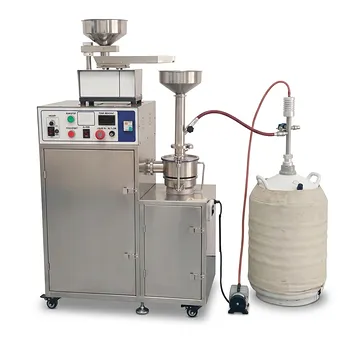
Laboratory Cryogenic Grinder Liquid Nitrogen Low Temperature Ultrafine Grinding
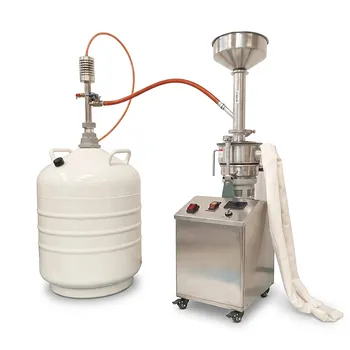
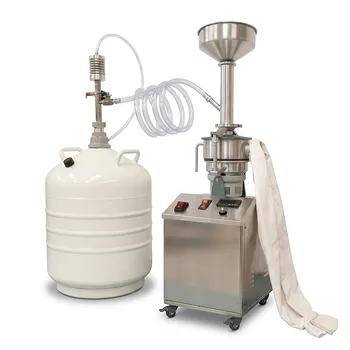
Laboratory Liquid Nitrogen Cryogenic Grinder for Polymer and Elastomer Materials
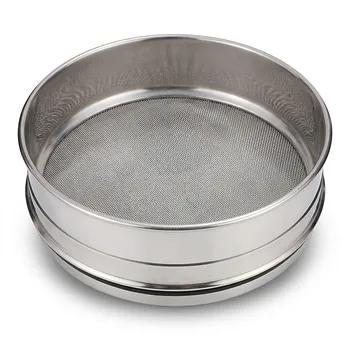
High Precision Laboratory Analysis Test Sieves
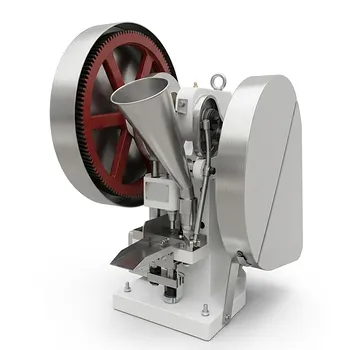
6-Ton Small Single-Punch Tablet Press — Laboratory Powder & Granule Tableting Equipment / Tablet Forming Machine