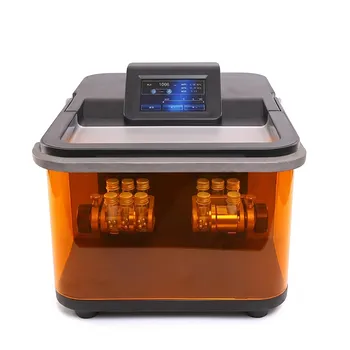
How do steel grinding jars and balls affect glass-ceramics? Balancing milling efficiency and optical purity.
Updated 4 months ago
The use of steel grinding media in high-energy ball milling creates a fundamental tension between mechanical efficiency and chemical purity. While high-strength steel jars and balls provide the kinetic energy necessary to refine glass-ceramic powders to micron-level sizes, they inevitably introduce trace metallic impurities through media wear. These impurities, such as iron and chromium, significantly alter the optical profile of the final glass-ceramic, often resulting in visible discoloration and reduced light transparency.
Core Takeaway: Steel grinding media maximizes energy transfer for rapid particle size reduction but risks contaminating glass-ceramics with metallic micro-particles that degrade optical clarity while maintaining high luminescent intensity.
Kinetic Energy and Particle Refinement
Achieving Superior Impact Force
High-strength steel balls act as the primary vehicle for kinetic energy transfer within the milling system. Their high density and mechanical hardness ensure that sufficient impact force is generated during high-frequency cycles to crush hard ceramic reinforcements.
Surface Area and Rheological Benefits
Reducing ceramic fillers to specific average particle sizes (such as 5 to 23 microns) vastly increases the specific surface area. This refinement helps reduce rheological resistance during the sintering process, allowing the glass matrix to flow more effectively around the filler.
Structural Modification of Raw Materials
The mechanical action of steel media can cause significant deformation and create micro-cracks in the raw material morphology. These structural changes are essential for forming stable network structures and enhancing the material's ability to embed smaller molecules or dopants within the glass-ceramic framework.
Chemical Impurities and Optical Degradation
The Introduction of Metallic Trace Elements
During the high-energy milling process, the friction and impact between the balls and the jar walls release trace amounts of iron, chromium, aluminum, and silicon. These elements originate directly from the wear of the steel surfaces and integrate into the raw powder.
Color Shifts and Scattering Effects
During subsequent sintering, these metallic impurities can form micro-particles within the glass-ceramic matrix. These particles cause internal light scattering, which typically causes lithium boron vanadate glass-ceramics to appear black or undergo significant color changes.
Resilience of Luminescent Properties
Despite the loss of visible light transparency, the chemical presence of steel-derived impurities does not necessarily destroy all functional properties. Research indicates that the luminescence intensity of the glass-ceramic can remain high under specific excitation conditions, even if the material is no longer transparent.
Understanding the Trade-offs
Efficiency vs. Contamination
The primary trade-off when using steel is the balance between milling speed and purity. While steel is more durable and provides higher impact energy than agate or ceramic media, it is unsuitable for applications requiring absolute optical "water-white" clarity or high-purity trace analysis.
Impact on Thermal Expansion
Refining particles to very small sizes can slightly diminish the filler's ability to lower the Coefficient of Thermal Expansion (CTE). Users must weigh the benefit of a more uniform microstructure against the potential loss of thermal stability in the final composite.
Heat Generation and Crystallization
The high thermal conductivity of steel media allows it to capture and redistribute the instantaneous high temperatures produced during collisions. This localized heating can influence the mechanochemical reaction and help delay the crystallization of the glass during processing.
Making the Right Choice for Your Goal
To optimize your milling process, select your media based on the specific performance requirements of your glass-ceramic application:
- If your primary focus is optical transparency: Avoid steel media and utilize high-purity ceramic or agate jars to prevent metallic discoloration and light scattering.
- If your primary focus is rapid particle size reduction: Use high-hardness alloy steel to maximize kinetic energy transfer and ensure ceramic reinforcements are adequately crushed.
- If your primary focus is luminescent performance: Steel media may be acceptable, as the luminescence intensity can remain stable even when trace metallic impurities cause visible darkening.
- If your primary focus is thermal management: Monitor the milling duration closely, as excessive refinement can lead to minor increases in the Coefficient of Thermal Expansion.
By carefully balancing the high-energy benefits of steel with its inherent contamination risks, researchers can precisely tailor the optical and structural properties of glass-ceramic materials.
Summary Table:
| Feature | Impact of Steel Grinding Media | Key Result |
|---|---|---|
| Milling Efficiency | High kinetic energy and impact force | Rapid particle size reduction (5-23 microns) |
| Optical Quality | Introduction of trace Fe and Cr impurities | Visible discoloration and reduced transparency |
| Morphology | Mechanical deformation and micro-cracking | Improved sintering and structural stability |
| Luminescence | Integration of metallic micro-particles | Stable luminescent intensity despite darkening |
| Thermal Stability | Higher specific surface area | Potential slight increase in Thermal Expansion (CTE) |
Elevate Your Material Research with Precision Sample Preparation
Are you struggling to balance milling speed with the strict purity requirements of your glass-ceramic applications? At [Insert Brand Name], we provide complete laboratory sample preparation solutions tailored for advanced material science. We specialize in high-performance powder processing and compaction equipment designed to deliver consistent, repeatable results.
Our extensive product line includes:
- Advanced Milling: Planetary ball mills, jet mills, and cryogenic grinders for superior particle refinement.
- Preparation Tools: Jaw/roll crushers, sieve shakers (vibratory/air-jet), and high-precision test sieves.
- Mixing Solutions: Powder mixers and vacuum defoaming mixers for homogeneous results.
- Compaction Equipment: A full spectrum of hydraulic presses, including Cold/Warm Isostatic Presses (CIP/WIP), standard lab presses, XRF pellet presses, and vacuum hot presses.
Whether you need to maximize kinetic energy or ensure absolute optical clarity, our experts are here to help you choose the right media and machinery for your specific goals. Contact us today to optimize your laboratory workflow!
References
- O. Chukova, Emmanuel Stratakis. The Effects of the Incorporation of Luminescent Vanadate Nanoparticles in Lithium Borate Glass Matrices by Various Methods. DOI: 10.3390/solids5040032
Mentioned Products
- High Energy Omnidirectional Planetary Ball Mill 16L
- Dual Jar High Energy Vibratory Ball Mill
- 8L Planetary Ball Mill for Laboratory Grinding and Sample Preparation
- High Energy Omnidirectional Planetary Ball Mill 20L
- High Energy Laboratory Planetary Ball Mill for Nano Grinding and Material Science Sample Preparation
People Also Ask
- What role does an omni-directional planetary ball mill play in brass/cobalt antimonide pretreatment? Achieve Nano-Scale Homogeneity.
- What is the role of a high-energy planetary ball mill in Li2ZrO3 and LBS prep? Achieve Superior Electrolyte Density
- What role does a high-energy planetary ball mill play in processing quenched bioactive glass? Achieve Nano-Scale Precision
- What role does a planetary ball mill play in nano-mineral filler prep? Achieve Sub-100nm Precision & Performance
- What role does a high-energy planetary ball mill play in magnesium-based hydrogen storage alloy preparation?

Tech Team · PowderPreparation
Last updated on Jun 03, 2026
Related Products
High Energy Omnidirectional Planetary Ball Mill 16L
Dual Jar High Energy Vibratory Ball Mill
8L Planetary Ball Mill for Laboratory Grinding and Sample Preparation
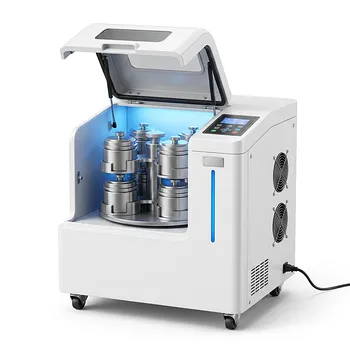
High Energy Omnidirectional Planetary Ball Mill 20L
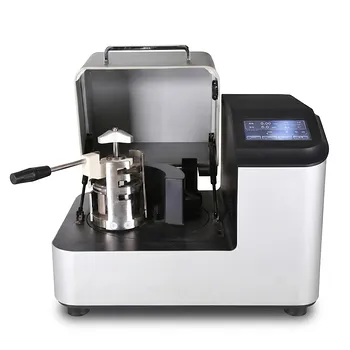
High Energy Laboratory Planetary Ball Mill for Nano Grinding and Material Science Sample Preparation
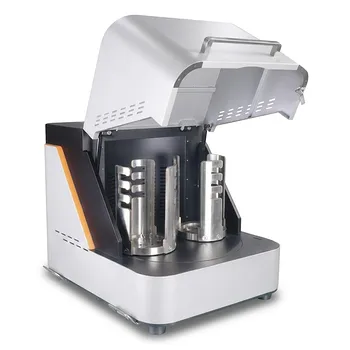
High Energy Laboratory Planetary Ball Mill for Nano Grinding and Colloidal Mixing of Hard and Brittle Materials
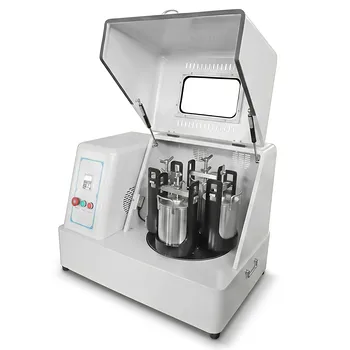
Vertical Square Planetary Ball Mill for Laboratory Sample Preparation and Nanoscale Grinding

High Energy Planetary Ball Mill for Nano Scale Grinding and Mechanical Alloying
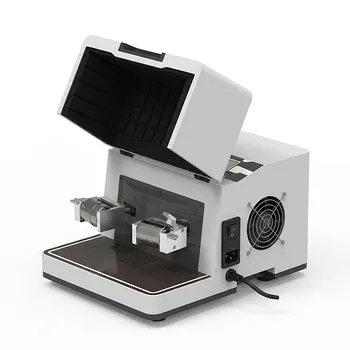
High Energy Hybrid Vibratory Ball Mill for Grinding Mixing and Cell Disruption
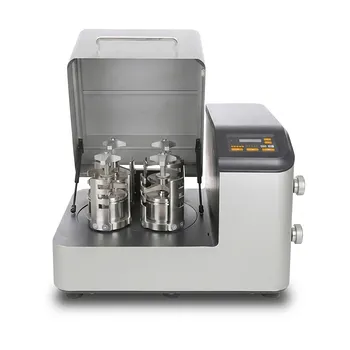
High Energy Planetary Ball Mill for Nano Scale Grinding and Colloidal Mixing in Material Science Research
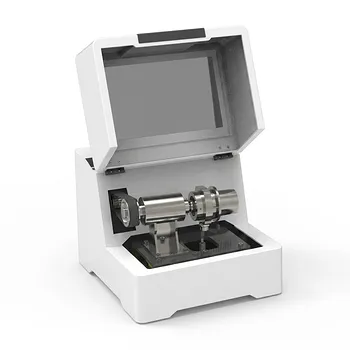
Single Tank High Energy Vibratory Ball Mill for Laboratory Grinding and Mixing
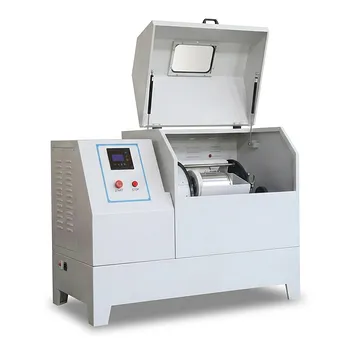
Heavy Duty Horizontal Planetary Ball Mill for Efficient Industrial Grinding and Sample Preparation

Nano High Energy Vibratory Ball Mill for Laboratory Sample Preparation
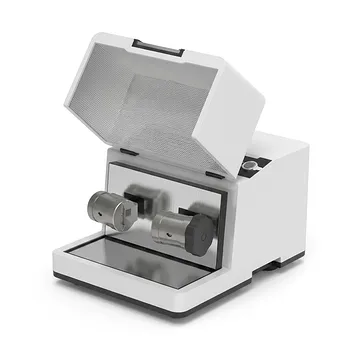
Heating Temperature Controlled High Energy Vibratory Ball Mill
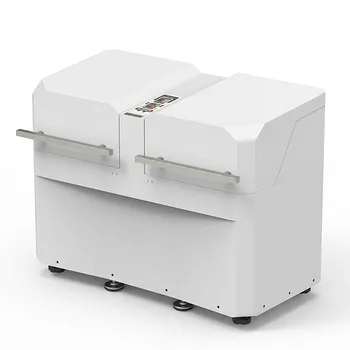
Dual Station Planetary Ball Mill 24L
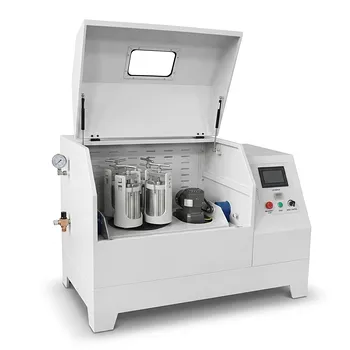
Vertical Production Planetary Ball Mill for High Throughput Powder Processing
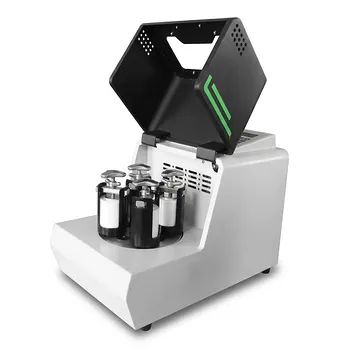
Miniature Planetary Ball Mill with Vacuum Grinding and High Efficiency for Laboratory Sample Preparation
Ultra-Low Temperature Cryogenic High-Energy Vibratory Ball Mill
Multi-Platform Nanoscale High-Energy Vibratory Ball Mill