Why are silicon nitride grinding jars and balls used for preparing TiO2–CeO2 mixed powders? Achieve Ultra-High Purity
Updated 4 months ago
Silicon nitride grinding media are utilized in the preparation of TiO2–CeO2 mixed powders because of their exceptional hardness, superior wear resistance, and chemical inertness. These properties ensure that the grinding process does not introduce unwanted impurities into the semiconductor sensing materials, maintaining the high chemical purity and structural integrity required for their specific functional applications.
The primary reason for selecting silicon nitride is to prevent contamination during high-energy milling. By utilizing a medium that resists physical wear and chemical reaction, researchers ensure the resulting TiO2–CeO2 powder maintains its precise stoichiometric composition and electrical performance.
Maintaining High Chemical Purity
Avoiding Metallic and Oxide Contamination
Semiconductor sensing materials like TiO2–CeO2 are extremely sensitive to trace impurities, which can drastically alter their electrical properties.
Silicon nitride (Si3N4) is a non-metallic, high-performance ceramic that does not introduce iron, chromium, or other metallic ions into the mixture.
Using this media prevents "irrelevant oxide contamination," which is common when using standard alumina or zirconia media that may wear down and blend into the sample.
Chemical Inertness Under Stress
During the mixing process, the high local temperatures and pressures can trigger unwanted chemical reactions between the powder and the grinding media.
Silicon nitride is chemically stable and does not react with titanium or cerium oxides, ensuring the final powder remains a pure binary or mixed-phase system.
This stability is critical for research into phase stability and the performance of high-sensitivity sensors.
Durability in High-Energy Environments
Resilience to Mechanical Stress
High-energy ball milling involves intense kinetic energy and constant impacts to break down powder agglomerates and achieve uniform mixing.
Silicon nitride media can withstand significant mechanical stress without fracturing or chipping, unlike lower-grade ceramics that might fail under high-intensity conditions.
This physical toughness ensures that the grinding efficiency remains constant throughout the entire duration of the milling process.
Minimizing Media Wear
The extreme hardness of Si3N4 allows it to grind hard oxide powders like TiO2 and CeO2 with minimal loss of its own mass.
Because the wear rate is negligible, the particle size distribution of the final powder is governed by the milling parameters rather than the degradation of the grinding balls.
This results in a more predictable and repeatable manufacturing process for advanced ceramic precursors.
Understanding the Trade-offs
Cost vs. Performance
Silicon nitride is generally more expensive than alumina or hardened steel grinding media.
However, the high cost of Si3N4 is offset by its longevity and the prevention of "spoiled" batches due to contamination.
For industrial or high-precision semiconductor applications, the risk of using cheaper, more abrasive media often outweighs the initial savings.
Material Specificity
While Si3N4 is excellent for many systems, it is most essential when "homogeneous grinding" or "high-purity" strategies are required.
In cases where a specific impurity (like Alumina) is already part of the final formula, researchers might opt for Alumina media to achieve uniform mixing at a lower price point.
For TiO2–CeO2 sensing materials, however, silicon nitride remains the gold standard because it introduces no relevant contaminants that would interfere with the semiconductor's sensitivity.
Applying Media Selection to Your Project
Recommendations Based on Goal
- If your primary focus is semiconductor purity: Use silicon nitride jars and balls to eliminate metallic and unwanted oxide drift.
- If your primary focus is high-energy milling efficiency: Choose silicon nitride for its ability to withstand intense mechanical impact without fracturing.
- If your primary focus is cost-effective bulk mixing: Consider alumina or zirconia media only if the small amount of wear-induced contamination is compatible with your final material's chemistry.
Choosing the right grinding media is an investment in the reliability and accuracy of your final material performance.
Summary Table:
| Key Feature | Benefit for TiO2–CeO2 Powders | Why Silicon Nitride (Si3N4)? |
|---|---|---|
| Extreme Hardness | Prevents media degradation | High wear resistance ensures minimal mass loss and predictable sizing. |
| Chemical Inertness | Maintains stoichiometric purity | Non-reactive nature prevents unwanted chemical phases during high-energy milling. |
| Non-Metallic | Eliminates ion contamination | Avoids introduction of iron or chromium, crucial for semiconductor sensitivity. |
| Thermal Stability | Resists local heat spikes | Stable performance even under the high temperatures of intense friction. |
Elevate Your Material Research with High-Purity Solutions
Achieve uncompromising precision in your powder processing with our professional laboratory sample preparation solutions. We specialize in providing high-performance equipment designed for the rigorous demands of material science and semiconductor research.
Our extensive product range includes:
- Advanced Milling: Planetary ball mills, jet mills, disc/rotor mills, and liquid nitrogen cryogenic grinders for ultra-fine results.
- Precision Crushing: Robust jaw and roll crushers for primary size reduction.
- Sieving & Mixing: Vibratory/air-jet sieve shakers and high-efficiency powder/defoaming mixers.
- Sample Compaction: A full spectrum of hydraulic presses, including Cold/Warm Isostatic Presses (CIP/WIP), XRF pellet presses, and vacuum hot presses for superior structural integrity.
Whether you are developing next-generation sensors or advanced ceramics, we provide the tools to ensure zero contamination and repeatable results. Contact us today to optimize your laboratory workflow!
References
- Jelena N. Stevanović, Srdjan Petrović. Insight into the Oxygen-Sensing Mechanisms of TiO2–CeO2 Mixed Oxides Treated in a High-Energy Ball Mill: An XPS Analysis. DOI: 10.3390/inorganics13050159
Mentioned Products
- High Energy Omnidirectional Planetary Ball Mill 16L
- Vertical Semi Circular Planetary Ball Mill for Laboratory Precision Grinding
- Vertical Square Planetary Ball Mill for Laboratory Sample Preparation and Nanoscale Grinding
- High Energy Planetary Ball Mill for Nano Scale Grinding and Colloidal Mixing in Material Science Research
- High Energy Laboratory Planetary Ball Mill for Nano Grinding and Material Science Sample Preparation
People Also Ask
- What role does an omni-directional planetary ball mill play in brass/cobalt antimonide pretreatment? Achieve Nano-Scale Homogeneity.
- What is the role of a high-energy planetary ball mill in Li2ZrO3 and LBS prep? Achieve Superior Electrolyte Density
- What role does a high-energy planetary ball mill play in processing quenched bioactive glass? Achieve Nano-Scale Precision
- What role does a planetary ball mill play in nano-mineral filler prep? Achieve Sub-100nm Precision & Performance
- What role does a high-energy planetary ball mill play in magnesium-based hydrogen storage alloy preparation?

Tech Team · PowderPreparation
Last updated on Jun 03, 2026
Related Products

High Energy Omnidirectional Planetary Ball Mill 16L
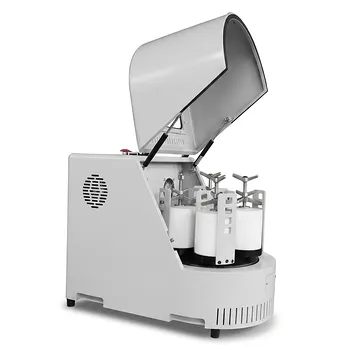
Vertical Semi Circular Planetary Ball Mill for Laboratory Precision Grinding

Vertical Square Planetary Ball Mill for Laboratory Sample Preparation and Nanoscale Grinding
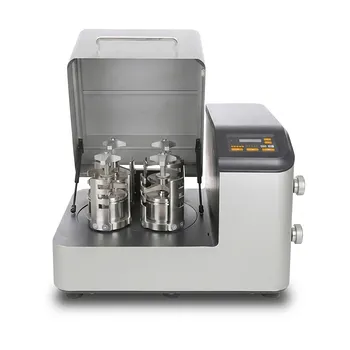
High Energy Planetary Ball Mill for Nano Scale Grinding and Colloidal Mixing in Material Science Research

High Energy Laboratory Planetary Ball Mill for Nano Grinding and Material Science Sample Preparation