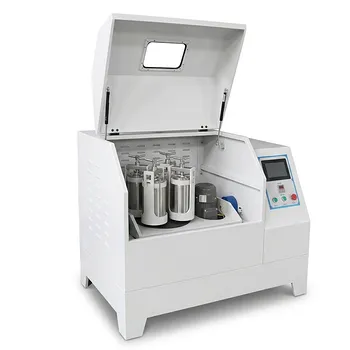
What Role Does Lab Grinding Play in Banana Fiber Thermal Coatings? Optimize Waste Into High-Performance Barriers
Updated 5 months ago
Laboratory grinding and milling equipment is the primary mechanism for transforming raw agricultural waste into a high-performance thermal barrier. By pulverizing dried banana fibers into microscopic particles, this equipment dramatically increases the material's specific surface area. This physical transformation is essential for ensuring the fiber powder disperses uniformly within a coating matrix, resulting in a composite insulation with stable physical and thermal properties.
The central role of grinding and milling equipment is to engineer the particle geometry of banana fiber waste, optimizing its surface area for better matrix integration and enhanced chemical reactivity.
Enhancing Material Integration and Dispersion
Maximizing Specific Surface Area
Grinding equipment mechanically breaks down bulky, dried banana fibers into fine, microscopic powders. This process significantly increases the specific surface area, which allows for more intimate contact between the fiber particles and the coating's binder.
Achieving Matrix Uniformity
A fine, consistent powder is much easier to distribute evenly throughout a liquid or resin-based coating. Uniform dispersion prevents the formation of fiber clumps, which would otherwise create structural weaknesses and inconsistent thermal resistance in the finished product.
Stabilizing Physical Properties
When fibers are reduced to a consistent micron-sized scale, the resulting composite material exhibits more predictable physical behavior. This stability is crucial for ensuring the coating adheres correctly to surfaces and maintains its integrity under thermal stress.
Optimizing Chemical and Thermal Performance
Refining Pre-Calcination Combustion
When banana leaves are used to create ash-based components, grinding the raw material before calcination is vital. Increasing the surface area ensures complete and uniform combustion within the furnace, leading to a higher quality of raw material.
Enhancing Pozzolanic Reactivity
Secondary grinding after the calcination process further refines the ash particles. This refinement enhances the chemical reactivity of the material, which can improve the pozzolanic properties and the overall strength of the insulation matrix.
Influencing Thermal Conductivity
The particle size achieved through milling directly impacts the final density and porosity of the coating. By precisely controlling the size of the banana fiber particles, researchers can manipulate the thermal conductivity, tailoring the material to meet specific insulation requirements.
Understanding the Trade-offs and Pitfalls
The Risk of Over-Processing
Extended milling can generate significant heat, which may inadvertently degrade the organic components of the banana fiber. Over-processing also leads to higher energy consumption, potentially undermining the environmental benefits of using agricultural waste.
Particle Size Distribution Challenges
Achieving a perfectly uniform particle size is difficult; most milling processes result in a range of sizes. Inconsistent distribution can lead to "hot spots" in the coating where thermal protection is less effective due to variations in density.
Equipment Maintenance and Contamination
Milling fibrous agricultural waste can be abrasive, leading to significant wear on laboratory equipment. There is also a risk of cross-contamination if the grinding chambers are not meticulously cleaned between different batches or material types.
How to Apply This to Your Project
Recommendations for Material Development
- If your primary focus is maximizing thermal resistance: Prioritize achieving the finest possible particle size post-calcination to create a dense, uniform barrier that minimizes heat transfer.
- If your primary focus is cost-effective sustainability: Optimize the initial grinding phase to achieve "just-enough" surface area for stability, thereby reducing the energy-intensive milling time.
- If your primary focus is coating durability and adhesion: Focus on the mechanical pulverization of raw fibers to ensure they integrate seamlessly with the binder, preventing peeling or cracking.
By mastering the precision of laboratory milling, you turn raw agricultural waste into a sophisticated, high-value component for advanced thermal insulation.
Summary Table:
| Processing Stage | Key Function of Equipment | Impact on Final Coating |
|---|---|---|
| Raw Fiber Grinding | Increases specific surface area | Ensures uniform dispersion and prevents clumping |
| Pre-Calcination | Refines material for combustion | Achieves complete, uniform ash quality |
| Secondary Milling | Particle size refinement | Enhances pozzolanic reactivity and chemical bond |
| Precision Milling | Particle geometry engineering | Enables precise control over thermal conductivity |
Elevate Your Material Research with Precision Sample Preparation
Transform agricultural waste like banana fiber into high-value thermal barriers with industry-leading precision. At our core, we provide complete laboratory sample preparation solutions for material science, specializing in high-performance powder processing and compaction equipment.
Whether you are refining organic fibers or synthesizing advanced composites, our extensive product line is designed to meet your exact specifications:
- Advanced Milling & Grinding: Planetary ball mills, jet mills, disc/rotor mills, and liquid nitrogen cryogenic grinders for heat-sensitive fibers.
- Crushing & Sieving: Jaw and roll crushers, plus vibratory and air-jet sieve shakers for precise particle size distribution.
- Advanced Compaction: A full spectrum of hydraulic presses, including Cold/Warm Isostatic Presses (CIP/WIP), vacuum hot presses, and XRF pellet presses.
- Mixing Solutions: Specialized powder mixers and defoaming mixers for air-free coating matrices.
Ready to optimize your insulation coating performance? Contact our technical experts today to discuss how our equipment can streamline your R&D workflow and ensure superior material stability.
References
- John Robert F. Paler, Ronald D. Danan. Pulverised Dried Banana Fiber Mixed with White Elastomeric Paint as a Thermal Insulator on an External Wall. DOI: 10.5281/zenodo.7977357
Mentioned Products
- Continuous Feeding Grinding Mill for Dry Fibrous Tough and Hard Materials in Laboratory and Small Production
- Small Laboratory Colloid Mill for Ultra-Fine Wet Grinding and Emulsification
- High Efficiency High Speed Grinder Laboratory Mill 1300W 25000rpm
- Vibratory Disc Mill for Rapid Fine Grinding and High Throughput Sample Preparation of Hard and Brittle Materials
- Vertical Square Planetary Ball Mill for Laboratory Sample Preparation and Nanoscale Grinding
People Also Ask
- What is the technical significance of the relative collision velocity of grinding media? Maximize Milling Efficiency
- Why use a grinding mill to refine mine filling samples to below 75μm? Ensure Accurate XRF and Chemical Analysis
- Why is a cutting mill utilized for processing fibrous Agarwood distillation waste? Efficient Shearing Solutions
- What is the primary function of grinding equipment during the raw material preparation stage for aluminum matrix composites?
- Why use precision filtration meshes for PEDOT:PSS? Ensure Clog-Free & High-Resolution 3D Printing

Tech Team · PowderPreparation
Last updated on May 14, 2026
Related Products
Continuous Feeding Grinding Mill for Dry Fibrous Tough and Hard Materials in Laboratory and Small Production
Small Laboratory Colloid Mill for Ultra-Fine Wet Grinding and Emulsification
High Efficiency High Speed Grinder Laboratory Mill 1300W 25000rpm
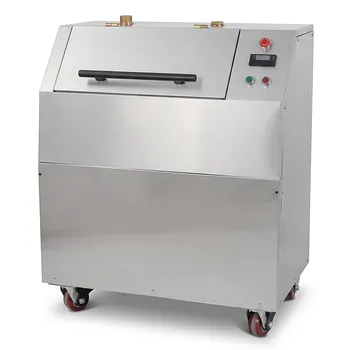
Vibratory Disc Mill for Rapid Fine Grinding and High Throughput Sample Preparation of Hard and Brittle Materials
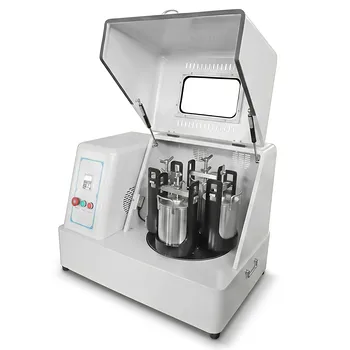
Vertical Square Planetary Ball Mill for Laboratory Sample Preparation and Nanoscale Grinding
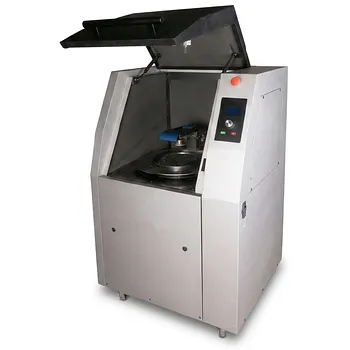
High Speed Vibratory Disc Mill for Spectral Analysis Sample Preparation and Rapid Powder Grinding
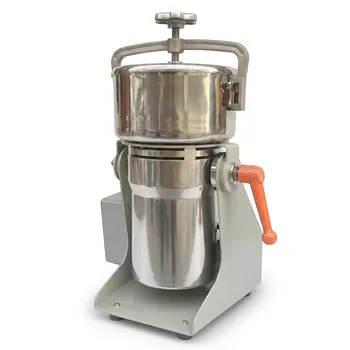
High Speed Laboratory Grinder Efficient Stainless Steel Powder Pulverizer Universal Material Science Mill for Sample Preparation
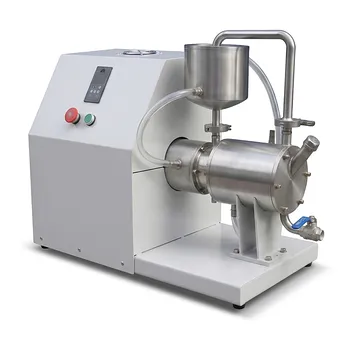
Laboratory Small Horizontal Sand Mill for Nano Materials Wet Grinding
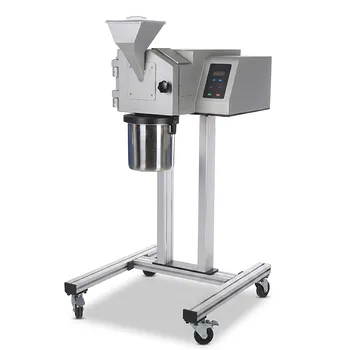
Cross Beater Mill for Brittle Material Grinding and Continuous Fine Crushing Industrial Sample Preparation
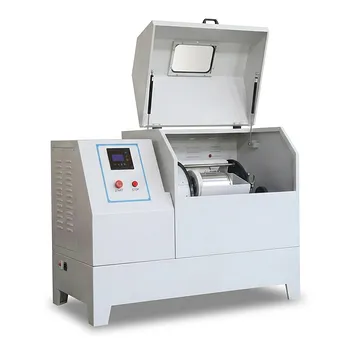
Heavy Duty Horizontal Planetary Ball Mill for Efficient Industrial Grinding and Sample Preparation
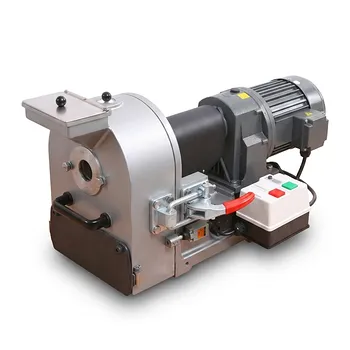
Laboratory Disc Mill for Fine Sample Preparation of Hard and Brittle Materials
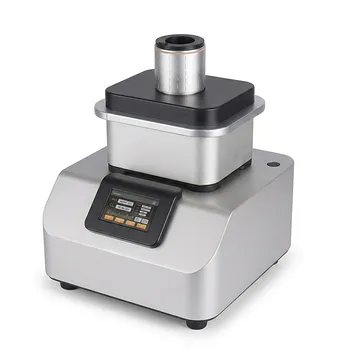
Ultra Centrifugal Mill High Speed Laboratory Grinder for Fibrous and Brittle Sample Preparation
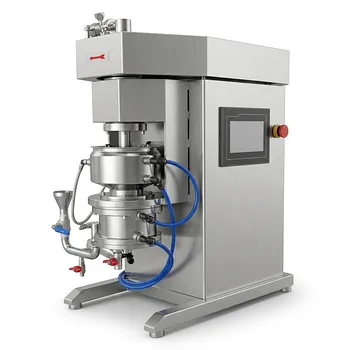
Small Ceramic Structure Laboratory Sand Mill Nanoscale Grinding Dispersion Equipment Seal-less Screen-less Design
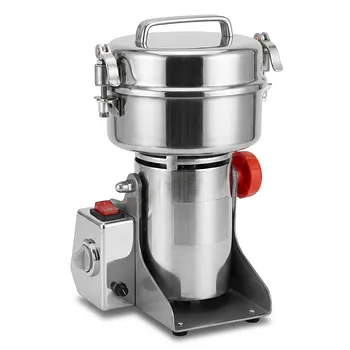
High Speed Laboratory Powder Grinder Small Batch Sample Preparation Mill
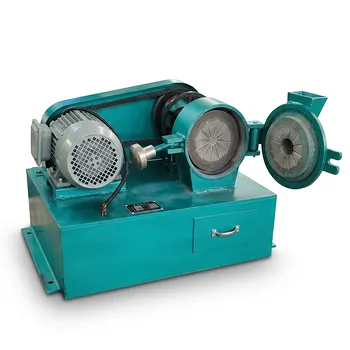
Laboratory Disc Mill Medium Hard Material Grinding Coal Coke Ore Pulverizer
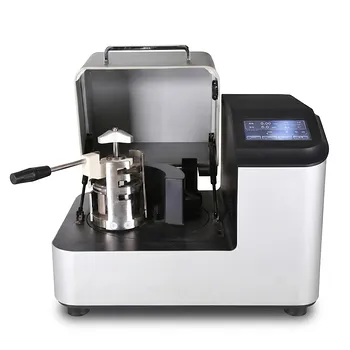
High Energy Laboratory Planetary Ball Mill for Nano Grinding and Material Science Sample Preparation
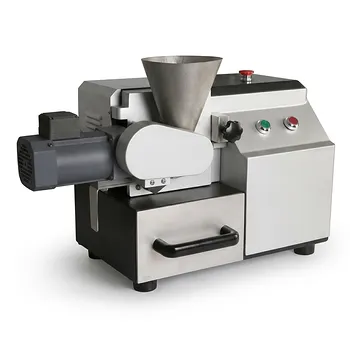
Laboratory Hammer Mill for Coal Quality Analysis and Brittle Mineral Grinding
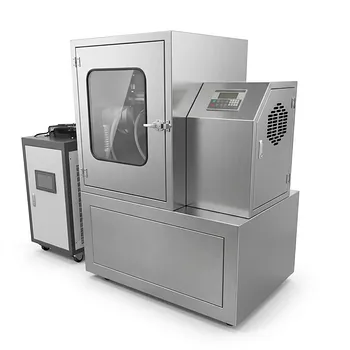
Vibratory Superfine Grinder for Ultra Fine Laboratory Powder Milling
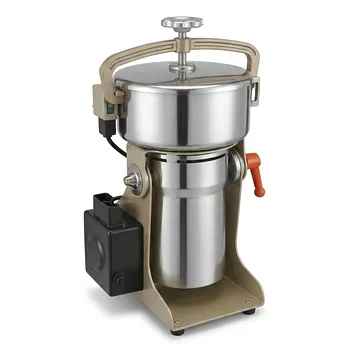
Multifunctional High Efficiency High Speed Laboratory Grinder