Why use manual grinding & sieves for malachite leaching? Optimize surface area and kinetic modeling.
Updated 4 months ago
Manual grinding and standard test sieves serve the dual purpose of reducing malachite ore to a fine powder and classifying it into precise, uniform particle size ranges. This pretreatment is critical for maximizing the active surface area available for the leaching agent and providing the standardized data required to build accurate mathematical kinetic models.
The primary purpose of these tools is to control the physical dimensions of the ore, which directly dictates the speed of the chemical reaction and the reliability of the resulting leaching data. By ensuring a narrow particle size distribution, researchers can isolate the impact of size on extraction rates and validate theoretical models like the Shrinking Core Model.
The Role of Surface Area in Leaching Kinetics
Expanding Active Reaction Sites
Manual grinding breaks down the physical structure of malachite, significantly increasing the effective surface area. Smaller particle sizes provide a higher density of active sites on the mineral surface, which facilitates faster contact with the methanesulfonic acid (MSA) leaching agent.
Accelerating Ion Release
By reducing the ore to fine particles, you eliminate the structural constraints that trap copper ions deep within the mineral matrix. This exposure allows for a more rapid release of metal ions into the solution, drastically improving the overall leaching efficiency.
Optimizing Reagent Interaction
A fine, ground powder ensures that the leaching agent can interact with the mineral uniformly. This prevents "dead zones" within the sample where the reagent cannot reach the ore, ensuring that the reaction rate reflects the true chemical potential of the materials.
Precision Classification and Kinetic Modeling
Prerequisite for the Shrinking Core Model
Standard test sieves are essential for isolating narrow particle size distributions, such as 120-200 μm. This high level of precision is a fundamental requirement for establishing an accurate Shrinking Core Model (SCM), which tracks how the reaction front moves inward as the particle dissolves.
Eliminating Rate Fluctuations
Using sieves to ensure uniform particle size eliminates reaction rate fluctuations caused by an uneven mixture of large and small grains. When all particles are approximately the same size, the experimental data becomes significantly more repeatable and scientifically sound.
Quantitative Kinetic Analysis
Accurate sieving allows researchers to perform quantitative studies on how specific diameters affect copper extraction. This data is vital for calculating the activation energy and determining whether the process is controlled by chemical reaction or diffusion.
Understanding the Trade-offs
Manual vs. Mechanical Grinding
While manual grinding offers high control for small-scale lab work, it lacks the throughput and consistency of industrial mechanical crushers. Manual methods may introduce human error in the force applied, potentially leading to variations in the "fines" produced before sieving.
The Risk of Over-Grinding
Excessive grinding can produce ultra-fine particles that may agglomerate or cause filtration issues during the leaching phase. If the particle size becomes too small, the material may deviate from standard kinetic models, as the surface energy begins to change the reaction's behavior.
Sieve Blinding and Wear
Standard test sieves must be maintained carefully; over time, particles can become trapped in the mesh (blinding), or the mesh can stretch. Either scenario compromises the accuracy of the classification, leading to skewed data in the kinetic analysis.
How to Apply This to Your Project
Recommendations for Pretreatment Success
The choice of grinding duration and sieve mesh size should align with your specific research or production objectives.
- If your primary focus is establishing a kinetic model: Use high-precision standard sieves to isolate a very narrow range of particle sizes to ensure the data fits the Shrinking Core Model parameters.
- If your primary focus is maximum copper recovery: Prioritize grinding to the smallest manageable size to maximize the active surface area and accelerate the reaction rate.
- If your primary focus is experimental reproducibility: Utilize a mechanical sieve shaker to ensure that the ore passes through the sieves consistently and that the grain size distribution is identical across all test batches.
Effective raw material pretreatment ensures that the subsequent leaching process is both efficient and mathematically predictable.
Summary Table:
| Pretreatment Tool | Primary Function | Impact on Leaching Results |
|---|---|---|
| Manual Grinding | Increases active surface area | Accelerates ion release and reagent interaction efficiency |
| Standard Sieves | Precise particle classification | Essential for Shrinking Core Model (SCM) & data repeatability |
| Particle Control | Eliminates size fluctuations | Ensures scientifically sound, quantitative kinetic analysis |
Elevate Your Material Research with Precise Sample Preparation
Achieving consistent leaching data starts with professional-grade pretreatment. KINTEK provides complete laboratory sample preparation solutions specialized for material science and powder processing.
From high-performance jaw/roll crushers and planetary ball mills to vibratory sieve shakers for precise classification, our equipment is designed to ensure uniform particle distribution and maximum active surface area. We also offer a full spectrum of hydraulic presses (CIP/WIP) and hot presses for advanced material compaction.
Contact our experts today to find the perfect sample preparation solution to optimize your lab's workflow and research accuracy!
References
- Qicheng Feng, Xv Bai. Leaching of Copper from Malachite with Methane-sulfonic Acid. DOI: 10.15261/serdj.22.159
Mentioned Products
- Laboratory Vibratory Test Sieve Shaker for Precision Particle Size Analysis and Powder Grading
- Small High-Speed Grinder for Efficient Laboratory Sample Preparation
- Small High-Speed Laboratory Grinder for Powder Processing
- Small High-Speed Laboratory Grinder for Rapid Sample Preparation
- Multifunctional High Efficiency High Speed Laboratory Grinder
People Also Ask
- What role does a laboratory sieve shaker play in determining PDI? Achieve Precision in Biomass Quality Testing
- What are the functions of sieve shakers for coconut shell powder? Achieve Precise Particle Size & Quality Control.
- What function does a laboratory sieve shaker perform in the PSD analysis of residual soil? Ensure Precise Grading
- What is the role of a laboratory sieve shaker in the preparation of plantain peel adsorbents? Standardize Particle Size
- What is the function of a laboratory vibratory sieve shaker? Enhance Coal Particle Size Distribution (PSD) Analysis

Tech Team · PowderPreparation
Last updated on Jun 03, 2026
Related Products

Laboratory Vibratory Test Sieve Shaker for Precision Particle Size Analysis and Powder Grading
Small High-Speed Grinder for Efficient Laboratory Sample Preparation
Small High-Speed Laboratory Grinder for Powder Processing
Small High-Speed Laboratory Grinder for Rapid Sample Preparation
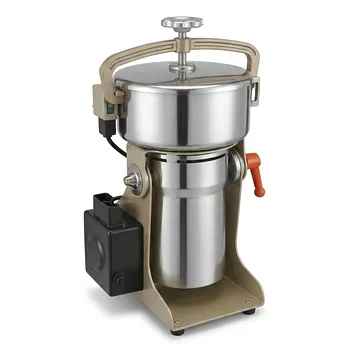
Multifunctional High Efficiency High Speed Laboratory Grinder
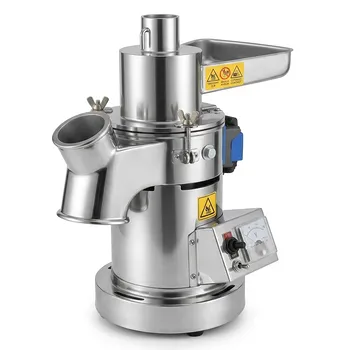
Continuous Feeding Grinder High Efficiency Pulverizer for Lab Sample Preparation

Small Laboratory Vibratory Sieve Shaker for Powder Gradation and Particle Size Analysis
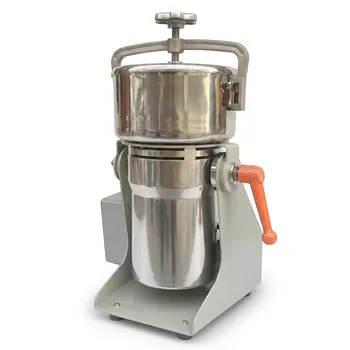
High Speed Laboratory Grinder Efficient Stainless Steel Powder Pulverizer Universal Material Science Mill for Sample Preparation
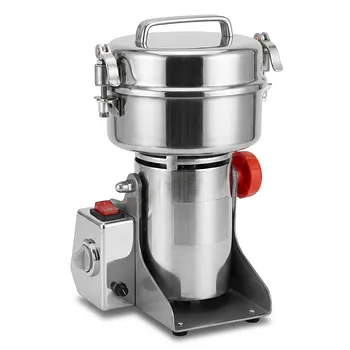
High Speed Laboratory Powder Grinder Small Batch Sample Preparation Mill
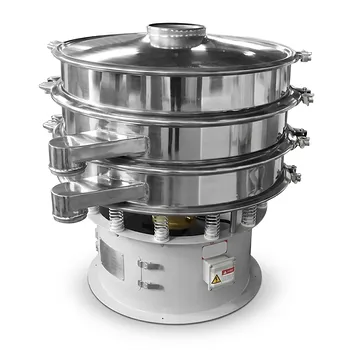
Three Dimensional Rotary Vibrating Sieve
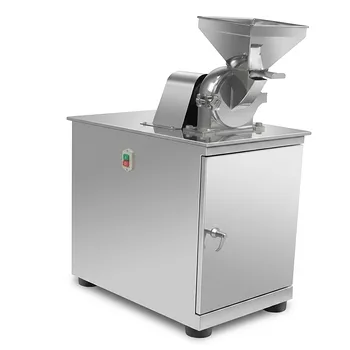
Universal Laboratory Pulverizer Grinder for Small Batch Powder Processing and Material Science Research

Small Laboratory Vibrating Sieve Shaker for Precise Particle Size Analysis
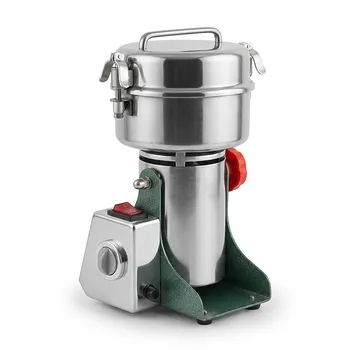
Small High-Speed Swing Grinder for Laboratory Sample Preparation
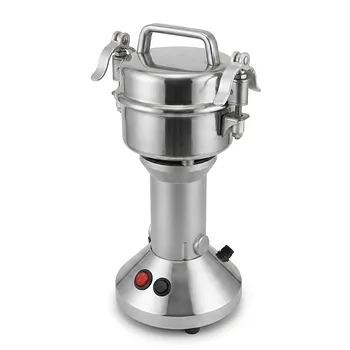
Continuous Feeding Grinding Mill for Dry Fibrous Tough and Hard Materials in Laboratory and Small Production
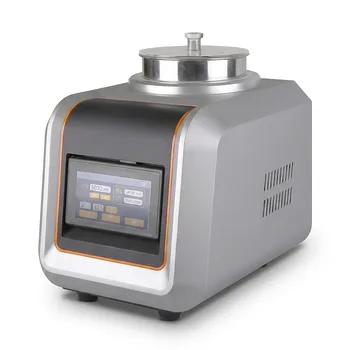
Laboratory Air Jet Sieving Machine for Fine Powder Particle Size Analysis and Deagglomeration
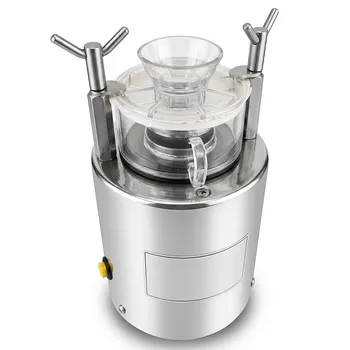
Laboratory Desktop Ultra Fine Powder Grinder High Speed Micronizing Pulverizer
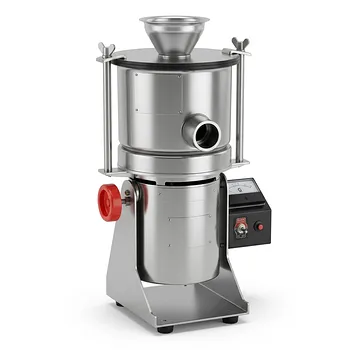
Laboratory Ultrafine Impact and Airflow Grinder for Precise Particle Size Control
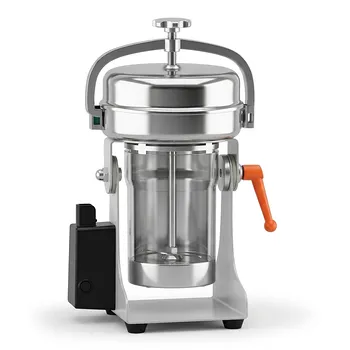
High Efficiency High Speed Grinder 2200W 25000 RPM Laboratory Sample Preparation
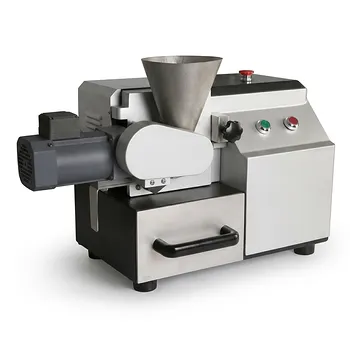
Laboratory Hammer Mill for Coal Quality Analysis and Brittle Mineral Grinding