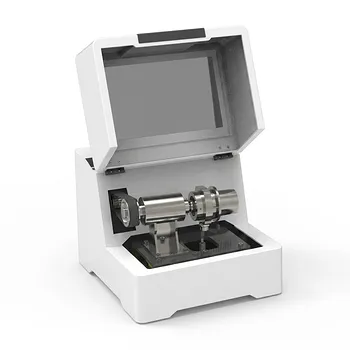
Why are alumina grinding balls selected for use in the crystalline glaze grinding process? Ensure Purity & Efficiency
Updated 5 months ago
The selection of alumina grinding balls for crystalline glazes is driven by a critical need for material purity and high-energy mechanical efficiency.
Alumina media possess exceptional hardness and wear resistance, allowing them to effectively pulverize tough glaze frits through high-energy impact and shear forces. Most importantly, their low wear rate and chemical compatibility prevent the introduction of foreign impurities that would otherwise disrupt the delicate chemical balance required for consistent crystal growth.
Crystalline glaze production requires a precise chemical environment to allow crystals to "bloom" during firing; alumina grinding balls ensure this environment remains uncontaminated while providing the mechanical force necessary for a uniform, fine-grained slurry.
Superior Mechanical Performance and Efficiency
High Hardness and Crushing Power
Alumina balls are selected because their hardness exceeds that of the glaze frits and mineral raw materials they are designed to process. This hardness differential allows the media to break down tough particles through efficient impact and shear forces during the wet grinding process.
Density and Energy Transfer
High-alumina media provide significant mass, which translates to high grinding energy during the rotation of the ball mill. This high density accelerates the reduction of particle size, shortening the milling time required to reach the desired glaze consistency.
Multi-Scale Impact Efficiency
Utilizing a combination of large, medium, and small diameter balls optimizes the filling efficiency within the mill. This variety ensures that particles of all sizes are targeted by the media, resulting in a more uniform particle size distribution in the final glaze powder.
Preservation of Chemical Purity
Minimizing Media Wear
During the high-speed homogenization of glaze slurries, some wear of the grinding media is inevitable. Alumina balls have an extremely low wear rate, which minimizes the volume of debris shed into the mixture compared to softer media.
Maintaining Phase Structural Stability
The chemical inertness of alumina ensures that it does not react with the glaze components during the milling process. This stability is vital for specialized systems, such as Al2O3-YAG:Ce composites, where maintaining optical purity and phase stability is a requirement for the final product.
The "Autogenous" Strategy
By selecting grinding media that match the chemical composition of the glaze’s own alumina content, manufacturers implement an "autogenous-like" strategy. Any trace wear debris that does enter the slurry is chemically identical to the matrix, preventing the introduction of foreign metallic or non-metallic ions.
Achieving Microstructural Uniformity
Breakdown of Powder Agglomerates
Extended stirring with high-hardness alumina balls uses mechanical collisions to break down stubborn powder agglomerates. This ensures that the glaze remains fluid and that all components are integrated at a molecular level.
Uniform Distribution of Additives
The grinding process ensures that organic additives, such as dispersants and binders, are uniformly coated onto the ceramic powder. This uniform coating is essential for producing dense sintered bodies with superior mechanical and aesthetic properties.
Understanding the Trade-offs
Equipment Wear and Tear
The high density and hardness of alumina balls, while beneficial for grinding speed, increase the mechanical stress on the ball mill’s internal lining. Operators must ensure that the mill's motor and lining are rated for high-alumina media to avoid premature equipment failure.
Cost vs. Performance
High-alumina balls generally carry a higher upfront cost than natural stone or lower-grade ceramic media. However, this is typically offset by their longer service life and the reduction in "off-spec" glaze batches caused by contamination.
Heat Generation
The high-energy impact of alumina media can generate significant heat during long milling cycles. In some temperature-sensitive glaze formulations, this may require cooling measures to prevent the premature activation of certain additives or binders.
How to Apply This to Your Process
Selecting the right media depends on your specific production goals and the sensitivity of your glaze formula.
- If your primary focus is maximum purity: Use high-purity (>99%) alumina balls to ensure that wear debris has zero impact on the crystal formation or color response.
- If your primary focus is grinding speed and throughput: Utilize a graduated charge of large and small alumina balls to maximize the contact points and impact energy within the mill.
- If your primary focus is mechanical property stability: Ensure the chemical composition of your grinding balls matches the alumina content in your raw powder to maintain a consistent chemical environment.
Choosing the right alumina media is the foundational step in mastering the complex and sensitive chemistry of crystalline ceramics.
Summary Table:
| Key Feature | Benefit for Crystalline Glazes |
|---|---|
| High Hardness | Efficiently pulverizes tough glaze frits and mineral raw materials. |
| Low Wear Rate | Prevents contamination to maintain the delicate chemical balance for crystal growth. |
| High Density | Increases energy transfer and reduces milling time for uniform slurries. |
| Chemical Inertness | Ensures no unwanted reactions occur, preserving phase stability and optical purity. |
| Sizing Variety | Optimizes filling efficiency to achieve a more uniform particle size distribution. |
Elevate Your Material Preparation with Professional Lab Solutions
Achieve flawless crystal growth and superior material purity with high-performance equipment from our team. We provide complete laboratory sample preparation solutions for material science, specializing in professional-grade powder processing and compaction equipment.
Our extensive product line is designed to meet the rigorous demands of ceramic and material research:
- Advanced Milling & Grinding: Planetary ball mills, jet mills, sand/bead mills, and cryogenic grinders for ultra-fine particle reduction.
- Precision Sizing: Sieve shakers (vibratory/air-jet) and a wide range of test sieves.
- Compaction Excellence: A full spectrum of hydraulic presses, including Cold/Warm Isostatic Presses (CIP/WIP), vacuum hot presses, and XRF pellet presses.
- Homogenization: Powder mixers and vacuum defoaming mixers for perfect slurry consistency.
Whether you are processing tough glaze frits or developing advanced Al2O3-YAG composites, our tools ensure consistent, contamination-free results every time. Contact us today to optimize your laboratory workflow!
References
- Keriman Pekkan, Yalçın Gün. EFFECT OF DIFFERENT METAL OXIDES ON VICKERS HARDNESS OF THE FRIT BASED CRYSTALLINE GLAZES. DOI: 10.17100/nevbiltek.368987
Mentioned Products
- Laboratory Nano High Energy Ball Mill Ultrafine Grinding Mechanical Alloying
- Vertical Semi Circular Planetary Ball Mill for Laboratory Precision Grinding
- Vertical Square Planetary Ball Mill for Laboratory Sample Preparation and Nanoscale Grinding
- High Energy Laboratory Planetary Ball Mill for Nano Grinding and Material Science Sample Preparation
- 8L Planetary Ball Mill for Laboratory Grinding and Sample Preparation
People Also Ask
- Role of Lab Ball Mills in Activating Coal Fly Ash for Cement: Enhance Reactivity and Strength
- What core function does a laboratory ball mill perform during phosphate ore grinding? Achieve Monomer Dissociation
- What are the primary functions of a laboratory ball mill or powder mixer when synthesizing multi-component standard reference materials?
- How does the size distribution of steel ball grinding media affect ore grindability? Optimize Energy & Lab Accuracy
- What role does a laboratory ball mill play in the study of chalcopyrite mineral liberation? Key for Recovery Success

Tech Team · PowderPreparation
Last updated on May 14, 2026
Related Products
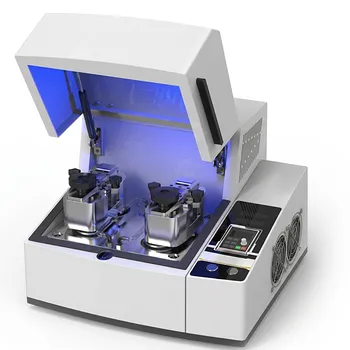
Laboratory Nano High Energy Ball Mill Ultrafine Grinding Mechanical Alloying
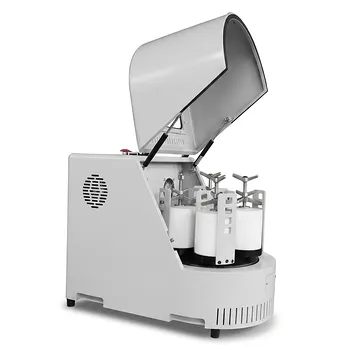
Vertical Semi Circular Planetary Ball Mill for Laboratory Precision Grinding
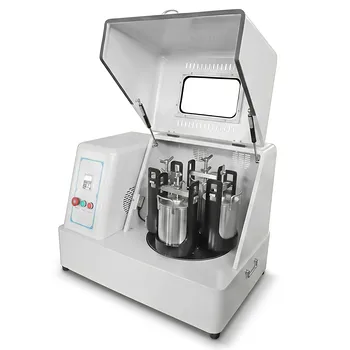
Vertical Square Planetary Ball Mill for Laboratory Sample Preparation and Nanoscale Grinding
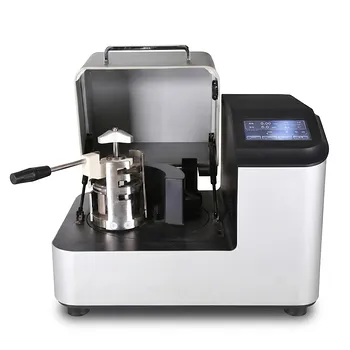
High Energy Laboratory Planetary Ball Mill for Nano Grinding and Material Science Sample Preparation
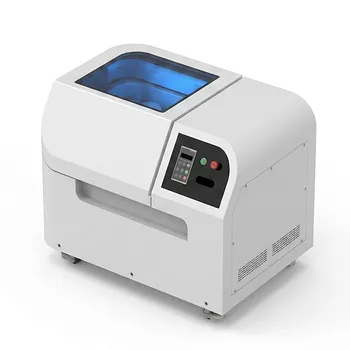
8L Planetary Ball Mill for Laboratory Grinding and Sample Preparation
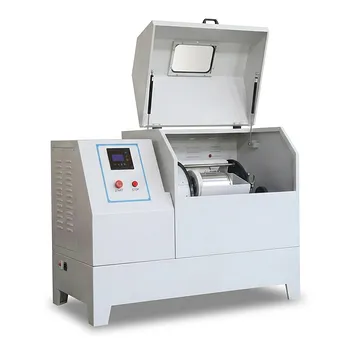
Heavy Duty Horizontal Planetary Ball Mill for Efficient Industrial Grinding and Sample Preparation
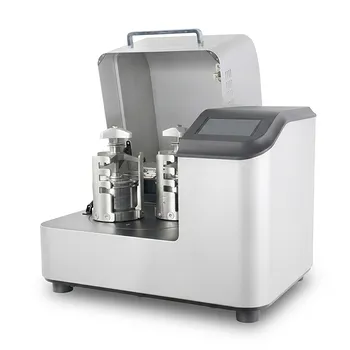
High Energy Planetary Ball Mill for Nano Scale Grinding and Mechanical Alloying
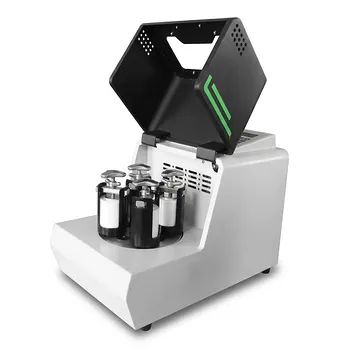
Miniature Planetary Ball Mill with Vacuum Grinding and High Efficiency for Laboratory Sample Preparation
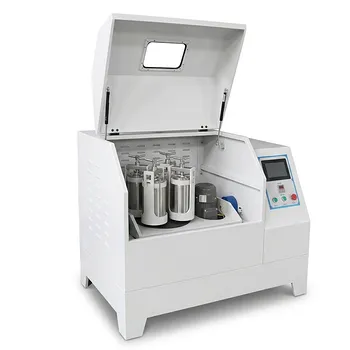
360° Rotating Omnidirectional Laboratory Planetary Ball Mill for Homogeneous Ultra-Fine Grinding and Mixing
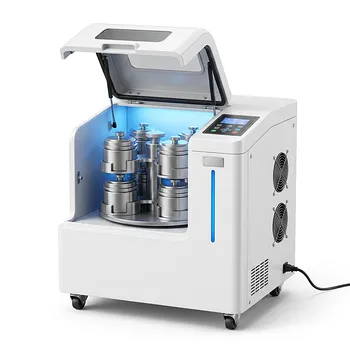
High Energy Omnidirectional Planetary Ball Mill 20L
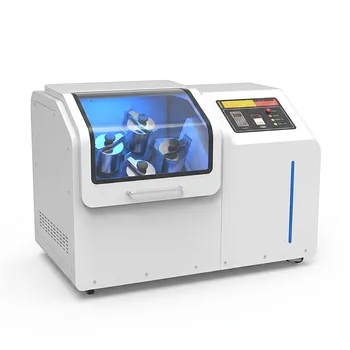
High Energy Omnidirectional Planetary Ball Mill 16L
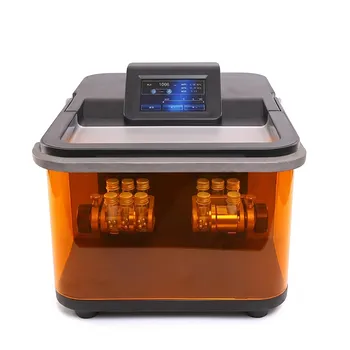
High Throughput Micro Ball Mill for Cryogenic Grinding and Laboratory Cell Disruption