Why use high-hardness steel for mechanochemical formaldehyde condensation? Boost Energy & Purity
Updated 4 months ago
High-hardness stainless steel grinding jars and balls are selected to ensure efficient energy transfer and maintain chemical purity during intense mechanochemical reactions. These materials provide the necessary durability to withstand high-frequency impacts while preventing the introduction of metallic wear debris that could compromise the formaldehyde condensation process.
The selection of high-hardness stainless steel is driven by the need for a stable, high-energy environment where mechanical force is efficiently converted into chemical activation. By prioritizing material density and wear resistance, researchers ensure that the reaction reaches its required energy threshold without contaminating the final product.
The Role of Energy Transfer in Mechanochemistry
Maximizing Kinetic Energy Output
The efficiency of a mechanochemical reaction depends directly on the kinetic energy transferred during collisions. High-density materials like stainless steel transfer significantly more energy upon impact compared to lower-density alternatives like Teflon.
Sustaining High-Frequency Impacts
Formaldehyde condensation often requires high-frequency cycles, sometimes reaching 20 cycles per second or more. High-hardness steel resists deformation under these extreme stresses, ensuring that the impact dynamics remain consistent throughout the duration of the experiment.
Facilitating Molecular-Level Contact
In solvent-free mechanochemical processes, the grinding media must physically force reactants into intimate molecular contact. The mechanical stress generated by high-hardness balls effectively breaks down particles to sub-micron levels, overcoming mass transfer limitations that traditional stirring cannot address.
Maintaining Chemical and Structural Integrity
Minimizing Metallic Contamination
Wear resistance is a critical factor for ensuring product purity. High-hardness alloys are specifically designed to resist the abrasive forces of grinding, which prevents excessive metal particles from leaching into the reaction and interfering with the iron-based catalysts or the final condensation products.
Ensuring Reproducible Collision Dynamics
The structural rigidity of hardened steel allows for a clearly defined collision environment. When used in flat-bottom jars, these balls follow predictable paths, allowing researchers to precisely estimate energy loss and impact velocity using sensors for more reliable data.
Preventing Equipment Fatigue
Long-duration experiments generate significant heat and mechanical fatigue. High-strength stainless steel maintains its structural integrity over time, ensuring that the energy density within the jar remains stable even during extended milling sessions at high speeds, such as 500 rpm.
Understanding the Trade-offs
While high-hardness stainless steel is the standard for high-energy milling, it is not without limitations. Despite its superior wear resistance, trace metal contamination is still possible during extremely long runs, which may be problematic for highly sensitive electronic-grade materials.
Additionally, stainless steel has limited chemical resistance to highly acidic or corrosive substrates. In such specific cases, the risk of chemical corrosion leading to media degradation may necessitate the use of even harder, chemically inert materials like tungsten carbide or zirconia, despite their higher cost.
Making the Right Choice for Your Goal
How to Apply This to Your Project
The selection of your grinding media should align with the specific energy requirements and purity standards of your formaldehyde condensation experiment.
- If your primary focus is maximum reaction speed: Utilize high-density stainless steel or tungsten carbide to ensure the highest possible kinetic energy transfer per impact.
- If your primary focus is product purity: Opt for high-hardness, wear-resistant steel and perform a pre-grinding "seasoning" run to remove loose surface particles before starting your actual experiment.
- If your primary focus is precise kinetic modeling: Ensure the use of standardized, high-strength stainless steel balls in a flat-bottom jar to maintain consistent, measurable collision dynamics.
Selecting the appropriate high-hardness media is the foundational step in transforming mechanical force into predictable and controllable chemical outcomes.
Summary Table:
| Feature | Benefit to Experiment | Impact on Results |
|---|---|---|
| High Material Density | Maximizes kinetic energy transfer | Increases reaction speed and efficiency |
| Extreme Hardness | Resists abrasive wear and deformation | Minimizes metallic contamination in products |
| Structural Rigidity | Maintains consistent collision dynamics | Ensures high reproducibility of experiments |
| Fatigue Resistance | Sustains high-frequency (20Hz+) cycles | Stable energy density during long runs |
Optimize Your Mechanochemical Workflow Today
Achieve superior precision in your material science research with our professional laboratory sample preparation solutions. At [Your Brand Name], we specialize in high-performance powder processing and compaction equipment designed to meet the most rigorous experimental standards.
Our extensive product line includes:
- Advanced Milling: Planetary ball mills, jet mills, and cryogenic grinders for ultra-fine particle reduction.
- Premium Media: High-hardness stainless steel, tungsten carbide, and zirconia grinding jars and balls.
- Compaction Excellence: A full spectrum of hydraulic presses, including Cold/Warm Isostatic Presses (CIP/WIP), vacuum hot presses, and XRF pellet presses.
- Material Handling: Precision sieve shakers, powder mixers, and defoaming mixers.
Whether you are conducting formaldehyde condensation experiments or developing advanced ceramics, our equipment ensures maximum energy efficiency and product purity.
Ready to upgrade your lab? Contact our technical experts today to find the perfect solution for your application!
References
- Maren Haas, Oliver Trapp. Mineral-mediated carbohydrate synthesis by mechanical forces in a primordial geochemical setting. DOI: 10.1038/s42004-020-00387-w
Mentioned Products
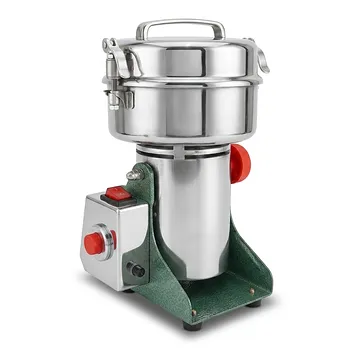
- Small High-Speed Laboratory Grinder for Powder Processing
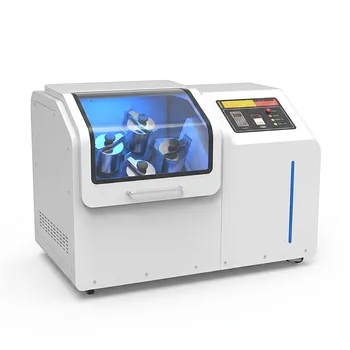
- High Energy Omnidirectional Planetary Ball Mill 16L
People Also Ask
- What role does a laboratory grinder play in the pretreatment of sunflower seed shell-based adsorbents? Boost Efficiency.
- How does a laboratory grinder or mill enhance the adsorption performance of agricultural waste materials? Boost Surface Area
- What is the role of laboratory grinding equipment in the preparation of waste glass powder for eco-friendly red bricks?
- Why is grinding equipment necessary for SnO2-Sb2O3 xerogels? Maximize surface area and photocatalytic activity.
- What is the primary role of grinding equipment in BLA preparation? Enhance Reactivity & Material Uniformity

Tech Team · PowderPreparation
Last updated on May 14, 2026