Why are tungsten carbide grinding jars a standard choice for geological samples? The Key to Ultra-Fine Precision
Updated 4 months ago
Tungsten carbide is the industry standard because of its unmatched hardness and high density. These properties allow it to efficiently pulverize geological materials to ultra-fine levels (below 200 mesh) while maintaining superior sample representativeness. In professional geochemistry, it is preferred because it minimizes the introduction of silica and other common contaminants that interfere with critical trace element analyses.
Core Takeaway: Tungsten carbide grinding jars provide the extreme impact energy and wear resistance required to produce ultra-fine powders quickly. While they introduce trace amounts of tungsten and cobalt, this contamination is often less disruptive to geological data than the silica introduced by softer alternatives like agate.
The Mechanics of Extreme Hardness
Efficient Pulverization of Hard Materials
Tungsten carbide (WC) possesses extreme hardness that allows it to crush hard ferroalloys and geological ores with ease. This hardness ensures the media can grind samples down to a fineness of below 200 mesh (75 microns) or even smaller (90μm to 125μm) for copper ore refinement.
Superior Wear Resistance
The material’s inherent wear resistance ensures that the grinding jars and balls do not degrade significantly during high-energy processes. By minimizing the loss of the grinding media itself, the jar maintains the chemical purity and compositional accuracy of the geological sample.
Handling High-Intensity Collisions
Geological samples often require high-energy ball milling to reach ultra-fine states. Tungsten carbide-cobalt (WC-Co) media can withstand the high-intensity collisions inherent in these processes without fracturing or shedding excessive debris.
Density and Kinetic Energy
Generating High Impact Energy
Tungsten carbide is a high-density material, which is critical for generating the impact energy needed for crushing hard particles like pyrite. Higher density means more kinetic energy is transferred to the sample with every rotation or vibration of the mill.
Reduced Processing Duration
Because of the high energy transfer, grinding times are significantly shortened. Achieving uniform particle size distribution for quantitative phase analysis can often be accomplished in as little as 10 minutes, reducing the window for potential external contamination.
Consistency in Long Milling Cycles
Even during prolonged milling cycles (some lasting up to 30 hours), tungsten carbide maintains its structural integrity. This consistency ensures that the energy levels remain stable throughout the refinement of high-hardness tungsten-based hard materials.
Chemical Purity and Sample Representativeness
Managing Cross-Contamination
While no grinding media is perfectly inert, tungsten carbide is chosen because its contamination profile (trace W and Co) is often preferable. In many trace element analyses, the silica contamination introduced by agate grinding is much more detrimental to the data than the trace metallic additions from carbide.
Material Compatibility
For samples that already contain tungsten or cobalt, such as tungsten alloys or high-entropy carbides, WC-Co jars are the ideal choice. Any minor wear from the media is chemically compatible with the material system, effectively guaranteeing the purity of the synthesized powder.
Chemical Stability
Tungsten carbide exhibits excellent chemical stability during the grinding of reactive ores like copper. This ensures that the grinding process does not trigger unwanted chemical reactions that could alter the mineralogical state of the sample.
Understanding the Trade-offs
The Trace Element Dilemma
The primary trade-off is the introduction of Tungsten (W) and Cobalt (Co) into the sample. If these specific elements are the primary focus of your geological study, tungsten carbide may not be suitable despite its physical efficiency.
Fragility and Thermal Shock
Despite its hardness, tungsten carbide is relatively brittle compared to steel. It can be susceptible to damage from mechanical shock or extreme thermal gradients if not handled with care by lab technicians.
Cost vs. Performance
Tungsten carbide is significantly more expensive than stainless steel or chrome steel. However, the investment is usually justified by the reduced processing time and the ability to reach ultra-fine particle sizes that softer, cheaper materials cannot achieve.
How to Apply This to Your Project
Making the Right Choice for Your Goal
- If your primary focus is ultra-fine particle size (<200 mesh): Use tungsten carbide jars to ensure efficient pulverization of hard minerals within short timeframes.
- If your primary focus is trace element analysis (excluding W and Co): Choose tungsten carbide over agate to avoid significant silica contamination and ensure sample representativeness.
- If your primary focus is material synthesis of tungsten alloys: Use WC-Co media to maintain chemical compatibility and prevent the introduction of foreign metallic impurities.
- If your primary focus is high-speed quantitative phase analysis: Leverage the high density of tungsten carbide to achieve uniform particle distribution in under 15 minutes.
Ultimately, tungsten carbide serves as the definitive tool for geologists who require maximum grinding energy and minimal interference with standard trace element data.
Summary Table:
| Feature | Advantage | Ideal Application |
|---|---|---|
| Extreme Hardness | Pulverizes hard ores to < 200 mesh | Ferroalloys, copper ore, & hard minerals |
| High Density | Higher kinetic energy & faster processing | High-speed quantitative phase analysis |
| Wear Resistance | Maintains chemical purity/representativeness | Long milling cycles (up to 30 hours) |
| Chemical Profile | Avoids silica contamination from agate | Trace element analysis (excluding W/Co) |
Elevate Your Geological Research with Precision Sample Prep
Achieving representative, ultra-fine powders requires equipment that can handle the toughest materials without compromising purity. At [Brand Name], we provide complete laboratory sample preparation solutions for material science, specializing in high-performance powder processing and compaction equipment.
Whether you need to crush raw ore or achieve sub-micron particle sizes, our extensive line has you covered:
- Milling & Grinding: High-density tungsten carbide jars for our planetary ball mills, jet mills, and cryogenic grinders.
- Crushing & Sizing: Heavy-duty jaw/roll crushers and precision sieve shakers (vibratory/air-jet).
- Compaction & Pelletizing: A full spectrum of hydraulic presses, including CIP/WIP, XRF pellet presses, and vacuum hot presses.
Our solutions are designed to minimize contamination and maximize your lab's throughput. Contact our experts today to find the perfect equipment configuration for your specific geological or material science applications!
References
- Philip Robinson. <scp>GGR</scp> Handbook of Rock and Mineral Analysis Chapter 2 (Part 1) Analysis of Geological Materials – 1: Sample Preparation Methods. DOI: 10.1111/ggr.12555
Mentioned Products
- Laboratory Disc Mill for Ore and Mineral Sample Preparation
- Laboratory Disc Mill for Fine Sample Preparation of Hard and Brittle Materials
- Laboratory Mortar Grinder for Sample Preparation and Cryogenic Powder Homogenization
- Small High-Speed Laboratory Grinder for Rapid Sample Preparation
- Small High-Speed Grinder for Efficient Laboratory Sample Preparation
People Also Ask
- What is the primary function of a laboratory disc mill for oyster shells? Boost Reactivity & Analytical Precision
- What is the purpose of using a laboratory mill to grind dried precipitates? Optimize TiO2/AuNRs Catalyst Homogeneity
- What is the function of a laboratory mill in Cassia tora L. seed analysis? Master Precision Thermal Data Prep.
- What role does a laboratory mill play in the study of lignite coal co-combustion? Optimizing Fuel Blends and Reactivity
- What function does a laboratory mill serve in corn starch saccharification experiments? Optimize Surface Area & Reactions

Tech Team · PowderPreparation
Last updated on Jun 03, 2026
Related Products
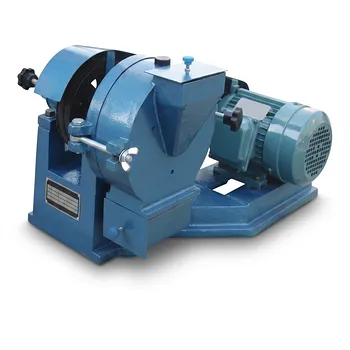
Laboratory Disc Mill for Ore and Mineral Sample Preparation
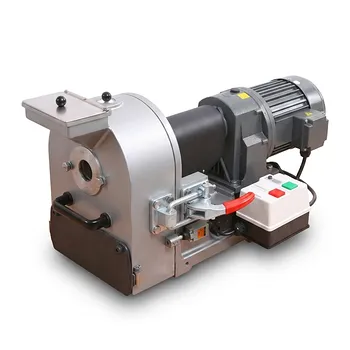
Laboratory Disc Mill for Fine Sample Preparation of Hard and Brittle Materials
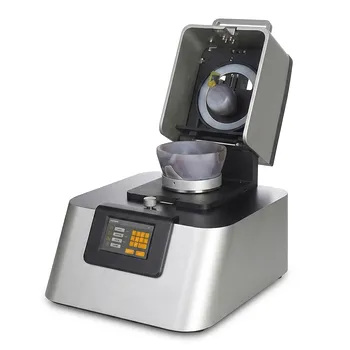
Laboratory Mortar Grinder for Sample Preparation and Cryogenic Powder Homogenization
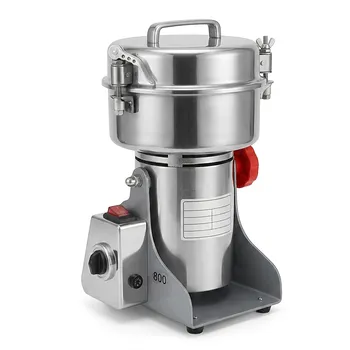
Small High-Speed Laboratory Grinder for Rapid Sample Preparation
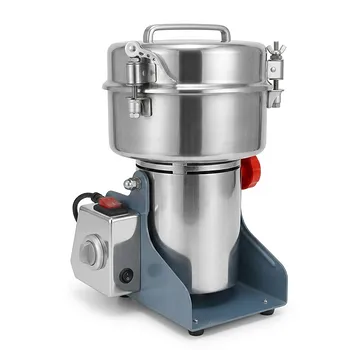
Small High-Speed Grinder for Efficient Laboratory Sample Preparation
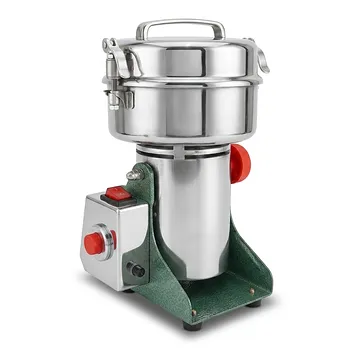
Small High-Speed Laboratory Grinder for Powder Processing