Why are zirconia grinding balls preferred for AlxCrCuFeNiTi HEA powders? Optimize Purity and Milling Energy
Updated 4 months ago
Zirconia (ZrO2) grinding balls are preferred for AlxCrCuFeNiTi high-entropy alloy (HEA) production due to their unique combination of extreme hardness and high density. This provides the necessary kinetic energy to fracture and refine powders while maintaining a low wear rate that prevents chemical contamination of the final alloy.
Zirconia media enables the mechanical alloying of complex, high-melting-point elements by providing consistent impact force without introducing impurities. Its durability ensures that the structural and chemical integrity of the AlxCrCuFeNiTi powder is preserved through long-duration, high-energy milling cycles.
Maximizing Mechanical Energy for Alloying
High-energy ball milling relies on the transfer of kinetic energy from the grinding media to the metal powders. Zirconia is uniquely suited for this demanding environment.
Superior Kinetic Energy Transfer
Zirconia balls possess a high density and hardness that allow them to deliver intense impact and shear forces during milling. This energy is essential for the pulverization of raw materials and the refinement of particle sizes into the sub-micron range.
Handling High-Melting-Point Elements
The AlxCrCuFeNiTi alloy contains elements like Chromium (Cr) and Titanium (Ti), which have significantly high melting points. Zirconia provides the mechanical energy required to force these disparate elements into a solid solution reaction, ensuring a homogenous alloy.
Breaking Down Agglomerates
During the milling process, metal powders often form hard agglomerates that resist refinement. The high impact force of zirconia media effectively breaks these clusters, leading to a more uniform grain size and better overall powder quality.
Safeguarding Chemical Purity
In high-entropy alloys, even minor levels of contamination can drastically alter the material's properties. Zirconia acts as an inert and highly resistant medium to prevent this.
Exceptional Wear Resistance
Zirconia is known for its excellent toughness and a very low wear rate, even during 180-minute high-energy cycles. Because the media does not easily degrade, it prevents media debris from mixing with the AlxCrCuFeNiTi powder.
Chemical Stability and Biocompatibility
Zirconia is chemically stable, meaning it does not react with the metallic elements during the high-heat environment of milling. This is critical for maintaining the specific stoichiometry of the high-entropy alloy and preventing unwanted metallic impurities.
Consistent Performance over Long Cycles
High-energy ball milling often requires prolonged processing times to achieve the desired phase transitions. Zirconia maintains its spherical shape and mass throughout these cycles, ensuring that the impact force remains constant from start to finish.
Understanding the Trade-offs
While zirconia is a premium choice, it is important to understand the limitations and requirements of using this media in HEA production.
Thermal Management Challenges
The high-energy impacts of zirconia generate significant localized heat during the milling process. If not managed through rest cycles or cooling systems, this heat can lead to unwanted cold welding of the powder to the balls or the vial walls.
Cost and Media Ratios
Zirconia is more expensive than steel or alumina media, requiring a higher initial investment. Furthermore, achieving the correct ball-to-powder ratio is critical; an incorrect ratio can lead to inefficient alloying or excessive heat regardless of the media quality.
Mechanical Shock Limits
While tough, zirconia can be susceptible to thermal shock or fracturing if subjected to extreme, instantaneous temperature changes. Proper operating procedures must be followed to ensure the longevity of the grinding media.
Applying This to Your Alloy Synthesis
Choosing the right milling parameters is as important as choosing the media itself to ensure the best results for AlxCrCuFeNiTi powders.
- If your primary focus is Maximum Purity: Prioritize Yttria-stabilized Zirconia (YSZ) and use a high ball-to-powder ratio to minimize the total milling time required.
- If your primary focus is Grain Refinement: Utilize smaller diameter zirconia balls to increase the number of contact points and shear forces within the milling vial.
- If your primary focus is Solid Solution Formation: Ensure high-energy settings are used with periodic "cool down" intervals to prevent the alloy from adhering to the media.
By leveraging the hardness and stability of zirconia, researchers can successfully synthesize complex high-entropy alloys while maintaining the strict chemical tolerances required for advanced engineering applications.
Summary Table:
| Feature | Advantage for HEA Synthesis | Key Benefit |
|---|---|---|
| High Density & Hardness | Delivers maximum kinetic energy and shear force | Efficient pulverization of high-melting elements (Cr, Ti) |
| Superior Wear Resistance | Minimal media degradation during long cycles | Prevents powder contamination and preserves purity |
| Chemical Stability | Inert response to metallic elements at high heat | Maintains exact stoichiometry and alloy integrity |
| Toughness | Resists fracturing under high-energy impacts | Consistent milling performance and grain refinement |
Elevate Your Material Synthesis with Precision Equipment
Achieving the perfect high-entropy alloy requires more than just the right media; it requires a complete, high-performance laboratory setup. At [Your Brand Name], we provide end-to-end laboratory sample preparation solutions tailored for material science and advanced powder processing.
Whether you are synthesizing complex HEAs or processing advanced ceramics, our extensive equipment line supports your research at every stage:
- Advanced Milling: Planetary ball mills, jet mills, and cryogenic grinders for sub-micron refinement.
- Size Classification: Vibratory and air-jet sieve shakers with precision test sieves.
- Expert Mixing: High-efficiency powder and defoaming mixers for perfect homogeneity.
- Superior Compaction: A full spectrum of hydraulic presses, including Cold/Warm Isostatic Presses (CIP/WIP), vacuum hot presses, and XRF pellet presses.
Ready to optimize your powder processing workflow? Contact our technical experts today to find the ideal solution for your laboratory needs!
References
- Enrique Rocha‐Rangel, Eddie N. Armendáriz-Mireles. Manufactura y caracterización de aleaciones de alta entropía. DOI: 10.18779/ingenio.v5i2.519
Mentioned Products
- Vertical Semi Circular Planetary Ball Mill for Laboratory Precision Grinding
- High Energy Laboratory Planetary Ball Mill for Nano Grinding and Material Science Sample Preparation
- Heavy Duty Horizontal Planetary Ball Mill for Efficient Industrial Grinding and Sample Preparation
- Vertical Square Planetary Ball Mill for Laboratory Sample Preparation and Nanoscale Grinding
- 8L Planetary Ball Mill for Laboratory Grinding and Sample Preparation
People Also Ask
- What role does a planetary ball mill play in the synthesis of Li6PS5Cl (LPSCl)? Unlock High Ionic Conductivity
- Why is a planetary ball mill essential for SiBCN-rGO wet-spinning? Achieve Superior Dispersion and Spinnability
- Why is an intermittent grinding process required for perovskites in a planetary ball mill? Ensure Stability & Purity
- Why is a planetary ball mill required for PET micronization? Ensure Accurate Chemical Analysis of Reprocessed PET
- How does mechanized planetary ball milling compare to manual agate grinding? Optimize sulfide standard material precision.

Tech Team · PowderPreparation
Last updated on Jun 03, 2026
Related Products
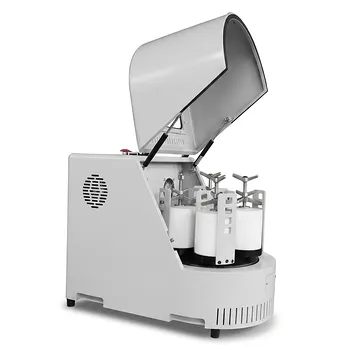
Vertical Semi Circular Planetary Ball Mill for Laboratory Precision Grinding
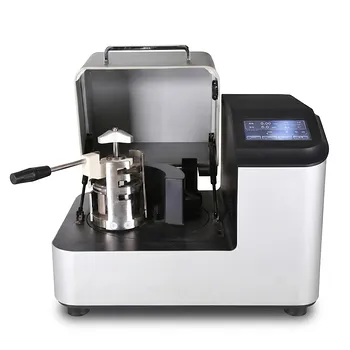
High Energy Laboratory Planetary Ball Mill for Nano Grinding and Material Science Sample Preparation
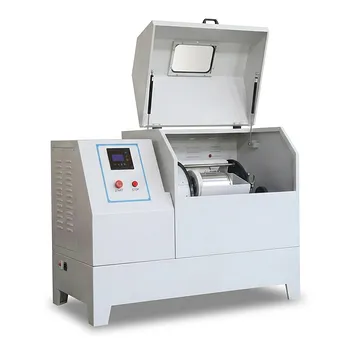
Heavy Duty Horizontal Planetary Ball Mill for Efficient Industrial Grinding and Sample Preparation
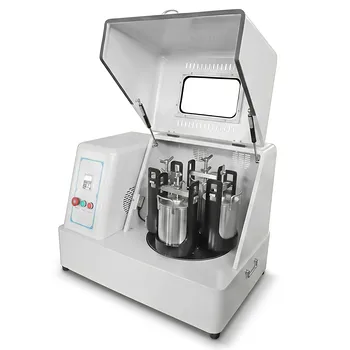
Vertical Square Planetary Ball Mill for Laboratory Sample Preparation and Nanoscale Grinding
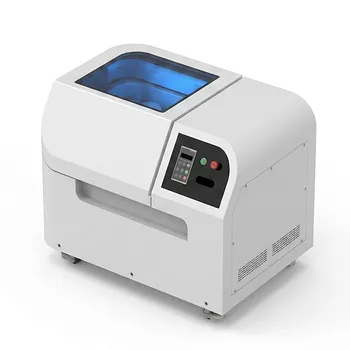
8L Planetary Ball Mill for Laboratory Grinding and Sample Preparation
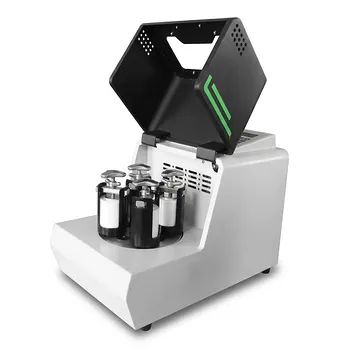
Miniature Planetary Ball Mill with Vacuum Grinding and High Efficiency for Laboratory Sample Preparation
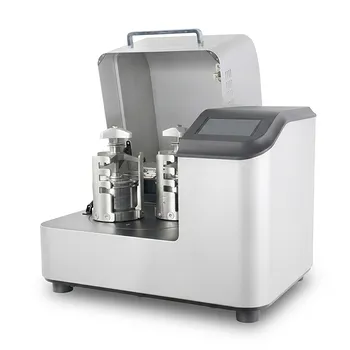
High Energy Planetary Ball Mill for Nano Scale Grinding and Mechanical Alloying
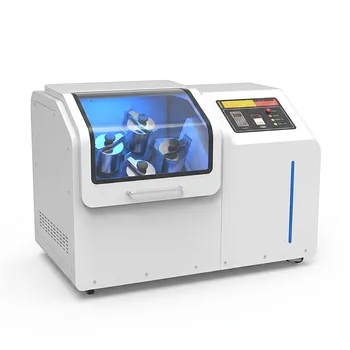
High Energy Omnidirectional Planetary Ball Mill 16L
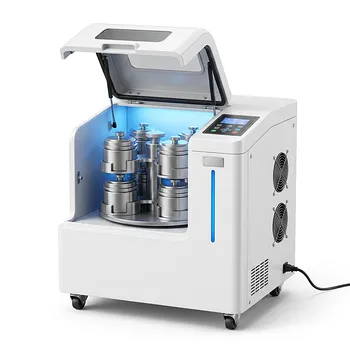
High Energy Omnidirectional Planetary Ball Mill 20L
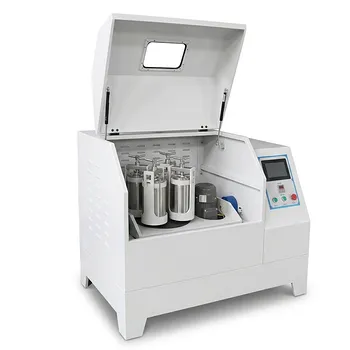
360° Rotating Omnidirectional Laboratory Planetary Ball Mill for Homogeneous Ultra-Fine Grinding and Mixing