Why are high-hardness stainless steel grinding jars and balls necessary for milling AlZrTi alloy powders? Key Benefits
Updated 4 months ago
High-hardness stainless steel grinding media are essential for AlZrTi alloys because they provide the intense mechanical impact energy required to overcome the material's inherent toughness. These high-energy collisions facilitate the fragmentation and grain refinement necessary to transform raw powders into a homogenous alloy. Without sufficient hardness, the media would fail to transfer enough kinetic energy to induce the cycles of deformation and fracturing required for successful milling.
High-hardness stainless steel serves as the mechanical engine for alloying AlZrTi, ensuring efficient energy transfer for particle refinement while managing the chemical profile of the final powder. It balances the need for high-frequency impact durability with a specific contamination profile that can actually enhance the alloy's mechanical properties.
Overcoming Material Resistance and Toughness
Mechanical Energy and Impact Forces
AlZrTi alloys possess significant inherent toughness and plasticity that resist simple grinding. High-hardness stainless steel media provide the necessary impact forces to crush these particles effectively. Without this hardness, the grinding energy would be absorbed by the media itself rather than being directed into the powder.
The Foundation of Grain Refinement
Efficient fragmentation is only possible when the collision energy exceeds the deformation resistance of the alloy. The high-energy collisions between the balls and the jar walls serve as the physical foundation for grain refinement. This process reduces the particle size to the micro or nano-scale, which is critical for the final material's performance.
Sustaining High-Intensity Milling
High-energy ball milling often requires extended processing times, sometimes lasting up to 45 hours or more. High-strength jars and balls are required to withstand the continuous, high-frequency mechanical stress of these impacts. Standard materials would degrade or fail structurally under such rigorous conditions.
Driving the Mechanical Alloying Process
Cycles of Cold-Welding and Fracturing
Mechanical alloying is not a simple mixing process; it relies on repeated cycles of plastic deformation, cold welding, and fracturing. High-hardness media ensure that each impact is powerful enough to bond different metallic particles together and then break them apart. This continuous cycle eventually leads to a completely homogenous precursor alloy.
Efficient Kinetic Energy Transfer
The high mass and hardness of steel balls maximize the transfer of kinetic energy to the powder particles. This energy is what drives the diffusion of elements like Zirconium and Titanium into the Aluminum matrix. Lower-hardness media would result in incomplete alloying and a non-uniform distribution of elements.
Maintaining Particle Uniformity
High-hardness media help ensure that any reinforcement particles or alloying elements are adequately crushed and uniformly distributed. This prevents the formation of clusters or "dead zones" within the powder. Consistency in the milling environment is key to achieving chemical precision in the final composite.
Balancing Purity and Strengthening Phases
Controlling Media Wear
Using hardened materials significantly reduces the rate of abrasive wear on the grinding media. While some material loss is inevitable, high wear resistance minimizes the volume of impurities introduced into the high-purity composite powders. This ensures that the bulk chemical composition remains within the desired specifications.
The Role of Trace Iron Contamination
Unlike many other milling applications where iron (Fe) is a detrimental contaminant, it plays a unique role here. Trace amounts of iron introduced by the stainless steel media can form strengthening phases during subsequent heat treatments. This unintended "contamination" can actually improve the overall mechanical properties of the AlZrTi material.
Material Compatibility
Stainless steel offers excellent material compatibility when processing alloys that may eventually interact with iron-group elements. It provides a cost-effective solution for high-energy milling without the extreme expense of specialized ceramic or exotic metal media. This makes it a pragmatic choice for industrial-scale alloy development.
Understanding the Trade-offs
Contamination vs. Reinforcement
While trace iron can be beneficial, users must monitor the levels of chromium and nickel introduced by the stainless steel. If the application requires absolute high purity with no interstitial elements, even the low wear of hardened steel may be problematic. You must balance the mechanical benefits of Fe-strengthening against the strict purity requirements of your specific alloy grade.
Heat Generation and Energy Loss
High-energy milling generates significant heat, which can lead to unwanted phase transformations or excessive cold welding (sticking) to the media. The high-frequency impacts of hard steel balls are efficient, but they also require careful monitoring of the ball-to-powder weight ratio. Using an incorrect ratio, such as one too low, can lead to insufficient collision frequency and wasted energy.
How to Apply This to Your Project
Selecting Media Based on Your Objectives
- If your primary focus is maximum grain refinement: Use high-hardness hardened steel balls with a 10:1 ball-to-powder ratio to maximize collision frequency and impact energy.
- If your primary focus is mechanical property enhancement: Utilize stainless steel media specifically to leverage the trace iron pickup for the formation of strengthening phases during heat treatment.
- If your primary focus is preventing powder sticking: Monitor the milling duration and consider process control agents if the high-energy impacts lead to excessive cold welding on the jar walls.
- If your primary focus is chemical precision: Regularly calibrate your milling time and media wear rates to ensure that the introduction of Cr, Ni, and Fe remains within your alloy's tolerance limits.
By selecting high-hardness stainless steel, you ensure the mechanical energy necessary to transform tough aluminum precursors into high-performance AlZrTi alloys.
Summary Table:
| Key Factor | Benefit for AlZrTi Milling |
|---|---|
| Energy Transfer | Maximizes kinetic energy to overcome material toughness and resistance. |
| Grain Refinement | Facilitates fragmentation to achieve micro or nano-scale particle uniformity. |
| Process Durability | Withstands high-intensity mechanical stress for 45+ hours of milling. |
| Mechanical Alloying | Drives the essential cycles of plastic deformation, cold-welding, and fracturing. |
| Trace Strengthening | Intentional iron (Fe) introduction can act as a strengthening phase in the alloy. |
Elevate Your Material Research with Expert Powder Solutions
Achieving the perfect AlZrTi alloy requires more than just raw materials—it demands high-precision equipment. As specialists in material science sample preparation, we provide a complete line of powder processing and compaction equipment designed for high-energy applications.
Whether you need planetary ball mills, jet mills, or high-hardness grinding jars to ensure efficient energy transfer, or Cold/Warm Isostatic Presses (CIP/WIP) and vacuum hot presses for superior compaction, we have the solution. Our extensive range also includes:
- Crushers: Jaw and roll crushers for primary reduction.
- Sieve Shakers: Vibratory and air-jet models for precise particle sizing.
- Mixers: Powder and defoaming mixers for homogeneity.
- Lab Presses: Standard, XRF pellet, and customized hydraulic presses.
Ready to optimize your milling and compaction workflow? Contact us today to discuss your project requirements!
References
- Orsolya Molnárová, P. Málek. Bimodal Microstructure in an AlZrTi Alloy Prepared by Mechanical Milling and Spark Plasma Sintering. DOI: 10.3390/ma13173756
Mentioned Products
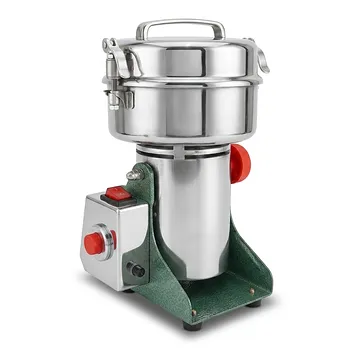
- Small High-Speed Laboratory Grinder for Powder Processing
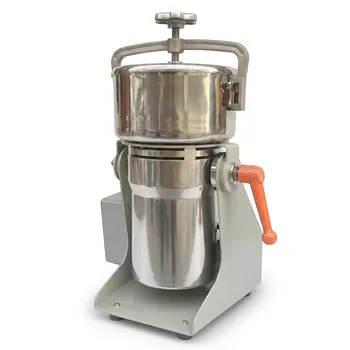
- High Speed Laboratory Grinder Efficient Stainless Steel Powder Pulverizer Universal Material Science Mill for Sample Preparation
- High Energy Omnidirectional Planetary Ball Mill 16L
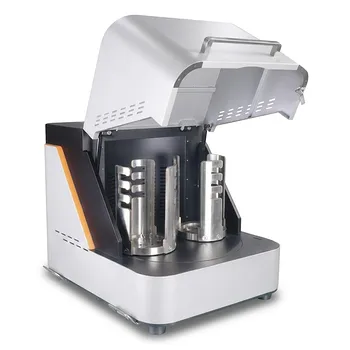
- High Energy Laboratory Planetary Ball Mill for Nano Grinding and Colloidal Mixing of Hard and Brittle Materials
- Multifunctional High Efficiency High Speed Laboratory Grinder
People Also Ask
- What role does a laboratory grinder play in the pretreatment of sunflower seed shell-based adsorbents? Boost Efficiency.
- How does a laboratory grinder or mill enhance the adsorption performance of agricultural waste materials? Boost Surface Area
- What is the role of laboratory grinding equipment in the preparation of waste glass powder for eco-friendly red bricks?
- Why is grinding equipment necessary for SnO2-Sb2O3 xerogels? Maximize surface area and photocatalytic activity.
- What is the primary role of grinding equipment in BLA preparation? Enhance Reactivity & Material Uniformity

Tech Team · PowderPreparation
Last updated on Jun 03, 2026
Related Products
Small High-Speed Laboratory Grinder for Powder Processing
High Speed Laboratory Grinder Efficient Stainless Steel Powder Pulverizer Universal Material Science Mill for Sample Preparation

High Energy Omnidirectional Planetary Ball Mill 16L
High Energy Laboratory Planetary Ball Mill for Nano Grinding and Colloidal Mixing of Hard and Brittle Materials
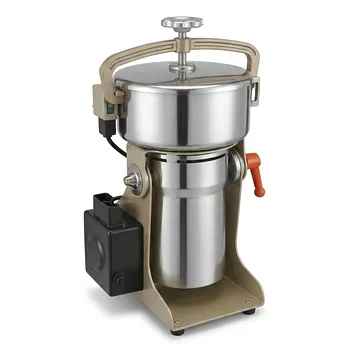
Multifunctional High Efficiency High Speed Laboratory Grinder
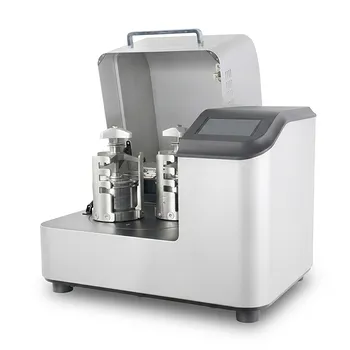
High Energy Planetary Ball Mill for Nano Scale Grinding and Mechanical Alloying
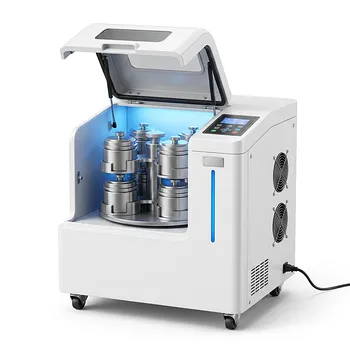
High Energy Omnidirectional Planetary Ball Mill 20L
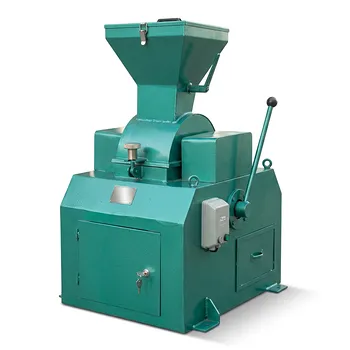
Laboratory Sealed Hammer Blade Crusher Divider for High Hardness Sample Preparation
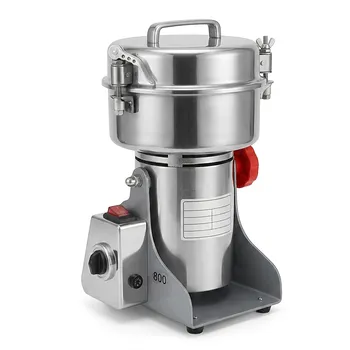
Small High-Speed Laboratory Grinder for Rapid Sample Preparation
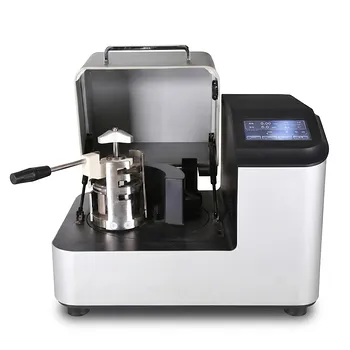
High Energy Laboratory Planetary Ball Mill for Nano Grinding and Material Science Sample Preparation
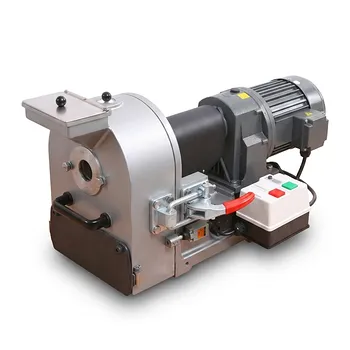
Laboratory Disc Mill for Fine Sample Preparation of Hard and Brittle Materials
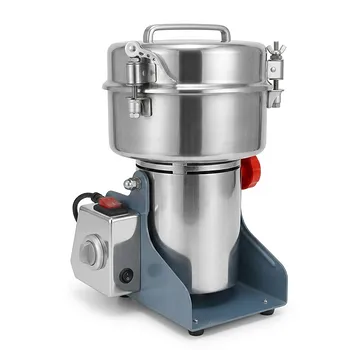
Small High-Speed Grinder for Efficient Laboratory Sample Preparation