All Questions
Why Are Zirconia Grinding Balls Preferred For Lead-Free Piezoceramics? Ensure High Purity And Mechanical Efficiency.
Discover why zirconia media is ideal for lead-free piezoceramics, ensuring high purity, low wear, and optimal electrical properties during grinding.
Why Use High-Purity Alumina Grinding Balls And Jars For Alumina Ceramics? Ensure Zero Contamination & Material Purity.
Learn why matching alumina grinding media with alumina ceramics prevents contamination and preserves mechanical, electrical, and optical properties.
Why Grind Lime-Pozzolan Specimens For Tg/Dta For 3 Mins? Master Sample Prep For High-Precision Thermal Analysis.
Learn why 3-minute planetary ball mill grinding is crucial for lime-pozzolan TG/DTA to improve homogeneity and quantitative accuracy.
Why Use Lab Grinders For Eggshell Water Filtration? Maximize Surface Area And Reactivity For Superior Purification.
Learn how grinding eggshells increases surface area, improves pH neutralization, and enhances heavy metal adsorption for advanced water treatment.
Why Are Silica Grinding Balls Preferred As The Grinding Media For Milling Kaolin And Sawdust Mixtures? Maximize Purity
Learn why silica grinding balls are essential for kaolin milling to ensure chemical purity, prevent contamination, and optimize ceramic composites.
What Is The Role Of Lab-Grade Grinding In Biomass Soil Modification? Unlock Full Material Reactivity & Integration
Discover how precision grinding equipment enhances biomass pretreatment for soil modification by increasing surface area and chemical reactivity.
Why Are Zirconia Grinding Balls And Jars Preferred For Ρ-Alumina? Ensure High Purity & Efficiency In Wet Grinding
Learn why zirconia is the top choice for grinding ρ-alumina. High density and wear resistance ensure material purity and electrical insulation.
Why Are High-Purity Zirconia Grinding Media Considered Essential Consumables In High-Performance Ceramic Processing?
Discover why high-purity zirconia media are vital for ceramic processing, offering superior efficiency, wear resistance, and material purity.
How Does High-Speed Grinding Equipment Facilitate The Preparation Of Lignin Binders? Optimize Powder For Stronger Bonds
Learn how high-speed grinding optimizes lignin binders by refining particle size, enhancing dispersibility, and strengthening biomass solid bridges.
Why Are High-Purity Zirconia Grinding Balls Preferred For Milling Composite Oxide Powders? Ensure Nano-Scale Purity
Discover how high-purity zirconia media ensures chemical neutrality and high kinetic energy for sub-micron particle refinement in oxide milling.
What Role Do Grinders And Sieve Shakers Play In Psp Fiber Pretreatment? Enhance Surface Area And Reaction Efficiency
Learn how industrial grinders and sieve shakers refine plantain pseudo-stem (PSP) fibers to boost chemical efficiency and material performance.
What Are The Technical Advantages Of Using A Vertical Ball Mill For Mwcnt Epoxy Dispersion Vs. Solution-Based Methods?
Learn why vertical ball milling is superior for MWCNT dispersion, eliminating solvents to ensure zero-porosity and high-strength epoxy composites.
Why Are Silicon Nitride Grinding Balls Selected For Sialon Ceramics? Ensure Purity And Mechanical Integrity.
Learn how silicon nitride grinding balls provide homogeneous grinding and eliminate contamination during high-performance SiAlON ceramic production.
What Capabilities Must Lab-Scale Grinding Equipment Possess For Ptfe Depolymerization? Master Molecular Control
Discover the critical features of lab grinding equipment for PTFE depolymerization, focusing on high energy output and precision control.
Why Grind Coal To -60 Mesh For Humic Acid Extraction? Maximize Surface Area & Chemical Reactivity For Higher Yields
Learn why -60 mesh grinding is vital for humic acid extraction: it maximizes surface area and reactive sites for efficient chemical conversion.
Why Are Zirconia Grinding Balls Preferred For Srtio3 Milling? Ensure High Purity & Precise Particle Size Refinement
Discover how zirconia grinding balls optimize SrTiO3 milling by providing high-impact energy while preserving critical dielectric and chemical purity.
Why Are Agate Grinding Jars And Balls Selected For Silver Oxide? Ensure Purity And Prevent Thermal Reduction
Learn why agate grinding media is essential for milling silver oxide: it prevents thermal reduction, ensures chemical inertness, and maintains purity.
What Role Does Mechanical Grinding Play In The Microstructural Characterization Of Zrc–Zrb2–Sic Ceramics? Key To Precision
Learn how mechanical grinding enables high-res TEM imaging and Raman precision for ZrC–ZrB2–SiC ceramics by achieving nanometer-scale transparency.
Why Use High-Efficiency Grinding For E-Waste In Soil Stabilization? Enhance Structural Integrity And Shear Strength.
Learn how high-efficiency grinding transforms E-waste into fine filler to increase surface area and improve soil stability and load-bearing capacity.
Why Are Laboratory Crushers Or Grinding Mills Used During The Preparation Of Stabilized Lateritic Soil Materials? Ensure Uniformity
Learn why lab crushers are vital for lateritic soil stabilization: break clusters, ensure uniform mixing, and achieve accurate compaction results.
How To Select Ss Grinding Media For Aluminum-Based Composite Powders? Technical Factors For Lab Success
Expert guide on selecting stainless steel grinding balls and jars for aluminum composites to maximize grain refinement and material purity.
Why Use Zirconia Media For Bzcy Ceramic Powders? Ensure Maximum Purity And Electrochemical Performance
Discover why zirconia grinding media is the industry standard for BZCY powders, ensuring high purity, efficiency, and electrochemical integrity.
Why Are High-Density Zirconia Grinding Balls Preferred For Piezoelectric Ceramic Milling? Ensure Purity & Efficiency
Learn why high-density zirconia media is the industry standard for piezoelectric powders, offering high kinetic energy and exceptional chemical purity.
Why Are Grinding Consumables Made Of Zirconia Used For High-Purity Chemical Samples? Ensure Pure Sample Prep & Efficiency
Discover why zirconia is essential for high-purity grinding. Learn how its hardness and inertness prevent contamination in material science.
How Do Polycarbonate Or Resin Grinding Media Compare To Zirconia Media For Contamination Control & Milling Purity?
Compare polymer vs. zirconia media for contamination control. Learn when to prioritize metal-free purity over milling efficiency and wear resistance.
How Does The Diameter Of The Grinding Media Influence The Efficiency And Outcome Of The Drug Milling Process? | Guide
Learn how grinding media diameter affects collision frequency and impact force to optimize drug milling efficiency and reach sub-200nm particles.
Why Are Zirconia Grinding Balls Frequently Selected As The Grinding Media For Nanomilling Processes? High Purity Guide
Discover why zirconia grinding balls are the standard for nanomilling, offering high density, extreme hardness, and superior wear resistance.
Why Is Zirconia Grinding Media Preferred For Mixing Ce-Tzp Ceramic Powders? Ensure Purity & Grinding Efficiency
Explore why zirconia media is ideal for Ce-TZP powders, focusing on the homogeneous grinding principle, chemical purity, and high milling efficiency.
What Is The Primary Function Of High-Speed Mixing And Grinding Equipment In Herbal Beverage Powders? Precision Mixing.
Discover how high-speed mixing and grinding improve herbal beverage powders through microscopic homogenization and precise particle size control.
Why Are Silicon Carbide Grinding Balls Typically Selected As The Grinding Media? Ensure Purity & Efficient Milling
Learn why silicon carbide grinding balls are essential for SiC powder milling to prevent contamination and ensure high-purity ceramic results.
What Are The Advantages Of Selecting Zirconia Grinding Balls As The Media For Milling Strontium Titanate? Boost Purity
Discover why zirconia media is ideal for Strontium Titanate: high kinetic energy, low wear, and preserved dielectric purity for functional ceramics.
Why Use Hardened Ball Mill Media For Sic-Mosi2? Ensure High Purity And Prevent Contamination In Composite Ceramics.
Avoid metallic contamination in SiC-MoSi2 ceramics. Learn how hardened milling media ensures chemical purity and optimal sintering performance.
What Is The Role Of Crushing And Milling Equipment In Mycotoxin Analysis? Ensure Sample Accuracy & Homogenization
Learn how cyclone and disc mills ensure analytical accuracy by eliminating hotspots and maximizing extraction efficiency in mycotoxin testing.
Tungsten Carbide Vs. Stainless Steel: Boosting Titanium Powder Refinement Efficiency
Discover how high-density tungsten carbide milling balls accelerate titanium refinement and improve particle morphology compared to stainless steel.
What Is The Role Of High-Efficiency Powder Refinement Equipment In The Preparation Of Advanced Ceramic Armor Materials?
Learn how high-efficiency powder refinement like jet and ball milling enhances the density, hardness, and ballistic performance of ceramic armor.
What Are The Advantages Of Wet Mechanochemical Grinding Over Bottom-Up Synthesis? Scaling Silica Production
Compare wet grinding and chemical synthesis for silica nanoparticles. Learn why mechanochemical methods offer superior scalability and lower costs.
How Is Equipment Wear And Its Impact On Product Purity Assessed? Monitor Steel Media Wear In Silica Grinding Via Eds
Learn how to quantify iron contamination from steel jars and balls in silica grinding using EDS analysis to ensure high product purity standards.
How Does The Duration Of The Grinding Process Affect Silica Nanoparticle Size? Optimize Your Particle Size Control
Learn how grinding time impacts silica nanoparticle size, from mechanical fracture to the critical threshold of reverse grinding and agglomeration.
Why Is It Critical To Use Iron-Free Grinding For Quartz Composites? Protect Purity And Structural Integrity.
Learn why iron-free grinding is essential for quartz composites to maintain 99% purity, ensure resin curing, and prevent aesthetic defects.
Why Are Zirconia Grinding Balls With A Diameter Of 10 Mm Preferred For Preparing Rare-Earth Doped Bismuth Ferrite Powders?
Discover why 10 mm zirconia balls are the top choice for bismuth ferrite powders, ensuring high kinetic energy and zero metallic contamination.
What Role Does High-Energy Grinding Equipment Play In Mixing Al2O3/Ce-Tzp? Enhance Homogeneity And Efficiency
Learn how high-energy grinding optimizes Al2O3/Ce-TZP composites by enhancing homogeneity, refining particles, and cutting mixing time to 1 hour.
What Is The Role Of A Two-Stage Grinding Process In Preparing Biochar Fillers For Wood Modification? Achieve Micron Precision
Learn how a two-stage grinding process transforms bulk biochar into micron-level fillers to optimize wood penetration and surface area interaction.
Why Must Soil Samples Be Ground Before Xrd Or Xrf Analysis? Ensure Precision & Homogeneity In Lab Results
Discover why laboratory grinding is essential for XRD & XRF soil analysis to eliminate preferred orientation and ensure representative chemical data.
How Does Laboratory Grinding Or Pulverizing Equipment Influence Eggshell-Derived Adsorbents? Maximize Surface Area.
Explore how grinding equipment optimizes eggshell-derived adsorbents by increasing surface area, exposing pores, and enhancing adsorption efficiency.
Primary Purpose Of Grinding For Effervescent Tablet Ingredients? Maximize Surface Area For Dissolution & Bioavailability.
Learn how high-performance grinding maximizes surface area, dissolution rates, and bioavailability for active ingredients in effervescent tablets.
What Is The Role Of Laboratory Grinding Equipment In The Preparation Of Waste Glass Powder For Eco-Friendly Red Bricks?
Learn how lab grinding equipment transforms waste glass into a reactive powder to improve the strength and density of eco-friendly red bricks.
What Is The Primary Role Of Grinding Equipment In Bla Preparation? Enhance Reactivity & Material Uniformity
Discover how laboratory grinding equipment optimizes Banana Leaf Ash (BLA) for superior combustion efficiency and chemical reactivity in engineering.
Why Are Zirconia Grinding Balls Selected For Mos2 Electrodes? Maximize Exfoliation And Ensure Chemical Purity.
Discover how zirconia grinding media optimizes MoS2 exfoliation while preserving the purity of battery electrodes and sulfide electrolytes.
Featured Products
Laboratory Cryogenic Grinder Liquid Nitrogen Low Temperature Ultrafine Grinding
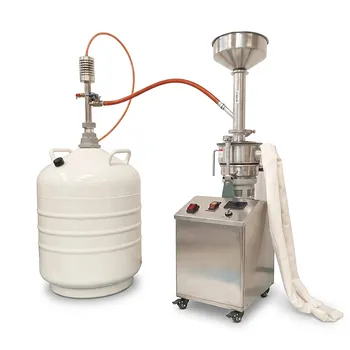
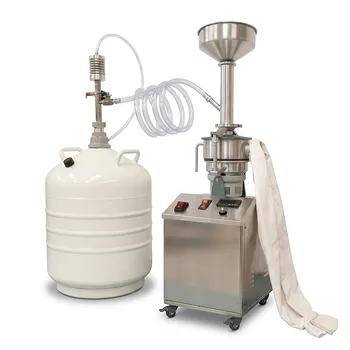
Laboratory Liquid Nitrogen Cryogenic Grinder for Polymer and Elastomer Materials
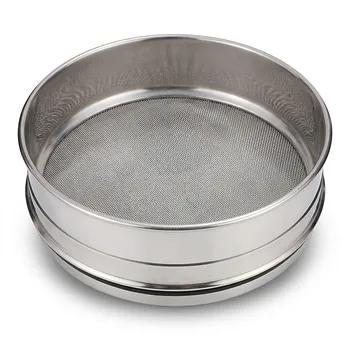
High Precision Laboratory Analysis Test Sieves
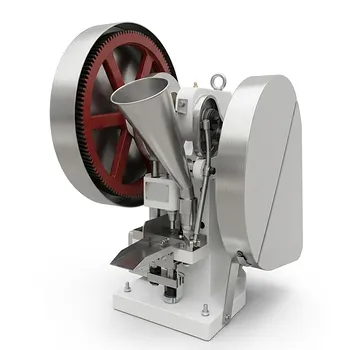
6-Ton Small Single-Punch Tablet Press — Laboratory Powder & Granule Tableting Equipment / Tablet Forming Machine