What are the primary considerations for selecting zirconia-lined stainless steel ball milling jars? Optimize Purity.
Updated 3 months ago
Selecting zirconia-lined stainless steel jars and zirconia grinding balls requires a focus on two critical vectors: the elimination of metallic contamination and the optimization of mechanical energy transfer. This configuration is specifically designed for high-energy mechanochemical reactions where maintaining the chemical integrity of the sample—such as quantum dots or carbon materials—is as vital as the kinetic energy required to initiate the reaction.
The primary objective of using zirconia-lined systems is to leverage high material density for efficient energy transfer while utilizing extreme hardness and chemical inertness to prevent the introduction of impurities that could degrade the final product’s performance.
Ensuring High Chemical Purity
Eliminating Metallic Contamination
Standard stainless steel jars pose a significant risk of introducing iron, chromium, or nickel into the reaction mixture during high-energy milling. Zirconia-lined jars provide a protective barrier that ensures the reactants only come into contact with chemically inert ceramic surfaces.
Chemical Inertness in Reactive Environments
Mechanochemical synthesis often involves aggressive reagents or the formation of highly reactive intermediates. Zirconia (ZrO2) is exceptionally stable and does not participate in the chemical transformation, ensuring that the synthesized materials, such as photocatalysts or organic molecules, remain uncontaminated.
Benefits of Homologous Grinding Media
Using zirconia grinding balls with zirconia-lined jars ensures material compatibility throughout the process. Because wear is inevitable in any high-energy milling environment, using the same material for both the jar lining and the media prevents the introduction of foreign inorganic species into the composite.
Maximizing Mechanical Energy Transfer
The Role of Material Density
The efficiency of a mechanochemical reaction is directly tied to the kinetic energy of the grinding balls. Zirconia’s high density provides sufficient mass to deliver the high-impact energy necessary for molecular activation and bond breaking.
Impact Energy and Reaction Kinetics
Higher density media result in more forceful collisions, which significantly accelerate reaction rates and conversion efficiency. This makes zirconia a superior choice over lighter materials like agate or PTFE when intense mechanical activation is required.
Maintaining Crystal Structure and Properties
For sensitive materials like silicon quantum dots, the controlled energy transfer of zirconia media is essential. It provides enough force for synthesis without the excessive friction-induced heat or contamination that could quench luminescence or alter optical properties.
Durability and Wear Resistance
Hardness Under High-Energy Impact
Zirconia features extreme hardness, allowing the jars and balls to withstand prolonged, frequent impacts without significant mechanical loss. This durability ensures that the geometry of the grinding media remains consistent, leading to reproducible reaction conditions.
Minimizing Secondary Contamination
The low wear rate of zirconia is a primary consideration for high-purity applications like graphene composite production. Even under intense planetary ball milling, the amount of material shed by the media is negligible, preserving the chemical profile of the recovered products.
Understanding the Trade-offs
Thermal Conductivity Challenges
While zirconia is excellent for purity, it is a ceramic and possesses lower thermal conductivity than pure stainless steel. In high-energy reactions that generate significant heat, users must carefully monitor internal temperatures to prevent thermal degradation of sensitive organic compounds.
Structural vs. Surface Properties
Zirconia-lined stainless steel jars are a hybrid solution designed to solve the brittleness of pure ceramic jars. The outer steel casing provides the structural "toughness" to prevent the jar from cracking under high centrifugal forces, while the lining provides the necessary chemical environment.
Cost and Complexity
Zirconia components are generally more expensive than standard steel or plastic media. The investment is justified only when sample purity and high impact energy are non-negotiable requirements for the specific mechanochemical pathway being explored.
How to Apply This to Your Project
Recommendations Based on Your Synthesis Goals
- If your primary focus is contamination-sensitive organic synthesis: Use zirconia-lined jars and balls to ensure no metallic catalysts are inadvertently introduced to your reaction.
- If your primary focus is high-energy mechanical activation: Prioritize zirconia over lighter ceramics like agate to ensure the impact energy is high enough to achieve the desired conversion rates.
- If your primary focus is synthesizing luminescent nanomaterials: Select high-purity zirconia to prevent "quenching" of optical properties caused by trace metal impurities from the milling equipment.
- If your primary focus is corrosive or acidic reaction environments: Verify that the zirconia lining is fully intact, as the underlying stainless steel jar remains susceptible to corrosion if the lining is breached.
By aligning the density and inertness of your grinding hardware with the specific energy requirements of your reaction, you ensure both the efficiency and the purity of your mechanochemical process.
Summary Table:
| Key Consideration | Advantage of Zirconia | Target Applications |
|---|---|---|
| Chemical Purity | Eliminates iron/nickel contamination; chemically inert | Quantum dots, organic synthesis, catalysts |
| Energy Transfer | High density provides maximum kinetic impact energy | Mechanical activation, bond breaking |
| Wear Resistance | Low debris generation due to extreme hardness | Graphene composites, high-purity powders |
| Structural Integrity | Steel outer shell prevents ceramic brittleness | High-speed planetary ball milling |
Elevate Your Material Research with High-Purity Processing Solutions
Achieving precision in mechanochemical reactions requires equipment that balances durability with chemical integrity. At [Your Brand Name], we provide complete laboratory sample preparation solutions specifically engineered for advanced material science and powder processing.
Our extensive expertise ensures your samples remain free from contamination while receiving the exact energy required for synthesis. Our product range includes:
- Advanced Milling: Planetary ball mills, jet mills, liquid nitrogen cryogenic grinders, and disc/rotor mills.
- Precision Pressing: A full spectrum of hydraulic presses, including Cold/Warm Isostatic Presses (CIP/WIP), vacuum hot presses, and XRF pellet presses.
- Sizing & Mixing: Vibratory/air-jet sieve shakers, jaw/roll crushers, and high-efficiency powder or defoaming mixers.
Whether you are synthesizing luminescent nanomaterials or developing new energy composites, we have the tools to optimize your workflow. Contact our technical team today to discuss your specific requirements and find the perfect configuration for your laboratory.
References
- Yingjie Li, Xiaojun He. Efficient Degradation of Hazardous Dechlorane Plus by Solvent‐Free Mechanochemical Strategy for Green Synthesis of Supercapacitive Alkynyl Carbon Material. DOI: 10.1002/cnl2.70043
Mentioned Products
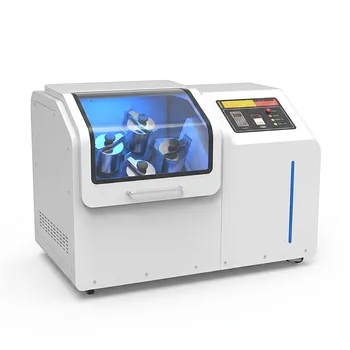
- High Energy Omnidirectional Planetary Ball Mill 16L
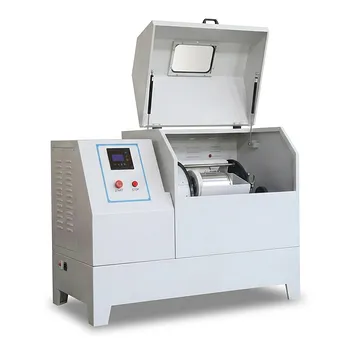
- Heavy Duty Horizontal Planetary Ball Mill for Efficient Industrial Grinding and Sample Preparation
People Also Ask
- What role does an omni-directional planetary ball mill play in brass/cobalt antimonide pretreatment? Achieve Nano-Scale Homogeneity.
- What is the role of a high-energy planetary ball mill in Li2ZrO3 and LBS prep? Achieve Superior Electrolyte Density
- What role does a high-energy planetary ball mill play in processing quenched bioactive glass? Achieve Nano-Scale Precision
- What role does a planetary ball mill play in nano-mineral filler prep? Achieve Sub-100nm Precision & Performance
- What role does a high-energy planetary ball mill play in magnesium-based hydrogen storage alloy preparation?

Tech Team · PowderPreparation
Last updated on Jun 03, 2026