Why is grinding equipment necessary for SnO2-Sb2O3 xerogels? Maximize surface area and photocatalytic activity.
Updated 5 months ago
Mechanical refinement is the critical link between bulk xerogel synthesis and the production of high-activity photocatalytic powders. After the drying process, $SnO_2-Sb_2O_3$ xerogels typically exist in a bulk, solidified form. Laboratory grinding or milling is necessary to reduce these solids into fine particles, significantly increasing their specific surface area and ensuring uniform heat transfer during subsequent thermal treatments.
Core Takeaway: Grinding transforms bulk xerogels into high-surface-area powders to facilitate uniform calcination and prevent abnormal grain growth. This mechanical step is foundational for achieving the nanocrystalline structure and high chemical activity required for high-performance photocatalytic ceramics.
Enhancing Material Properties through Size Reduction
Increasing Specific Surface Area
Grinding breaks down large, irregular aggregates into fine, uniform powders. This dramatically increases the specific surface area of the $SnO_2-Sb_2O_3$, which is essential for maximizing the interface where photocatalytic reactions occur.
Optimizing Thermal Conductivity
Bulk materials often suffer from uneven temperature gradients during the calcination process. Reducing the material to a fine powder promotes uniform heat conduction, ensuring that every particle undergoes the same thermal transformation simultaneously.
Maximizing Reaction Activity
By refining the particle size, the material’s reaction activity and melt fluidity are improved. This is particularly important when the $SnO_2-Sb_2O_3$ is intended for use in ceramic binders or composite matrices where thorough mixing is required.
Achieving Structural and Chemical Precision
Controlling Nanocrystalline Growth
Uniform particle sizes prevent abnormal grain growth caused by localized overheating. This precision allows researchers to maintain a narrow size distribution, often resulting in nanocrystalline powders with an average particle size as small as 5–11 nm.
Facilitating Advanced Characterization
High-precision grinding is required to meet the stringent standards of analytical techniques such as FTIR, XPS, and XRD. Fine powders eliminate the "preferred orientation effect," allowing equipment to capture accurate diffraction peaks and chemical signatures.
Ensuring Homogeneous Dispersion
In applications such as electrode slurries or gypsum board coatings, fine particles ensure a thorough mix with conductive agents or binders. This uniformity is vital for maintaining consistent electrochemical or catalytic performance across the entire surface of the final product.
Understanding the Trade-offs
Risks of Material Contamination
High-energy milling can unintentionally introduce impurities from the grinding media (such as zirconia or alumina) into the sample. These contaminants can act as recombination centers, potentially degrading the photocatalytic efficiency of the $SnO_2-Sb_2O_3$.
Mechanical Heat and Phase Stability
The friction generated during prolonged grinding can lead to localized heat buildup. If not monitored, this unintended thermal energy can trigger premature phase transitions or cause the fine particles to re-agglomerate into hard clusters.
Applying Grinding Strategies to Your Project
Making the Right Choice for Your Goal
To achieve the best results with $SnO_2-Sb_2O_3$ xerogels, your processing approach should align with your final application:
- If your primary focus is photocatalytic activity: Prioritize high-precision milling to maximize specific surface area, ensuring the highest possible contact between the catalyst, light, and pollutants.
- If your primary focus is structural characterization: Focus on achieving a high degree of refinement to eliminate particle orientation effects and ensure representative sampling for XRD or XPS analysis.
- If your primary focus is thermal stability: Use controlled grinding to create a narrow particle size distribution, which prevents localized hot spots and ensures uniform grain growth during calcination.
By mastering the mechanical refinement of xerogels, you ensure the structural integrity and chemical potency of the resulting photocatalytic materials.
Summary Table:
| Key Function | Impact on SnO2-Sb2O3 Xerogels | Scientific Advantage |
|---|---|---|
| Size Reduction | Increases specific surface area | Enhances photocatalytic reaction sites |
| Thermal Control | Promotes uniform heat conduction | Prevents abnormal grain growth (5-11 nm) |
| Homogeneity | Ensures thorough mixing & dispersion | Accurate characterization (XRD, XPS, FTIR) |
| Reaction Prep | Improves melt fluidity and activity | High-performance ceramic & electrode output |
Elevate Your Material Science Research with Precision Sample Preparation
At [Brand Name], we specialize in providing complete laboratory sample preparation solutions tailored for advanced material research. Whether you are refining SnO2-Sb2O3 xerogels or developing next-generation ceramics, our high-performance equipment ensures the structural and chemical precision your project demands.
Our extensive product line includes:
- Powder Processing: Planetary ball mills, jet mills, disc mills, and liquid nitrogen cryogenic grinders for achieving nanocrystalline particle sizes.
- Sizing & Mixing: Vibratory and air-jet sieve shakers, along with high-efficiency powder and defoaming mixers for homogeneous dispersion.
- Compaction Solutions: A full spectrum of hydraulic presses, including Cold/Warm Isostatic Presses (CIP/WIP), XRF pellet presses, and vacuum hot presses for superior material density.
Ready to achieve superior photocatalytic activity and uniform grain growth in your materials? Contact our experts today to find the perfect solution for your laboratory!
References
- Victor M. Rosas-García, A. Ramírez. Photocatalytic Degradation of Methylene Blue (MB) and Methyl Orange (MO) by the Highly Oxidative Properties of SnO<sub>2</sub>–Sb<sub>2</sub>O<sub>3</sub> Particles. DOI: 10.2320/matertrans.mt-m2022014
Mentioned Products
- Multifunctional High Efficiency High Speed Laboratory Grinder
- Small High Speed Upright Grinder for Laboratory Sample Preparation
- Small High Speed Grinder for Laboratory Sample Preparation
- High Speed Laboratory Grinder Efficient Stainless Steel Powder Pulverizer Universal Material Science Mill for Sample Preparation
- Laboratory Ultrafine Impact and Airflow Grinder for Precise Particle Size Control
People Also Ask
- What role does a laboratory grinder play in the pretreatment of sunflower seed shell-based adsorbents? Boost Efficiency.
- How does a laboratory grinder or mill enhance the adsorption performance of agricultural waste materials? Boost Surface Area
- What is the function of laboratory grinding equipment in ZnO nanosphere sol-gel synthesis? Ensure Superior Particle Size
- Why use lab grinding for eggshell & husk carbon materials? Maximize Surface Area & Heat Transfer for Better Adsorption
- What is the role of laboratory grinding equipment in the preparation of waste glass powder for eco-friendly red bricks?

Tech Team · PowderPreparation
Last updated on May 14, 2026
Related Products
Multifunctional High Efficiency High Speed Laboratory Grinder
Small High Speed Upright Grinder for Laboratory Sample Preparation

Small High Speed Grinder for Laboratory Sample Preparation
High Speed Laboratory Grinder Efficient Stainless Steel Powder Pulverizer Universal Material Science Mill for Sample Preparation
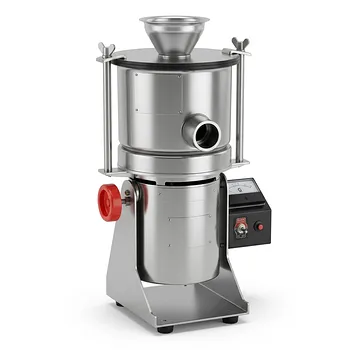
Laboratory Ultrafine Impact and Airflow Grinder for Precise Particle Size Control
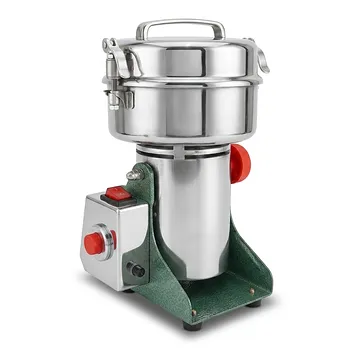
Small High-Speed Laboratory Grinder for Powder Processing
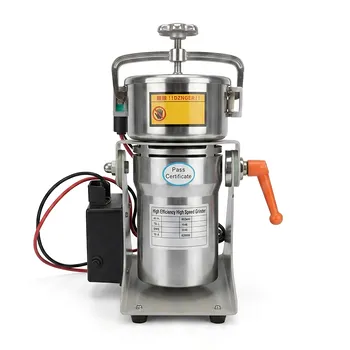
High Efficiency High Speed Grinder Laboratory Mill 1300W 25000rpm
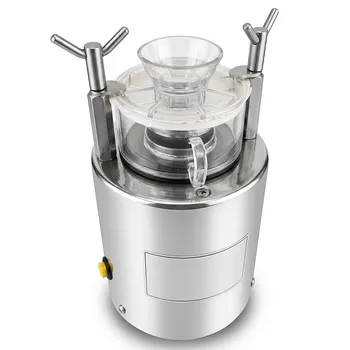
Laboratory Desktop Ultra Fine Powder Grinder High Speed Micronizing Pulverizer
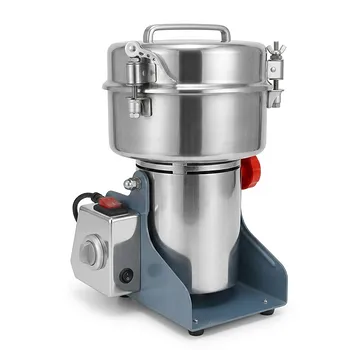
Small High-Speed Grinder for Efficient Laboratory Sample Preparation
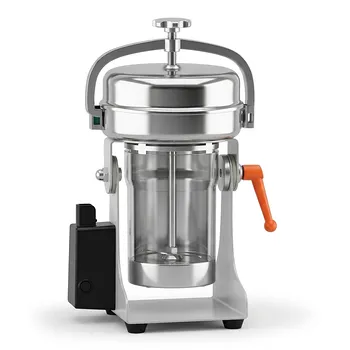
High Efficiency High Speed Grinder 2200W 25000 RPM Laboratory Sample Preparation
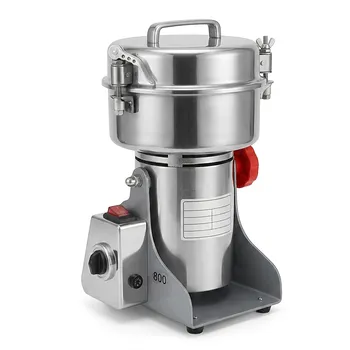
Small High-Speed Laboratory Grinder for Rapid Sample Preparation
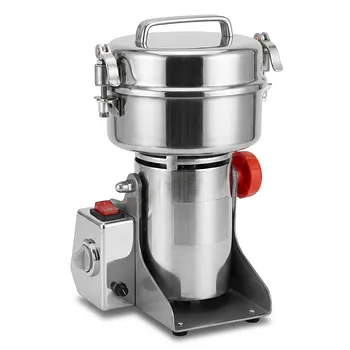
High Speed Laboratory Powder Grinder Small Batch Sample Preparation Mill

Micro Solid Sample Grinder High Speed Pulverizer for Laboratory Small Batch Grinding
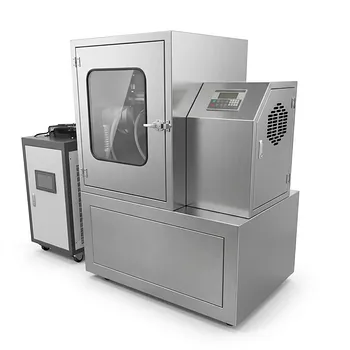
Vibratory Superfine Grinder for Ultra Fine Laboratory Powder Milling
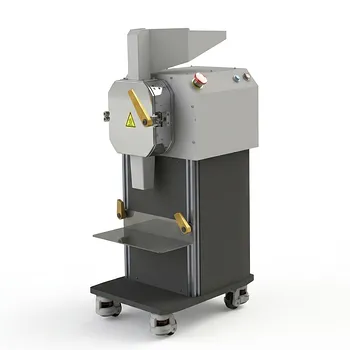
Small Laboratory Knife Crusher for Plastic Sample Preparation and Material Grinding
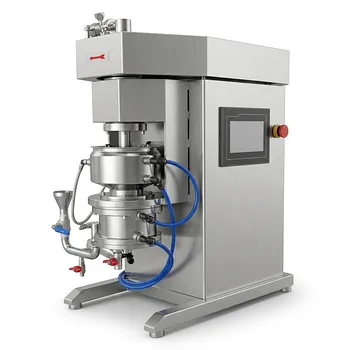
Small Ceramic Structure Laboratory Sand Mill Nanoscale Grinding Dispersion Equipment Seal-less Screen-less Design
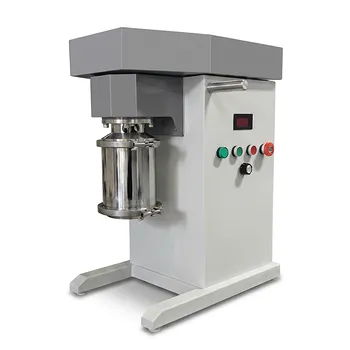
Nano Laboratory Bead Mill Desktop Sub Micron Sand Mill Screenless Seal Less Powder Grinder
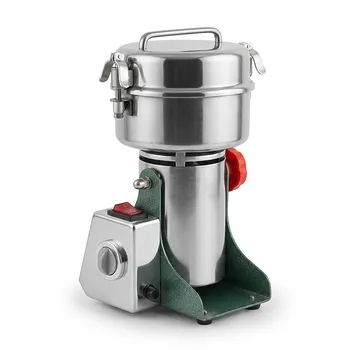
Small High-Speed Swing Grinder for Laboratory Sample Preparation
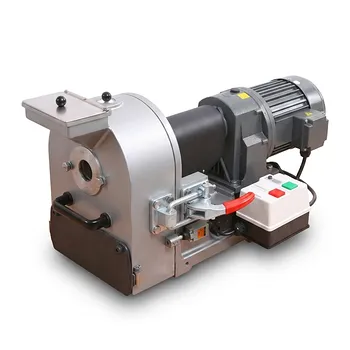
Laboratory Disc Mill for Fine Sample Preparation of Hard and Brittle Materials