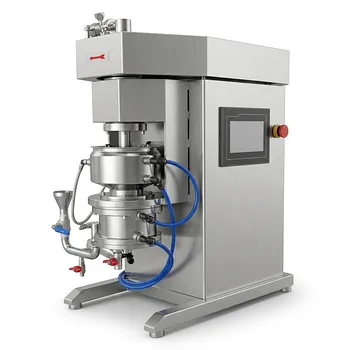
What are the technical considerations for selecting stainless steel grinding jars for cellulose? Optimize Performance
Updated 4 months ago
Selecting stainless steel for cellulose milling is driven by the need for high kinetic energy and mechanical durability. Stainless steel jars and spheres provide the mass and hardness necessary to induce structural refinement and mechanochemical reactions in cellulose fibers at high rotational speeds, typically around 600 rpm. This selection ensures efficient energy transfer to achieve the desired morphology and activity within a practical timeframe.
The central takeaway: To effectively process cellulose, stainless steel is selected because its high density and hardness provide the impact force required to break down fibrous structures. While it offers superior energy transfer, users must balance milling intensity with the potential for metallic contamination in the final product.
Maximizing Kinetic Energy Transfer
The Role of Density and Mass
The high density of stainless steel is its most critical technical attribute for cellulose processing. Because kinetic energy is a function of mass, the heavy stainless steel spheres generate the intense impact forces required to break the strong hydrogen bonds within cellulose fibers.
Achieving High Rotational Speeds
Stainless steel components are engineered to withstand high rotational speeds, often reaching 600 rpm or higher. This velocity is essential to transition the milling process from simple grinding to mechanochemical activation, where the physical structure of the cellulose is fundamentally altered.
Hardness and Mechanical Foundation
The high hardness of stainless steel ensures that the energy of the collision is directed into the sample rather than being absorbed by the deformation of the media. This provides the physical foundation necessary for consistent particle size refinement and increased surface area.
Optimizing Impact Frequency and Force
Ball-to-Material Ratios
A common technical standard for efficient energy transfer is a 10:1 ball-to-material ratio. This ratio ensures that there is enough media to create high-frequency collisions, converting mechanical energy into crystal defect energy within the cellulose.
Utilizing Graduated Ball Diameters
Using a combination of different ball diameters, such as 15mm and 20mm, optimizes the milling environment. Larger balls provide the impact force needed for initial breakdown, while smaller balls increase the collision frequency to refine the cellulose into a finer powder.
Withstanding High-Frequency Cycles
Stainless steel jars are designed to endure high-frequency vibrations, sometimes up to 20 cycles per second. Their structural integrity prevents the jars from deforming under the immense internal pressures generated during long-duration milling sessions.
Understanding the Trade-offs: Wear and Contamination
The Risk of Metallic Impurities
While stainless steel is highly wear-resistant, the intense impact forces over long durations (exceeding 30 hours) can lead to trace metallic contamination. Tiny amounts of iron, chromium, or nickel may be introduced into the cellulose, which could be problematic for specific analytical or high-purity applications.
Material Hardness vs. Sample Requirements
The grinding media must always be harder and denser than the sample material to ensure efficiency. While stainless steel is ideal for cellulose, it may be outperformed by materials like tungsten carbide if the goal is absolute minimum wear, or zirconia if metallic ions must be avoided entirely.
Temperature and Chemical Stability
In cryogenic or high-energy milling, stainless steel maintains its chemical stability and does not react with the cellulose. However, the heat generated during dry milling can affect the sample's moisture content, requiring careful monitoring of the milling cycles.
How to Apply This to Your Project
Selecting the right configuration depends on whether your goal is structural change, speed, or purity.
- If your primary focus is Maximum Structural Refinement: Utilize a high ball-to-material ratio (10:1) and high rotational speeds (600 rpm) to maximize the kinetic energy delivered to the cellulose fibers.
- If your primary focus is High Throughput and Efficiency: Use a mixture of ball diameters (15mm and 20mm) to balance high-impact force with a high frequency of collisions.
- If your primary focus is Product Purity: Monitor milling duration closely and consider if the trace introduction of iron or chromium from the stainless steel is acceptable for your final application.
- If your primary focus is Food-Grade or Trace Analysis: Ensure the stainless steel is of high-strength, food-safe quality and consider if alternative materials like agate or ceramic are required to eliminate metallic contamination.
By matching the density and hardness of stainless steel to your specific energy requirements, you can effectively transform the physical and chemical properties of cellulose.
Summary Table:
| Technical Parameter | Recommended Value / Standard | Primary Benefit |
|---|---|---|
| Rotational Speed | ~600 rpm | Triggers mechanochemical activation |
| Ball-to-Material Ratio | 10:1 | Ensures high-frequency collisions |
| Media Density | High (Stainless Steel) | Maximizes kinetic energy for fiber breakdown |
| Ball Diameters | Graduated (e.g., 15mm & 20mm) | Balances impact force and collision frequency |
| Durability | High-frequency resistance | Prevents deformation under internal pressure |
Optimize Your Material Preparation with Expert Solutions
Achieving the perfect morphology in cellulose milling requires precision equipment. At [Company Name], we provide complete laboratory sample preparation solutions for material science, specializing in high-performance powder processing and compaction equipment.
Whether you need planetary ball mills, high-density stainless steel jars/spheres, or advanced cryogenic grinders, our tools are engineered for maximum energy transfer and durability. Our extensive product line also includes:
- Crushers & Mills: Jaw/roll crushers, jet mills, and rotor mills.
- Sieving & Mixing: Vibratory sieve shakers, powder mixers, and defoaming mixers.
- Hydraulic Presses: A full spectrum including Cold/Warm Isostatic Presses (CIP/WIP), vacuum hot presses, and XRF pellet presses.
Ready to enhance your lab's efficiency and product purity? Contact our technical team today to find the ideal configuration for your specific research needs!
References
- Roberta Capuano, Maria Emanuela Errico. Enhancement of Stability Towards Aging and Soil Degradation Rate of Plasticized Poly(lactic Acid) Composites Containing Ball-Milled Cellulose. DOI: 10.3390/polym17152127
Mentioned Products
- Small High-Speed Laboratory Grinder for Powder Processing
- High Speed Laboratory Grinder Efficient Stainless Steel Powder Pulverizer Universal Material Science Mill for Sample Preparation
- Vertical Square Planetary Ball Mill for Laboratory Sample Preparation and Nanoscale Grinding
- High Energy Hybrid Vibratory Ball Mill for Grinding Mixing and Cell Disruption
- Heavy Duty Horizontal Planetary Ball Mill for Efficient Industrial Grinding and Sample Preparation
People Also Ask
- What role does a laboratory grinder play in the pretreatment of sunflower seed shell-based adsorbents? Boost Efficiency.
- How does a laboratory grinder or mill enhance the adsorption performance of agricultural waste materials? Boost Surface Area
- What is the role of laboratory grinding equipment in the preparation of waste glass powder for eco-friendly red bricks?
- Why is grinding equipment necessary for SnO2-Sb2O3 xerogels? Maximize surface area and photocatalytic activity.
- What is the primary role of grinding equipment in BLA preparation? Enhance Reactivity & Material Uniformity

Tech Team · PowderPreparation
Last updated on Jun 03, 2026
Related Products
Small High-Speed Laboratory Grinder for Powder Processing
High Speed Laboratory Grinder Efficient Stainless Steel Powder Pulverizer Universal Material Science Mill for Sample Preparation
Vertical Square Planetary Ball Mill for Laboratory Sample Preparation and Nanoscale Grinding
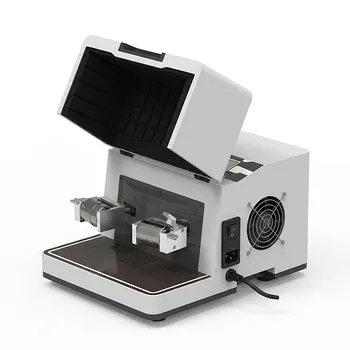
High Energy Hybrid Vibratory Ball Mill for Grinding Mixing and Cell Disruption
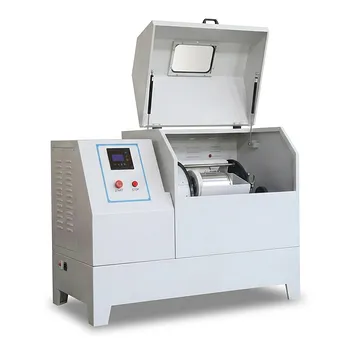
Heavy Duty Horizontal Planetary Ball Mill for Efficient Industrial Grinding and Sample Preparation
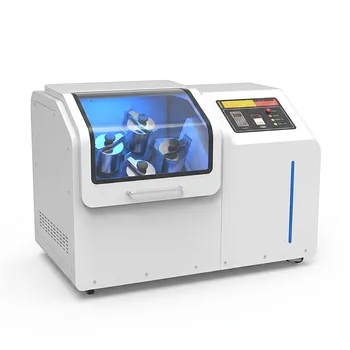
High Energy Omnidirectional Planetary Ball Mill 16L

High Throughput Micro Ball Mill for Cryogenic Grinding and Laboratory Cell Disruption
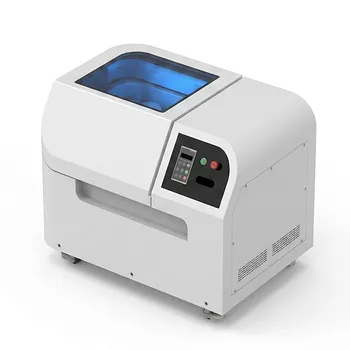
8L Planetary Ball Mill for Laboratory Grinding and Sample Preparation
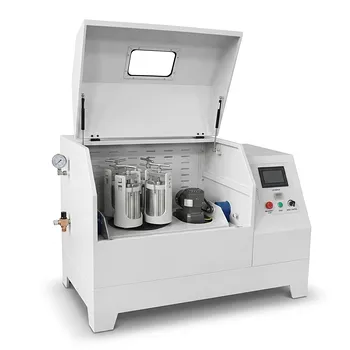
Vertical Production Planetary Ball Mill for High Throughput Powder Processing
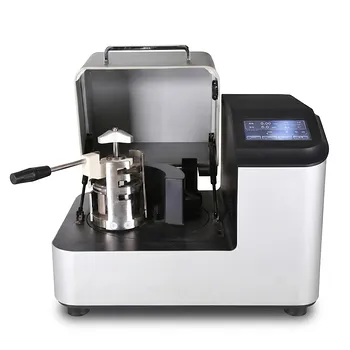
High Energy Laboratory Planetary Ball Mill for Nano Grinding and Material Science Sample Preparation
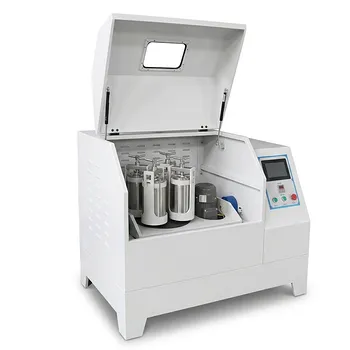
360° Rotating Omnidirectional Laboratory Planetary Ball Mill for Homogeneous Ultra-Fine Grinding and Mixing
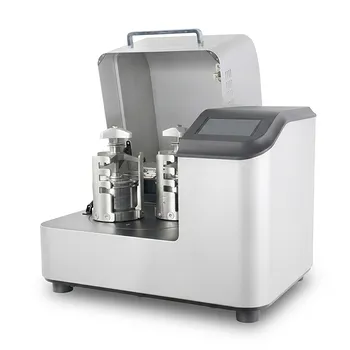
High Energy Planetary Ball Mill for Nano Scale Grinding and Mechanical Alloying
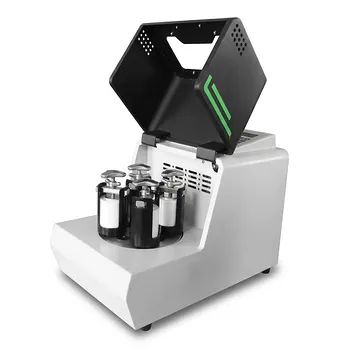
Miniature Planetary Ball Mill with Vacuum Grinding and High Efficiency for Laboratory Sample Preparation
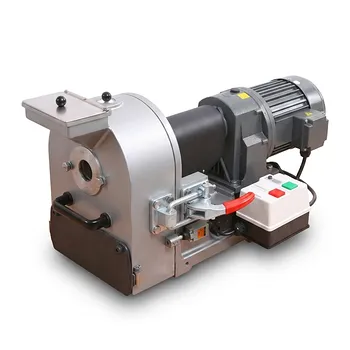
Laboratory Disc Mill for Fine Sample Preparation of Hard and Brittle Materials
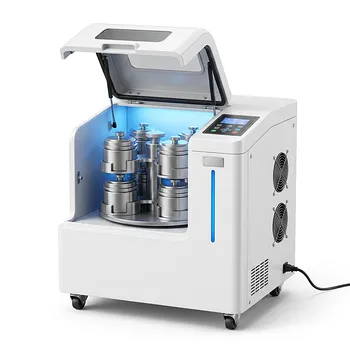
High Energy Omnidirectional Planetary Ball Mill 20L
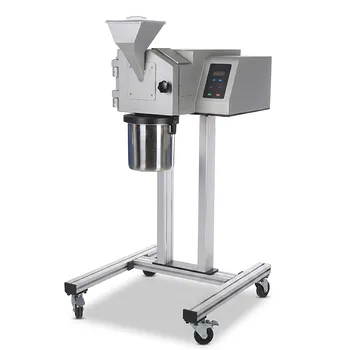
Cross Beater Mill for Brittle Material Grinding and Continuous Fine Crushing Industrial Sample Preparation
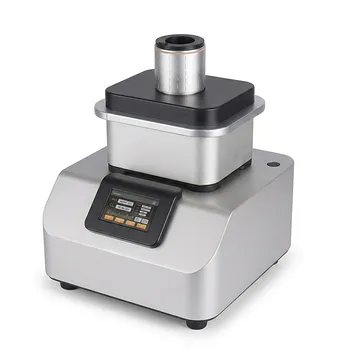
Ultra Centrifugal Mill High Speed Laboratory Grinder for Fibrous and Brittle Sample Preparation
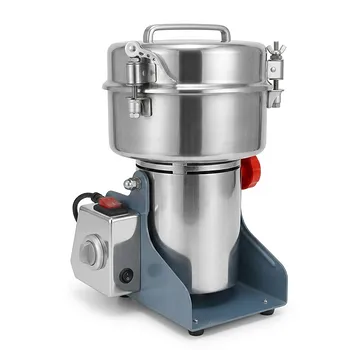
Small High-Speed Grinder for Efficient Laboratory Sample Preparation