Why are high-strength stainless steel grinding balls and jars used for grinding forsterite ceramic powders? Key Benefits
Updated 4 months ago
High-strength stainless steel is the preferred material for grinding forsterite ceramic powders because its superior density and hardness provide the necessary kinetic energy for efficient particle size reduction. These properties allow the equipment to withstand intense mechanical impacts over long milling durations while maintaining the chemical purity required for the powder to transform into a well-crystallized forsterite phase during heat treatment.
High-strength stainless steel serves as a high-efficiency energy transfer medium that survives the extreme mechanical stresses of ball milling. By combining high wear resistance with high density, these components ensure consistent energy delivery and minimal contamination, which are critical for the successful synthesis of advanced ceramic materials.
Optimizing Kinetic Energy Transfer
The Role of Material Density
High-strength stainless steel possesses a high density that is critical for generating sufficient kinetic energy during the milling cycle. This density ensures that each collision between the grinding balls and the ceramic powder carries enough force to overcome the material's inherent toughness.
Hardness and Impact Efficiency
The superior hardness of this steel prevents the balls and jars from deforming upon impact, ensuring that energy is directed into the powder rather than being absorbed by the equipment. This efficiency is vital for achieving nanostructural modifications and uniform particle distribution within a standard timeframe.
Sustaining High-Frequency Cycles
High-energy ball mills often operate at high frequencies, such as 20 cycles per second, creating a violent internal environment. High-strength steel is specifically chosen for its ability to withstand these rapid, repetitive impacts without experiencing mechanical failure or structural fatigue.
Facilitating Phase Transformation
Preparing for Heat Treatment
The mechanical energy provided by stainless steel media does more than just crush particles; it facilitates the eventual transformation into a well-crystallized forsterite phase. Proper milling ensures the precursors are sufficiently activated and mixed at the molecular level before the final firing process.
Maintaining Optimal Milling Ratios
Using high-strength materials allows researchers to utilize high ball-to-powder ratios, such as 10:1, without damaging the jar. This high ratio increases collision frequency, which is essential for achieving a homogenous solid solution and consistent material properties.
Defining Collision Dynamics
The structural integrity of stainless steel jars, particularly those with flat-bottom designs, allows for clearly defined collision dynamics. This predictability is essential for technical professionals who need to precisely estimate energy loss and impact velocity using sensors.
Managing Contamination and Wear
Minimizing Media Self-Consumption
High wear resistance is a hallmark of industrial-grade stainless steel like AISI 420, which minimizes the "self-consumption" of the grinding media. By reducing the amount of media that rubs off during the process, the chemical composition of the forsterite remains stable and predictable.
Ensuring Chemical Purity
In many ceramic applications, the introduction of metallic impurities can degrade the final product's performance. High-strength steel’s resistance to abrasion ensures that the resulting powder meets the high-purity standards required for technical ceramics.
Chemical Stability and Safety
Beyond physical wear, stainless steel offers excellent chemical stability, preventing the introduction of heavy metal impurities. This makes it an ideal choice for milling processes where maintaining strict material safety and purity is a primary concern.
Understanding the Trade-offs
The Risk of Iron Contamination
Despite their high wear resistance, stainless steel components can still introduce trace amounts of iron (Fe) into the ceramic powder during prolonged milling. While often negligible, these trace elements can act as dopants that may alter the electrical or mechanical properties of the final ceramic.
Energy Loss through Heat
The intense mechanical action required to grind hard ceramics like forsterite generates significant heat within the stainless steel jar. If not managed through intermittent milling or cooling, this temperature rise can lead to unintended phase changes or pressure buildup within the sealed vessel.
Material Weight and Equipment Strain
The high density that makes stainless steel effective also makes the grinding assembly very heavy. This weight places significant stress on the motor and drive system of the ball mill, requiring robust equipment that can handle the high starting torque and operational load.
How to Apply This to Your Project
Making the Right Choice for Your Goal
To achieve the best results when milling forsterite or similar technical ceramics, consider your primary objective:
- If your primary focus is phase purity: Utilize high-hardness AISI 420 stainless steel to minimize media wear and prevent the introduction of unwanted metallic fragments.
- If your primary focus is rapid particle size reduction: Prioritize high-density grinding balls to maximize the kinetic energy delivered during each collision cycle.
- If your primary focus is structural refinement: Maintain a strict 10:1 ball-to-powder ratio to ensure the collision frequency is high enough to induce nanostructural changes.
Selecting high-strength stainless steel provides the mechanical foundation necessary to transform raw precursors into high-performance, well-crystallized ceramic materials.
Summary Table:
| Feature | Benefit for Ceramic Grinding | Impact on Final Product |
|---|---|---|
| High Density | Maximizes kinetic energy during impact | Efficient particle size reduction |
| Superior Hardness | Prevents deformation of grinding media | Directs energy into the powder |
| Wear Resistance | Minimizes media self-consumption | Maintains high chemical purity |
| Mechanical Strength | Withstands high-frequency vibration | Enables rapid, stable processing |
| Predictable Dynamics | Clear collision physics in flat-bottom jars | Consistent, repeatable results |
Elevate Your Ceramic Research with Precision Grinding Solutions
Achieving the perfect forsterite phase requires high-performance equipment and the right grinding media. [Your Brand Name] provides complete laboratory sample preparation solutions for material science, specializing in advanced powder processing and compaction equipment.
Whether you need planetary ball mills equipped with high-strength stainless steel jars or cryogenic grinders for heat-sensitive materials, our extensive product line is designed for precision. We offer:
- Advanced Milling: Planetary, jet, and disc mills for nanostructural refinement.
- Sample Preparation: Jaw/roll crushers and vibratory sieve shakers for consistent particle distribution.
- Compaction Excellence: A full spectrum of hydraulic presses, including Cold/Warm Isostatic Presses (CIP/WIP), hot presses, and vacuum hot presses.
- Mixing Solutions: Powder and defoaming mixers for homogeneous solid solutions.
Ready to optimize your material synthesis? Contact our technical experts today to find the ideal equipment for your laboratory and ensure superior quality in every batch.
References
- Hamza Milles, Khaled Toualbia. Hot corrosion behavior of Mg\(_{2}\)SiO\(_{4}\) ceramic exposed to molten Na\(_{2}\)SO\(_{4}\) at 900℃ to 1100℃. DOI: 10.55713/jmmm.v34i1.1777
Mentioned Products
- Small High-Speed Laboratory Grinder for Powder Processing
- Vertical Nano Bead Mill for Ceramic Materials with Permanent Magnet Motor and High Efficiency Grinding
- High Speed Laboratory Grinder Efficient Stainless Steel Powder Pulverizer Universal Material Science Mill for Sample Preparation
- Heavy Duty Horizontal Planetary Ball Mill for Efficient Industrial Grinding and Sample Preparation
- Small Ceramic Structure Laboratory Sand Mill Nanoscale Grinding Dispersion Equipment Seal-less Screen-less Design
People Also Ask
- What role does a laboratory grinder play in the pretreatment of sunflower seed shell-based adsorbents? Boost Efficiency.
- How does a laboratory grinder or mill enhance the adsorption performance of agricultural waste materials? Boost Surface Area
- What is the role of laboratory grinding equipment in the preparation of waste glass powder for eco-friendly red bricks?
- Why is grinding equipment necessary for SnO2-Sb2O3 xerogels? Maximize surface area and photocatalytic activity.
- What is the primary role of grinding equipment in BLA preparation? Enhance Reactivity & Material Uniformity

Tech Team · PowderPreparation
Last updated on May 14, 2026
Related Products
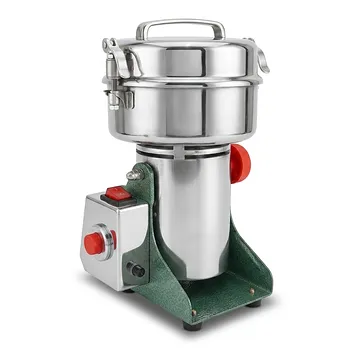
Small High-Speed Laboratory Grinder for Powder Processing
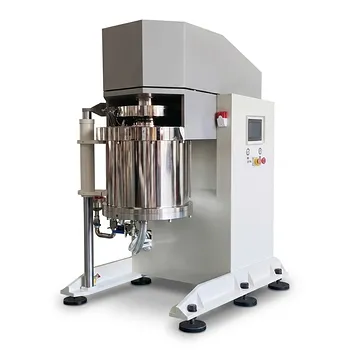
Vertical Nano Bead Mill for Ceramic Materials with Permanent Magnet Motor and High Efficiency Grinding
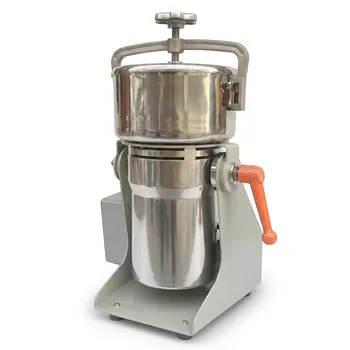
High Speed Laboratory Grinder Efficient Stainless Steel Powder Pulverizer Universal Material Science Mill for Sample Preparation

Heavy Duty Horizontal Planetary Ball Mill for Efficient Industrial Grinding and Sample Preparation
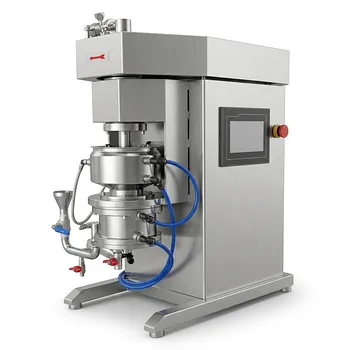
Small Ceramic Structure Laboratory Sand Mill Nanoscale Grinding Dispersion Equipment Seal-less Screen-less Design

High Energy Omnidirectional Planetary Ball Mill 16L

8L Planetary Ball Mill for Laboratory Grinding and Sample Preparation

Vertical Square Planetary Ball Mill for Laboratory Sample Preparation and Nanoscale Grinding

High Energy Laboratory Planetary Ball Mill for Nano Grinding and Material Science Sample Preparation
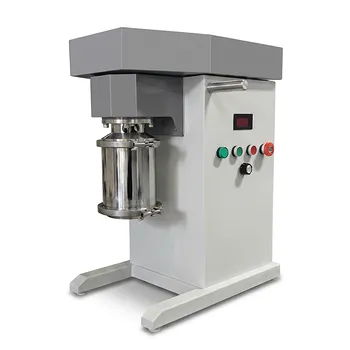
Nano Laboratory Bead Mill Desktop Sub Micron Sand Mill Screenless Seal Less Powder Grinder
