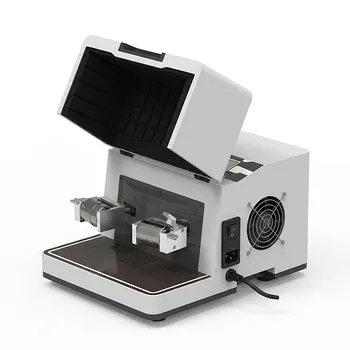
Why are zirconia grinding balls preferred for zirconium-based chloride electrolytes? Achieve High Purity & Efficiency
Updated 4 months ago
High-strength zirconia grinding balls are the industry standard for synthesizing zirconium-based chloride solid electrolytes because they provide the necessary mechanical energy to drive phase transformations while ensuring the chemical purity of the final product. Their combination of high density and extreme hardness allows for the efficient breaking of precursor crystal lattices at high rotational speeds (e.g., 600 rpm). Furthermore, their chemical inertness and wear resistance prevent the introduction of metallic or oxide impurities, which is critical for maintaining high ionic conductivity and electrochemical stability in halide-based battery systems.
Core Takeaway: Zirconia grinding media serve a dual purpose: they provide the high kinetic energy required to promote new phase formation via mechanochemical synthesis and act as a "material-matched" medium that minimizes foreign ion contamination in zirconium-sensitive electrolytes.
Maximizing Mechanical Energy for Phase Formation
High Density and Kinetic Energy
The synthesis of chloride solid electrolytes requires significant energy to force chemical precursors into a stable, conductive phase. Zirconia (ZrO2) possesses a high mass density, which translates to superior kinetic energy during high-speed planetary ball milling. This energy is essential for pulverizing precursors and facilitating the solid-state reactions necessary for high-performance electrolytes.
Breaking Crystal Lattices
At speeds such as 600 rpm, the impact force generated by zirconia balls is sufficient to disrupt the crystal lattices of raw materials. This mechanical activation lowers the thermal energy required for reaction, allowing for the formation of complex zirconium-based chloride phases that might be difficult to achieve through traditional sintering.
Efficiency in Long-Duration Milling
Preparing high-quality electrolytes often involves prolonged milling cycles, sometimes exceeding 20 hours. High-strength zirconia maintains its structural integrity under these intense conditions, ensuring that the grinding efficiency remains constant from the first hour to the last.
Preserving Chemical Purity and Performance
Exceptional Wear Resistance
Standard grinding media can shed micro-particles due to friction, leading to contamination. Zirconia is prized for its high hardness and wear resistance, which results in an extremely low wear rate. This ensures that the electrolyte's ionic conductivity is not compromised by the introduction of foreign debris.
Chemical Inertness in Reactive Environments
Chloride-based electrolytes are often sensitive to moisture and reactive with certain metals. Zirconia is chemically inert, meaning it will not react with the halide precursors or the resulting electrolyte powder. This stability prevents the formation of secondary, non-conductive phases that could impede lithium-ion transport.
The Advantage of Material Homology
Since the target electrolyte is zirconium-based, using zirconia media is a strategic choice. Any negligible wear that does occur introduces zirconium—an element already present in the electrolyte's stoichiometry—rather than heterogeneous impurities like alumina or steel. This "self-matching" approach preserves the compositional integrity of the material.
Understanding the Trade-offs
Thermal Management Challenges
The high kinetic energy that makes zirconia effective also generates significant frictional heat. In sensitive chloride systems, excessive heat during milling can lead to unwanted phase transitions or the decomposition of the electrolyte. Users must often implement cooling intervals or "rest periods" to manage the internal temperature of the milling jar.
Cost vs. Longevity
While zirconia grinding balls represent a higher initial investment compared to alumina or hardened steel, their longevity usually offsets the cost. However, for low-energy applications where purity is less critical, the extreme performance of high-strength zirconia may exceed the project's requirements, making it a premium solution rather than a universal necessity.
How to Apply This to Your Project
When selecting grinding media for solid-state electrolyte synthesis, your choice should align with your specific purity and energy requirements.
- If your primary focus is Maximum Phase Purity: Use high-purity zirconia (95% ZrO2 stabilized with Y2O3) to ensure that any media wear does not introduce foreign ions into your zirconium-based chloride system.
- If your primary focus is Synthesis Speed: Utilize high-density zirconia balls at rotational speeds above 500 rpm to maximize kinetic impact and shorten the time required for lattice transformation.
- If your primary focus is Scalability and Cost: Evaluate the wear rate over multiple 20-hour cycles; the durability of zirconia often makes it more cost-effective than cheaper media that require frequent replacement and cause batch contamination.
By leveraging the high density and chemical compatibility of zirconia, researchers can achieve the precise stoichiometric control necessary for next-generation solid-state batteries.
Summary Table:
| Key Feature | Functional Benefit | Impact on Solid Electrolyte |
|---|---|---|
| High Density | Maximizes kinetic energy during milling | Facilitates rapid phase transformation |
| Extreme Hardness | Exceptional wear resistance | Maintains ultra-low contamination levels |
| Chemical Inertness | Non-reactive with halide precursors | Preserves ionic conductivity and stability |
| Material Homology | Zirconium-based composition | Prevents introduction of foreign metallic ions |
| Mechanical Strength | Maintains integrity during 20h+ cycles | Ensures consistent grinding efficiency |
Optimize Your Material Synthesis with Professional Lab Solutions
At [Your Brand Name], we provide complete laboratory sample preparation solutions tailored for material science research. If you are developing next-generation zirconium-based chloride electrolytes, our equipment is designed to meet your strictest requirements for purity and precision.
Our specialized product lines include:
- Advanced Milling: Planetary ball mills, jet mills, and cryogenic grinders for efficient particle size reduction.
- Precision Compaction: A full spectrum of hydraulic presses, including Cold/Warm Isostatic Presses (CIP/WIP), vacuum hot presses, and XRF pellet presses.
- Processing & Sizing: Jaw/roll crushers, vibratory sieve shakers, and high-performance powder/defoaming mixers.
Whether you need to maximize kinetic energy for mechanochemical synthesis or ensure the chemical integrity of your samples, our experts are here to help. Contact us today to find the perfect equipment for your lab!
References
- Wanqing Ren, Li‐Zhen Fan. Promoting Ion Conduction and Li Metal Compatibility Through Nb <sup>5+</sup> ‐Substituted Zirconium‐Based Chlorides for All‐Solid‐State Batteries. DOI: 10.1002/idm2.70022
Mentioned Products
- Vertical Semi Circular Planetary Ball Mill for Laboratory Precision Grinding
- High Energy Laboratory Planetary Ball Mill for Nano Grinding and Material Science Sample Preparation
- Heavy Duty Horizontal Planetary Ball Mill for Efficient Industrial Grinding and Sample Preparation
- Vertical Square Planetary Ball Mill for Laboratory Sample Preparation and Nanoscale Grinding
- 8L Planetary Ball Mill for Laboratory Grinding and Sample Preparation
People Also Ask
- What role does a planetary ball mill play in the synthesis of Li6PS5Cl (LPSCl)? Unlock High Ionic Conductivity
- Why is a planetary ball mill essential for SiBCN-rGO wet-spinning? Achieve Superior Dispersion and Spinnability
- Why is an intermittent grinding process required for perovskites in a planetary ball mill? Ensure Stability & Purity
- Why is a planetary ball mill required for PET micronization? Ensure Accurate Chemical Analysis of Reprocessed PET
- How does mechanized planetary ball milling compare to manual agate grinding? Optimize sulfide standard material precision.

Tech Team · PowderPreparation
Last updated on Jun 03, 2026
Related Products
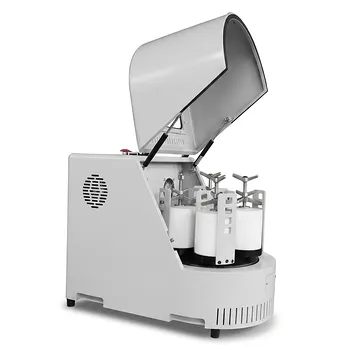
Vertical Semi Circular Planetary Ball Mill for Laboratory Precision Grinding
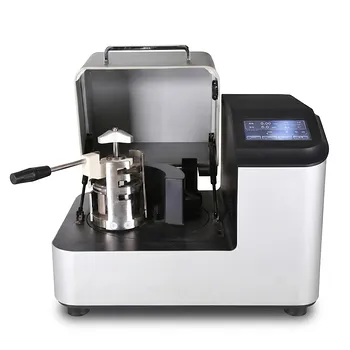
High Energy Laboratory Planetary Ball Mill for Nano Grinding and Material Science Sample Preparation
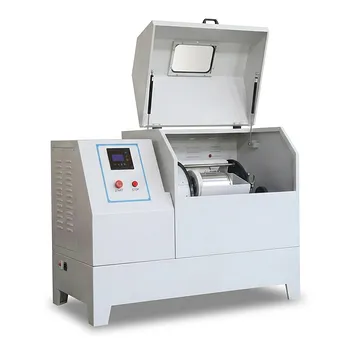
Heavy Duty Horizontal Planetary Ball Mill for Efficient Industrial Grinding and Sample Preparation
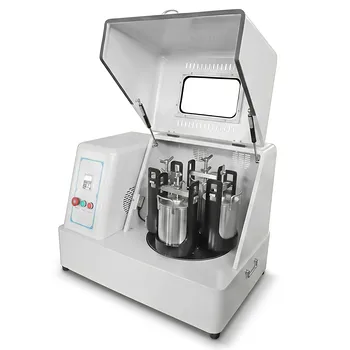
Vertical Square Planetary Ball Mill for Laboratory Sample Preparation and Nanoscale Grinding
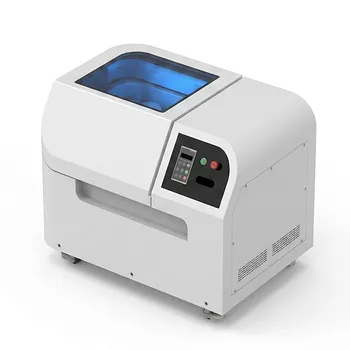
8L Planetary Ball Mill for Laboratory Grinding and Sample Preparation
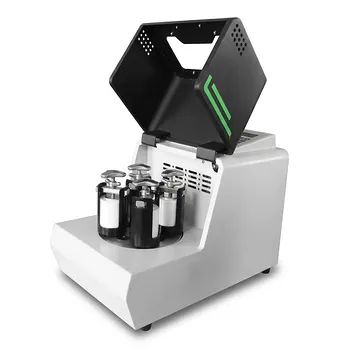
Miniature Planetary Ball Mill with Vacuum Grinding and High Efficiency for Laboratory Sample Preparation
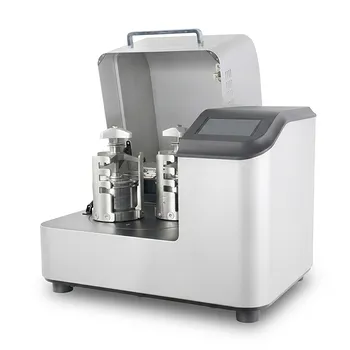
High Energy Planetary Ball Mill for Nano Scale Grinding and Mechanical Alloying
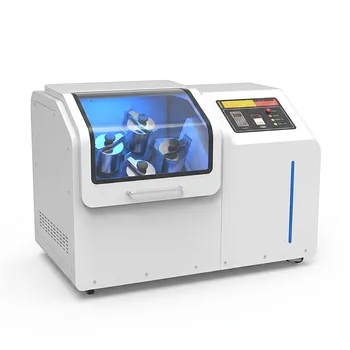
High Energy Omnidirectional Planetary Ball Mill 16L
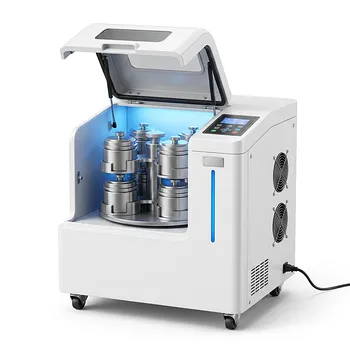
High Energy Omnidirectional Planetary Ball Mill 20L
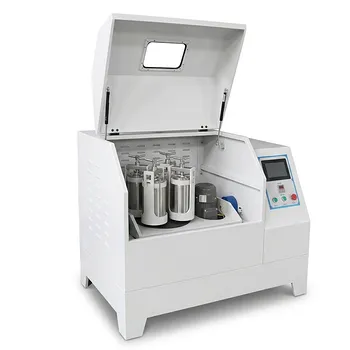
360° Rotating Omnidirectional Laboratory Planetary Ball Mill for Homogeneous Ultra-Fine Grinding and Mixing