Why is a combination of steel balls with different diameters (10-40mm) used as grinding media for talc powder processing?
Updated 4 months ago
Optimizing talc powder processing requires a dual-force approach to particle reduction. Using a mixture of steel balls with diameters ranging from 10mm to 40mm ensures that the mill provides both the high-impact energy necessary to crush coarse ore and the high-frequency contact points required for fine refinement. This specific graduation is essential for achieving a uniform particle size distribution and ensuring the powder successfully passes through critical quality benchmarks, such as a 106-micron sieve.
The combination of different ball diameters maximizes grinding efficiency by balancing impact kinetic energy (from larger balls) with attrition and friction (from smaller balls). This "graded" environment prevents gaps in the grinding process, ensuring that particles of all sizes are consistently reduced to a fine, uniform state.
The Role of High-Impact Energy
Breaking Down Coarse Talc Ore
The 40mm steel balls are the "heavy hitters" of the grinding process. Their primary function is to provide the kinetic energy necessary to fracture large, coarse particles of talc ore upon impact.
Overcoming Fracture Toughness
Talc, while soft, still requires a specific energy threshold to initiate the first stage of breakage. Larger balls possess the mass and density to effectively convert mechanical energy into crushing force, which is required to overcome the initial fracture toughness of the raw material.
The Science of Contact Frequency and Attrition
Increasing Total Surface Area
While large balls break big pieces, they leave significant gaps in the "grinding zone." Smaller diameter balls (closer to 10mm) fill these interstitial spaces, drastically increasing the total surface area of the grinding media within the mill.
Enhancing Fine Refinement
The smaller balls provide a higher number of contact points. This creates a high-frequency environment of friction and shearing forces (attrition) that polishes and refines intermediate particles into a fine powder that larger balls would simply miss.
Achieving Particle Size Uniformity
Preventing Bimodal Distribution
Using only one size of media often results in a "bimodal distribution," where there are too many coarse chunks and too much "over-ground" dust. A graded selection ensures a smooth transition from coarse to fine, creating a more consistent and marketable product.
Ensuring High Pass Rates
The ultimate goal of talc processing is often meeting a specific mesh size, such as a 106-micron sieve. The synergy between impact and attrition ensures that the final batch has the uniformity required to meet these industrial standards without excessive residue.
Understanding the Trade-offs
The Risk of Improper Ratios
If the ratio of large to small balls is unbalanced, efficiency drops significantly. Too many large balls lead to excessive energy consumption and over-grinding of some particles while leaving others too coarse.
Wear and Media Maintenance
While steel balls are selected for their high hardness and wear resistance, the smaller balls in the mix will wear down faster due to their higher surface-area-to-volume ratio. Neglecting to replenish the smaller media will eventually shift the mill's performance back toward inefficient, high-impact-only grinding.
Applying This to Your Processing Goals
Choosing the Right Media Mix
To achieve the best results in your milling operation, consider your specific production priorities and the initial state of your raw talc.
- If your primary focus is Maximum Throughput: Lean toward a higher percentage of larger (40mm) balls to ensure the primary breakage of coarse ore happens as quickly as possible.
- If your primary focus is Ultra-Fine Fineness: Increase the concentration of smaller (10mm to 20mm) balls to maximize the shearing forces and contact points necessary for micronization.
- If your primary focus is Energy Efficiency: Maintain a strictly graded distribution (e.g., 40mm, 25mm, and 10mm) to ensure that no mechanical energy is wasted on particles already reduced to the target size.
By carefully balancing impact and attrition through media graduation, you transform a simple mechanical process into a precision-engineered refinement system.
Summary Table:
| Ball Diameter | Primary Function | Mechanical Action | Key Benefit |
|---|---|---|---|
| Large (40mm) | Breaking coarse ore | High-impact energy | Overcomes initial fracture toughness |
| Medium (20-30mm) | Intermediate reduction | Impact + Friction | Smooth transition to fine particles |
| Small (10mm) | Fine refinement | Attrition & Shearing | Increases contact points for uniformity |
| Graded Mix | Total optimization | Balanced synergy | High pass rate for 106-micron sieves |
Elevate Your Material Processing with Expert Solutions
Achieving the perfect particle size distribution in talc processing requires more than just the right media—it requires precision-engineered equipment. At our core, we provide complete laboratory sample preparation solutions tailored for material science professionals.
Whether you are refining raw ores or compacting fine powders, our specialized equipment ensures consistency and efficiency:
- Advanced Milling: From planetary ball mills and jet mills to rotor and disc mills for ultra-fine refinement.
- Crushing & Sizing: Heavy-duty jaw/roll crushers and precision vibratory or air-jet sieve shakers.
- Powder Compaction: A full spectrum of hydraulic presses, including Cold/Warm Isostatic Presses (CIP/WIP), vacuum hot presses, and XRF pellet presses.
- Mixing Technology: High-efficiency powder and defoaming mixers for uniform material blending.
Ready to optimize your grinding efficiency and achieve superior material quality? Contact our technical team today to find the ideal equipment configuration for your laboratory or production line.
References
- Ömer GÜLEÇ, Metin Uçurum. Combination of Conventional Ball Mill and Stirred Mill to Obtain Ultra-Fine Talc. DOI: 10.21605/cukurovaumfd.1377725
Mentioned Products
- Heavy Duty Horizontal Planetary Ball Mill for Efficient Industrial Grinding and Sample Preparation
- Vertical Semi Circular Planetary Ball Mill for Laboratory Precision Grinding
- 8L Planetary Ball Mill for Laboratory Grinding and Sample Preparation
- Vertical Square Planetary Ball Mill for Laboratory Sample Preparation and Nanoscale Grinding
- High Energy Planetary Ball Mill for Nano Scale Grinding and Mechanical Alloying
People Also Ask
- Why grind lime-pozzolan specimens for TG/DTA for 3 mins? Master sample prep for high-precision thermal analysis.
- What is the role of a planetary ball mill in the mechanical activation of ZTA powder? Boost Sintering Performance
- What is the function of a planetary ball mill in wollastonite ceramic prep? Achieve Molecular Homogenization & Reactivity
- How does a planetary ball mill contribute to the homogenization of trace elements? Achieve Sub-Micron Uniformity
- What is the function of a high-performance planetary ball mill in AMZ laminates? Master Ceramic Homogenization.

Tech Team · PowderPreparation
Last updated on May 14, 2026
Related Products
Heavy Duty Horizontal Planetary Ball Mill for Efficient Industrial Grinding and Sample Preparation
Vertical Semi Circular Planetary Ball Mill for Laboratory Precision Grinding
8L Planetary Ball Mill for Laboratory Grinding and Sample Preparation
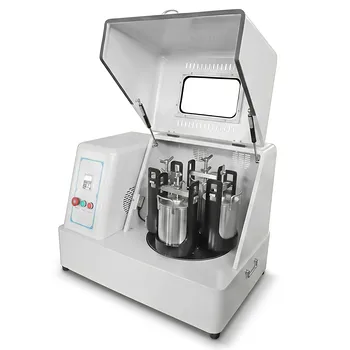
Vertical Square Planetary Ball Mill for Laboratory Sample Preparation and Nanoscale Grinding
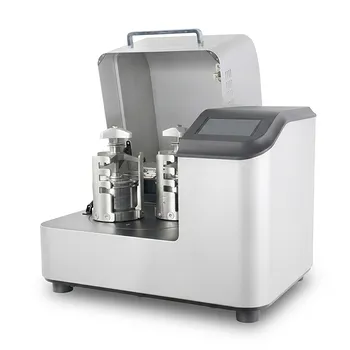
High Energy Planetary Ball Mill for Nano Scale Grinding and Mechanical Alloying
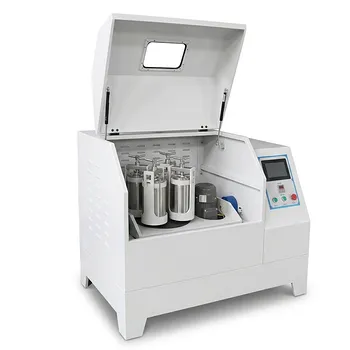
360° Rotating Omnidirectional Laboratory Planetary Ball Mill for Homogeneous Ultra-Fine Grinding and Mixing
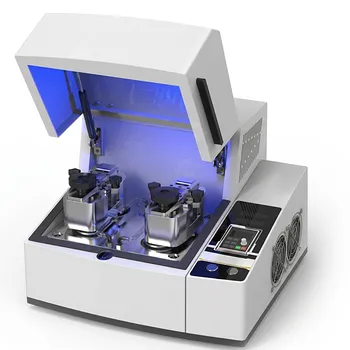
Laboratory Nano High Energy Ball Mill Ultrafine Grinding Mechanical Alloying
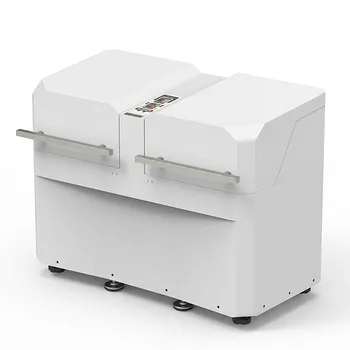
Dual Station Planetary Ball Mill 24L
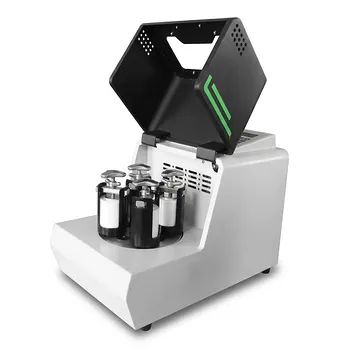
Miniature Planetary Ball Mill with Vacuum Grinding and High Efficiency for Laboratory Sample Preparation
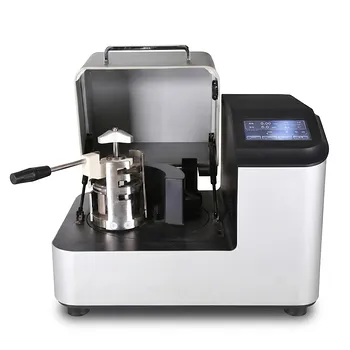
High Energy Laboratory Planetary Ball Mill for Nano Grinding and Material Science Sample Preparation
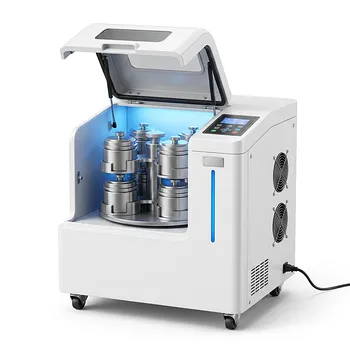
High Energy Omnidirectional Planetary Ball Mill 20L
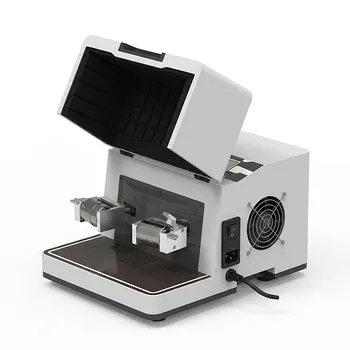
High Energy Hybrid Vibratory Ball Mill for Grinding Mixing and Cell Disruption
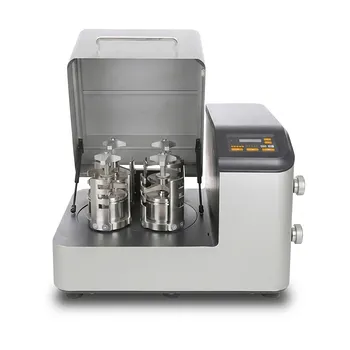
High Energy Planetary Ball Mill for Nano Scale Grinding and Colloidal Mixing in Material Science Research
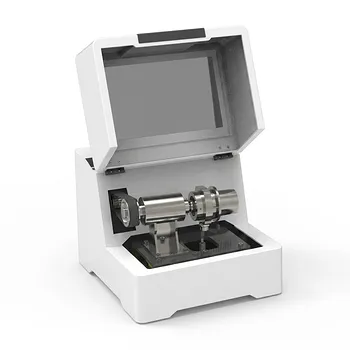
Single Tank High Energy Vibratory Ball Mill for Laboratory Grinding and Mixing
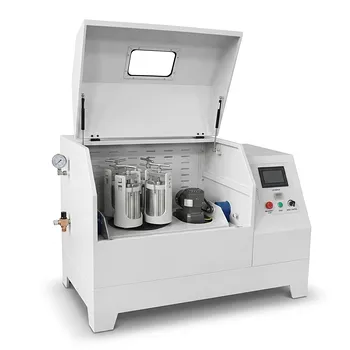
Vertical Production Planetary Ball Mill for High Throughput Powder Processing

High Throughput Micro Ball Mill for Cryogenic Grinding and Laboratory Cell Disruption
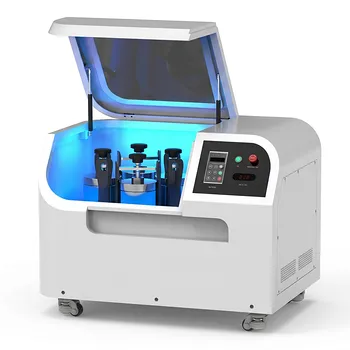
Planetary Ball Mill 12L
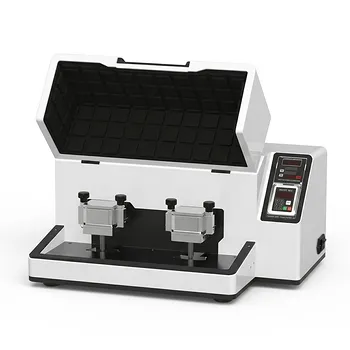
Nanoscale High Energy Vibratory Ball Mill Low Temperature
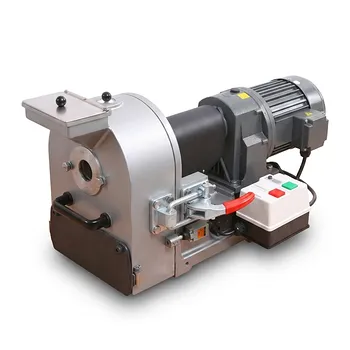
Laboratory Disc Mill for Fine Sample Preparation of Hard and Brittle Materials