How do high-efficiency powder grinding and milling machines contribute to microstructural control in armor material design?
Updated 4 months ago
High-efficiency powder grinding and milling machines act as the primary catalyst for microstructural control by refining raw materials to sub-micron or nanometer scales. This mechanical processing ensures a high degree of chemical uniformity and increases the sintering activity of the powder. By precisely managing particle size distribution and purity, these machines lay the groundwork for a dense, defect-free microstructure that is essential for superior ballistic performance.
Precision in the milling stage determines the ceiling for an armor material's performance; without sub-micron refinement and uniform additive distribution, the final ceramic will never achieve the hardness or fracture toughness required for modern threats.
Achieving Radical Particle Refinement
The Push Toward Nanoscale Powders
High-efficiency equipment like planetary ball mills and jet mills are engineered to break down raw materials far beyond the capabilities of standard crushers. They facilitate the transition from coarse fragments to sub-micron or even nanometer scales, which is the fundamental requirement for advanced armor ceramics like Silicon Carbide (SiC).
Increasing Sintering Activity
By reducing particle size, these machines significantly increase the specific surface area of the powder. This heightened surface energy acts as a driving force during the sintering process, allowing the material to achieve maximum density at lower temperatures or shorter durations.
Precision Control of the Microstructure
Uniform Distribution of Sintering Aids
A critical role of high-efficiency milling is the homogenization of sintering aids throughout the matrix. When these additives are distributed with high uniformity at the micro-scale, they prevent localized clusters that could otherwise lead to microstructural defects or weak points in the armor.
Managing Grain Boundary Composition
The purity and composition of grain boundaries are directly influenced by the milling environment and the efficiency of the powder refinement. Precise control over these boundaries ensures that the final product maintains a fine grain size after sintering, which is a primary determinant of macroscopic hardness.
The Link to Ballistic Performance
Enhancing Impact Hardness
A dense, fine-grained microstructure—enabled by high-quality powder—directly correlates to higher impact hardness. This allows the armor material to effectively shatter or deform incoming projectiles upon initial contact.
Boosting Fracture Toughness
Refined powder specifications help eliminate internal voids and irregularities, significantly enhancing the fracture toughness of the ceramic. This structural integrity is vital for energy absorption and prevents the material from catastrophic failure during high-velocity impacts.
Understanding the Trade-offs and Constraints
Contamination and Powder Purity
Extensive milling can sometimes introduce impurities from the grinding media or the atmosphere, which can degrade the ballistic properties of the armor. Selecting the correct media (e.g., using SiC media for SiC powder) and using inert gas environments in jet mills are necessary but often more expensive solutions.
Energy Consumption and Throughput
Achieving sub-micron scales requires a high energy input and can result in lower throughput compared to coarse grinding. Engineers must balance the need for extreme refinement with the economic feasibility of the production cycle, especially in large-scale armor manufacturing.
How to Apply This to Armor Material Development
Selecting the right milling strategy depends on the specific performance requirements and material chemistry of your project.
- If your primary focus is Maximum Hardness: Prioritize high-energy planetary ball milling to achieve the smallest possible grain size and ensure absolute uniformity of the matrix.
- If your primary focus is High Purity and Scalability: Utilize jet milling, as it relies on particle-to-particle attrition and reduces the risk of contamination from grinding media while maintaining high throughput.
- If your primary focus is Fracture Toughness: Focus on the precise distribution of sintering aids during the milling phase to ensure a defect-free, fully dense final microstructure.
By mastering the mechanical refinement of powders, you establish the structural foundation necessary to engineer materials capable of withstanding the most demanding ballistic environments.
Summary Table:
| Feature | Mechanical Effect | Ballistic Outcome |
|---|---|---|
| Particle Refinement | Sub-micron/Nanoscale powders | Higher impact hardness and density |
| Homogenization | Uniform sintering aid distribution | Minimized structural defects & weak points |
| Sintering Activity | Increased specific surface area | Fine grain size and enhanced toughness |
| Contamination Control | Inert gas/specific media options | Maintained material purity and integrity |
Optimize Your Armor Material Development with Precision Engineering
Achieve the ultimate ballistic performance with [Brand Name]’s complete laboratory sample preparation solutions. We specialize in advanced powder processing and compaction equipment designed to give you total control over material microstructure.
Our extensive product line supports every stage of armor material R&D:
- Advanced Milling: High-energy planetary ball mills, jet mills, and cryogenic grinders for radical refinement.
- Processing & Sizing: Jaw/roll crushers, vibratory sieve shakers, and high-efficiency powder mixers.
- Precision Compaction: A full spectrum of hydraulic presses, including Cold/Warm Isostatic Presses (CIP/WIP), vacuum hot presses, and XRF pellet presses.
Whether you need to maximize fracture toughness or ensure chemical uniformity, our tools provide the reliability and precision your research demands. Contact our experts today to find the perfect solution for your material science challenges!
References
- James W. McCauley. Institutional and technical history of requirements‐based strategic armor ceramics basic research leading up to the multiscale material by design materials in extreme dynamic environments (MEDE) program. Part I. Brief history of institutional changes and relevant major research programs. DOI: 10.1002/ces2.10176
Mentioned Products
- High Speed Laboratory Powder Grinder Small Batch Sample Preparation Mill
- Vibratory Superfine Grinder for Ultra Fine Laboratory Powder Milling
- Laboratory Desktop Ultra Fine Powder Grinder High Speed Micronizing Pulverizer
- High Speed Laboratory Grinder Efficient Stainless Steel Powder Pulverizer Universal Material Science Mill for Sample Preparation
- Air Guided Ultrafine Pulverizer High Speed Laboratory Powder Grinder for Chemical and Material Processing
People Also Ask
- What role does a laboratory grinder play in the pretreatment of sunflower seed shell-based adsorbents? Boost Efficiency.
- How does a laboratory grinder or mill enhance the adsorption performance of agricultural waste materials? Boost Surface Area
- What is the function of a laboratory high-speed pulverizer in the preparation of eggshell powder? Essential Pretreatment
- What is the role of laboratory grinding equipment in the preparation of waste glass powder for eco-friendly red bricks?
- Why is grinding equipment necessary for SnO2-Sb2O3 xerogels? Maximize surface area and photocatalytic activity.

Tech Team · PowderPreparation
Last updated on Jun 03, 2026
Related Products
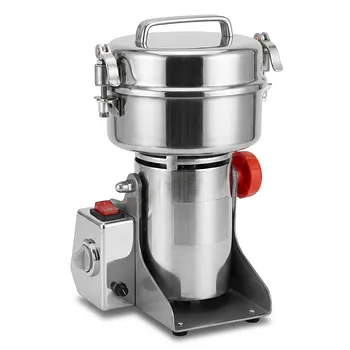
High Speed Laboratory Powder Grinder Small Batch Sample Preparation Mill
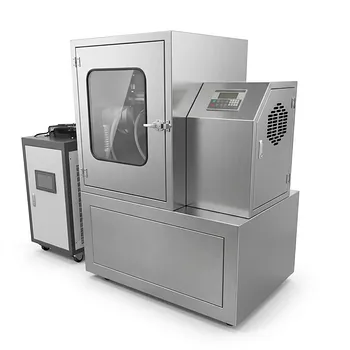
Vibratory Superfine Grinder for Ultra Fine Laboratory Powder Milling
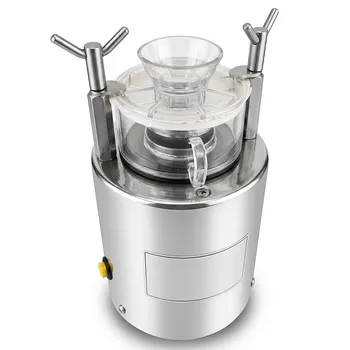
Laboratory Desktop Ultra Fine Powder Grinder High Speed Micronizing Pulverizer
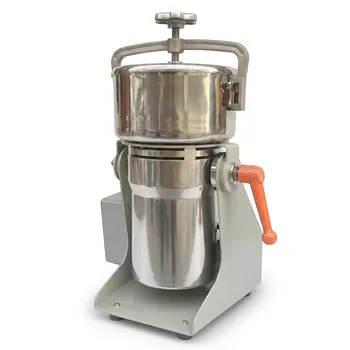
High Speed Laboratory Grinder Efficient Stainless Steel Powder Pulverizer Universal Material Science Mill for Sample Preparation
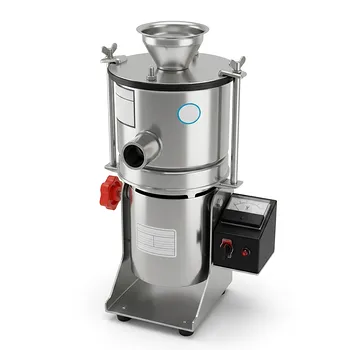
Air Guided Ultrafine Pulverizer High Speed Laboratory Powder Grinder for Chemical and Material Processing
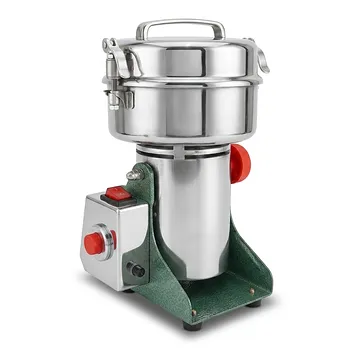
Small High-Speed Laboratory Grinder for Powder Processing
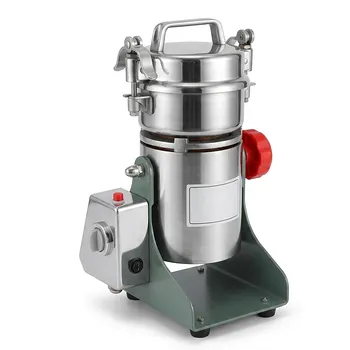
High Speed Swing Type Laboratory Pulverizer for Fine Powder Grinding and Sample Preparation

Vertical Production Planetary Ball Mill for High Throughput Powder Processing
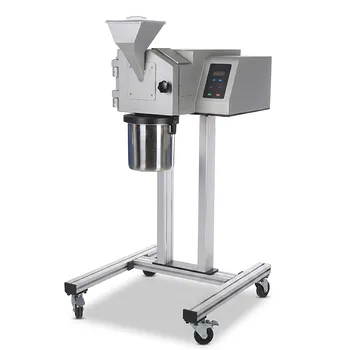
Cross Beater Mill for Brittle Material Grinding and Continuous Fine Crushing Industrial Sample Preparation
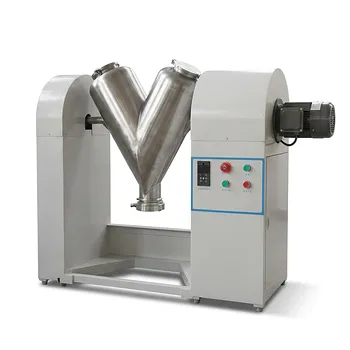
V-Type Powder Mixer for Uniform Blending of Dry Powders and Granules
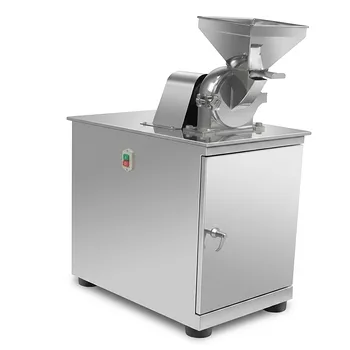
Universal Laboratory Pulverizer Grinder for Small Batch Powder Processing and Material Science Research

Heavy Duty Horizontal Planetary Ball Mill for Efficient Industrial Grinding and Sample Preparation
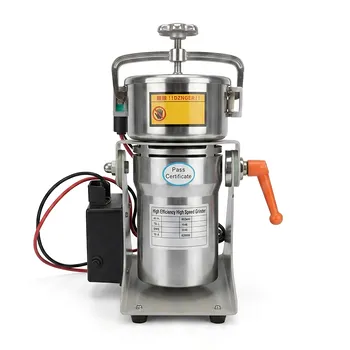
High Efficiency High Speed Grinder Laboratory Mill 1300W 25000rpm
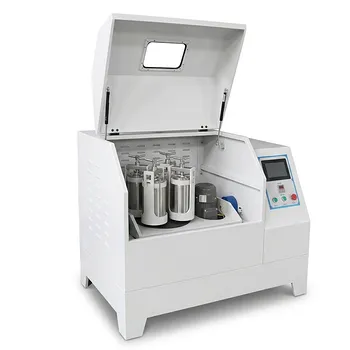
360° Rotating Omnidirectional Laboratory Planetary Ball Mill for Homogeneous Ultra-Fine Grinding and Mixing
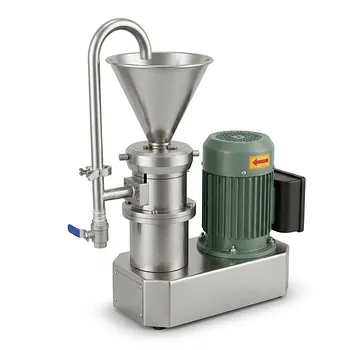
Small Laboratory Colloid Mill for Ultra-Fine Wet Grinding and Emulsification
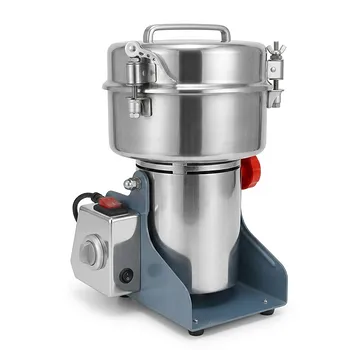
Small High-Speed Grinder for Efficient Laboratory Sample Preparation
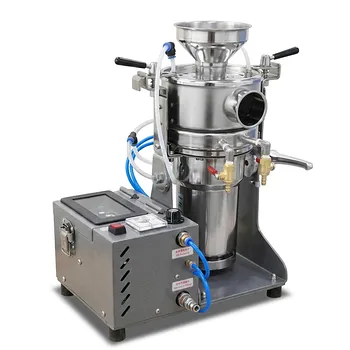
Water Cooled Pulse Jet Ultrafine Grinder
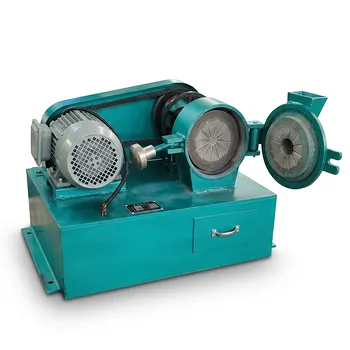
Laboratory Disc Mill Medium Hard Material Grinding Coal Coke Ore Pulverizer
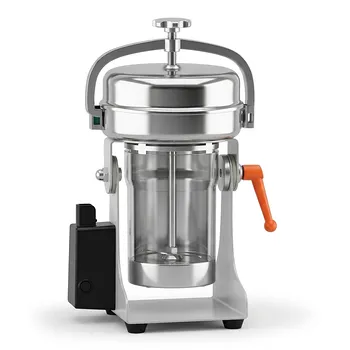
High Efficiency High Speed Grinder 2200W 25000 RPM Laboratory Sample Preparation
