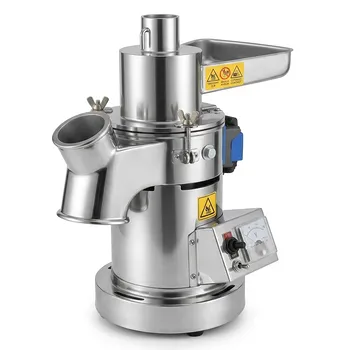
How do grinders and industrial standard sieves process carbonized palm shell charcoal for superior biomass quality?
Updated 3 months ago
Grinders and industrial standard sieves are the primary tools used to transform raw carbonized palm shell chunks into a high-performance, uniform charcoal powder. Grinders provide the mechanical force necessary to reduce particle size, while sieves ensure the final product meets specific mesh requirements, such as a 60-mesh standard. This dual-stage process optimizes the powder's surface area, ensuring superior binder integration and consistent combustion properties.
The synergy between grinding and sieving is critical for achieving a uniform particle size, which maximizes surface area and binder efficiency. This technical precision directly determines the structural integrity, density, and burning quality of the final biomass pellet or briquette.
The Role of Grinding in Material Reduction
Increasing Specific Surface Area
Grinders and pulverizing devices are used to mechanically break down coarse carbonized palm shell chunks into a fine powder. By reducing the particle size, the specific surface area of the material increases significantly. This allows for more "contact points" between the charcoal particles and the added binders during the mixing stage.
Facilitating Component Homogenization
In many industrial applications, palm shell charcoal is blended with other materials like coconut shell or rice husk charcoal. Fine grinding ensures these different biomass components can be mixed thoroughly and evenly. This homogeneity is vital for maintaining a consistent chemical composition throughout the entire batch of charcoal powder.
Enhancing Structural Density
When charcoal powder is finely ground, the particles can be packed more tightly during the pressing stage. This reduction in interstitial space leads to an increase in the structural density of the biomass briquettes. A denser product typically results in a longer burn time and higher physical durability.
The Precision of Industrial Standard Sieves
Controlling Particle Size Distribution
Following the grinding process, industrial standard sieves (such as a 60-mesh sieve) are used to filter the powder. This stage is critical for ensuring uniformity, as it removes oversized particles that could create weak points in the final pellet. Precise control over size distribution ensures that the powder behaves predictably during automated processing.
Optimizing Binder Efficiency
A uniform particle size ensures that the charcoal powder mixes thoroughly with binders without requiring excessive amounts of additives. When particles are consistent in size, the binder can coat each grain evenly. This leads to a stronger mechanical bond, preventing the pellets from crumbling during transport or storage.
Improving Combustion Performance
Uniformity directly impacts how the final product burns. Finely sieved powder creates a consistent internal structure that allows for steady oxygen flow and heat release. Without the precision provided by sieving, the resulting pellets may exhibit uneven burning rates or poor ignition quality.
Understanding the Trade-offs and Limitations
Energy Consumption vs. Fineness
While finer powder generally leads to better pellets, the energy required to grind material increases exponentially as the target size decreases. Manufacturers must find the economic balance between the cost of electricity for pulverizers and the desired quality of the charcoal. Over-grinding can also lead to "dusting" issues, which create waste and safety hazards.
Sieve Blinding and Maintenance
Standard sieves are prone to a phenomenon called "blinding," where fine particles clog the mesh openings. This reduces throughput and can lead to inconsistent particle sizing if the equipment is not regularly cleaned or fitted with anti-blinding mechanisms. Regular maintenance is required to ensure the 60-mesh or other standard screens remain effective.
How to Apply This to Your Production Line
To achieve the best results in carbonized palm shell processing, your equipment strategy should align with your specific output requirements.
- If your primary focus is Maximum Durability: Invest in high-precision grinders that produce a finer powder to increase the structural density and mechanical strength of your briquettes.
- If your primary focus is Combustion Consistency: Prioritize industrial-grade 60-mesh sieving to ensure a uniform particle size distribution, which stabilizes the burn rate.
- If your primary focus is Operational Efficiency: Implement a closed-loop system where oversized particles captured by the sieve are automatically fed back into the grinder to minimize material waste.
By mastering the balance between mechanical reduction and precise filtration, you ensure a superior biomass product that meets both structural and thermal standards.
Summary Table:
| Process Step | Primary Function | Key Impact on Charcoal Powder |
|---|---|---|
| Grinding | Mechanical Size Reduction | Increases specific surface area and facilitates binder integration. |
| Sieving | Size Distribution Control | Ensures 60-mesh uniformity for consistent combustion and density. |
| Homogenization | Component Blending | Enables even mixing of biomass types (e.g., coconut or rice husk). |
| Refinement | Quality Assurance | Removes oversized particles to prevent structural weak points. |
Elevate Your Material Processing with Professional Laboratory Solutions
At Our Material Science Division, we provide complete laboratory sample preparation solutions tailored for high-performance powder processing. Whether you are refining carbonized palm shells or developing advanced biomass briquettes, our specialized equipment ensures precision at every stage:
- Size Reduction: High-efficiency crushers (jaw/roll) and a versatile range of mills (planetary ball, jet, sand/bead, disc, rotor) including liquid nitrogen cryogenic grinders for heat-sensitive materials.
- Classification: Precision sieve shakers (vibratory/air-jet) with a wide array of test sieves and meshes to guarantee particle uniformity.
- Mixing & Compaction: Advanced powder and defoaming mixers, followed by our full spectrum of hydraulic presses—including Cold/Warm Isostatic Presses (CIP/WIP), standard lab presses, and vacuum hot presses—to achieve maximum structural density.
Ready to optimize your production consistency and fuel quality? Contact our experts today to find the perfect equipment for your workflow!
References
- Hendri Nurdin, Yoszi Mingsi Anaperta. Evaluation and characterization of charcoal briquettes using damar binder for sustainable energy. DOI: 10.24036/teknomekanik.v8i1.33672
Mentioned Products
- Small High-Speed Laboratory Grinder for Powder Processing
- Universal Laboratory Pulverizer Grinder for Small Batch Powder Processing and Material Science Research
- Laboratory Hammer Mill for Coal Quality Analysis and Brittle Mineral Grinding
- Laboratory Mortar Grinder for Sample Preparation and Cryogenic Powder Homogenization
- Laboratory Disc Pulverizer for Coal Coke Ore and Medium Hard Materials Sample Preparation
People Also Ask
- What role does a laboratory grinder play in the pretreatment of sunflower seed shell-based adsorbents? Boost Efficiency.
- How does a laboratory grinder or mill enhance the adsorption performance of agricultural waste materials? Boost Surface Area
- What is the role of laboratory grinding equipment in the preparation of waste glass powder for eco-friendly red bricks?
- Why is grinding equipment necessary for SnO2-Sb2O3 xerogels? Maximize surface area and photocatalytic activity.
- What is the primary role of grinding equipment in BLA preparation? Enhance Reactivity & Material Uniformity

Tech Team · PowderPreparation
Last updated on Jun 03, 2026
Related Products
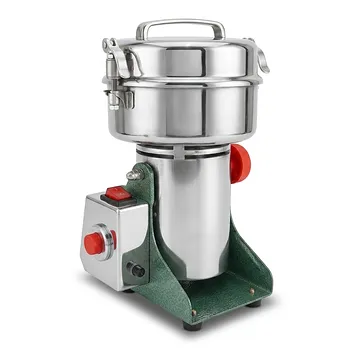
Small High-Speed Laboratory Grinder for Powder Processing
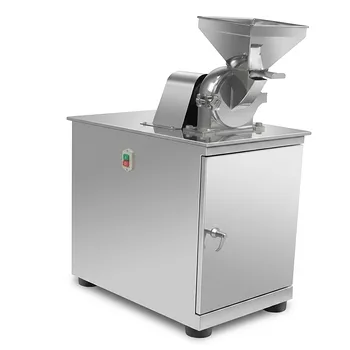
Universal Laboratory Pulverizer Grinder for Small Batch Powder Processing and Material Science Research
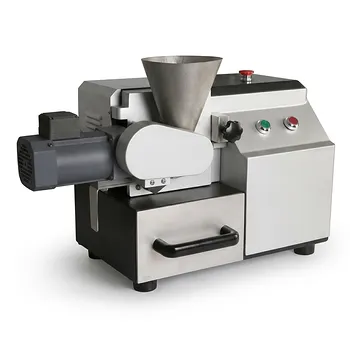
Laboratory Hammer Mill for Coal Quality Analysis and Brittle Mineral Grinding

Laboratory Mortar Grinder for Sample Preparation and Cryogenic Powder Homogenization
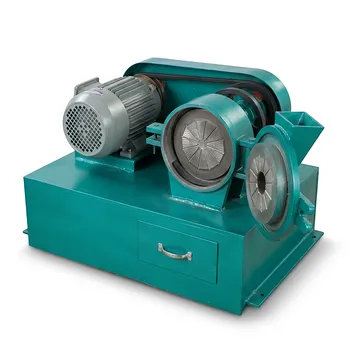
Laboratory Disc Pulverizer for Coal Coke Ore and Medium Hard Materials Sample Preparation
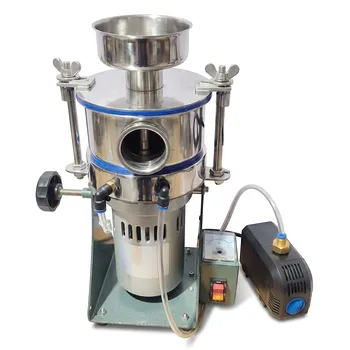
Water Cooled Airflow Ultra Fine Grinder for Low Temperature Material Processing
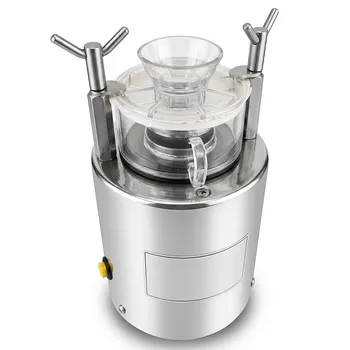
Laboratory Desktop Ultra Fine Powder Grinder High Speed Micronizing Pulverizer
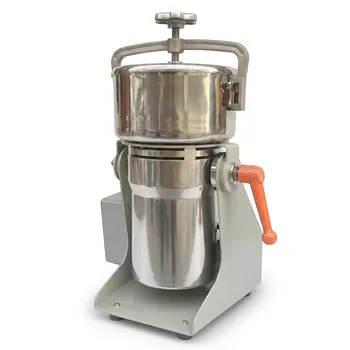
High Speed Laboratory Grinder Efficient Stainless Steel Powder Pulverizer Universal Material Science Mill for Sample Preparation
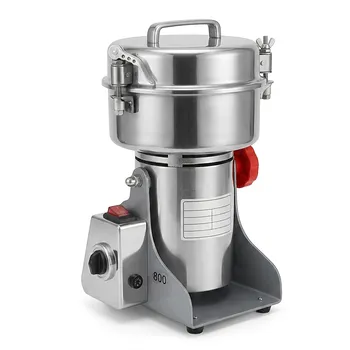
Small High-Speed Laboratory Grinder for Rapid Sample Preparation
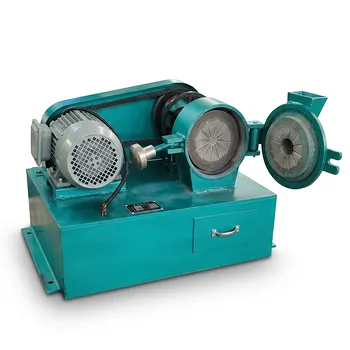
Laboratory Disc Mill Medium Hard Material Grinding Coal Coke Ore Pulverizer
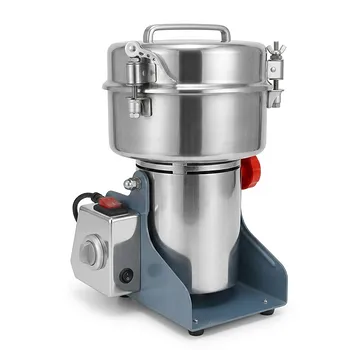
Small High-Speed Grinder for Efficient Laboratory Sample Preparation
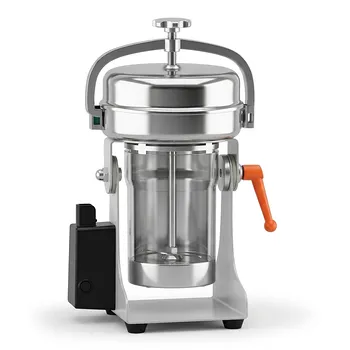
High Efficiency High Speed Grinder 2200W 25000 RPM Laboratory Sample Preparation