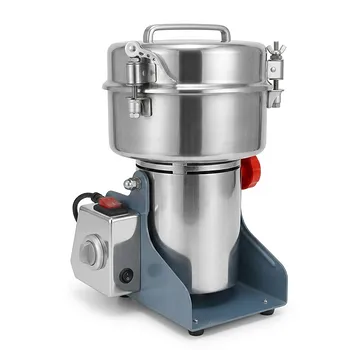
What role does grinding equipment play in the powder processing of Bi-2212 superconducting ceramics? Boost Phase Purity
Updated 5 months ago
Grinding equipment is the primary mechanism for achieving the microscopic homogeneity and high surface reactivity required for Bi-2212 superconducting ceramics. It uses mechanical force—specifically impact and shear—to refine raw material particles into a micron-level distribution while breaking down agglomerates. This process ensures that precursor components like bismuth oxide, strontium carbonate, and copper oxide are uniformly mixed at an atomic level, creating the optimal environment for high-purity phase formation during thermal treatment.
Core Takeaway: Grinding equipment transforms inert raw chemical powders into a highly reactive, homogenous precursor by maximizing specific surface area and ensuring precise stoichiometric distribution. This step is the fundamental prerequisite for preventing local phase segregation and ensuring the structural integrity of the final superconducting ceramic matrix.
Enhancing Reactivity through Particle Refinement
Increasing Effective Specific Surface Area
Grinding equipment utilizes high-intensity physical force to significantly reduce the size of raw material particles.
This reduction drastically increases the effective specific surface area of the powder.
A higher surface area facilitates greater contact between individual particles, which is essential for initiating chemical changes.
Promoting Solid-State Reaction Activity
The increased surface energy resulting from mechanical refinement acts as a catalyst for solid-state reaction activity.
By decreasing the distance between reacting species, grinding provides the necessary kinetic conditions for the precursors to interact efficiently during calcination.
This promotes the formation of critical covalent bonds during thermal treatment, leading to a more stable ceramic structure.
Achieving Microscopic Homogeneity and Stoichiometry
Molecular-Level Component Mixing
Electronic grinding machines and ball mills are used for continuous milling to ensure that high-purity raw materials reach a high degree of uniformity.
This process ensures that components like Bi2O3, SrCO3, CaCO3, and CuO are mixed at the molecular or atomic level.
Without this level of precision, the material would suffer from localized compositional differences that degrade superconducting performance.
Preventing Localized Phase Segregation
High-energy grinding prevents the formation of "dead zones" where the chemical ratio is incorrect.
By achieving a micron-level particle size distribution, the equipment ensures that no single component dominates a specific area of the matrix.
This uniformity is a critical foundation for ensuring that the subsequent sintering process results in a high-purity superconducting phase.
Optimizing the Production Cycle
Breaking Down Agglomerates
Raw materials often arrive with large clusters or "agglomerates" that can hinder the reaction process.
Long-term grinding (often up to 9 hours or more) uses mechanical impact to break down these agglomerates into fine powders.
This step ensures that the precursor is physically consistent before any heat is applied.
Efficiency and High-Energy Milling
Advanced high-energy friction mills can significantly shorten the mixing time compared to traditional methods.
While traditional ball milling may take 24 hours or more, high-energy equipment can achieve similar or superior uniformity in as little as one hour.
This optimization allows for a faster production cycle without sacrificing the microscopic consistency of the Bi-2212 system.
Understanding the Trade-offs
Contamination Risks
The primary trade-off in extended grinding is the risk of media contamination.
As the grinding media (balls or lining) wears down, small amounts of the material can be incorporated into the Bi-2212 powder.
Even trace amounts of impurities can significantly disrupt the superconducting properties of the final ceramic.
Over-Processing and Amorphization
Excessive grinding can sometimes lead to the unwanted amorphization of the crystalline raw materials.
While high surface energy is beneficial, over-processing can make the powder difficult to handle during the forming and pressing stages.
Balancing the intensity and duration of the milling is vital to maintaining the balance between reactivity and processability.
How to Apply Grinding Strategies to Your Project
Making the Right Choice for Your Goal
- If your primary focus is Maximum Phase Purity: Utilize long-term (9+ hour) low-speed ball milling with high-purity zirconia media to ensure total homogeneity without excessive heat.
- If your primary focus is Rapid Prototyping and Throughput: Employ high-energy friction or planetary milling to reduce mixing times to under two hours, while carefully monitoring for media wear.
- If your primary focus is Large-Scale Structural Uniformity: Prioritize electronic powder mixing equipment that emphasizes continuous mechanical motion to maintain precise stoichiometry across large batches.
The strategic application of grinding equipment is the most critical factor in transforming raw chemical oxides into a high-performance Bi-2212 superconducting matrix.
Summary Table:
| Key Processing Phase | Grinding Equipment Role | Impact on Bi-2212 Quality |
|---|---|---|
| Particle Refinement | Increases specific surface area | Enhances solid-state reaction activity |
| Homogenization | Molecular-level component mixing | Prevents localized phase segregation |
| De-agglomeration | Breaks down clusters/clumps | Ensures physical consistency of precursors |
| Time Optimization | High-energy milling (Planetary/Friction) | Dramatically shortens production cycles |
| Stoichiometry Control | Precise mechanical distribution | Guarantees correct chemical ratios for superconductivity |
Elevate Your Superconductor Research with Precision Sample Prep
Achieving high-purity Bi-2212 phases requires more than just mixing; it demands absolute microscopic homogeneity. At [Your Brand Name], we provide complete laboratory sample preparation solutions tailored for material science. Our expertise in powder processing ensures your precursors achieve the exact stoichiometry and reactivity needed for high-performance ceramics.
Our comprehensive equipment line includes:
- Milling & Grinding: High-energy planetary ball mills, jet mills, rotor mills, and cryogenic grinders for contamination-free refinement.
- Mixing: Advanced powder and vacuum defoaming mixers for molecular-level uniformity.
- Compaction & Sintering: A full spectrum of hydraulic presses, including Cold/Warm Isostatic Presses (CIP/WIP), XRF pellet presses, and vacuum hot presses.
- Sizing: Vibratory and air-jet sieve shakers for precise particle size distribution.
Don't let impurities or poor homogeneity compromise your superconducting properties. Contact our technical experts today to find the ideal milling and pressing solution for your material research!
References
- Ali Mercan, G. Yıldırım. Examination of Load-Independent Parameters of Bi2.1-xBaxSr2.0Ca1.1Cu2.0Oy Samples Depending on Semi-Empirical Mechanical Models. DOI: 10.16984/saufenbilder.1687983
Mentioned Products
- Vertical Nano Bead Mill for Ceramic Materials with Permanent Magnet Motor and High Efficiency Grinding
- Small Ceramic Structure Laboratory Sand Mill Nanoscale Grinding Dispersion Equipment Seal-less Screen-less Design
- Nano Laboratory Bead Mill Desktop Sub Micron Sand Mill Screenless Seal Less Powder Grinder
- Cross Beater Mill for Brittle Material Grinding and Continuous Fine Crushing Industrial Sample Preparation
- High Speed Vibratory Disc Mill for Spectral Analysis Sample Preparation and Rapid Powder Grinding
People Also Ask
- What role does a vertical bead mill play in the preparation of pharmaceutical nanocrystals? Enhance Bioavailability
- Why is it necessary to precisely control the grinding media loading ratio? Master Nanosuspension Yield & API Stability
- How does the bead filling rate affect the grinding performance and equipment wear in a bead mill? Optimization Guide
- Why is an external cooling circulation system necessary during the high-speed operation of a bead mill? Protect Integrity
- Why is a ceramic lining preferred over stainless steel for a bead mill? Protect Enzymes and Ensure Biomass Purity

Tech Team · PowderPreparation
Last updated on May 14, 2026
Related Products
Vertical Nano Bead Mill for Ceramic Materials with Permanent Magnet Motor and High Efficiency Grinding
Small Ceramic Structure Laboratory Sand Mill Nanoscale Grinding Dispersion Equipment Seal-less Screen-less Design
Nano Laboratory Bead Mill Desktop Sub Micron Sand Mill Screenless Seal Less Powder Grinder
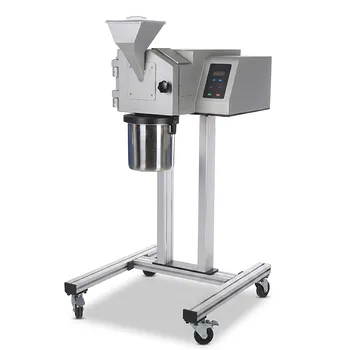
Cross Beater Mill for Brittle Material Grinding and Continuous Fine Crushing Industrial Sample Preparation
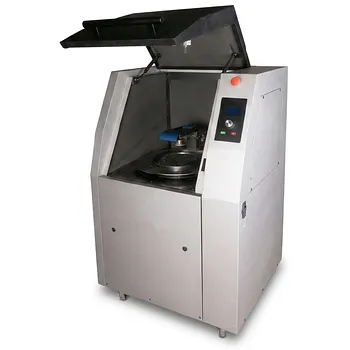
High Speed Vibratory Disc Mill for Spectral Analysis Sample Preparation and Rapid Powder Grinding
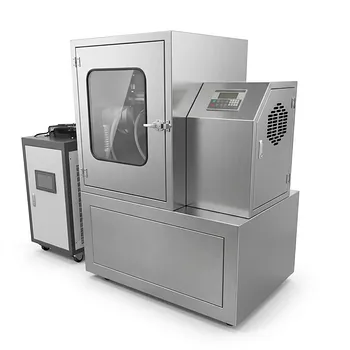
Vibratory Superfine Grinder for Ultra Fine Laboratory Powder Milling
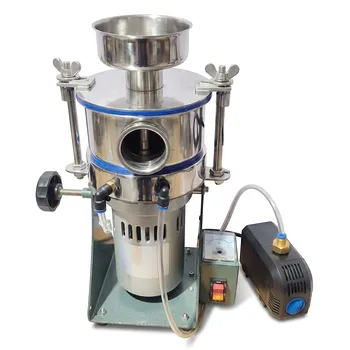
Water Cooled Airflow Ultra Fine Grinder for Low Temperature Material Processing
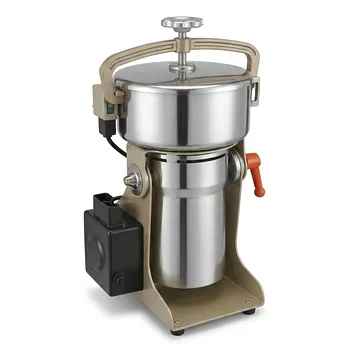
Multifunctional High Efficiency High Speed Laboratory Grinder
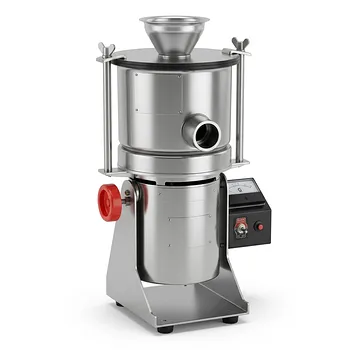
Laboratory Ultrafine Impact and Airflow Grinder for Precise Particle Size Control
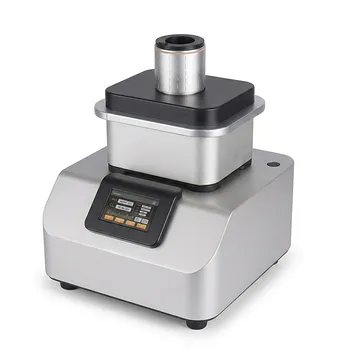
Ultra Centrifugal Mill High Speed Laboratory Grinder for Fibrous and Brittle Sample Preparation
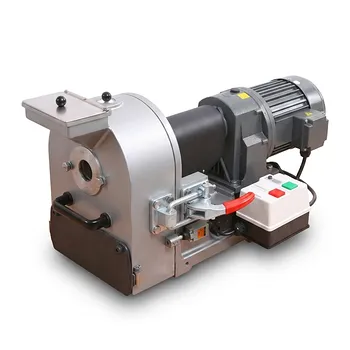
Laboratory Disc Mill for Fine Sample Preparation of Hard and Brittle Materials
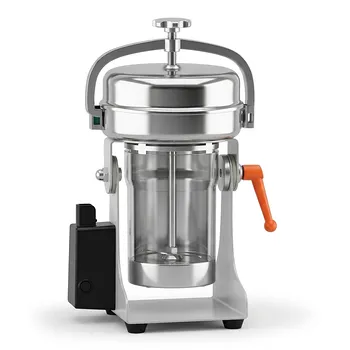
High Efficiency High Speed Grinder 2200W 25000 RPM Laboratory Sample Preparation
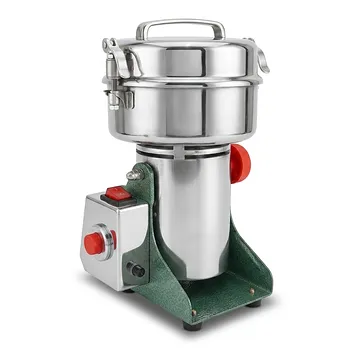
Small High-Speed Laboratory Grinder for Powder Processing
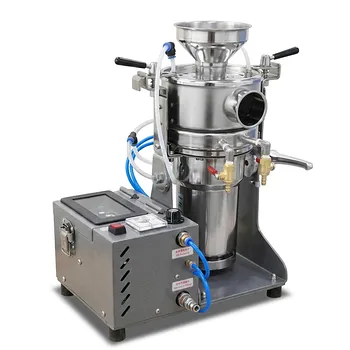
Water Cooled Pulse Jet Ultrafine Grinder
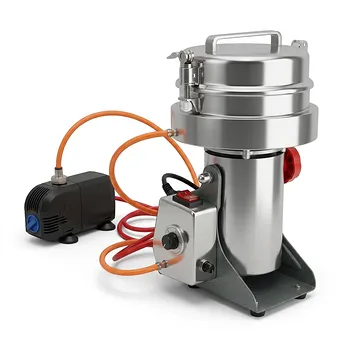
Water Cooled High Speed Grinder with Cryogenic Option for Laboratory Sample Preparation
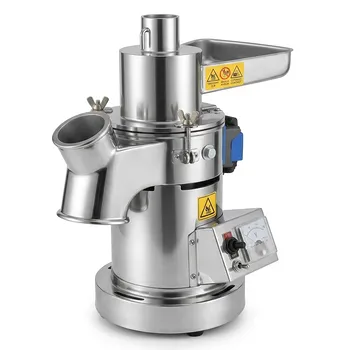
Continuous Feeding Grinder High Efficiency Pulverizer for Lab Sample Preparation
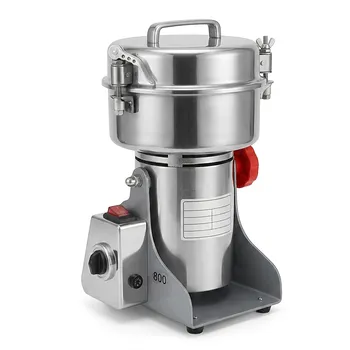
Small High-Speed Laboratory Grinder for Rapid Sample Preparation
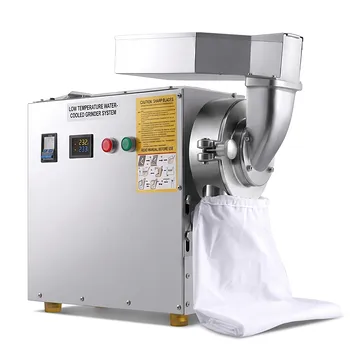
Low Temperature Water Cooled Continuous Feed Grinder Two Stage Coarse and Fine Grinding System
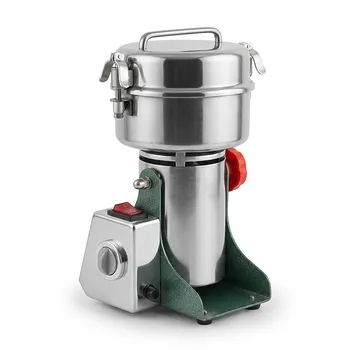
Small High-Speed Swing Grinder for Laboratory Sample Preparation