How does the size of grinding media influence the vibratory milling efficiency? Achieve Optimal Pharmaceutical Fineness
Updated 4 months ago
The selection of grinding media size is the primary determinant of energy transfer and final product fineness in vibratory milling. For pharmaceutical suspensions, smaller media increase the frequency of particle collisions, which is essential for reaching the nanometer range, while larger media provide the necessary impact force to fracture larger or harder starting materials.
Media size dictates the balance between collision frequency and impact energy. By optimizing this choice based on your equipment’s power density and the initial feed size, you can effectively lower the grinding equilibrium and achieve a stable, uniform suspension.
The Mechanics of Media Size and Collision Frequency
Contact Point Density
The diameter of the grinding media directly determines the number of contact points within the milling chamber. Smaller beads, such as those with a 0.3 mm diameter, provide significantly more contact points per unit volume than 1.0 mm beads.
This increased density ensures that drug particles are subjected to a higher collision frequency. This is a critical factor for ensuring that every particle in the suspension is repeatedly captured and processed.
Probability of Particle Capture
Smaller grinding media offer a higher probability of capturing and fracturing drug particles. Because the specific surface area of the media is greater, there is a more uniform distribution of shear forces throughout the suspension.
This uniform energy distribution allows drug particles to reach a target size, often below 200 nm, more rapidly. It is the preferred approach for modern nano-formulations that require extreme fineness.
Impact Energy vs. Stress Intensity
The Role of Media Mass
While small media excel at frequency, larger media provide a stronger single impact force due to their greater mass. This is necessary when the starting material consists of coarse crystals or high-hardness aggregates that resist low-energy collisions.
As a general rule, the grinding media should be at least three times larger than the largest particles in the feed material. This ensures that the media has enough momentum to overcome the structural integrity of the initial solids.
Matching Media to Power Density
The efficiency of the size selection is inextricably linked to the power density of the vibratory mill. High-power equipment can effectively utilize very small media (0.1 mm to 0.2 mm) to reach the lower grinding limit.
Conversely, in lower-power settings, larger media may be required to maintain sufficient stress intensity. Without adequate impact force, the milling process will fail to fracture the particles regardless of the collision frequency.
Achieving the Nanoscale Equilibrium
Reaching the Lower Grinding Limit
Every milling process has a grinding equilibrium diameter, where the rate of breakage equals the rate of particle re-aggregation. Using smaller media, such as fine ceramic beads, effectively lowers this equilibrium point.
By reducing the media size, you allow the system to produce finer nanometer-scale particles that would be impossible to achieve with larger, heavier media.
Distribution Uniformity
Smaller media contribute to a narrower particle size distribution. Because the shear forces are more evenly applied, there is less variation in the energy experienced by individual drug crystals.
This results in a more stable pharmaceutical suspension with consistent bioavailability and predictable dissolution rates.
Understanding the Trade-offs
Milling Time and Viscosity
Using extremely small media can sometimes increase the overall milling time if the media is not properly matched to the initial particle size. If the media is too small to fracture the initial feed, the process becomes highly inefficient.
Additionally, as particles become finer, the viscosity of the suspension typically increases. Smaller media may struggle to move effectively through highly viscous fluids, leading to a "cushioning" effect that reduces breakage efficiency.
Contamination and Material Integrity
The choice of media material—such as zirconia or high-density ceramics—is as important as its size. Smaller media have a higher total surface area, which can increase the risk of sample contamination from media wear.
It is vital to select media that is chemically inert and denser than the pharmaceutical sample. This ensures that the energy is used for particle reduction rather than wearing down the grinding beads themselves.
How to Apply This to Your Process
Making the Right Choice for Your Goal
- If your primary focus is reaching sub-200nm sizes: Utilize the smallest possible media (0.1 mm to 0.3 mm) in a high-power density mill to maximize collision frequency.
- If your primary focus is processing coarse feed material: Begin with larger media (2.0 mm or greater) to ensure the initial impact force is sufficient to fracture large crystals.
- If your primary focus is minimizing milling time: Match the media size to be approximately 3-10 times the size of the target particle to balance impact force with frequency.
- If your primary focus is reducing contamination: Select high-density, wear-resistant ceramic media and ensure the media size is not so small that it leads to excessive frictional wear.
By precisely balancing media diameter with the mechanical limits of your equipment, you can achieve a highly stable pharmaceutical suspension with optimal particle morphology.
Summary Table:
| Media Size | Primary Mechanism | Best Applications | Key Result |
|---|---|---|---|
| Small (0.1–0.5 mm) | High Collision Frequency | Nano-formulations, sub-200nm targets | Uniform, stable suspensions |
| Large (> 1.0 mm) | High Impact Energy | Coarse crystals, high-hardness feed | Efficient initial fracture |
| Matched Size | Balanced Stress Intensity | General size reduction | Optimized milling time |
Elevate Your Material Processing with Expert Solutions
Achieving the perfect particle size distribution requires the right equipment and technical expertise. At Our Laboratory Solutions, we provide complete sample preparation systems for material science, specializing in high-performance powder processing and compaction equipment.
Whether you are developing stable pharmaceutical suspensions or advanced ceramic materials, our extensive product line supports every stage of your workflow:
- Precision Milling: Planetary ball mills, jet mills, rotor mills, and liquid nitrogen cryogenic grinders for reaching the nanoscale.
- Material Preparation: Jaw/roll crushers and vibratory/air-jet sieve shakers for consistent feed sizing.
- Advanced Compaction: A full spectrum of hydraulic presses, including Cold/Warm Isostatic Presses (CIP/WIP), vacuum hot presses, and XRF pellet presses.
- Homogeneous Mixing: Specialized powder and defoaming mixers to ensure suspension stability.
Ready to optimize your milling efficiency and achieve superior material integrity? Contact our technical team today for a tailored consultation on our laboratory equipment solutions!
References
- Meng Li, Ecevit Bilgili. An Intensified Vibratory Milling Process for Enhancing the Breakage Kinetics during the Preparation of Drug Nanosuspensions. DOI: 10.1208/s12249-015-0364-3
Mentioned Products
- Vibratory Disc Mill for Rapid Fine Grinding and High Throughput Sample Preparation of Hard and Brittle Materials
- High Speed Vibratory Disc Mill for Spectral Analysis Sample Preparation and Rapid Powder Grinding
- Single Tank High Energy Vibratory Ball Mill for Laboratory Grinding and Mixing
- Nanoscale High-Energy Vibratory Ball Mill for Laboratory Sample Preparation, Mechanochemistry, and Mechanical Alloying
- Dual Jar High Energy Vibratory Ball Mill
People Also Ask
- Why is a vibratory disc mill utilized for the pretreatment of alum shale waste samples in phase analysis? Ensure XRD Accuracy
- What is the primary function of a vibrating disc mill in the pretreatment of raw clay samples? Achieve Micron-Level Precision
- What is the primary function of a laboratory disc mill for oyster shells? Boost Reactivity & Analytical Precision
- What is the function of a laboratory vibratory mill? Master StPh/MMT Nanocomposite Preparation via Mechanochemistry
- What is the primary function of a vibration mill in processing beta-SiAlON after SHS? Powder Refinement Guide.

Tech Team · PowderPreparation
Last updated on Jun 03, 2026
Related Products
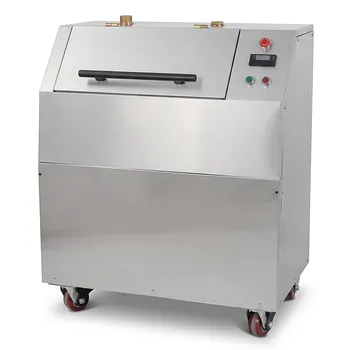
Vibratory Disc Mill for Rapid Fine Grinding and High Throughput Sample Preparation of Hard and Brittle Materials
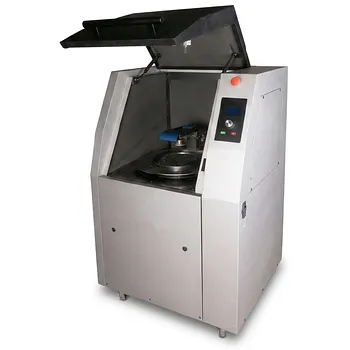
High Speed Vibratory Disc Mill for Spectral Analysis Sample Preparation and Rapid Powder Grinding
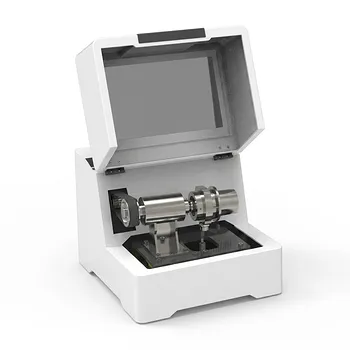
Single Tank High Energy Vibratory Ball Mill for Laboratory Grinding and Mixing
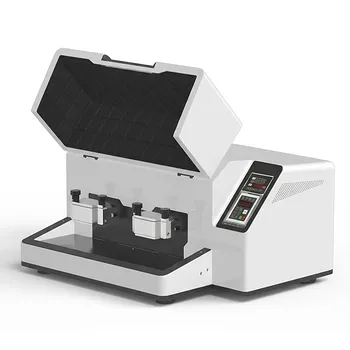
Nanoscale High-Energy Vibratory Ball Mill for Laboratory Sample Preparation, Mechanochemistry, and Mechanical Alloying
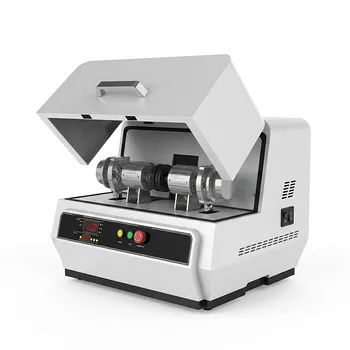
Dual Jar High Energy Vibratory Ball Mill
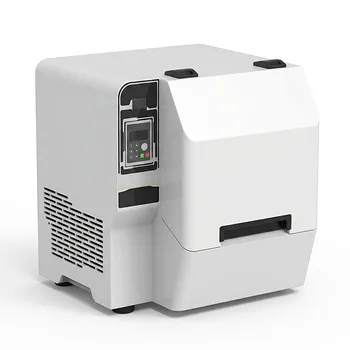
Nano High Energy Vibratory Ball Mill for Laboratory Sample Preparation
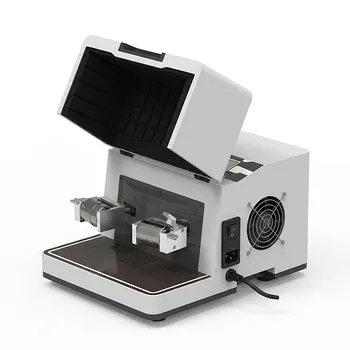
High Energy Hybrid Vibratory Ball Mill for Grinding Mixing and Cell Disruption
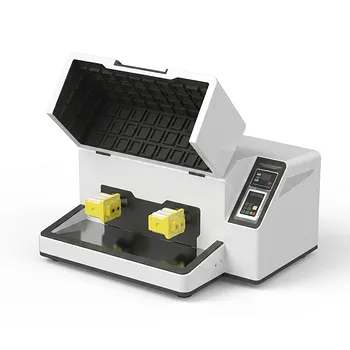
Multi-Platform Nanoscale High-Energy Vibratory Ball Mill
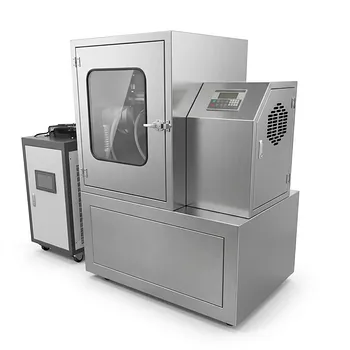
Vibratory Superfine Grinder for Ultra Fine Laboratory Powder Milling
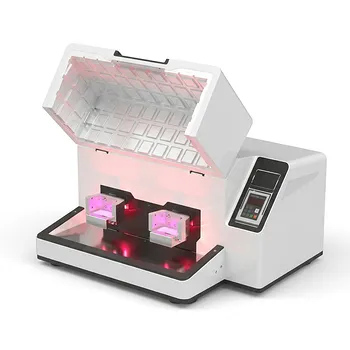
Nano High Energy Vibratory Ball Mill with Heating and Temperature Control
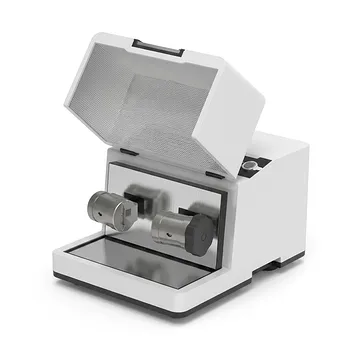
Heating Temperature Controlled High Energy Vibratory Ball Mill
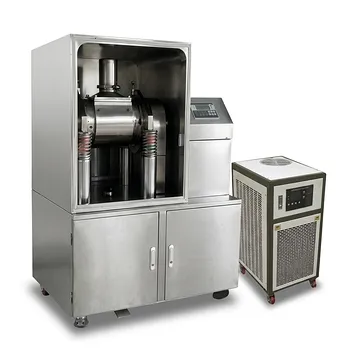
Small Vibrating Ultrafine Grinder for Traditional Chinese Medicine
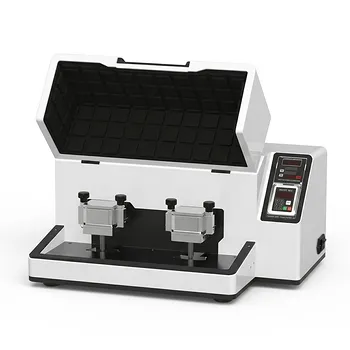
Nanoscale High Energy Vibratory Ball Mill Low Temperature
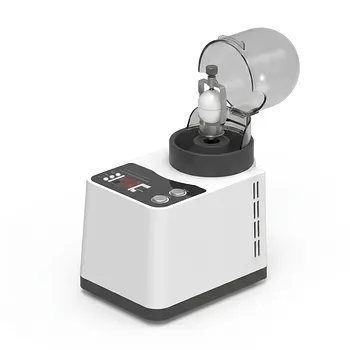
Laboratory Micro Vibration Grinding Mill for Trace Sample Preparation
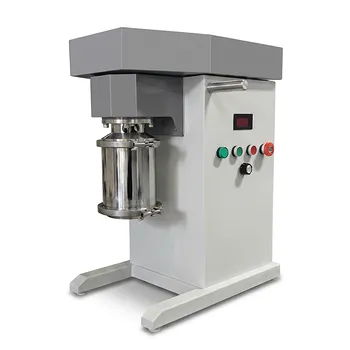
Nano Laboratory Bead Mill Desktop Sub Micron Sand Mill Screenless Seal Less Powder Grinder
Stainless Steel Rotary Vibrating Sieve High Precision Circular Vibratory Separator Industrial Powder Grading Machine Multi Layer Sifting Equipment
Automatic Vibrating Powder Feeder for Laboratory Material Processing Precision Vibratory Hopper Feeder for Granular and Powder Material Handling Industrial Grade Vibrating Tray Feeder for Consistent Material Sample Preparation

Miniature Planetary Ball Mill with Vacuum Grinding and High Efficiency for Laboratory Sample Preparation
Ultra Centrifugal Mill High Speed Laboratory Grinder for Fibrous and Brittle Sample Preparation
