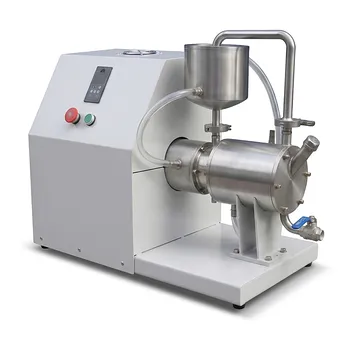
How does lab grinding equipment aid soil pre-treatment for tire wear particle analysis? Ensure Precise Results
Updated 4 months ago
The precision of tire wear particle (TWP) analysis is fundamentally limited by the homogeneity of the initial soil sample. Laboratory grinding equipment bridges the gap between bulk environmental samples and the milligram-scale requirements of advanced analytical instruments. By refining coarse soil fractions—specifically those exceeding 500 µm—grinding ensures that the sub-samples used for quantitative analysis are statistically representative of the entire site.
Core Takeaway: Grinding equipment is a critical pre-treatment tool that transforms heterogeneous soil into a uniform matrix, allowing for accurate quantification of tire wear particles through techniques like STA-FTIR. Without this refinement, sampling errors often lead to significant underestimation or overestimation of environmental contamination.
Optimizing Homogeneity for Quantitative Accuracy
Tackling Coarse Soil Fractions
Environmental soil samples are naturally diverse, often containing stones, organic matter, and debris larger than 500 µm. These coarse fractions create "nugget effects," where a single large particle can disproportionately skew the results of a small sub-sample.
Grinding equipment mechanically reduces these large components into a fine, consistent powder. This process ensures that tire wear particles, which may be adhered to or trapped within larger soil aggregates, are evenly distributed throughout the final material.
Bridging the Gap to STA-FTIR
Simultaneous Thermal Analysis coupled with Fourier Transform Infrared Spectroscopy (STA-FTIR) requires very small sub-sample masses to function correctly. If the bulk material is not homogenized through grinding, it is mathematically improbable that a few milligrams of soil will accurately reflect the concentration of the larger sample.
Refinement guarantees that every milligram of the processed soil contains a proportional representative of the total TWP load. This consistency is the foundation of quantitative reliability in environmental forensics.
The Physical Mechanisms of Sample Refinement
Increasing Specific Surface Area
Mechanical shearing and pulverization significantly increase the specific surface area of the soil particles. This is particularly important for subsequent chemical or thermal processes, as it allows for uniform heat transfer across the entire sample during analysis.
A higher surface area also facilitates better contact between the sample and any reagents used in pre-treatment. This ensures that the chemical signature of the tire rubber is fully accessible to the analytical sensors.
Breaking Down Soil Agglomerates
During the drying phase of soil preparation, particles often form hard clumps or agglomerates. These clumps can trap TWP and other target analytes, shielding them from extraction or thermal detection.
Grinding equipment effectively disrupts these bonds, releasing trapped components without necessarily altering the chemical integrity of the tire wear particles themselves. This step is essential for obtaining a "true" reading of the contamination levels.
Understanding the Trade-offs and Pitfalls
Risk of Cross-Contamination
The high energy required for grinding can lead to cross-contamination if equipment is not rigorously cleaned between batches. Residual material from a high-concentration sample can easily "salt" a low-concentration sample, leading to false positives.
Grinding media, such as stainless steel or tungsten carbide, may also introduce trace metals into the sample. While this may not affect TWP analysis directly, it can interfere if the same sample is being used for broader heavy metal partitioning studies.
Thermal Degradation Concerns
Mechanical grinding generates friction, which in turn generates heat. If the temperature is not controlled, the volatile components of tire wear particles may begin to degrade before they ever reach the lab instruments.
Using cryo-grinding techniques or pulsed grinding intervals is often necessary to preserve the chemical signature of the polymers. Analysts must balance the need for fineness with the risk of thermally altering the sample.
How to Apply Grinding to Your Analytical Workflow
Effective soil pre-treatment requires selecting the right approach based on the specific goals of your environmental study.
- If your primary focus is quantitative TWP concentration: Use mechanical pulverization to reduce all material to less than 150 µm to ensure maximum homogeneity for STA-FTIR.
- If your primary focus is particle size distribution: Avoid high-energy grinding and instead use gentle de-agglomeration with a mortar and pestle to release trapped particles without shattering the original TWP grains.
- If your primary focus is high-throughput screening: Implement automated disc mills or rotor mills to achieve a uniform size below 1000 µm, which improves sample flowability for automated feeding systems.
By mastering the refinement of soil samples, you ensure that your analytical data reflects the true environmental reality rather than the inconsistencies of the soil matrix.
Summary Table:
| Feature | Impact on Soil Analysis | Key Benefit |
|---|---|---|
| Homogeneity | Eliminates 'nugget effects' in coarse soil | Statistically representative sub-sampling |
| Size Reduction | Refines fractions to <500 µm or <150 µm | Ensures compatibility with STA-FTIR |
| De-agglomeration | Breaks down hard soil clumps/bonds | Releases trapped tire wear particles (TWP) |
| Surface Area | Increases specific surface area | Enhances heat transfer and chemical detection |
Optimize Your Sample Preparation Workflow Today
Achieving reliable data in environmental forensics and material science requires more than just high-end analytical instruments—it requires perfect sample homogeneity. At [Brand Name], we provide complete laboratory sample preparation solutions tailored for powder processing and material characterization.
Whether you are analyzing tire wear particles or developing new materials, our extensive equipment line ensures the highest precision:
- Advanced Milling: Planetary ball, jet, and rotor mills for contamination-free grinding and cryo-processing.
- Size Classification: Vibratory and air-jet sieve shakers to verify particle distribution.
- Compaction & Pressing: A full spectrum of hydraulic presses, including Cold/Warm Isostatic Presses (CIP/WIP), vacuum hot presses, and XRF pellet presses.
Ready to elevate your lab's accuracy? Contact our experts today to find the ideal equipment for your specific application requirements.
References
- Demmelash Mengistu, Arve Heistad. Concentrations and Retention Efficiency of Tire Wear Particles from Road Runoff in Bioretention Cells. DOI: 10.3390/w14203233
Mentioned Products
- Precision Soil Disc Mill for Laboratory Fine Grinding and Environmental Sample Preparation
- Multifunctional High Efficiency High Speed Laboratory Grinder
- Small High Speed Grinder for Laboratory Sample Preparation
- Small High Speed Upright Grinder for Laboratory Sample Preparation
- Small High-Speed Laboratory Grinder for Powder Processing
People Also Ask
- What is the primary function of a laboratory disc mill for oyster shells? Boost Reactivity & Analytical Precision
- What is the role of a disk mill in the sample preparation of natural clinoptilolite? Enhance Reactivity & Precision
- Why are laboratory crushers or grinding mills used during the preparation of stabilized lateritic soil materials? Ensure Uniformity
- What is the function of precision test sieves in the process of soil aggregate analysis? Enhance Research Accuracy
- How does a laboratory mill or grinder assist in fertilizer nutrient analysis? Ensure Precise Sample Pretreatment

Tech Team · PowderPreparation
Last updated on Jun 03, 2026
Related Products
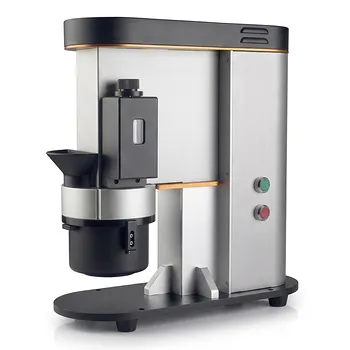
Precision Soil Disc Mill for Laboratory Fine Grinding and Environmental Sample Preparation
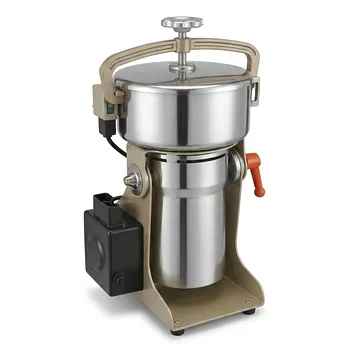
Multifunctional High Efficiency High Speed Laboratory Grinder
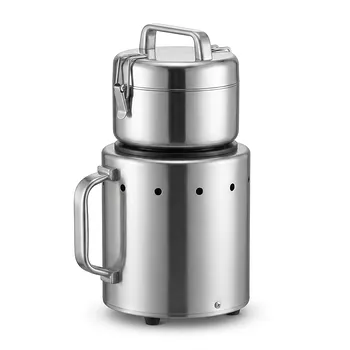
Small High Speed Grinder for Laboratory Sample Preparation
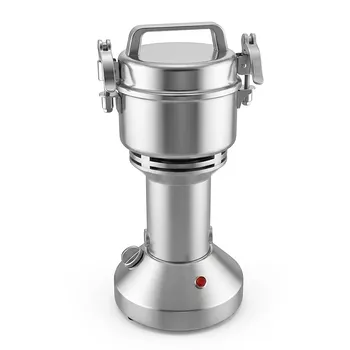
Small High Speed Upright Grinder for Laboratory Sample Preparation
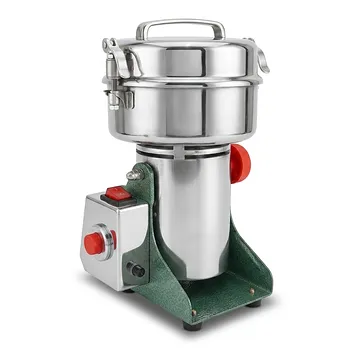
Small High-Speed Laboratory Grinder for Powder Processing
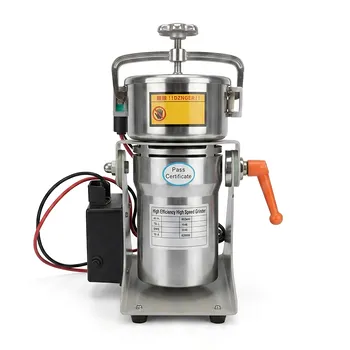
High Efficiency High Speed Grinder Laboratory Mill 1300W 25000rpm
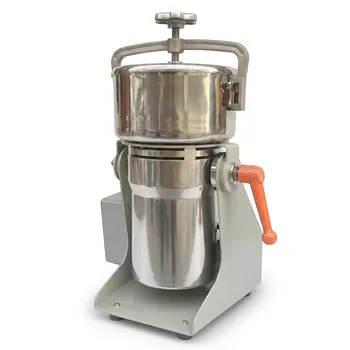
High Speed Laboratory Grinder Efficient Stainless Steel Powder Pulverizer Universal Material Science Mill for Sample Preparation
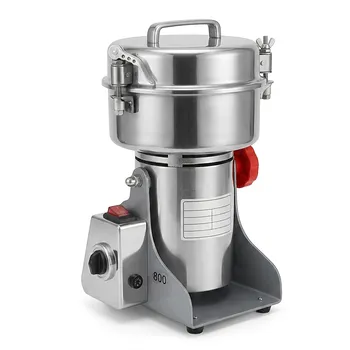
Small High-Speed Laboratory Grinder for Rapid Sample Preparation
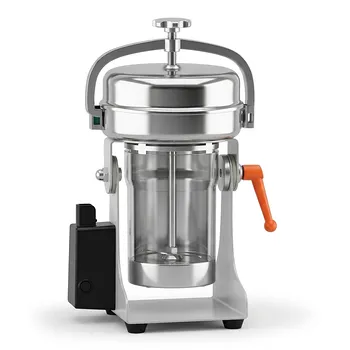
High Efficiency High Speed Grinder 2200W 25000 RPM Laboratory Sample Preparation
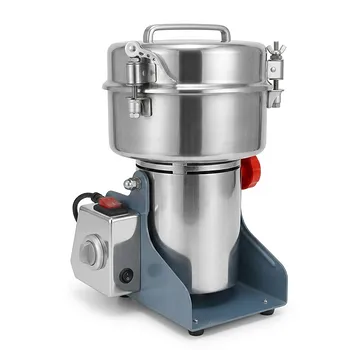
Small High-Speed Grinder for Efficient Laboratory Sample Preparation
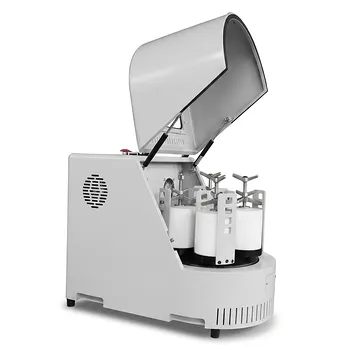
Vertical Semi Circular Planetary Ball Mill for Laboratory Precision Grinding
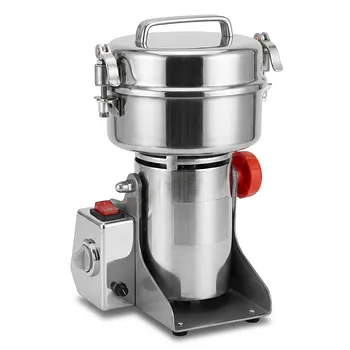
High Speed Laboratory Powder Grinder Small Batch Sample Preparation Mill
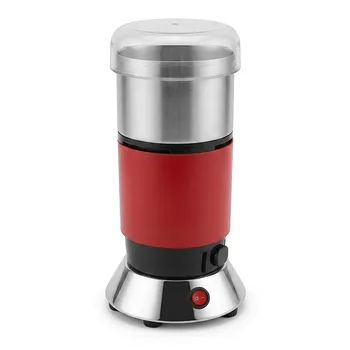
Micro Solid Sample Grinder High Speed Pulverizer for Laboratory Small Batch Grinding
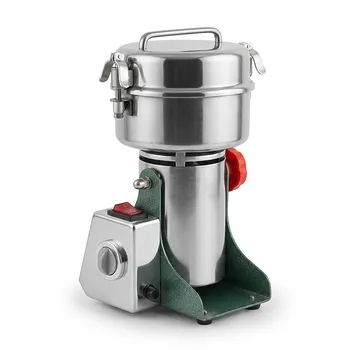
Small High-Speed Swing Grinder for Laboratory Sample Preparation
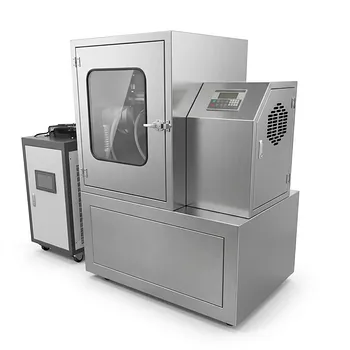
Vibratory Superfine Grinder for Ultra Fine Laboratory Powder Milling
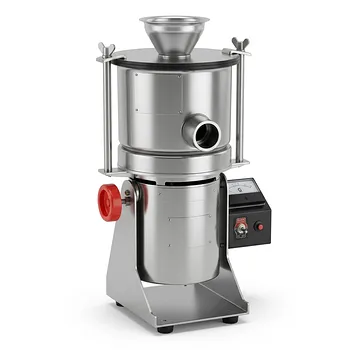
Laboratory Ultrafine Impact and Airflow Grinder for Precise Particle Size Control
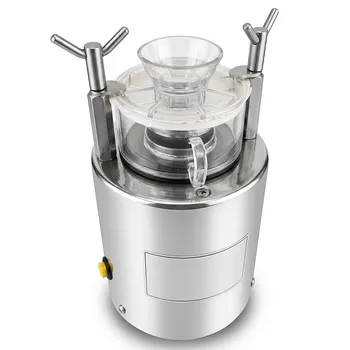
Laboratory Desktop Ultra Fine Powder Grinder High Speed Micronizing Pulverizer
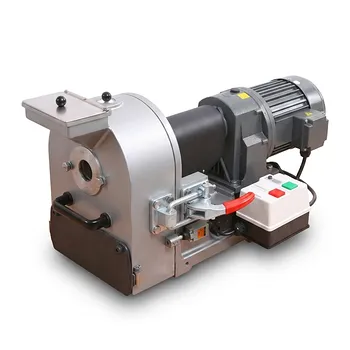
Laboratory Disc Mill for Fine Sample Preparation of Hard and Brittle Materials
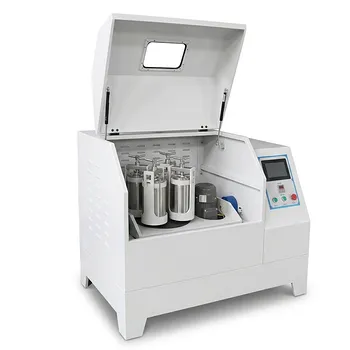
360° Rotating Omnidirectional Laboratory Planetary Ball Mill for Homogeneous Ultra-Fine Grinding and Mixing