How does liner design reduce ineffective collisions? Optimize Trajectories for Peak Grinding Efficiency
Updated 4 months ago
The primary mechanism for reducing ineffective collisions is the strategic optimization of liner lifter geometry. By precisely calibrating the height and slope of lifter bars, the mill guides the trajectory of the grinding media so they strike the ore charge rather than the mill shell. This shift transforms wasted energy into productive grinding force, simultaneously lowering steel consumption and increasing throughput.
Core Takeaway: Liner design enhances grinding efficiency by redirecting the trajectory of grinding media away from the liner surface and toward the ore bed. This optimization reduces "ball-on-liner" impacts, preserving energy and extending the service life of wear parts.
The Mechanics of Ineffective Collisions
Defining the "Ball-on-Liner" Problem
Ineffective collisions occur when grinding media strike the internal liner directly without any intervening ore material. These events consume significant kinetic energy but provide zero grinding value, representing a total loss of mechanical work.
The Impact on Steel Consumption
Every direct strike between a grinding ball and the liner causes metal-to-metal wear and potential work hardening or cracking. This results in accelerated steel consumption, forcing more frequent maintenance shutdowns and increasing the total cost of operation.
Energy Dissipation vs. Breakage
When a ball hits the liner, the energy is dissipated as heat, noise, and vibration throughout the mill structure. Conversely, when a ball hits the ore bed, that same energy is used for comminution, which is the actual breaking of the rock into smaller particles.
Redesigning the Trajectory Through Geometry
Optimizing Lifter Bar Height
The height of the lifter bar determines how high the grinding media is carried before it is released into a "cataracting" motion. If the lifter is too low, the media simply slides; if it is correctly sized, it provides the necessary mechanical lift to launch the media into the center of the ore charge.
The Influence of Lifter Slope
The face angle or slope of the lifter dictates the launch angle of the grinding balls as they leave the liner. A well-engineered slope ensures that the "toe" of the charge—the area where the balls land—is composed of ore material, effectively shielding the liner from direct impact.
Increasing Effective Collision Frequency
By guiding the balls to interact primarily with the ore or other balls, the design increases the frequency of productive events. This ensures that the majority of the mill’s power draw is converted into the reduction of particle size rather than the destruction of the mill's internals.
Understanding the Trade-offs and Pitfalls
The Risk of Excessive Lift
If lifter bars are designed too aggressively or high for the mill's operating speed, the media may be thrown too far. This causes the balls to strike the opposite side of the mill liner above the charge, which is even more damaging than sliding wear.
Impact of Liner Wear on Performance
As lifters wear down over time, their height decreases and their slope changes, which gradually shifts the ball trajectory back toward the liner. Consistent monitoring is required because a liner that is too worn will inevitably see an increase in ineffective collisions regardless of its initial design.
Balancing Throughput and Protection
A design that offers maximum protection might restrict the volume of the mill, potentially reducing total throughput. Engineers must find the "sweet spot" where the protection of the shell does not come at the expense of the required volumetric flow of material.
How to Apply This to Your Milling Operation
Making the Right Choice for Your Goal
To maximize the impact of your grinding media, consider the following strategic priorities:
- If your primary focus is reducing operating costs: Prioritize a lifter slope that ensures the media lands consistently within the ore bed to minimize expensive steel-on-steel wear.
- If your primary focus is increasing mill throughput: Optimize the lifter height to maximize the cascading and cataracting motion, ensuring the highest possible frequency of effective breakage events.
- If your primary focus is extending maintenance intervals: Select high-profile lifter designs that account for "wear life margins," allowing the mill to maintain an effective trajectory even as the liner material erodes.
By aligning liner geometry with the specific rotational speed and material density of your mill, you can turn parasitic energy loss into a decisive grinding advantage.
Summary Table:
| Key Design Element | Function in Grinding | Impact on Efficiency |
|---|---|---|
| Lifter Height | Determines the lift and release point of media | Ensures media reaches the center of the ore charge. |
| Lifter Slope/Angle | Controls the launch trajectory of balls | Prevents direct 'ball-on-liner' impacts and shell wear. |
| The Ore Bed (Toe) | Acts as the target impact zone | Converts kinetic energy into productive comminution. |
| Wear Monitoring | Maintains intended geometry over time | Prevents energy dissipation caused by worn profiles. |
Maximize Your Material Processing Efficiency with [Your Brand Name]
Turning wasted energy into productive force is the key to superior material science results. At [Your Brand Name], we provide complete laboratory sample preparation solutions specialized in powder processing and compaction. Whether you are scaling up industrial milling or conducting precise lab research, our equipment is engineered for durability and high throughput.
Our extensive product range includes:
- Crushing & Grinding: Jaw/roll crushers, liquid nitrogen cryogenic grinders, and high-efficiency mills (Planetary Ball, Jet, Sand, Disc, and Rotor).
- Sieving & Mixing: Vibratory/air-jet sieve shakers and advanced powder/defoaming mixers.
- Compaction Solutions: A full spectrum of hydraulic presses, including Cold/Warm Isostatic Presses (CIP/WIP), XRF pellet presses, and vacuum hot presses.
Don't let inefficient equipment increase your operating costs. Contact us today to find the perfect solution for your specific material density and processing goals.
References
- Jun Shen, Mingrong Huang. Discrete element simulation analysis of ball mill ball trajectory and liner plate structure based on EDEM. DOI: 10.55214/25768484.v9i4.6037
Mentioned Products
- Heavy Duty Horizontal Planetary Ball Mill for Efficient Industrial Grinding and Sample Preparation
- Vertical Production Planetary Ball Mill for High Throughput Powder Processing
- High Energy Omnidirectional Planetary Ball Mill 20L
- High Energy Omnidirectional Planetary Ball Mill 16L
- Dual Station Planetary Ball Mill 24L
People Also Ask
- Why grind lime-pozzolan specimens for TG/DTA for 3 mins? Master sample prep for high-precision thermal analysis.
- What is the role of a planetary ball mill in the mechanical activation of ZTA powder? Boost Sintering Performance
- What is the function of a planetary ball mill in wollastonite ceramic prep? Achieve Molecular Homogenization & Reactivity
- How does a planetary ball mill contribute to the homogenization of trace elements? Achieve Sub-Micron Uniformity
- What is the function of a high-performance planetary ball mill in AMZ laminates? Master Ceramic Homogenization.

Tech Team · PowderPreparation
Last updated on Jun 03, 2026
Related Products
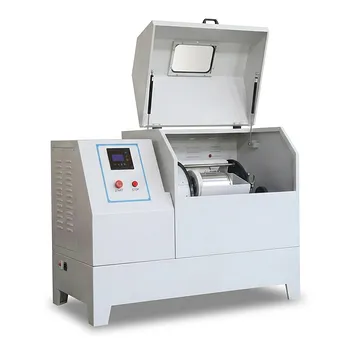
Heavy Duty Horizontal Planetary Ball Mill for Efficient Industrial Grinding and Sample Preparation
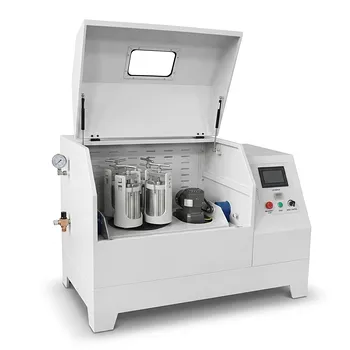
Vertical Production Planetary Ball Mill for High Throughput Powder Processing
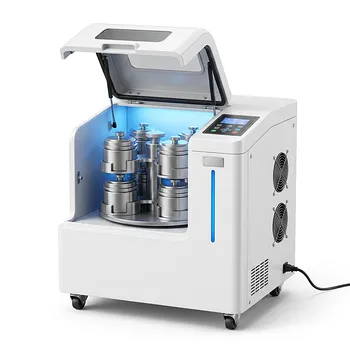
High Energy Omnidirectional Planetary Ball Mill 20L

High Energy Omnidirectional Planetary Ball Mill 16L
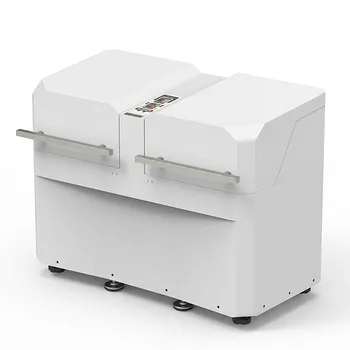
Dual Station Planetary Ball Mill 24L
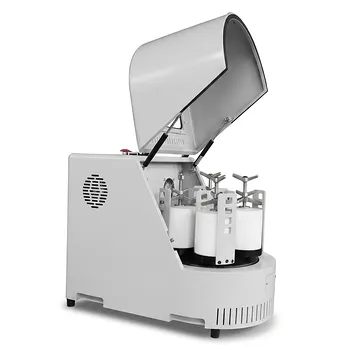
Vertical Semi Circular Planetary Ball Mill for Laboratory Precision Grinding

Vertical Square Planetary Ball Mill for Laboratory Sample Preparation and Nanoscale Grinding
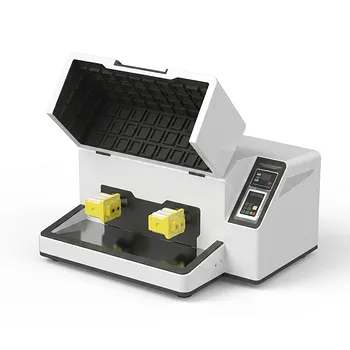
Multi-Platform Nanoscale High-Energy Vibratory Ball Mill
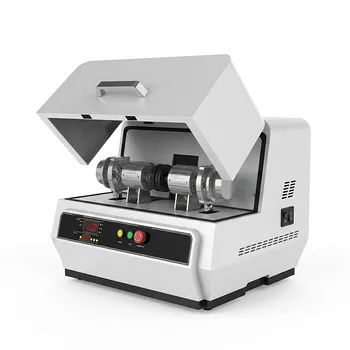
Dual Jar High Energy Vibratory Ball Mill

Single Tank High Energy Vibratory Ball Mill for Laboratory Grinding and Mixing
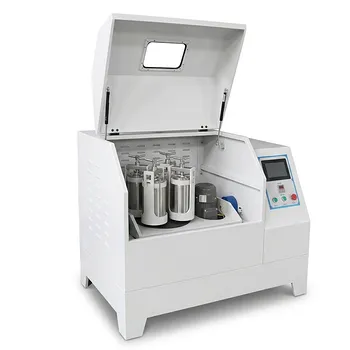
360° Rotating Omnidirectional Laboratory Planetary Ball Mill for Homogeneous Ultra-Fine Grinding and Mixing
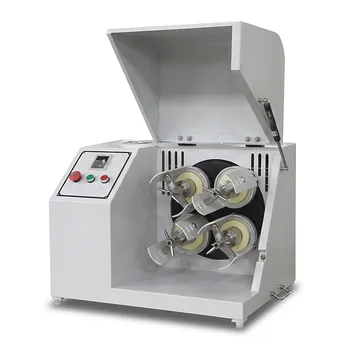
Horizontal Light Duty Planetary Ball Mill for Laboratory Sample Preparation
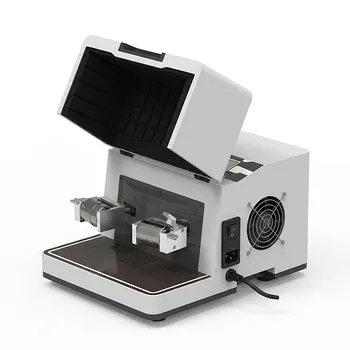
High Energy Hybrid Vibratory Ball Mill for Grinding Mixing and Cell Disruption
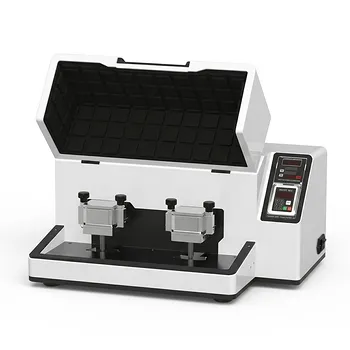
Nanoscale High Energy Vibratory Ball Mill Low Temperature
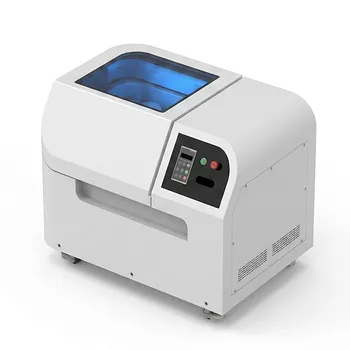
8L Planetary Ball Mill for Laboratory Grinding and Sample Preparation
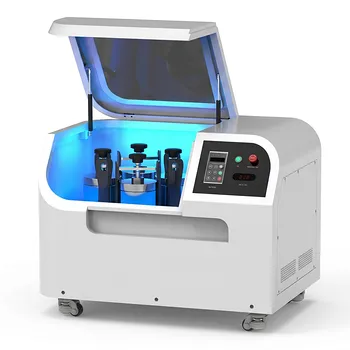
Planetary Ball Mill 12L
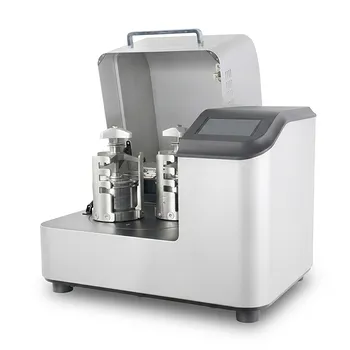
High Energy Planetary Ball Mill for Nano Scale Grinding and Mechanical Alloying

High Energy Laboratory Planetary Ball Mill for Nano Grinding and Material Science Sample Preparation
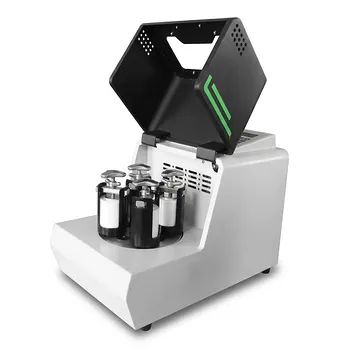
Miniature Planetary Ball Mill with Vacuum Grinding and High Efficiency for Laboratory Sample Preparation