Why is the use of cemented carbide (WC-6Co) grinding jars and balls recommended? Ensure Purity and High Densification
Updated 3 months ago
The selection of grinding media is a critical factor in determining the final quality of cemented carbide products. Using WC-6Co (tungsten carbide-cobalt) jars and balls is the industry standard because it simultaneously solves the problems of material contamination and milling efficiency. This specific pairing ensures that any wear from the equipment is chemically identical to the powder being processed, while the high density of the material accelerates the milling process.
The recommendation for WC-6Co grinding media rests on two pillars: chemical compatibility to prevent foreign metal contamination and high mass density to maximize kinetic energy transfer during milling. This synergy results in high-purity powders that achieve superior densification during the sintering phase.
Eliminating Heterogeneous Contamination
Chemical Consistency with the Target Product
When milling powders, the grinding media and the container walls inevitably experience wear due to high-intensity collisions. By using WC-6Co media, any microscopic particles shed during this process are identical in composition to the cemented carbide powder mixture itself.
Preventing Foreign Metal Impurities
Using alternative materials, such as stainless steel, introduces foreign elements like iron into the mixture. These heterogeneous impurities can significantly degrade the mechanical properties and chemical integrity of the final sintered carbide product.
Maintaining Precise Material Ratios
Because the wear is "more of the same," it allows for a controlled transfer of material components. This ensures that the synthesized composite maintains its intended physical and chemical properties without the risk of unpredictable reactions from external contaminants.
Maximizing Milling Efficiency and Energy Transfer
The Role of High Density in Kinetic Energy
Cemented carbide is significantly denser than stainless steel or ceramic alternatives. In high-energy ball milling, this higher mass translates directly into greater impact energy delivered to the powder at the same rotational speed.
Accelerating Powder Activation
The increased impact energy facilitates more efficient crushing and particle size reduction. This high-intensity processing increases the surface activity of the powder, which is vital for the chemical reactions required in advanced composite synthesis.
Achieving Superior Densification
Enhanced powder activity directly impacts the final production stage. Research indicates that using high-density carbide media can lead to densification levels as high as 92 percent during sintering, resulting in a more robust and less porous finished part.
Durability and Process Stability
Extreme Hardness and Wear Resistance
WC-6Co is prized for its exceptional hardness, which allows it to withstand the abrasive nature of carbide powders. This resistance ensures that media wear is kept to an absolute minimum, even during prolonged milling cycles that can last 10 to 30 hours.
Consistency Across Long Milling Cycles
The structural integrity of WC-6Co means the grinding balls maintain their shape and mass longer than softer materials. This provides a stable and repeatable milling environment, which is essential for industrial scalability and quality control.
Understanding the Trade-offs
High Initial Investment
The primary downside to WC-6Co grinding sets is their high cost compared to steel or alumina. However, this is usually offset by the increased lifespan of the media and the significantly higher value of the uncontaminated final product.
Equipment Strain and Weight
The extreme density of these jars makes them exceptionally heavy, which can put additional mechanical stress on planetary ball mills. Operators must ensure their equipment is rated for the specific weight of carbide-lined jars to prevent motor or drive-belt failure.
Brittleness and Handling
Despite their hardness, cemented carbides are relatively brittle compared to steel. They are susceptible to cracking if dropped or subjected to extreme thermal shocks, requiring more careful handling and storage protocols.
Applying This to Your Project
Recommendations Based on Your Objectives
- If your primary focus is Maximum Purity: Always use WC-6Co media to ensure that zero foreign metals (like iron or chrome) interfere with the alloy’s performance.
- If your primary focus is Sintering Performance: Utilize carbide media to take advantage of its high density, which produces the highly active powders necessary for 90%+ densification.
- If your primary focus is Long-Term Durability: Invest in WC-6Co jars for high-intensity, multi-day milling cycles where softer media would degrade and contaminate the batch.
By aligning the chemistry of your grinding tools with the chemistry of your product, you ensure a high-performance material that meets the most rigorous industrial standards.
Summary Table:
| Key Feature | Benefit | Impact on Final Product |
|---|---|---|
| Chemical Compatibility | Eliminates foreign metal (e.g., Fe) contamination | Maintains chemical integrity & hardness |
| High Mass Density | Maximizes kinetic energy transfer during milling | Faster particle reduction & 92% densification |
| Extreme Hardness | Exceptional wear resistance over 10-30h cycles | Long-term process stability & media durability |
| Surface Activation | Increases particle surface energy | Enhances chemical reactivity during sintering |
Optimize Your Material Synthesis with Advanced Powder Solutions
Achieving superior material properties requires high-purity preparation and precision compaction. We provide complete laboratory sample preparation solutions for material science, specializing in high-performance powder processing and compaction equipment.
Our extensive range includes:
- Advanced Milling: Planetary ball mills, jet mills, and cryogenic grinders optimized for WC-6Co media.
- Precision Sizing: Sieve shakers (vibratory/air-jet) and high-quality test sieves.
- Superior Compaction: A full spectrum of hydraulic presses, including Cold/Warm Isostatic Presses (CIP/WIP), vacuum hot presses, and XRF pellet presses.
- Homogeneous Mixing: Specialized powder and defoaming mixers for consistent alloy blends.
Ready to elevate your lab's efficiency and product purity? Contact our technical experts today to discuss the ideal grinding and pressing configuration for your specific material requirements.
References
- Victor Ioan Stanciu, Fabienne Delaunois. Reactive Sintering of Cemented Carbides. DOI: 10.3390/alloys4030015
Mentioned Products
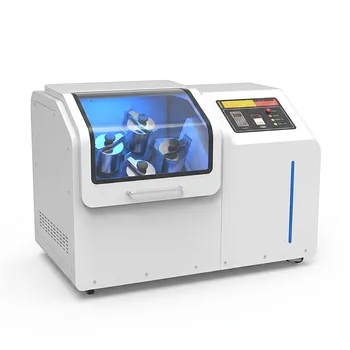
- High Energy Omnidirectional Planetary Ball Mill 16L
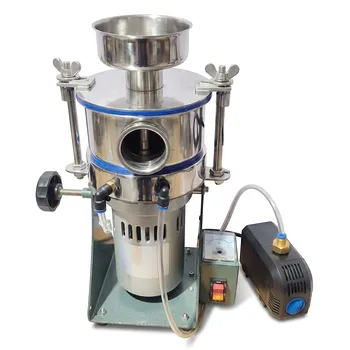
- Water Cooled Airflow Ultra Fine Grinder for Low Temperature Material Processing
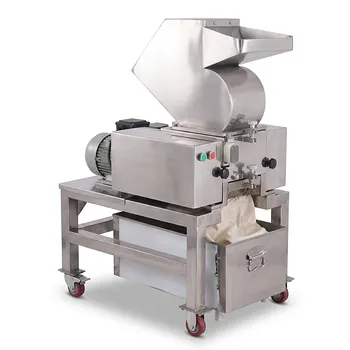
- Stainless Steel Coarse Crusher for Pharmaceutical Food and Plastic Material Processing
People Also Ask
- What role does an omni-directional planetary ball mill play in brass/cobalt antimonide pretreatment? Achieve Nano-Scale Homogeneity.
- What is the role of a high-energy planetary ball mill in Li2ZrO3 and LBS prep? Achieve Superior Electrolyte Density
- What role does a high-energy planetary ball mill play in processing quenched bioactive glass? Achieve Nano-Scale Precision
- What role does a planetary ball mill play in nano-mineral filler prep? Achieve Sub-100nm Precision & Performance
- What role does a high-energy planetary ball mill play in magnesium-based hydrogen storage alloy preparation?

Tech Team · PowderPreparation
Last updated on Jun 03, 2026