How does an electric laboratory grinder contribute to the performance analysis of hardened cement pastes? Key Benefits
Updated 5 months ago
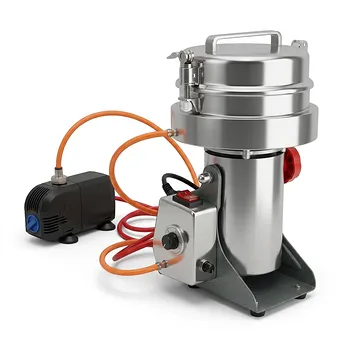
Electric laboratory grinders are essential for converting hardened cement paste blocks into ultra-fine powders—typically below 45 μm—enabling precise chemical and mineralogical characterization. This mechanical preparation is the prerequisite for diagnostic tests like Thermogravimetric Analysis (TGA) and X-ray Diffraction (XRD). By providing high, uniform grinding intensity, these machines ensure that the resulting sample is a reliable representation of the bulk material’s internal structure.
The electric laboratory grinder serves as the bridge between macroscopic material behavior and microscopic analysis, providing the extreme fineness and uniformity required for accurate phase quantification. It eliminates the variability of manual preparation, ensuring that thermal and diffraction data reflect the material's true properties.
Ensuring Precision Through High-Intensity Grinding
Superiority Over Manual Methods
Electric grinders provide a much higher and more consistent grinding intensity compared to a manual mortar and pestle. This mechanical consistency is vital for eliminating human error and ensuring that every sample is processed under identical conditions.
Achieving Critical Particle Fineness
For performance analysis, hardened cement must often be reduced to particles finer than 45 μm. This level of fineness is necessary to ensure that X-rays or thermal sensors can interact with a homogenous volume of material rather than isolated, large chunks.
Uniformity for Quantitative Analysis
Uniformity in particle size prevents "preferred orientation" in XRD, where crystals align in a way that skews results. An electric grinder ensures a random distribution of particles, which is the foundation of accurate quantitative phase analysis.
Enabling Advanced Analytical Techniques
Support for X-ray Diffraction (XRD)
XRD requires a flat, densely packed powder surface to accurately identify the mineralogical phases of hardened paste, such as C-S-H or portlandite. The fine powder produced by an electric grinder allows for clear diffraction patterns and reliable identification of crystalline components.
Precision in Thermogravimetric Analysis (TGA)
TGA measures mass loss as a function of temperature to determine the decomposition of specific hydrates. Uniform particle size ensures that heat transfer is consistent throughout the sample, leading to precise thermal decomposition kinetic data.
Impact and Shear Force Mechanisms
Many laboratory grinders, such as ball mills, utilize steel balls to apply impact and shear forces through high-speed rotation. This process simulates industrial-scale energy application, making the laboratory results more relevant to real-world production environments.
Understanding the Trade-offs and Limitations
Risk of Heat-Induced Dehydration
The high intensity of electric grinding generates localized heat, which can inadvertently dehydrate sensitive hydrates like gypsum or ettringite. If the grinding duration is too long, the heat may alter the very chemical phases the researcher intended to analyze.
Potential for Crystal Lattice Damage
Excessive mechanical energy can lead to "amorphization," where the crystal structure of the cement minerals is physically damaged. This can result in lower peaks during XRD analysis, potentially leading to an underestimation of certain crystalline phases.
Sample Contamination
Using steel grinding media can introduce trace amounts of iron or other metallic contaminants into the cement powder. While usually negligible, these impurities must be accounted for in highly sensitive chemical assays or specialized research.
How to Apply This to Your Performance Analysis
Making the Right Choice for Your Goal
To maximize the value of your performance analysis, tailor your grinding protocol to the specific requirements of your testing suite.
- If your primary focus is Phase Quantification (XRD): Use an electric grinder to achieve a particle size below 45 μm to ensure high-resolution diffraction peaks and avoid orientation bias.
- If your primary focus is Thermal Kinetics (TGA): Prioritize short, high-intensity grinding cycles to prevent heat-induced dehydration of the cement hydrates before the test begins.
- If your primary focus is Grinding Aid Efficacy: Utilize a laboratory ball mill with steel media to accurately simulate the impact and shear forces found in industrial production.
Consistent sample preparation via electric grinding is the only way to ensure that your analytical results are both repeatable and scientifically defensible.
Summary Table:
| Feature | Impact on Cement Analysis | Why It Matters |
|---|---|---|
| Particle Fineness | Reduces samples to < 45 μm | Ensures homogenous volume for X-rays/sensors |
| Structural Uniformity | Eliminates "preferred orientation" | Foundations for accurate quantitative XRD phases |
| High Intensity | Replaces manual mortar & pestle | Removes human error and ensures repeatability |
| Force Mechanism | Applies impact and shear forces | Simulates industrial-scale energy for real-world relevance |
| Sample Integrity | Controlled grinding cycles | Minimizes risk of heat-induced dehydration/amorphization |
Elevate Your Material Science Research with Precision Preparation
Accurate performance analysis begins with impeccable sample preparation. At [Brand Name], we provide complete laboratory sample preparation solutions tailored for material science and cement research. Whether you are analyzing hardened pastes or developing new additives, our high-performance equipment ensures the uniformity and fineness your analysis demands.
Our extensive product range includes:
- Advanced Milling: Planetary ball mills, jet mills, and disc mills for achieving sub-45 μm powders.
- Crushing & Sizing: Jaw/roll crushers and vibratory sieve shakers for precise particle size control.
- Compaction Solutions: A full spectrum of hydraulic presses, including Cold/Warm Isostatic Presses (CIP/WIP), XRF pellet presses, and vacuum hot presses.
- Mixing Excellence: High-efficiency powder and defoaming mixers for homogenous material blends.
Don't let poor sample prep compromise your XRD or TGA data. Partner with experts who specialize in powder processing and compaction.
Contact us today to find the perfect grinding solution for your lab!
References
- Ebtisam Saeed, Jorge S. Dolado. Supplementary Cementitious Materials Based on CO <sub>2</sub> –Capturing Periwinkle Shell. DOI: 10.1021/acssusresmgt.5c00313
Mentioned Products
- High Efficiency High Speed Grinder Laboratory Mill 1300W 25000rpm
- High Efficiency High Speed Grinder 2200W 25000 RPM Laboratory Sample Preparation
- Multifunctional High Efficiency High Speed Laboratory Grinder
- Small High-Speed Laboratory Grinder for Powder Processing
- Small High Speed Grinder for Laboratory Sample Preparation
People Also Ask
- What role does a laboratory grinder play in the pretreatment of sunflower seed shell-based adsorbents? Boost Efficiency.
- How does high-speed grinding equipment facilitate the preparation of lignin binders? Optimize Powder for Stronger Bonds
- How does a laboratory grinder or mill enhance the adsorption performance of agricultural waste materials? Boost Surface Area
- Why is grinding equipment necessary for SnO2-Sb2O3 xerogels? Maximize surface area and photocatalytic activity.
- How does laboratory grinding or pulverizing equipment influence eggshell-derived adsorbents? Maximize Surface Area.

Tech Team · PowderPreparation
Last updated on May 14, 2026
Related Products
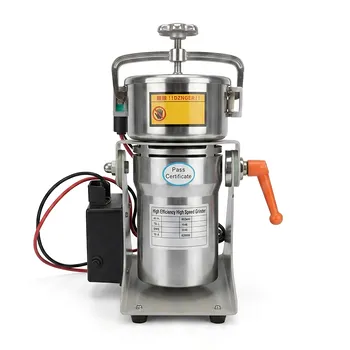
High Efficiency High Speed Grinder Laboratory Mill 1300W 25000rpm
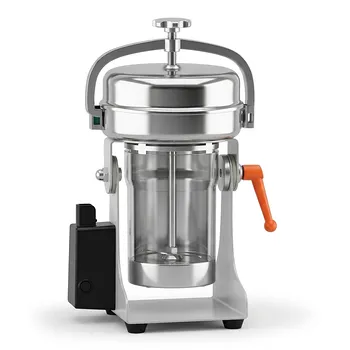
High Efficiency High Speed Grinder 2200W 25000 RPM Laboratory Sample Preparation
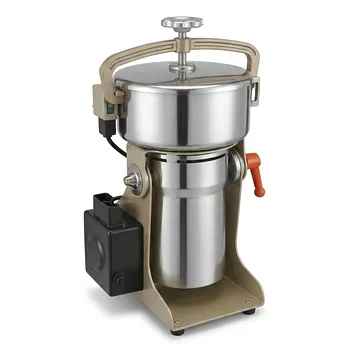
Multifunctional High Efficiency High Speed Laboratory Grinder
Small High-Speed Laboratory Grinder for Powder Processing
Small High Speed Grinder for Laboratory Sample Preparation
Small High-Speed Laboratory Grinder for Rapid Sample Preparation
Small High Speed Grinder for Laboratory Sample Preparation
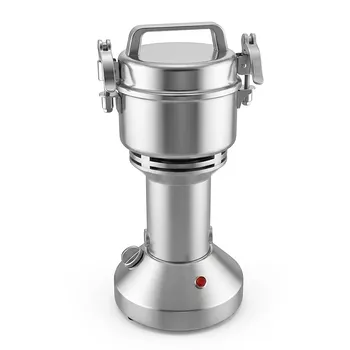
Small High Speed Upright Grinder for Laboratory Sample Preparation
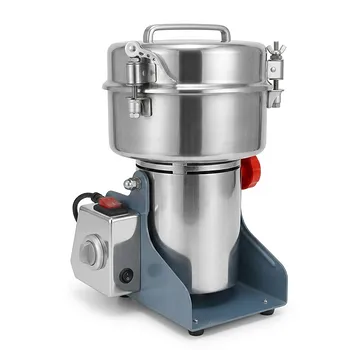
Small High-Speed Grinder for Efficient Laboratory Sample Preparation
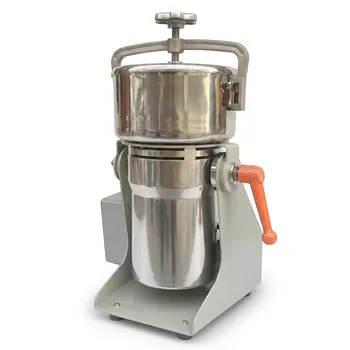
High Speed Laboratory Grinder Efficient Stainless Steel Powder Pulverizer Universal Material Science Mill for Sample Preparation
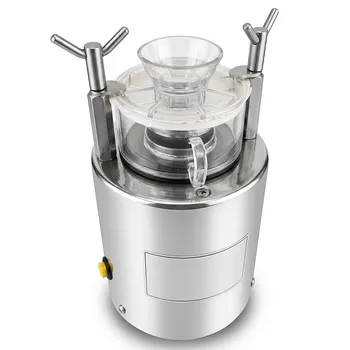
Laboratory Desktop Ultra Fine Powder Grinder High Speed Micronizing Pulverizer
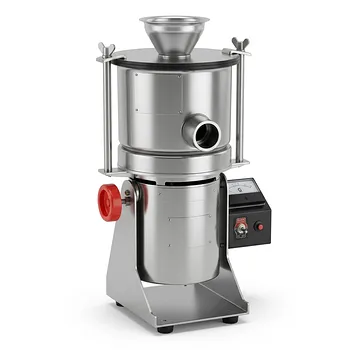
Laboratory Ultrafine Impact and Airflow Grinder for Precise Particle Size Control
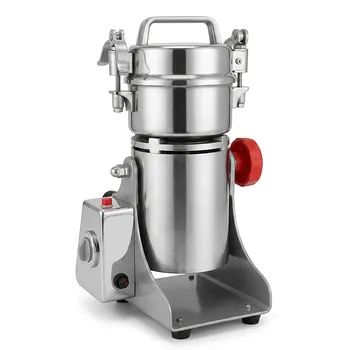
Industrial High Speed Small Sample Pulverizer Swing Type Laboratory Grinder for Powder Processing
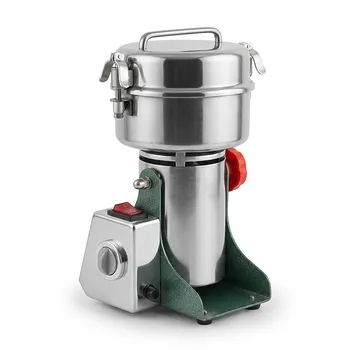
Small High-Speed Swing Grinder for Laboratory Sample Preparation
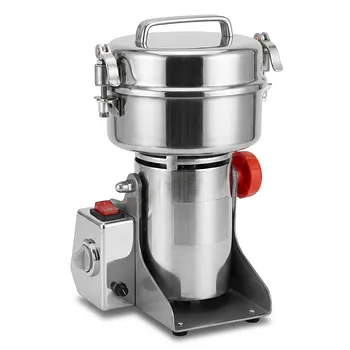
High Speed Laboratory Powder Grinder Small Batch Sample Preparation Mill
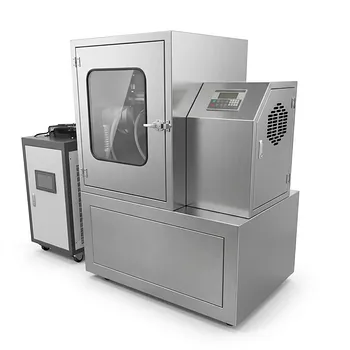
Vibratory Superfine Grinder for Ultra Fine Laboratory Powder Milling
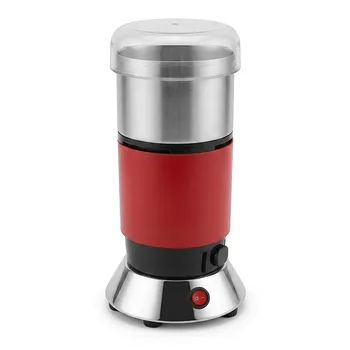
Micro Solid Sample Grinder High Speed Pulverizer for Laboratory Small Batch Grinding
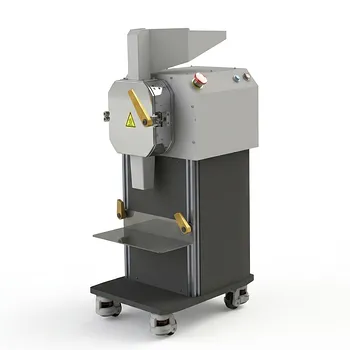
Small Laboratory Knife Crusher for Plastic Sample Preparation and Material Grinding
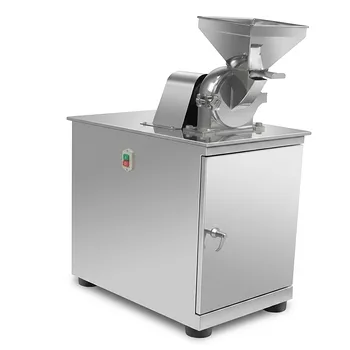
Universal Laboratory Pulverizer Grinder for Small Batch Powder Processing and Material Science Research