What are the advantages of using high-purity alumina grinding media? Ensure Purity & Efficiency in Ceramic Milling
Updated 4 months ago
High-purity alumina (HPA) grinding media is the industry standard for preparing colloidal inks because it eliminates foreign contamination while maximizing milling efficiency. By using media that matches the chemical composition of the ceramic slurry—a strategy known as autogenous grinding—manufacturers ensure that any inevitable wear debris remains chemically identical to the raw material. This preserves the precise chemical purity and phase stability required for advanced ceramic processing.
Core Takeaway: Utilizing high-purity alumina grinding media protects the chemical integrity of the slurry and ensures consistent thermo-reversible behavior by preventing the introduction of metallic or heterogeneous impurities. Its high density and hardness further optimize production by reducing grinding times and improving particle dispersion.
Maintaining Chemical and Phase Purity
Prevention of Heterogeneous Impurities
During high-energy ball milling, minor wear of the grinding media is physically unavoidable. Using media with the same composition as the raw material ensures that wear debris does not introduce foreign metals or heterogeneous ions into the system. This "autogenous" approach is critical for maintaining the strict purity levels required for technical ceramics.
Protecting Microstructure and Gelation
In colloidal ink preparation, chemical purity is vital for maintaining intended thermo-reversible gelation behavior. Foreign impurities can disrupt the delicate chemical balance of the slurry, leading to unpredictable rheological properties. This preservation of purity directly impacts the final sintered microstructure, preventing defects caused by incompatible materials.
Chemical Stability in Complex Formulations
High-purity alumina exhibits excellent chemical compatibility with a wide range of additives, including polymers like Polylactic Acid (PLA), binders like sucrose, and various pore-forming agents. Its inert nature ensures that the media does not react with or degrade the organic components of the ink during the homogenization process.
Enhancing Grinding and Dispersion Efficiency
Impact of High Density and Hardness
With a Mohs hardness of 9 and a specific gravity of approximately 3.57 g/cm³, high-alumina media generates significantly stronger impact and frictional shear forces than traditional siliceous media. This allows for the effective pulverization of tough ceramic powders and the thorough mixing of components with disparate particle sizes.
Reduction in Processing Time
The superior mechanical energy provided by HPA media can reduce grinding time by approximately 33% compared to lower-density alternatives. This increase in milling capacity per hour allows for higher throughput without increasing energy consumption, making the process more cost-effective.
Optimized Particle Size Distribution
Utilizing specific diameter combinations (such as 40mm and 20-25mm) allows for a precise particle size distribution during wet grinding. This refined control ensures that the resulting bonding slip or ink possesses the necessary bonding activity and fluidity for subsequent manufacturing steps, such as 3D printing or casting.
Understanding the Trade-offs
Initial Investment vs. Lifecycle Value
While high-purity alumina media carries a higher upfront cost than standard ceramic media, its extremely low wear rate extends the service life of the media. This longevity, combined with the reduction in rejected batches due to contamination, typically results in a lower total cost of ownership.
Risk of Excessive Surface Area
Because HPA media is highly efficient, there is a risk of over-grinding if process parameters are not strictly controlled. Excessive milling can lead to a drastic increase in the powder's specific surface area, which may negatively alter the viscosity of the colloidal ink and complicate the drying or sintering stages.
Media Size Selection
The choice of media size must be carefully balanced against the target particle size of the ink. While larger balls provide higher impact energy for refining fused powders, smaller media may be required for the deep mixing and homogenization of delicate pore-forming agents to ensure structural uniformity.
Optimizing Your Grinding Strategy
Selecting the right grinding media depends on your specific performance requirements and the sensitivity of your final ceramic component.
- If your primary focus is electrical or mechanical performance: Use high-purity alumina media to eliminate metallic contamination that could compromise insulation properties or structural strength.
- If your primary focus is maximum production throughput: Leverage the high specific gravity of HPA media to reduce milling cycles by up to one-third compared to traditional siliceous media.
- If your primary focus is rheological stability: Prioritize HPA media to ensure the chemical purity of the nano-slurry, which preserves the intended gelation behavior and flow characteristics of the ink.
By aligning your grinding media with your raw material composition, you secure both the chemical integrity and the processing efficiency of your ceramic colloidal systems.
Summary Table:
| Key Advantage | Feature | Impact on Ceramic Processing |
|---|---|---|
| Chemical Purity | Autogenous grinding (media matches raw material) | Prevents metallic contamination and preserves phase stability. |
| High Efficiency | Mohs hardness of 9 & high specific gravity | Faster pulverization and superior frictional shear forces. |
| Time Savings | High mechanical energy output | Reduces grinding cycles by approximately 33% vs. standard media. |
| Inert Stability | Chemically compatible with binders/additives | Prevents degradation of organic components in colloidal inks. |
| Quality Control | Controlled particle size distribution | Ensures optimal fluidity for 3D printing and precision casting. |
Elevate Your Material Science Research with Precision Solutions
Achieving the perfect colloidal ink requires more than just the right media—it demands high-performance equipment that ensures consistency and purity. At our company, we provide complete laboratory sample preparation solutions tailored for advanced material science and powder processing.
Our extensive product line is designed to support your entire workflow:
- Advanced Milling: Optimize your dispersion with our planetary ball mills, jet mills, and cryogenic grinders.
- Material Preparation: High-efficiency crushers (jaw/roll) and precision sieve shakers (vibratory/air-jet) for perfect particle sizing.
- Advanced Compaction: A full spectrum of hydraulic presses, including Cold/Warm Isostatic Presses (CIP/WIP), hot presses, and XRF pellet presses for superior material density.
Whether you are refining technical ceramics or developing new composites, our expert team provides the reliability and technical support you need to succeed.
Ready to optimize your powder processing workflow? Contact us today to discuss your project!
References
- Akira Kondo, Makio Naito. Thermoreversible colloidal gelation for direct-assembly of nanoparticles. DOI: 10.1007/bf00990748
Mentioned Products
- Continuous Feeding Grinder High Efficiency Pulverizer for Lab Sample Preparation
- High Speed Swing Type Laboratory Pulverizer for Fine Powder Grinding and Sample Preparation
- Small High-Speed Laboratory Grinder for Rapid Sample Preparation
- Small High Speed Grinder for Laboratory Sample Preparation
- High Efficiency High Speed Grinder 2200W 25000 RPM Laboratory Sample Preparation
People Also Ask
- Why must soil samples be ground before XRD or XRF analysis? Ensure Precision & Homogeneity in Lab Results
- What is the function of a laboratory blender for mixed fuels? Achieving Microscopic Uniformity for Accurate Analysis
- What is the function of a laboratory pulverizer in Boerhavia diffusa-based adsorbent prep? Maximize Surface Area
- What are the technical advantages of using a high-speed laboratory pulverizer for grinding tablets into powders? 20K RPM
- What is the function of laboratory-scale pulverizing equipment in bio-adsorptive film prep? Maximize Surface Area

Tech Team · PowderPreparation
Last updated on Jun 03, 2026
Related Products
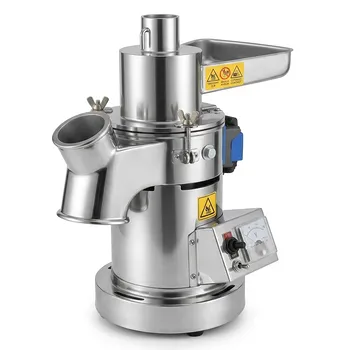
Continuous Feeding Grinder High Efficiency Pulverizer for Lab Sample Preparation
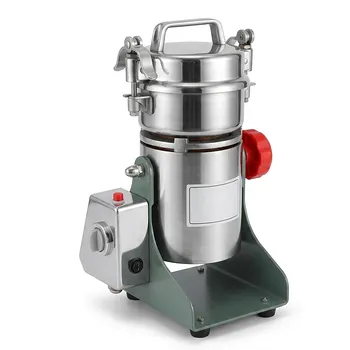
High Speed Swing Type Laboratory Pulverizer for Fine Powder Grinding and Sample Preparation
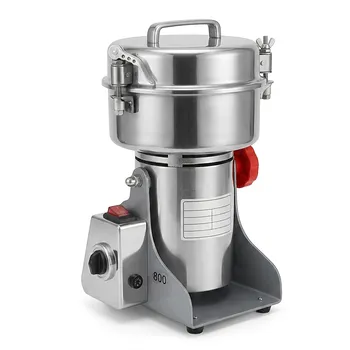
Small High-Speed Laboratory Grinder for Rapid Sample Preparation
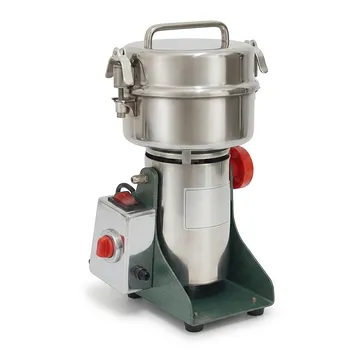
Small High Speed Grinder for Laboratory Sample Preparation
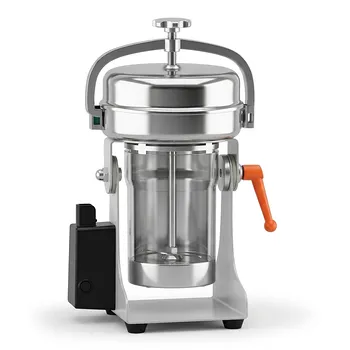
High Efficiency High Speed Grinder 2200W 25000 RPM Laboratory Sample Preparation
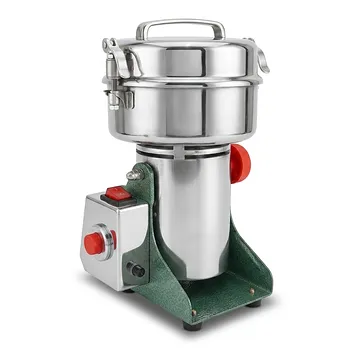
Small High-Speed Laboratory Grinder for Powder Processing
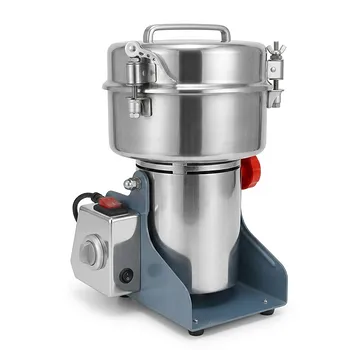
Small High-Speed Grinder for Efficient Laboratory Sample Preparation
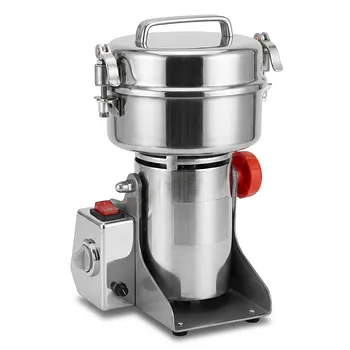
High Speed Laboratory Powder Grinder Small Batch Sample Preparation Mill
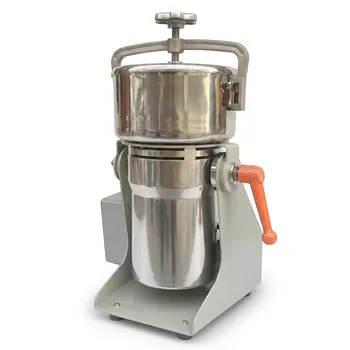
High Speed Laboratory Grinder Efficient Stainless Steel Powder Pulverizer Universal Material Science Mill for Sample Preparation
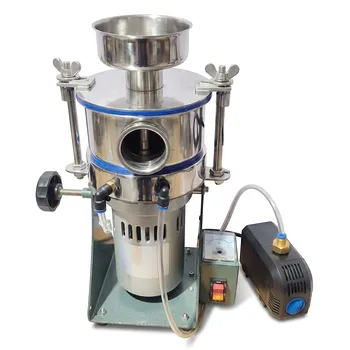
Water Cooled Airflow Ultra Fine Grinder for Low Temperature Material Processing
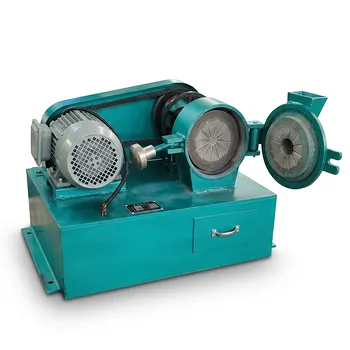
Laboratory Disc Mill Medium Hard Material Grinding Coal Coke Ore Pulverizer