Why are WC-Co grinding jars and balls selected for ZrB2? Achieve High Purity & Efficiency for UHTCs
Updated 5 months ago
Tungsten Carbide-Cobalt (WC-Co) is the industry standard for milling Zirconium Diboride (ZrB2) due to its superior hardness and high density. These properties are essential for effectively processing Ultra-High Temperature Ceramics (UHTCs), which are too resilient for standard stainless steel media. By utilizing WC-Co, researchers ensure efficient particle size reduction while preventing the introduction of metallic impurities that could compromise the final composite's thermal and mechanical integrity.
The selection of WC-Co grinding media is driven by the need for a material that exceeds the hardness of ZrB2 to facilitate fracture while providing the high kinetic energy required for uniform mixing. This choice balances mechanical efficiency with the strict purity requirements of high-performance ceramic engineering.
Overcoming the Hardness of Ultra-High Temperature Ceramics
Matching Material Hardness for Effective Attrition
Zirconium Diboride and its common additives, such as Silicon Carbide (SiC), belong to a class of materials known as Ultra-High Temperature Ceramics (UHTCs). These materials possess extreme intrinsic hardness, which causes rapid abrasive wear on softer grinding media like stainless steel.
Tungsten Carbide-Cobalt offers a hardness level significantly higher than standard alloys. This ensures the media can withstand the intense friction and high-speed impacts of ZrB2 particles without undergoing excessive surface degradation.
Preventing Sample Contamination
When grinding media wears down, the resulting debris becomes a permanent impurity in the powder mixture. In the case of ZrB2 composites, metallic impurities from steel (like iron or chromium) can drastically alter the material's dielectric and mechanical properties.
WC-Co is selected because its superior wear resistance minimizes this contamination. Furthermore, since WC-Co is often more chemically compatible with hard ceramic systems, any trace amounts of wear are less likely to destabilize the final composite’s performance.
Maximizing Energy Transfer and Mixing Efficiency
The Role of High Density in Particle Refinement
Efficiency in a planetary ball mill is largely determined by the kinetic energy of the milling balls. Tungsten Carbide is exceptionally dense, providing the mass necessary to generate high-impact forces during rotation.
This high density allows the media to promote particle deformation and fracture even in coarse ZrB2 powders. The result is a more rapid refinement of particle size and a tighter size distribution, which is critical for the subsequent sintering process.
Mechanical Activation and Uniformity
The high-energy impacts provided by WC-Co media do more than just crush particles; they facilitate mechanical activation. This process increases the surface energy of the powders, making them more reactive and easier to densify.
Using WC-Co ensures that additives like SiC are distributed homogeneously throughout the ZrB2 matrix. This physical foundation is vital for achieving the uniform microstructures required for extreme service environments.
Understanding the Trade-offs
Cost and Weight Considerations
While WC-Co is technically superior, it is significantly more expensive than alumina or steel alternatives. The high density also places a higher mechanical load on ball milling equipment, requiring robust motors and drive systems.
The Impact of Cobalt Binders
Most Tungsten Carbide media uses Cobalt as a metallic binder to improve toughness. Users must be aware that trace amounts of cobalt can be introduced into the sample, which may be undesirable for certain high-purity or specific chemical applications.
Making the Right Choice for Your Goal
When preparing ZrB2 composites, your choice of milling parameters should align with your final material requirements.
- If your primary focus is maximum chemical purity: Utilize WC-Co to prevent the introduction of iron-based impurities common with steel media.
- If your primary focus is rapid particle size reduction: Leverage the high density of WC-Co to increase kinetic energy and shorten milling times.
- If your primary focus is structural uniformity: Use WC-Co in high-energy planetary mills to ensure additives are mechanically activated and evenly dispersed.
The use of Tungsten Carbide-Cobalt remains the most reliable method for achieving the high-density, high-purity powders necessary for advanced UHTC applications.
Summary Table:
| Feature | Benefit for ZrB2 Processing | Why WC-Co is Preferred |
|---|---|---|
| Superior Hardness | Effectively grinds Ultra-High Temperature Ceramics | Resists abrasive wear better than stainless steel |
| High Density | Increases kinetic energy during milling | Facilitates rapid particle size refinement |
| Wear Resistance | Minimizes metallic contamination (Fe, Cr) | Preserves the thermal/mechanical integrity of the sample |
| Energy Transfer | Promotes mechanical activation | Increases surface energy for easier sintering/densification |
| Mixing Uniformity | Ensures homogeneous dispersion of additives | Provides the impact force needed for consistent matrices |
Elevate Your Material Research with Expert Sample Prep Solutions
At [Brand Name], we specialize in providing complete laboratory sample preparation solutions for material science, focusing on high-performance powder processing and compaction. Whether you are working with Ultra-High Temperature Ceramics (UHTCs) like ZrB2 or advanced alloys, our equipment is designed to meet the strictest purity and precision standards.
Our extensive product line includes:
- Milling & Grinding: High-energy planetary ball mills, jet mills, disc mills, and liquid nitrogen cryogenic grinders.
- Crushing & Sieving: Jaw/roll crushers and vibratory/air-jet sieve shakers with precision test sieves.
- Mixing: Powder mixers and vacuum defoaming mixers for homogeneous blends.
- Compaction: A full spectrum of hydraulic presses, including Cold/Warm Isostatic Presses (CIP/WIP), XRF pellet presses, and vacuum hot presses.
Ready to optimize your milling efficiency and sample purity? Our team is here to provide the specialized WC-Co media and processing equipment your lab requires.
Contact our technical experts today to find your solution!
References
- Annamária Duszová, Marcin Podsiadło. Selected properties of ZrB2 composites obtained by SPS method for parts of electro-erosion shaping machines. DOI: 10.17814/mechanik.2018.2.32
Mentioned Products
- Low Temperature Water Cooled Continuous Feed Grinder Two Stage Coarse and Fine Grinding System
- 500g Capacity Water Cooled Low Temperature Grinder with Variable Speed and Safety Cover
- Water Cooled Airflow Ultra Fine Grinder for Low Temperature Material Processing
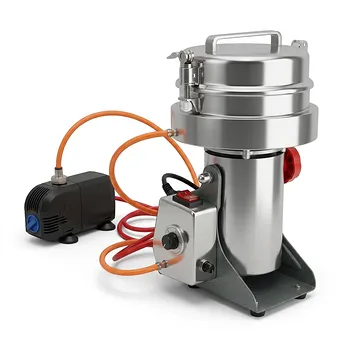
- Water Cooled High Speed Grinder with Cryogenic Option for Laboratory Sample Preparation
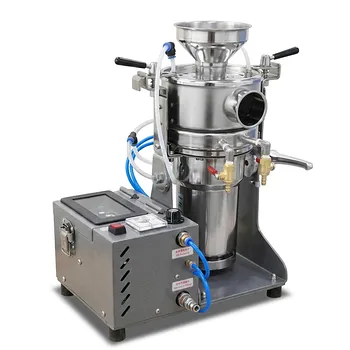
- Water Cooled Pulse Jet Ultrafine Grinder
People Also Ask
- What is the primary function of grinding equipment during the raw material preparation stage for aluminum matrix composites?
- Why are agate grinding elements preferred when preparing plant powder samples through micronization? For Purity
- Why is Warm Isostatic Pressing (WIP) used for laser-sintered parts? Maximize Density & Structural Integrity
- Why is laboratory hydraulic pressing necessary for Bi-2212 specimens? Achieve High Density & Grain Alignment
- What is the primary purpose of using grinding equipment during the pretreatment of natural fiber raw materials? Boost Surface Area

Tech Team · PowderPreparation
Last updated on May 14, 2026
Related Products
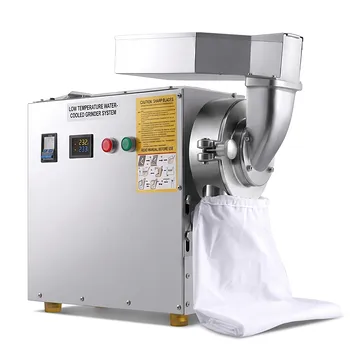
Low Temperature Water Cooled Continuous Feed Grinder Two Stage Coarse and Fine Grinding System
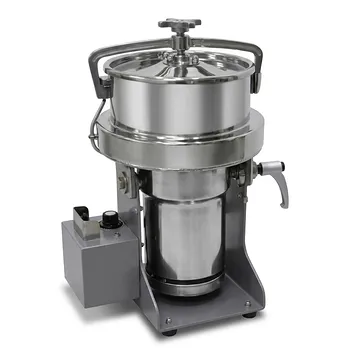
500g Capacity Water Cooled Low Temperature Grinder with Variable Speed and Safety Cover
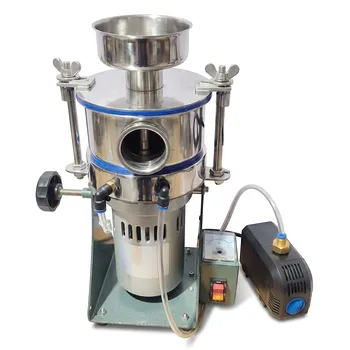
Water Cooled Airflow Ultra Fine Grinder for Low Temperature Material Processing
Water Cooled High Speed Grinder with Cryogenic Option for Laboratory Sample Preparation
Water Cooled Pulse Jet Ultrafine Grinder
Water Cooled Pulse Jet Ultra Fine Pulverizer for Continuous Grinding
High Energy Omnidirectional Planetary Ball Mill 16L