How does the volume filling ratio of steel ball grinding media affect the grinding quality of phosphate ore? (Tips)
Updated 4 months ago
The volume filling ratio of steel balls is the primary factor determining the effective collision frequency and the distribution of mechanical energy within a grinding mill. For phosphate ore, an optimal filling ratio provides the precise energy required to achieve target particle sizes, ensuring that minerals are fully dissociated without the creation of excessive, wasteful fines.
The volume filling ratio acts as a regulator for energy density; maintaining the correct balance is critical to prevent under-grinding, which leaves minerals trapped, or over-grinding, which produces problematic slime and wastes energy.
The Mechanics of Collision and Energy Transfer
Effective Collision Frequency
The filling ratio dictates how many media-to-ore collisions occur within a given timeframe. If the ratio is too low, there are simply not enough contact points to break down the phosphate ore efficiently, leading to a high recirculating load.
Mechanical Energy Distribution
The volume of steel balls determines the kinetic energy profile of the mill load. An appropriate ratio ensures that the energy is distributed evenly enough to facilitate both impact (for coarse breakage) and attrition (for fine grinding).
Impact on Particle Size and Mineral Dissociation
Achieving Target Particle Sizes
Properly calibrated filling ratios allow the mill to hit the specific liberation point of the phosphate ore. This is the stage where the valuable phosphate minerals are separated from the surrounding waste rock (gangue) without unnecessary reduction in size.
Preventing Over-Grinding and Slime
Phosphate processing is particularly sensitive to over-grinding, which results in "slime." When the filling ratio is excessively high, the resulting over-activity in the mill crushes the ore into ultra-fine particles that are difficult to recover in downstream flotation or leaching stages.
The Synergy of Media Size and Volume
Impact Kinetic Energy
While the filling ratio controls the quantity of collisions, the diameter of the steel balls determines the force of each impact. Larger balls provide the necessary kinetic energy to break coarse-grained phosphate, while smaller balls increase the total surface area for finer grinding.
Balancing Shear and Impact Forces
A standardized distribution of media sizes, combined with an optimized filling ratio, ensures a balance of impact and shear forces. This combination is necessary to achieve the breakage kinetics required for consistent mineral dissociation across different ore hardness levels.
Understanding the Trade-offs and Pitfalls
The Risk of Under-Filling
Under-filling a mill might seem like a way to save on media costs, but it often leads to under-grinding. In this scenario, the valuable minerals remain locked within the gangue, significantly reducing the overall recovery rate of the phosphate.
The Consequences of Over-Filling
Over-filling increases the weight of the mill charge, leading to excessive mechanical wear and higher energy consumption. Furthermore, it creates an environment where the ore is subjected to too many collisions, leading to the aforementioned slime production and reduced processing efficiency.
Making the Right Choice for Your Goal
To optimize your phosphate grinding process, you must align your filling ratio with your specific mineralogical requirements and production targets.
- If your primary focus is maximizing mineral dissociation: Aim for a filling ratio that balances impact forces with sufficient retention time to ensure the phosphate is fully liberated from the host rock.
- If your primary focus is minimizing slime production: Maintain a moderate filling ratio and utilize a larger media size distribution to favor selective breakage over high-intensity attrition.
- If your primary focus is measuring the Simplified Work Index (SWI): Ensure a standardized media distribution and filling ratio to maintain comparable mechanical conditions across different ore samples.
Achieving the perfect volume filling ratio transforms the grinding mill from a simple crusher into a precision instrument for mineral liberation.
Summary Table:
| Filling Ratio Level | Impact on Grinding Mechanics | Resulting Grinding Quality |
|---|---|---|
| Low Ratio | Insufficient collision frequency and energy density | Under-grinding; minerals remain trapped in gangue |
| Optimal Ratio | Balanced impact and attrition forces; precision energy | High liberation rate; target particle size achieved |
| High Ratio | Excessive mechanical energy and over-activity | Over-grinding; excessive slime and wasted energy |
| Media Size Synergy | Controls the force of individual impacts | Precise breakage kinetics for varying ore hardness |
Optimize Your Mineral Liberation with Precision Equipment
Achieving the perfect grinding quality for phosphate ore requires more than just the right ratio—it requires high-performance laboratory tools. At [Brand Name], we provide complete laboratory sample preparation solutions tailored for material science.
Whether you are processing phosphate ore or advanced ceramics, our extensive line includes:
- Milling & Grinding: Planetary ball mills, jet mills, and cryogenic grinders for precise particle size control.
- Crushing & Sizing: Jaw/roll crushers and vibratory sieve shakers to prepare your raw feed.
- Compaction & Pressing: A full spectrum of hydraulic presses, including Cold/Warm Isostatic Presses (CIP/WIP), hot presses, and vacuum hot presses for superior material density.
Ready to eliminate over-grinding and improve your recovery rates? Contact our technical experts today to find the ideal equipment for your powder processing and compaction needs!
References
- Gamal S. Abdelhaffez, Mohammed A. Hefni. CONTROLLING GRINDING PROCESS PARAMETERS USING CENTRAL COMPOSITE DESIGN TO REDUCE SLIMES IN PHOSPHATE ORE BENEFICIATION. DOI: 10.17794/rgn.2022.3.11
Mentioned Products
- Vertical Semi Circular Planetary Ball Mill for Laboratory Precision Grinding
- Heavy Duty Horizontal Planetary Ball Mill for Efficient Industrial Grinding and Sample Preparation
- Small High-Speed Laboratory Grinder for Powder Processing
- Vertical Square Planetary Ball Mill for Laboratory Sample Preparation and Nanoscale Grinding
- High Energy Laboratory Planetary Ball Mill for Nano Grinding and Colloidal Mixing of Hard and Brittle Materials
People Also Ask
- What role does a planetary ball mill play in the synthesis of Li6PS5Cl (LPSCl)? Unlock High Ionic Conductivity
- Why is a planetary ball mill essential for SiBCN-rGO wet-spinning? Achieve Superior Dispersion and Spinnability
- Why is an intermittent grinding process required for perovskites in a planetary ball mill? Ensure Stability & Purity
- Why is a planetary ball mill required for PET micronization? Ensure Accurate Chemical Analysis of Reprocessed PET
- How does mechanized planetary ball milling compare to manual agate grinding? Optimize sulfide standard material precision.

Tech Team · PowderPreparation
Last updated on Jun 03, 2026
Related Products
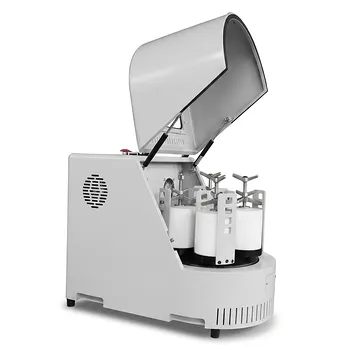
Vertical Semi Circular Planetary Ball Mill for Laboratory Precision Grinding
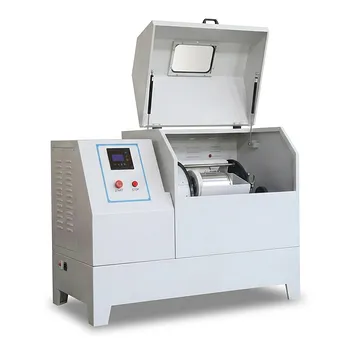
Heavy Duty Horizontal Planetary Ball Mill for Efficient Industrial Grinding and Sample Preparation
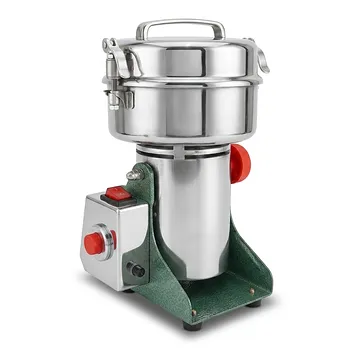
Small High-Speed Laboratory Grinder for Powder Processing
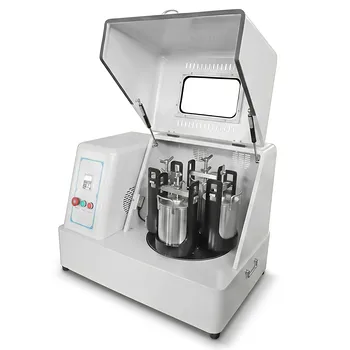
Vertical Square Planetary Ball Mill for Laboratory Sample Preparation and Nanoscale Grinding
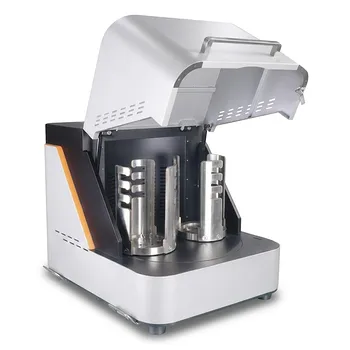
High Energy Laboratory Planetary Ball Mill for Nano Grinding and Colloidal Mixing of Hard and Brittle Materials
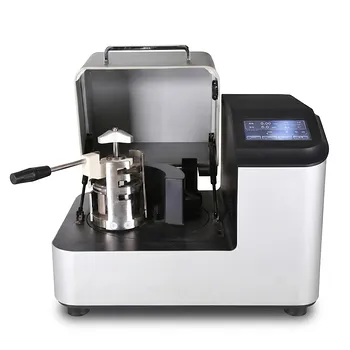
High Energy Laboratory Planetary Ball Mill for Nano Grinding and Material Science Sample Preparation
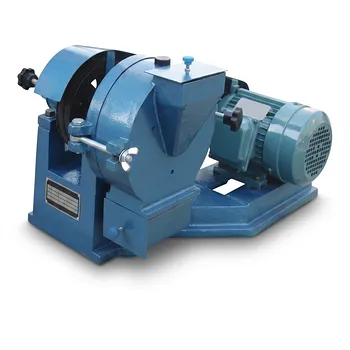
Laboratory Disc Mill for Ore and Mineral Sample Preparation
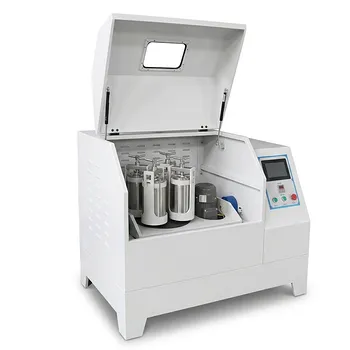
360° Rotating Omnidirectional Laboratory Planetary Ball Mill for Homogeneous Ultra-Fine Grinding and Mixing
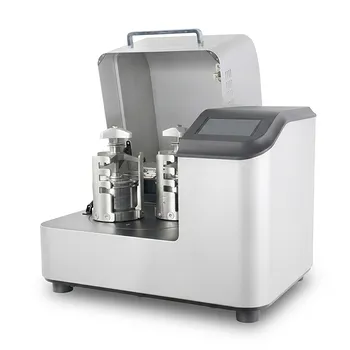
High Energy Planetary Ball Mill for Nano Scale Grinding and Mechanical Alloying