Why is laboratory grinding equipment required to process bioactive glass scaffolds before XRD? Ensure Precise Analysis
Updated 5 months ago
The necessity of precision grinding. Bioactive glass scaffolds must be pulverized into a uniform fine powder to satisfy the requirement for random orientation during X-ray diffraction (XRD) testing. This refinement is critical for determining whether a scaffold remains in an amorphous state or has developed specific microcrystalline phases following thermal processing.
Laboratory grinding transforms irregular, bulk scaffolds into homogeneous powders to eliminate preferred orientation effects. This process ensures that diffraction peaks reflect the true phase composition of the material, allowing for the accurate identification of crystalline structures and chemical purity.
The Mechanics of Diffraction Accuracy
Achieving Random Particle Orientation
XRD relies on the assumption that crystal planes are oriented in every possible direction within a sample. Bulk scaffolds or large aggregates possess fixed geometries that favor specific directions, leading to a phenomenon known as preferred orientation. Grinding reduces these structures into fine particles, ensuring a random distribution that allows the X-ray beam to interact with all possible lattice planes.
Increasing Crystallographic Sampling
To obtain a clear signal, a statistically significant number of crystal planes must participate in the diffraction process. Pulverizing the material increases the total number of individual particles exposed to the X-ray source. This high-degree refinement ensures the resulting data is representative of the entire bulk material rather than just a localized section.
Accuracy in Phase Identification
Bioactive glasses are often designed to be amorphous but may devitrify into crystalline phases like calcium phosphates during heat treatment. Without proper grinding, the diffraction intensities may be skewed, making it difficult to distinguish between a truly amorphous background and weak crystalline peaks. Fine powdering provides the resolution necessary to identify impurity phases by comparing results against standard databases.
Overcoming Material-Specific Challenges
Neutralizing Texturing Effects
Scaffolds produced through directional solidification or sintering often exhibit inherent texturing. This texture can artificially inflate the intensity of certain diffraction peaks while suppressing others. Laboratory grinding mills break down these directional patterns, restoring the natural intensity ratios required for lattice constant calculations.
Relieving Internal Stress Distortions
Bioactive materials often experience internal stress due to mismatched thermal expansion coefficients between different phases. These stresses can shift the positions of diffraction peaks, leading to errors in chemical content analysis. The grinding process helps relieve these localized distortions, ensuring that peak positions accurately reflect the material’s chemical stoichiometry.
Enhancing Physical Homogeneity
Irregular mineral aggregates and sintered blocks are physically non-uniform. High-efficiency mills reduce these to micron-sized powders (often less than 50 micrometers) to achieve high physical homogeneity. This uniformity is essential for obtaining the sharp, well-defined peaks needed to observe reactions, such as the formation of calcified materials.
Understanding the Trade-offs
The Risk of Phase Transformation
While grinding is necessary, excessive mechanical energy can generate localized heat. This heat can inadvertently trigger phase changes or crystallization in sensitive bioactive glasses before the test even begins. It is vital to use controlled grinding parameters to prevent the material from altering its state during preparation.
Sample Contamination
The use of grinding bowls and media (such as zirconia or alumina) introduces the risk of cross-contamination. If the grinding media is softer than the scaffold material, microscopic fragments of the equipment may end up in the sample. This can lead to "ghost peaks" in the XRD pattern that are misidentified as impurities in the bioactive glass.
Structural Amorphization
Over-grinding can lead to the destruction of the very crystalline structures you are trying to measure. Mechanical milling can break down long-range atomic order, turning a crystalline sample into a disordered amorphous state. Technicians must balance the need for fineness with the need to preserve the material's original structural integrity.
How to Apply This to Your Project
Recommendations for Sample Preparation
To ensure the highest quality XRD data, tailor your grinding approach to your specific research goal.
- If your primary focus is Phase Identification: Grind the sample to a uniform powder below 50 microns to ensure all potential crystalline impurities are detectable against the amorphous background.
- If your primary focus is Quantitative Analysis: Use a laboratory micro-grinder to achieve an extremely fine, consistent particle size to eliminate preferred orientation and improve the precision of intensity measurements.
- If your primary focus is Lattice Parameter Precision: Use a low-speed grinding method to relieve internal stresses without introducing excessive heat that could shift peak positions.
Effective laboratory grinding is the bridge between a raw, irregular scaffold and a scientifically valid diffraction pattern.
Summary Table:
| Preparation Requirement | Impact on XRD Analysis | Key Benefit |
|---|---|---|
| Particle Size Reduction | Eliminates preferred orientation | Ensures diffraction peaks reflect true phase composition |
| Random Orientation | Uniform distribution of lattice planes | Increases crystallographic sampling for statistical accuracy |
| Stress Relief | Reduces localized lattice distortions | Improves accuracy of peak positions and stoichiometry |
| Homogenization | Creates micron-sized powders (<50μm) | Produces sharp, well-defined peaks for impurity detection |
Optimize Your Material Analysis with Precision Sample Prep
Achieving accurate XRD results starts with superior sample preparation. At [Company Name], we provide complete laboratory sample preparation solutions for material science, specializing in high-performance powder processing and compaction equipment.
Whether you are refining bioactive glass scaffolds or advanced ceramics, our extensive line includes:
- Grinding & Milling: Planetary ball mills, jet mills, disc mills, and liquid nitrogen cryogenic grinders for heat-sensitive materials.
- Sizing & Mixing: Vibratory/air-jet sieve shakers and high-efficiency powder/defoaming mixers.
- Compaction Excellence: A full spectrum of hydraulic presses, including Cold/Warm Isostatic Presses (CIP/WIP), vacuum hot presses, and XRF pellet presses.
Don't let improper grinding compromise your research data. Contact our experts today to find the perfect milling or pressing solution tailored to your laboratory's specific requirements!
References
- Jacopo Barberi, Francesco Baino. Mechanical characterization of pore-graded bioactive glass scaffolds produced by robocasting. DOI: 10.1515/bglass-2019-0012
Mentioned Products
- Small Ceramic Structure Laboratory Sand Mill Nanoscale Grinding Dispersion Equipment Seal-less Screen-less Design
- High Throughput Micro Ball Mill for Cryogenic Grinding and Laboratory Cell Disruption
- High Energy Laboratory Planetary Ball Mill for Nano Grinding and Material Science Sample Preparation
- Laboratory Ultrafine Impact and Airflow Grinder for Precise Particle Size Control
- Cross Beater Mill for Brittle Material Grinding and Continuous Fine Crushing Industrial Sample Preparation
People Also Ask
- Why is a sand mill used to process solid carbon-forming agents like PPVA and PER? Enhance Dispersion & Flame Retardancy
- What is the role of laboratory grinding equipment in the preparation of waste glass powder for eco-friendly red bricks?
- Why is grinding equipment necessary for SnO2-Sb2O3 xerogels? Maximize surface area and photocatalytic activity.
- How does laboratory grinding or pulverizing equipment influence eggshell-derived adsorbents? Maximize Surface Area.
- What is the primary role of grinding equipment in BLA preparation? Enhance Reactivity & Material Uniformity

Tech Team · PowderPreparation
Last updated on May 14, 2026
Related Products
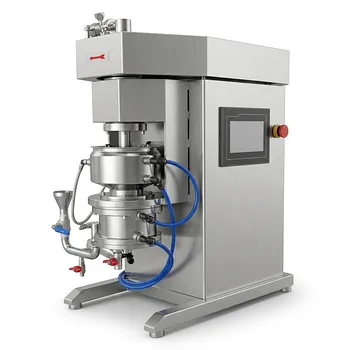
Small Ceramic Structure Laboratory Sand Mill Nanoscale Grinding Dispersion Equipment Seal-less Screen-less Design
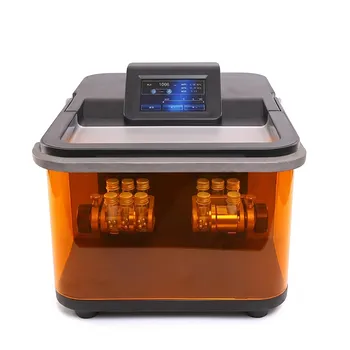
High Throughput Micro Ball Mill for Cryogenic Grinding and Laboratory Cell Disruption

High Energy Laboratory Planetary Ball Mill for Nano Grinding and Material Science Sample Preparation
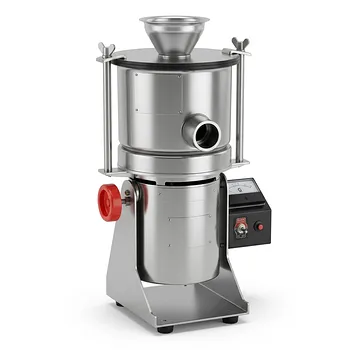
Laboratory Ultrafine Impact and Airflow Grinder for Precise Particle Size Control
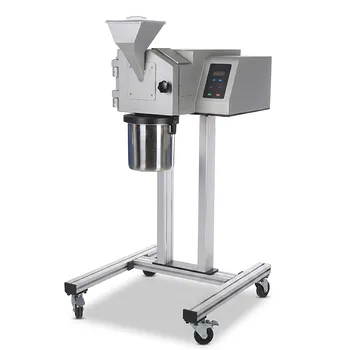
Cross Beater Mill for Brittle Material Grinding and Continuous Fine Crushing Industrial Sample Preparation
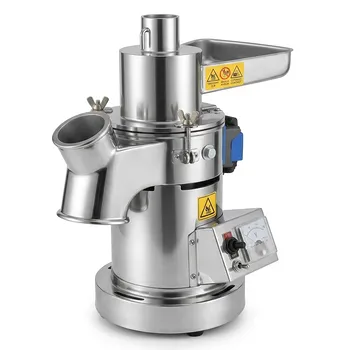
Continuous Feeding Grinder High Efficiency Pulverizer for Lab Sample Preparation
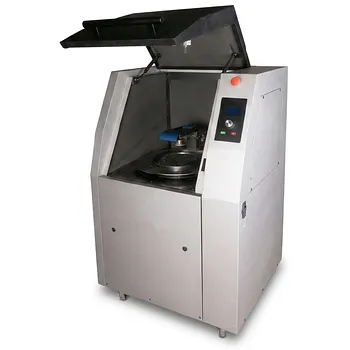
High Speed Vibratory Disc Mill for Spectral Analysis Sample Preparation and Rapid Powder Grinding
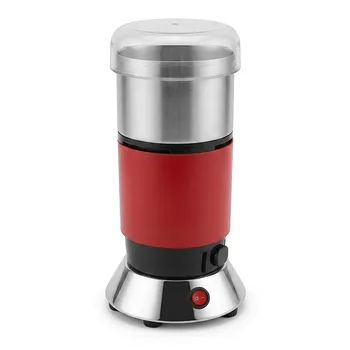
Micro Solid Sample Grinder High Speed Pulverizer for Laboratory Small Batch Grinding
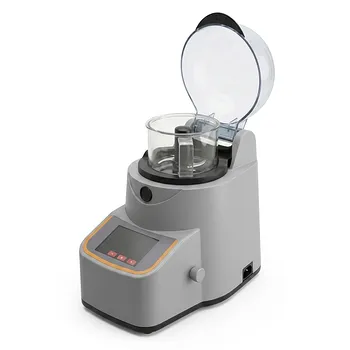
Industrial Knife Mill for Food and Biological Sample Preparation High Speed Laboratory Homogenizer

High Energy Planetary Ball Mill for Nano Scale Grinding and Mechanical Alloying
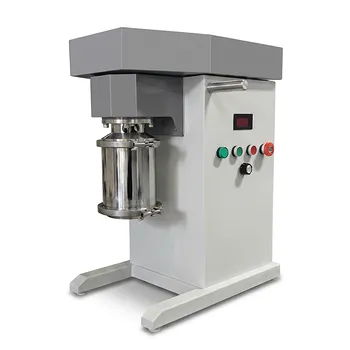
Nano Laboratory Bead Mill Desktop Sub Micron Sand Mill Screenless Seal Less Powder Grinder
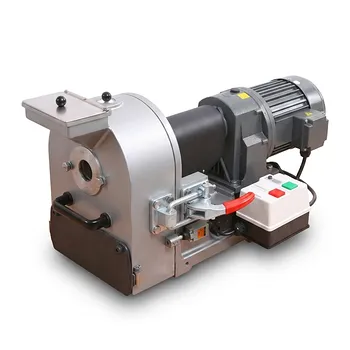
Laboratory Disc Mill for Fine Sample Preparation of Hard and Brittle Materials
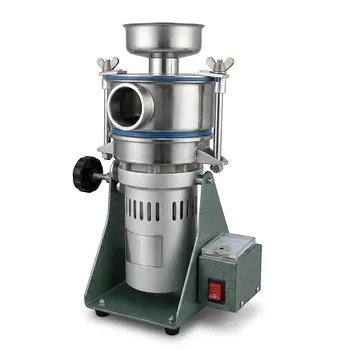
Small Airflow Ultra-Fine Grinder for Laboratory Sample Preparation
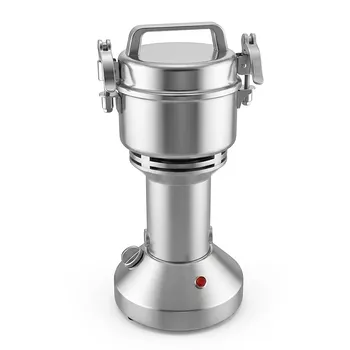
Small High Speed Upright Grinder for Laboratory Sample Preparation
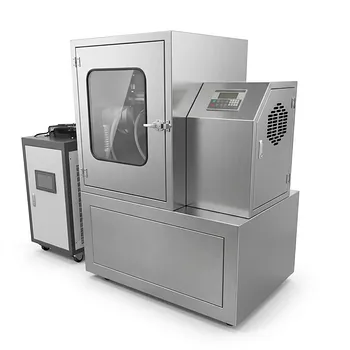
Vibratory Superfine Grinder for Ultra Fine Laboratory Powder Milling
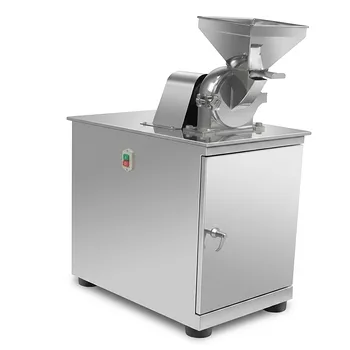
Universal Laboratory Pulverizer Grinder for Small Batch Powder Processing and Material Science Research
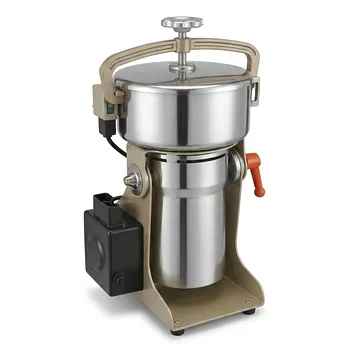
Multifunctional High Efficiency High Speed Laboratory Grinder
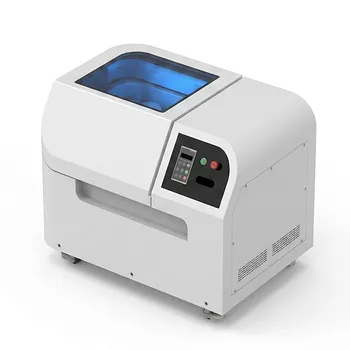
8L Planetary Ball Mill for Laboratory Grinding and Sample Preparation

Small High Speed Grinder for Laboratory Sample Preparation