How does the size distribution of steel ball grinding media affect ore grindability? Optimize Energy & Lab Accuracy
Updated 4 months ago
The size distribution of steel ball grinding media is the primary determinant of energy transfer efficiency and breakage kinetics within a laboratory ball mill. By balancing the ratio of larger balls for high-impact breakage with smaller balls for increased surface area contact, a standardized media charge ensures that ore grindability measurements—such as the Simplified Work Index (SWI)—remain consistent, accurate, and comparable across different material types.
Core Takeaway: To accurately determine ore grindability, the media size distribution must provide a specific equilibrium between impact forces and shear/attrition. A standardized distribution eliminates mechanical variables, allowing the resulting data to reflect the inherent physical resistance of the ore rather than the inefficiencies of the milling environment.
The Mechanics of Size Distribution in Energy Transfer
Balancing Impact and Shear Forces
The size distribution of steel balls acts as the delivery mechanism for mechanical energy. Large-diameter balls (e.g., 40 mm) provide the high impact kinetic energy required to fracture coarse-grained materials and hard ores. Conversely, smaller balls increase the total surface area and collision frequency, which is essential for fine grinding and enhancing the specific surface area of the sample.
Achieving Consistent Breakage Kinetics
Standardizing the distribution of media ensures that the breakage kinetics of different ore types are evaluated under identical mechanical conditions. This consistency is vital for measuring the Simplified Work Index (SWI). Without a fixed distribution, it becomes impossible to determine if a change in grinding rate is due to the ore's hardness or a shift in the mill's energy application.
The Role of Void Space and Contact Area
The ratio of ball sizes dictates the void space within the milling jar. Incorporating a specific percentage of smaller balls fills the gaps between larger media, increasing the frictional contact between the steel and the ore particles. This optimized contact ensures that even the smallest particles are subjected to mechanical stress, preventing them from "hiding" in the interstices of a coarse media charge.
Impact on Grindability Indices and Industrial Scaling
Defining the Bond Work Index (BWI)
Laboratory dry-grinding tests use controlled media distributions to calculate the energy required to reduce a material to a specific fineness. This data serves as the scientific foundation for predicting the unit energy consumption of industrial-scale equipment, such as roller presses or large ball mills. If the lab-scale media distribution is flawed, the industrial energy projections will be inaccurate.
Correlating Chemical Composition with Physical Resistance
Accurate grindability determination allows researchers to link a material's chemical composition (such as tricalcium silicate in clinker) to its physical resistance. A standardized media charge ensures that the mechanical "baseline" is constant. This allows the observer to isolate the effects of the ore's internal structure on its grindability profile.
Optimizing for Material Hardness
The media charge must be tailored to the initial particle size and hardness of the raw material. For extremely hard materials like steel slag, a higher proportion of larger balls is necessary to generate the single-impact energy required for initial fracture. For softer or pre-crushed samples, a distribution favoring smaller media will reach the target fineness more efficiently.
Understanding the Trade-offs and Pitfalls
The Risk of Over-Grinding and Slime Production
An incorrect media distribution—specifically one with too much surface area for the required task—can lead to over-grinding. This results in the production of excessive slimes or ultra-fine particles that may be detrimental to downstream processes like flotation. Over-grinding also masks the true grindability of the ore by consuming energy in unnecessary size reduction.
Under-Grinding and Mineral Liberation Issues
Conversely, a media charge that lacks sufficient impact energy will result in under-grinding. In this scenario, valuable minerals may not be fully dissociated from the gangue. This leads to an overestimation of the ore's hardness and an inaccurate assessment of the energy required for complete mineral liberation.
Media Filling Ratios and Energy Density
The volume filling ratio of the steel balls determines the effective collision frequency within the mill. A ratio that is too high restricts the movement of the balls, reducing the impact velocity. A ratio that is too low fails to provide enough collisions per revolution, drastically increasing the time required to reach the target fineness and skewing the grindability results.
How to Apply This to Your Project
Making the Right Choice for Your Goal
To ensure your laboratory results are both accurate and scalable, consider the following recommendations based on your specific testing objectives:
- If your primary focus is determining the Bond Work Index: Use a strictly standardized distribution of steel balls as defined by the BWI protocol to ensure your results are comparable to global benchmarks.
- If your primary focus is the liberation of coarse-grained minerals: Bias your media distribution toward larger ball diameters to maximize the single-impact energy necessary for initial fragmentation.
- If your primary focus is increasing the specific surface area for chemical reactions: Utilize a higher proportion of small-diameter balls (16–18 mm) to maximize collision frequency and frictional contact.
- If your primary focus is minimizing sample contamination: Ensure the media density is significantly higher than the sample density and consider the chemical inertness of the steel alloy relative to your ore.
By precisely controlling the size distribution of your grinding media, you transform the laboratory mill from a simple crusher into a calibrated instrument for scientific measurement.
Summary Table:
| Media Size Category | Mechanical Action | Primary Application |
|---|---|---|
| Large-Diameter Balls | High Impact Kinetic Energy | Fracturing hard, coarse-grained ores |
| Small-Diameter Balls | Shear & Attrition Force | Fine grinding & increasing surface area |
| Standardized Mix | Balanced Breakage Kinetics | BWI/SWI determination & scalable testing |
| High Filling Ratio | Increased Collision Frequency | Rapid reduction (requires careful velocity control) |
Elevate Your Material Research with Precise Sample Preparation
Achieving accurate grindability data requires more than just the right media—it requires precision-engineered equipment. At [Your Brand Name], we provide complete laboratory sample preparation solutions for material science, specializing in high-performance powder processing and compaction equipment.
Our extensive product line is designed to ensure consistency and scalability in your research:
- Advanced Milling: Planetary ball mills, jet mills, disc mills, rotor mills, and liquid nitrogen cryogenic grinders.
- Primary Size Reduction: Heavy-duty jaw and roll crushers.
- Sieving & Mixing: Vibratory/air-jet sieve shakers, powder mixers, and defoaming mixers.
- Material Compaction: A full spectrum of hydraulic presses, including Cold/Warm Isostatic Presses (CIP/WIP), standard lab presses, XRF pellet presses, and vacuum hot presses.
Whether you are refining mineral liberation or optimizing energy consumption for industrial scaling, our experts are here to help. Contact us today to find the perfect solution for your laboratory!
References
- Wladmir José Gomes Florêncio, Vládia Cristina Gonçalves de Souza. The Effect of Particle Size Distribution on the BWI and Energy Consumption of Harder Ores. DOI: 10.4236/jmmce.2025.135015
Mentioned Products
- 360° Rotating Omnidirectional Laboratory Planetary Ball Mill for Homogeneous Ultra-Fine Grinding and Mixing
- High Energy Laboratory Planetary Ball Mill for Nano Grinding and Material Science Sample Preparation
- Laboratory Nano High Energy Ball Mill Ultrafine Grinding Mechanical Alloying
- Vertical Semi Circular Planetary Ball Mill for Laboratory Precision Grinding
- Vertical Square Planetary Ball Mill for Laboratory Sample Preparation and Nanoscale Grinding
People Also Ask
- What role does an omni-directional planetary ball mill play in brass/cobalt antimonide pretreatment? Achieve Nano-Scale Homogeneity.
- What is the function of an omni-directional planetary ball mill? Achieve Streak-Free Glass Homogenization
- Why is an intermittent grinding process required for perovskites in a planetary ball mill? Ensure Stability & Purity
- Why is a planetary ball mill essential for SiBCN-rGO wet-spinning? Achieve Superior Dispersion and Spinnability
- What role does a planetary ball mill play in the synthesis of Li6PS5Cl (LPSCl)? Unlock High Ionic Conductivity

Tech Team · PowderPreparation
Last updated on Jun 03, 2026
Related Products
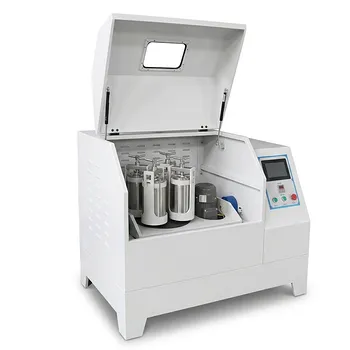
360° Rotating Omnidirectional Laboratory Planetary Ball Mill for Homogeneous Ultra-Fine Grinding and Mixing
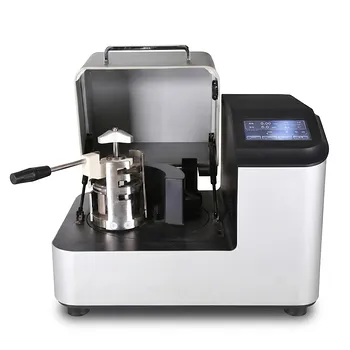
High Energy Laboratory Planetary Ball Mill for Nano Grinding and Material Science Sample Preparation
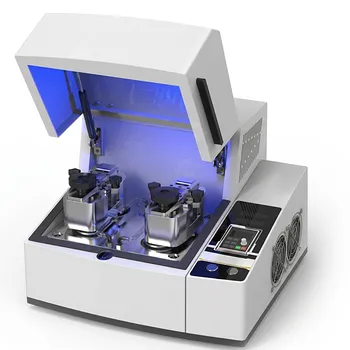
Laboratory Nano High Energy Ball Mill Ultrafine Grinding Mechanical Alloying
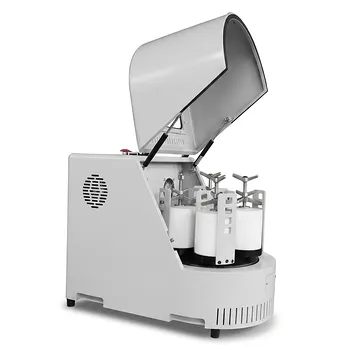
Vertical Semi Circular Planetary Ball Mill for Laboratory Precision Grinding

Vertical Square Planetary Ball Mill for Laboratory Sample Preparation and Nanoscale Grinding
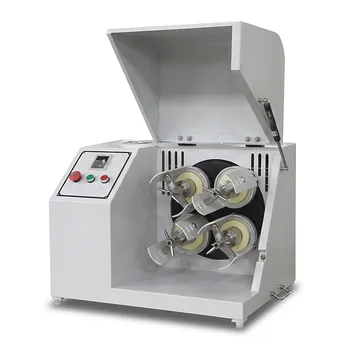
Horizontal Light Duty Planetary Ball Mill for Laboratory Sample Preparation
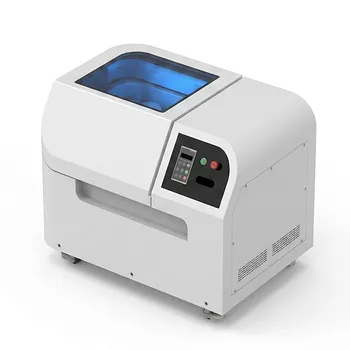
8L Planetary Ball Mill for Laboratory Grinding and Sample Preparation

Miniature Planetary Ball Mill with Vacuum Grinding and High Efficiency for Laboratory Sample Preparation
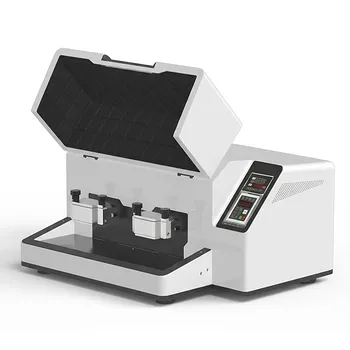
Nanoscale High-Energy Vibratory Ball Mill for Laboratory Sample Preparation, Mechanochemistry, and Mechanical Alloying

Nano High Energy Vibratory Ball Mill for Laboratory Sample Preparation
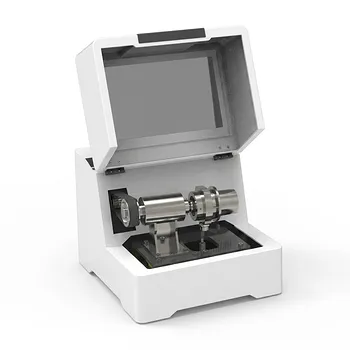
Single Tank High Energy Vibratory Ball Mill for Laboratory Grinding and Mixing
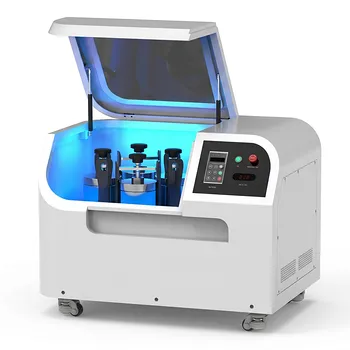
Planetary Ball Mill 12L
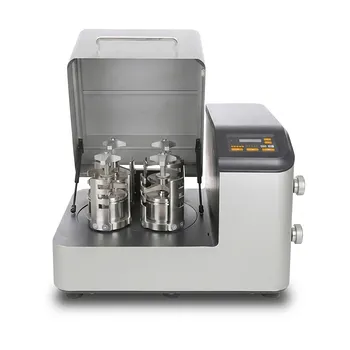
High Energy Planetary Ball Mill for Nano Scale Grinding and Colloidal Mixing in Material Science Research

High Throughput Micro Ball Mill for Cryogenic Grinding and Laboratory Cell Disruption

Heavy Duty Horizontal Planetary Ball Mill for Efficient Industrial Grinding and Sample Preparation
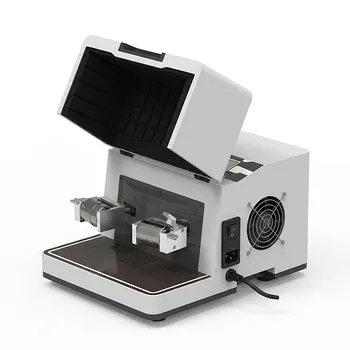
High Energy Hybrid Vibratory Ball Mill for Grinding Mixing and Cell Disruption
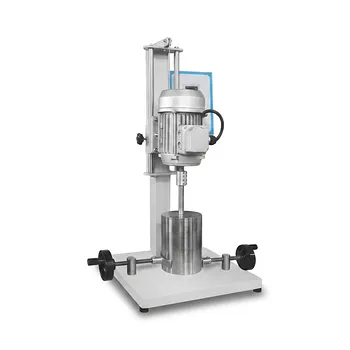
Laboratory Basket Sand Mill for Wet Grinding and Dispersion of Viscous Slurries

High Energy Planetary Ball Mill for Nano Scale Grinding and Mechanical Alloying

Vertical Production Planetary Ball Mill for High Throughput Powder Processing