Why are Tungsten Carbide (WC) grinding balls preferred for milling ZrB2 and SiC? Ensure Purity & High-Energy Results
Updated 4 months ago
Tungsten Carbide (WC) grinding balls are the primary choice for milling Zirconium Diboride ($ZrB_2$) and Silicon Carbide ($SiC$) due to their exceptional density and hardness. These properties are required to generate the high kinetic energy needed to fracture these specific high-hardness ceramic materials. Furthermore, the superior wear resistance of Tungsten Carbide ensures that the final powder maintains high chemical purity by minimizing the introduction of debris from the grinding media itself.
Core Takeaway: To effectively mill ultra-hard ceramics like $ZrB_2$ and $SiC$, grinding media must possess higher density and hardness than the material being processed. Tungsten Carbide fulfills this by providing the necessary impact energy for particle refinement while protecting the mixture from metallic contamination.
The Physics of High-Energy Milling
The Role of High Density in Energy Transfer
The high density of Tungsten Carbide is a critical factor in high-energy ball milling (HEBM). Density directly correlates with the kinetic energy generated during the high-speed rotation of the milling jar.
Because $ZrB_2$ and $SiC$ are structurally resilient, they require intense impact forces to induce particle deformation and fracture. WC balls provide the "heft" necessary to deliver these forces efficiently compared to lighter media.
Overcoming Material Hardness
Both $ZrB_2$ and $SiC$ are classified as high-hardness ceramics, making them difficult to process with standard steel or alumina media. Tungsten Carbide possesses extreme hardness, which allows it to crush these powders without the balls themselves being pulverized.
This hardness differential is essential for mechanical activation and particle size reduction. Without a harder medium, the energy of the mill would be wasted on wearing down the grinding balls rather than refining the ceramic powder.
Protecting Chemical and Material Integrity
Minimizing Abrasive Wear
During long-duration dry milling, the friction between the media and the powder can lead to abrasive wear. Tungsten Carbide’s superior wear resistance significantly reduces the amount of media material that "sloughs off" into the mix.
This resistance is vital for maintaining the chemical purity of the ceramic reinforcement phases. By preventing the introduction of excess metallic impurities, WC ensures the final composite retains its intended properties.
Impact on Final Product Properties
The use of WC media is often a prerequisite for achieving high-purity micron- or nano-scale additives. If the powder were contaminated by softer media, the final dielectric and mechanical properties of the sintered ceramic could be severely compromised.
Furthermore, the efficient grinding provided by WC leads to a uniform particle distribution. This uniformity is essential for producing high-density nanocomposites with consistent performance characteristics.
Understanding the Trade-offs
The Risk of Residual Contamination
While Tungsten Carbide is highly wear-resistant, it is not completely immune to degradation during prolonged processing. Minimal amounts of WC impurities may still be introduced into the precursor powders.
Weight and Equipment Strain
The high density that makes WC effective also makes the grinding sets significantly heavier than other materials. This increased weight can lead to faster wear on the mechanical components of the ball mill, such as motors and drive belts.
Cost Considerations
Tungsten Carbide is generally more expensive than zirconia or hardened steel media. However, its durability and efficiency often offset the initial investment by reducing processing time and increasing the lifecycle of the grinding sets.
How to Apply This to Your Project
Making the Right Choice for Your Goal
- If your primary focus is Maximum Purity: Utilize Tungsten Carbide to ensure that the abrasive nature of $SiC$ or $ZrB_2$ does not introduce significant metallic debris from the media.
- If your primary focus is Rapid Particle Refinement: Prioritize WC media for its high density, which maximizes the kinetic energy transfer needed to reach nano-scale dimensions quickly.
- If your primary focus is Milling Softer Materials: Consider lighter media like Zirconia, as the extreme density of WC may be unnecessary and could cause excessive wear on your milling equipment.
Selecting Tungsten Carbide provides the mechanical force and chemical stability necessary to transform ultra-hard ceramic precursors into high-performance engineering materials.
Summary Table:
| Key Feature | Benefit for $ZrB_2$ & $SiC$ Milling | Impact on Final Powder |
|---|---|---|
| High Density | Maximum kinetic energy transfer | Rapid reduction to nano-scale |
| Extreme Hardness | Superior to hard ceramic precursors | Efficient fracture without media loss |
| Wear Resistance | Minimal abrasive degradation | High chemical & material purity |
| Uniform Grinding | Consistent impact force | Homogeneous particle distribution |
Elevate Your Material Research with Expert Powder Solutions
Achieving the perfect micron- or nano-scale powder requires more than just high-quality media—it requires a complete, integrated approach to sample preparation. At [Brand Name], we specialize in providing complete laboratory sample preparation solutions for material science, focusing on high-performance powder processing and compaction equipment.
Our extensive product range is designed to handle the most challenging materials like $ZrB_2$ and $SiC$:
- Advanced Milling & Grinding: Planetary ball mills, jet mills, liquid nitrogen cryogenic grinders, and disc/rotor mills.
- Precision Sizing: Vibratory and air-jet sieve shakers with a full range of test sieves.
- Mixing & Defoaming: High-efficiency powder mixers and vacuum defoaming mixers.
- Advanced Compaction: A full spectrum of hydraulic presses, including Cold/Warm Isostatic Presses (CIP/WIP), standard lab presses, and vacuum hot presses.
Whether you are a researcher aiming for high-purity nanocomposites or a distributor seeking reliable, high-margin equipment with full OEM/ODM support, we are here to help. Contact us today to optimize your laboratory workflow!
References
- hossien salehi vaziri, Seyyed Salman Seyyed Afghahi. Influence of ZrB2/SiC Hybrid Particles on Microstructure and Creep Resistance of AZ31Magnesium Alloy Matrix Composite. DOI: 10.5829/ije.2026.39.02b.01
Mentioned Products
- Vertical Semi Circular Planetary Ball Mill for Laboratory Precision Grinding
- Heavy Duty Horizontal Planetary Ball Mill for Efficient Industrial Grinding and Sample Preparation
- 8L Planetary Ball Mill for Laboratory Grinding and Sample Preparation
- High Energy Laboratory Planetary Ball Mill for Nano Grinding and Material Science Sample Preparation
- Vertical Square Planetary Ball Mill for Laboratory Sample Preparation and Nanoscale Grinding
People Also Ask
- What role does a planetary ball mill play in the synthesis of Li6PS5Cl (LPSCl)? Unlock High Ionic Conductivity
- Why is a planetary ball mill essential for SiBCN-rGO wet-spinning? Achieve Superior Dispersion and Spinnability
- Why is an intermittent grinding process required for perovskites in a planetary ball mill? Ensure Stability & Purity
- Why is a planetary ball mill required for PET micronization? Ensure Accurate Chemical Analysis of Reprocessed PET
- How does mechanized planetary ball milling compare to manual agate grinding? Optimize sulfide standard material precision.

Tech Team · PowderPreparation
Last updated on Jun 03, 2026
Related Products
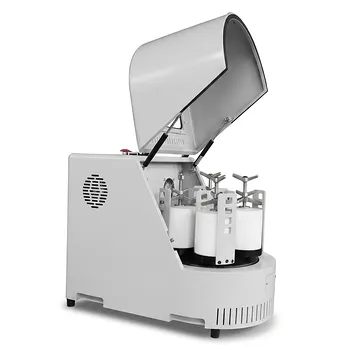
Vertical Semi Circular Planetary Ball Mill for Laboratory Precision Grinding
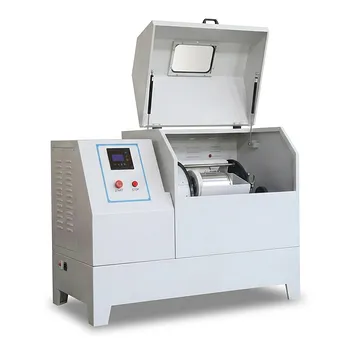
Heavy Duty Horizontal Planetary Ball Mill for Efficient Industrial Grinding and Sample Preparation
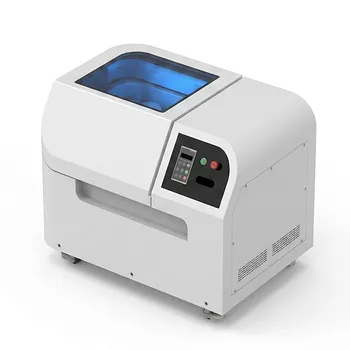
8L Planetary Ball Mill for Laboratory Grinding and Sample Preparation

High Energy Laboratory Planetary Ball Mill for Nano Grinding and Material Science Sample Preparation
