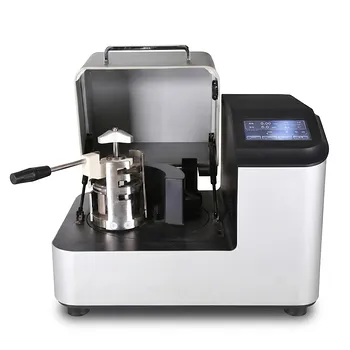
Why are 3mm zirconia grinding balls used for KNNLST ceramics? Achieve High Purity & Efficient Micron-Level Refinement
Updated 5 months ago
The use of 3mm zirconia grinding balls for milling KNNLST ceramic powders is driven by the need for high grinding efficiency, narrow particle size distribution, and extreme material purity. Specifically, the 3mm diameter provides the optimal surface area for rapid powder refinement, while the inherent hardness and density of zirconia ensure that the media can withstand high-energy milling without contaminating the ceramic’s sensitive piezoelectric composition.
Choosing 3mm zirconia media allows manufacturers to achieve micron-level refinement while maintaining the chemical integrity of KNNLST ceramics. This balance of mechanical impact and wear resistance is essential for preserving the final material's electrical performance.
The Mechanical Advantage of Zirconia
Zirconia is the preferred material for high-energy milling due to its unique physical properties.
Exceptional Hardness and Wear Resistance
Zirconia (ZrO2) possesses the high hardness required to withstand the high-speed operation of equipment like Attritor Mills or Planetary Mills. This durability ensures that the balls do not break or chip during the repetitive impacts necessary to break down hard ceramic powders.
High Kinetic Energy Transfer
The high density of zirconia allows the grinding media to generate significant mechanical impact and shear forces. This kinetic energy is transferred directly to the KNNLST powder, facilitating a faster reduction in particle size compared to lighter media like alumina.
Chemical Inertness and Purity
Maintaining the electrical and optical purity of KNNLST is critical for its function as a piezoelectric ceramic. Zirconia's chemical stability ensures that it does not react with the powder or introduce metallic impurities that could degrade the final product’s performance.
Why 3mm Diameter is the Ideal Scale
The specific selection of a 3mm diameter is a strategic choice focused on the kinetics of the milling process.
Increased Contact Points
Smaller diameter balls, such as those at 3mm, provide a significantly higher number of contact points within the mill compared to larger media. More contact points lead to more frequent collisions with the powder, which accelerates the refinement process.
Narrow Particle Size Distribution
The use of 3mm media helps achieve a narrower particle size distribution. This uniformity is vital for the subsequent sintering process, as it ensures the ceramic grains grow evenly, leading to superior mechanical and electrical properties.
Efficient Micron-Level Refinement
For materials like KNNLST, reaching micron-level refinement is necessary for optimal reactivity. The 3mm size is small enough to provide the "fine-tuning" required for these dimensions, yet large enough to carry the mass needed for effective crushing energy.
Understanding the Trade-offs
While 3mm zirconia is highly effective, there are specific challenges that engineers must manage.
Heat Generation and Management
High-speed milling with dense media can generate excessive heat within the milling chamber. If not properly cooled, this temperature rise can potentially alter the phase stability of the KNNLST powder.
Media Separation and Handling
The smaller 3mm size requires specialized screens or sieves for media separation after the milling cycle is complete. Additionally, the high cost of high-purity zirconia media compared to standard materials must be weighed against the required performance of the final ceramic.
How to Apply This to Your Project
Selecting the right grinding media depends on your specific production goals and the sensitivity of your ceramic composition.
- If your primary focus is Maximum Purity: Utilize high-purity zirconia balls to minimize "media loss" and prevent foreign chemical contamination during long milling cycles (8–24 hours).
- If your primary focus is Rapid Particle Refinement: Opt for the 3mm diameter to increase collision frequency and achieve a uniform, micron-level powder more quickly.
- If your primary focus is Attritor Mill Compatibility: Ensure your zirconia media is of the highest wear resistance to withstand the extreme high-speed shear forces characteristic of these machines.
By aligning your media size and material with the specific needs of KNNLST ceramics, you ensure a high-performance, lead-free piezoelectric material with predictable electrical characteristics.
Summary Table:
| Feature | Advantage for KNNLST Milling | Key Benefit |
|---|---|---|
| Material: Zirconia | High density and chemical inertness | Maximum kinetic energy without chemical contamination |
| 3mm Diameter | Increased contact points and surface area | Accelerated refinement and narrow particle size distribution |
| Mechanical Property | Exceptional hardness & wear resistance | Prevents media chipping in high-energy planetary or attritor mills |
| Target Outcome | Micron-level refinement | Uniform grain growth during sintering for superior electrical properties |
Elevate Your Ceramic Research with Precision Preparation Solutions
At [Your Brand Name], we provide complete laboratory sample preparation solutions tailored for advanced material science. Whether you are working on lead-free piezoelectric ceramics like KNNLST or high-performance alloys, our equipment ensures the highest standards of purity and precision.
Our extensive product line includes:
- Advanced Milling: Planetary ball mills, jet mills, and rotor mills for achieving perfect micron-level refinement.
- Superior Compaction: A full spectrum of hydraulic presses, including Cold/Warm Isostatic Presses (CIP/WIP), vacuum hot presses, and standard lab presses for high-density pellet formation.
- Processing & Sizing: Crushers, vibratory sieve shakers, and high-efficiency powder mixers.
Ready to optimize your powder processing workflow? Contact our technical experts today to find the ideal equipment and grinding media for your specific material requirements!
References
- Henry E. Mgbemere, Chiedozie Oluigbo. The synthesis and characterization of alkaline niobate-based ceramic composites containing L-lysine Hydrochloride. DOI: 10.26701/ems.1497079
Mentioned Products
- Vertical Nano Bead Mill for Ceramic Materials with Permanent Magnet Motor and High Efficiency Grinding
- Vertical Semi Circular Planetary Ball Mill for Laboratory Precision Grinding
- Heavy Duty Horizontal Planetary Ball Mill for Efficient Industrial Grinding and Sample Preparation
- Vertical Square Planetary Ball Mill for Laboratory Sample Preparation and Nanoscale Grinding
- Small Ceramic Structure Laboratory Sand Mill Nanoscale Grinding Dispersion Equipment Seal-less Screen-less Design
People Also Ask
- What role does a vertical bead mill play in the preparation of pharmaceutical nanocrystals? Enhance Bioavailability
- Why is it necessary to precisely control the grinding media loading ratio? Master Nanosuspension Yield & API Stability
- How does the bead filling rate affect the grinding performance and equipment wear in a bead mill? Optimization Guide
- Why is an external cooling circulation system necessary during the high-speed operation of a bead mill? Protect Integrity
- Why is a ceramic lining preferred over stainless steel for a bead mill? Protect Enzymes and Ensure Biomass Purity

Tech Team · PowderPreparation
Last updated on May 14, 2026
Related Products
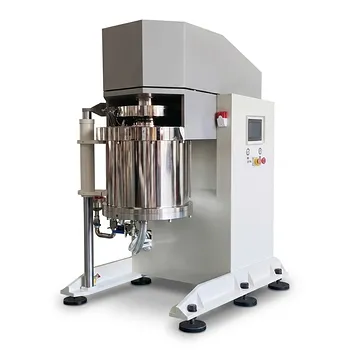
Vertical Nano Bead Mill for Ceramic Materials with Permanent Magnet Motor and High Efficiency Grinding
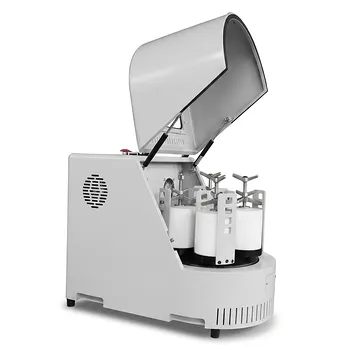
Vertical Semi Circular Planetary Ball Mill for Laboratory Precision Grinding
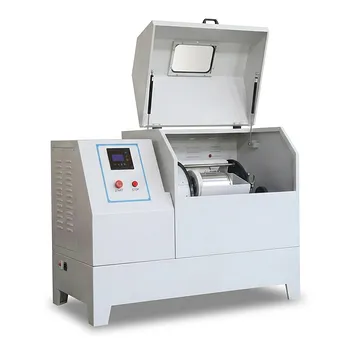
Heavy Duty Horizontal Planetary Ball Mill for Efficient Industrial Grinding and Sample Preparation
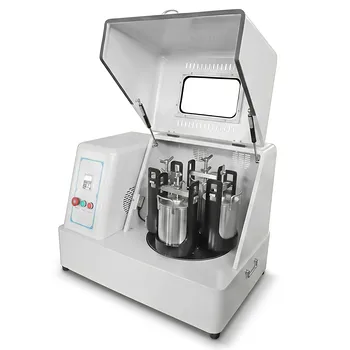
Vertical Square Planetary Ball Mill for Laboratory Sample Preparation and Nanoscale Grinding
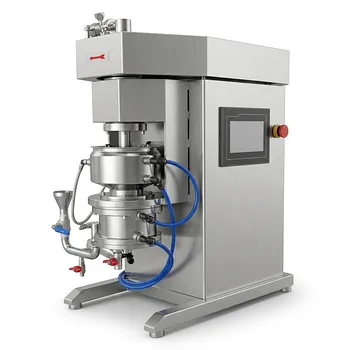
Small Ceramic Structure Laboratory Sand Mill Nanoscale Grinding Dispersion Equipment Seal-less Screen-less Design