Why are zirconia jars preferred for steel slag grinding and carbonation experiments? Maximizing Purity & Impact Force.
Updated 5 months ago
High-density zirconia is the preferred grinding medium because it combines extreme mechanical force with exceptional chemical purity. This material provides the necessary impact momentum to pulverize tough steel slag while its wear resistance and chemical inertness ensure that no external impurities interfere with the sensitive carbonation reactions or the final chemical analysis.
High-density zirconia solves the dual challenge of fragmenting high-strength steel slag and maintaining a sterile chemical environment. Its high mass maximizes kinetic energy for particle activation, while its inertness preserves the integrity of carbonation product data.
Maximizing Impact Energy for Hard Materials
Overcoming Slag Resistance
Basic Oxygen Furnace (BOF) and Argon Oxygen Decarburization (AOD) slags are inherently tough, requiring significant energy to break down. High-density zirconia balls generate the substantial impact momentum necessary to fragment these hard particles effectively.
Efficiency in Mechanochemical Activation
The high mass-to-volume ratio of zirconia allows for faster particle size reduction and activation during high-speed planetary milling. This ensures that the steel slag reaches the high surface area required for efficient carbonation and synergistic grinding.
Preserving Chemical Integrity and Purity
Eliminating Secondary Contamination
Zirconia’s superior wear resistance ensures that virtually no debris from the grinding media enters the sample. This prevents the introduction of metallic or silica impurities, which is critical when the goal is to produce high-purity carbon-based fillers or ceramic precursors.
Accuracy in Analytical Results
By maintaining a clean environment, researchers can ensure that the chemical composition analysis of the carbonation products is accurate. This allows for a precise assessment of how the slag interacts with high-pressure carbon dioxide without interference from grinding media wear.
Chemical Stability in Reactive Environments
Inertness under High Pressure
Zirconia remains chemically stable even when exposed to the moisture and high-pressure carbon dioxide used in carbonation experiments. Unlike steel media, it will not rust or undergo unwanted chemical reactions that could alter the sample's pH or chemical trajectory.
Preventing Unwanted Catalytic Interference
The inert nature of zirconia ensures it does not act as a catalyst or reactant during the milling process. This is vital for maintaining the photocatalytic activity or ionic conductivity of the materials being processed alongside the slag.
Understanding the Trade-offs
Cost and Thermal Management
While zirconia offers unmatched performance, it is a premium material with a significantly higher price point than alumina or steel media. Its high density also leads to increased heat generation during high-energy milling, which may require programmed "cooling breaks" to protect sample stability.
Equipment Compatibility
The weight of high-density zirconia requires robust milling equipment capable of handling the increased torque and centrifugal forces. Using these media in low-power or lightweight jars can lead to premature motor wear or structural failure of the mill.
How to Apply This to Your Project
When selecting grinding media for steel slag and carbonation research, consider your primary experimental objective:
- If your primary focus is analytical precision: Use zirconia to ensure that no iron or silica impurities skew your carbonation efficiency data.
- If your primary focus is rapid particle activation: Leverage high-density zirconia to achieve the smallest possible particle size in the shortest duration.
- If your primary focus is cost-efficiency for large-scale tests: Reserve zirconia for the final activation stages or use it only when chemical purity is a non-negotiable requirement.
By leveraging the density and inertness of zirconia, you ensure that your research results reflect the true potential of the mechanochemical process rather than the limitations of your equipment.
Summary Table:
| Feature | High-Density Zirconia | Benefit for Steel Slag Research |
|---|---|---|
| High Density | ~6.0 g/cm³ | Higher kinetic energy to pulverize tough slag particles. |
| Extreme Purity | 99.9% ZrO₂ | Prevents metallic or silica contamination in sensitive analyses. |
| Wear Resistance | Exceptional | Maintains sample integrity during long-duration planetary milling. |
| Chemical Inertness | High | Stable under high-pressure CO₂ and reactive environments. |
Precision Solutions for Your Material Science Research
At KINTEK, we understand that the integrity of your carbonation experiments depends on the quality of your equipment. Providing complete laboratory sample preparation solutions for material science, we specialize in high-performance powder processing and compaction equipment designed for extreme environments.
Our extensive product lines include:
- Advanced Milling: Planetary ball mills, jet mills, and rotor mills paired with high-density zirconia or alumina jars.
- Crushing & Sieving: Heavy-duty jaw/roll crushers and vibratory sieve shakers for precise particle size distribution.
- Compaction Excellence: A full spectrum of hydraulic presses, including Cold/Warm Isostatic Presses (CIP/WIP), vacuum hot presses, and XRF pellet presses.
- Mixing: High-efficiency powder and defoaming mixers for synergistic material blending.
Whether you are a researcher focused on carbon sequestration or a distributor seeking reliable OEM/ODM support, we bring the expertise and equipment needed to ensure your success. Contact KINTEK today to discuss your project requirements!
References
- Anthony de Schutter, Tom Van Gerven. Improving the Carbonation of Steel Slags Through Concurrent Wet Milling. DOI: 10.1007/s40831-024-00895-2
Mentioned Products
- High Energy Omnidirectional Planetary Ball Mill 16L
- High Energy Laboratory Planetary Ball Mill for Nano Grinding and Material Science Sample Preparation
- High Energy Planetary Ball Mill for Nano Scale Grinding and Mechanical Alloying
- Small High-Speed Laboratory Grinder for Rapid Sample Preparation
- Vertical Nano Bead Mill for Ceramic Materials with Permanent Magnet Motor and High Efficiency Grinding
People Also Ask
- What role does an omni-directional planetary ball mill play in brass/cobalt antimonide pretreatment? Achieve Nano-Scale Homogeneity.
- What is the role of a high-energy planetary ball mill in Li2ZrO3 and LBS prep? Achieve Superior Electrolyte Density
- What role does a high-energy planetary ball mill play in processing quenched bioactive glass? Achieve Nano-Scale Precision
- What role does a planetary ball mill play in nano-mineral filler prep? Achieve Sub-100nm Precision & Performance
- What role does a high-energy planetary ball mill play in magnesium-based hydrogen storage alloy preparation?

Tech Team · PowderPreparation
Last updated on May 14, 2026
Related Products
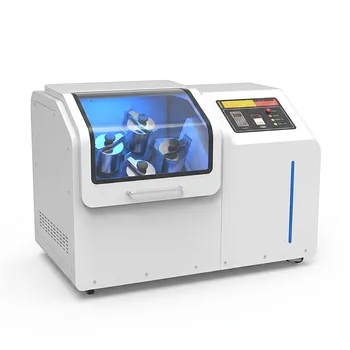
High Energy Omnidirectional Planetary Ball Mill 16L

High Energy Laboratory Planetary Ball Mill for Nano Grinding and Material Science Sample Preparation
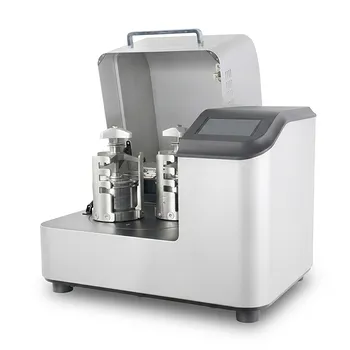
High Energy Planetary Ball Mill for Nano Scale Grinding and Mechanical Alloying
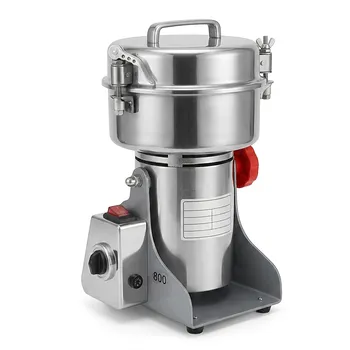
Small High-Speed Laboratory Grinder for Rapid Sample Preparation
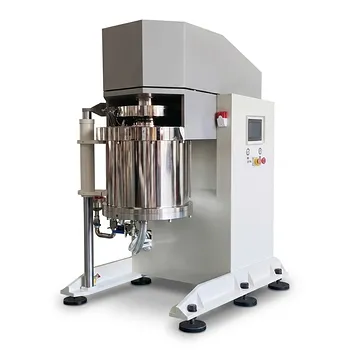
Vertical Nano Bead Mill for Ceramic Materials with Permanent Magnet Motor and High Efficiency Grinding
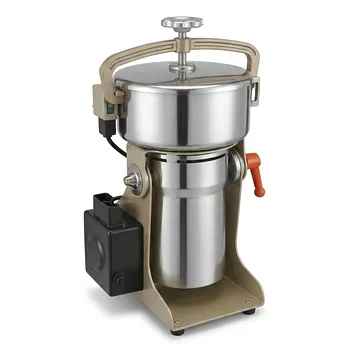
Multifunctional High Efficiency High Speed Laboratory Grinder

Miniature Planetary Ball Mill with Vacuum Grinding and High Efficiency for Laboratory Sample Preparation
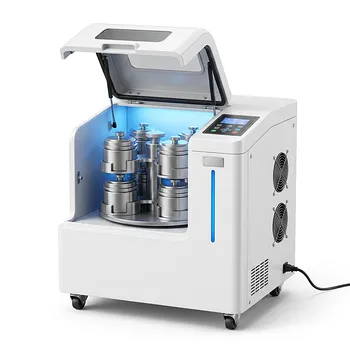
High Energy Omnidirectional Planetary Ball Mill 20L

High Efficiency High Speed Grinder 2200W 25000 RPM Laboratory Sample Preparation
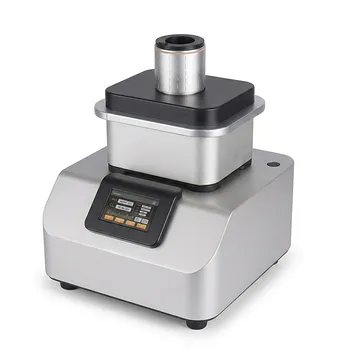
Ultra Centrifugal Mill High Speed Laboratory Grinder for Fibrous and Brittle Sample Preparation