How does mechanical mixing or grinding affect PTFE binders? Master Fibrillation for Dry-Process Battery Cathodes
Updated 3 months ago
Mechanical mixing and grinding transform polytetrafluoroethylene (PTFE) from a powder into a fibrous network through a process known as fibrillation. When subjected to intense shear forces and thermal energy, the granular PTFE particles stretch and interconnect, creating a microscopic web that encapsulates active materials and electrolytes into a cohesive, self-supporting film without the need for liquid solvents.
Core Takeaway: In dry-process battery manufacturing, mechanical energy acts as a physical catalyst that triggers PTFE fibrillation, converting a simple binder into a structural matrix that ensures mechanical integrity and superior interfacial contact within the cathode.
The Mechanism of PTFE Fibrillation
Transition from Granules to Fibers
During the initial stages of dry mixing, PTFE exists as discrete, micron-sized granular particles. As the grinding equipment applies shear stress, these granules are elongated and shredded at the molecular level.
This physical deformation forces the polymer chains to align and interlock. The result is a web-like network of nanofibers that acts as a structural scaffold for the entire cathode composite.
The Role of Thermal Energy
Fibrillation is not purely a mechanical process; it is significantly enhanced by thermal energy. Heated grinding or molding equipment lowers the energy barrier required for the PTFE chains to slide and stretch.
This synergy between heat and shear allows the binder to reach a "dough-like" consistency. This state is critical for achieving a uniform distribution of the binder throughout the dense mixture of lithium sulfide and conductive agents.
Structural Impact on the Cathode Composite
Formation of a Self-Supporting Matrix
Unlike traditional wet-slurry methods that rely on the evaporation of solvents to leave behind a binder film, dry mixing uses the fibrillated network to "trap" active particles. This creates a self-supporting composite cathode film with high mechanical strength.
The fibrous network ensures that the active materials, solid-state electrolytes, and conductive agents remain in permanent physical contact. This is essential for maintaining the continuous pathways required for both ionic and electronic conduction.
Enhancing Interfacial Contact
Mechanical mixing also facilitates mechanical activation (MA), which can create a tight physicochemical bond between the binder-protected particles. This process reduces the particle size of the active materials and increases the contact interface with the electrolyte.
By breaking down aggregated secondary particles into discrete primary particles, the grinding process improves the compaction density of the cathode. This prevents the formation of micro-cracks during the volume changes associated with battery charging and discharging.
Understanding the Trade-offs
The Risk of Over-Processing
While shear is necessary for fibrillation, excessive grinding can be detrimental. Prolonged mechanical stress can eventually break the very fibers it created, leading to a loss of structural integrity in the cathode film.
Particle Damage and Morphology
Aggressive mechanical forces intended to fibrillate the PTFE may inadvertently damage the active material morphology. For single-crystal materials, while breaking down aggregates is beneficial, over-grinding can create excessive surface area that may lead to unwanted side reactions with the electrolyte.
Thermal Sensitivity
The requirement for heat adds a layer of complexity to the manufacturing process. If the temperature is not precisely controlled, the PTFE may become too fluid, failing to form the necessary fibrous structure, or it may degrade the stability of sensitive solid-state electrolyte components.
How to Optimize Your Dry Mixing Process
Making the Right Choice for Your Goal
To achieve the best results in all-solid-state battery cathode production, your mixing strategy must balance mechanical force with material sensitivity.
- If your primary focus is mechanical durability: Prioritize higher shear forces and controlled heating to ensure a dense, highly interconnected PTFE fibrous web.
- If your primary focus is high ionic conductivity: Use moderate grinding speeds to ensure the PTFE encapsulates particles without creating a thick resistive barrier at the electrolyte interface.
- If your primary focus is long-term cycling stability: Focus on mechanical activation to break down secondary particles into primary crystals, reducing the risk of micro-cracking during expansion.
By precisely controlling the mechanical energy delivered during the mixing phase, manufacturers can leverage PTFE fibrillation to create solvent-free, high-performance cathodes that define the next generation of solid-state energy storage.
Summary Table:
| Process Stage | Effect on PTFE | Impact on Cathode Performance |
|---|---|---|
| Initial Mixing | Discrete granular particles | Even distribution of binder and active materials. |
| Shear Grinding | Fibrillation (Fiber network) | Creates a self-supporting, solvent-free structural scaffold. |
| Thermal Energy | Molecular chain alignment | Achieves "dough-like" consistency for uniform encapsulation. |
| Mechanical Activation | Particle size reduction | Increases compaction density and interfacial contact. |
| Over-Processing | Fiber breakage | Loss of structural integrity and potential material damage. |
Optimize Your Battery Material R&D with Precision Equipment
Achieving the perfect PTFE fibrillation requires precise control over mechanical energy and compaction. At [Company Name], we provide complete laboratory sample preparation solutions for material science, specializing in high-performance powder processing and compaction equipment.
Whether you are refining dry-process battery recipes or scaling up production, our extensive line includes:
- Grinding & Milling: Planetary ball mills, jet mills, and cryogenic grinders for optimal shear and particle size control.
- Mixing Solutions: Specialized powder mixers and defoaming mixers to ensure uniform binder distribution.
- Advanced Compaction: A full spectrum of hydraulic presses, including Cold/Warm Isostatic Presses (CIP/WIP), hot presses, and XRF pellet presses for high-density electrode formation.
Ready to enhance your cathode structural integrity and cycling stability?
Contact Our Experts Today to find the ideal equipment for your laboratory needs!
References
- Seungwoo Lee, Ungyu Paik. Stabilized Conductive Agent/Sulfide Solid Electrolyte Interface via a Halide Solid Electrolyte Coating for All‐Solid‐State Batteries. DOI: 10.1002/cey2.70051
Mentioned Products
- 非介入式材料均质机真空脱泡行星搅拌高粘度混合设备
- Single Tank High Energy Vibratory Ball Mill for Laboratory Grinding and Mixing
- High Viscosity Planetary Centrifugal Mixing and Vacuum Defoaming Machine for Laboratory Material Preparation
- Horizontal Ribbon Mixer for Dry Powder and Slurry Blending
- High Viscosity Planetary Centrifugal Vacuum Mixer for Material Defoaming and Uniform Mixing
People Also Ask
- How does a planetary vacuum defoaming mixer help magnesium calcium phosphate slurries? Achieve Flawless 3D Printed Bone
- Why is vacuum defoaming necessary for PDMS mixtures before microwave irradiation curing? Key to Structural Integrity
- What role does a vacuum defoaming mixer play in BNT MLCC slurry? Ensure High Dielectric Strength & Pinhole-Free Prep
- Why is a vacuum defoaming mixer essential for DLP 3D printing ceramic slurries? Key to Structural Integrity
- What is the purpose of using a high-vacuum defoaming mixer for SiC/Cf composites? Optimize Density and Strength

Tech Team · PowderPreparation
Last updated on Jun 03, 2026
Related Products
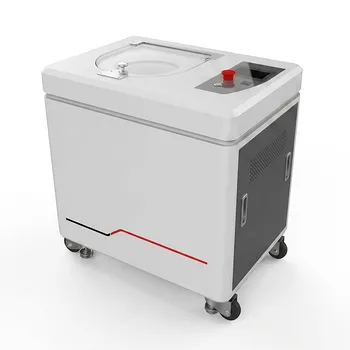
非介入式材料均质机真空脱泡行星搅拌高粘度混合设备
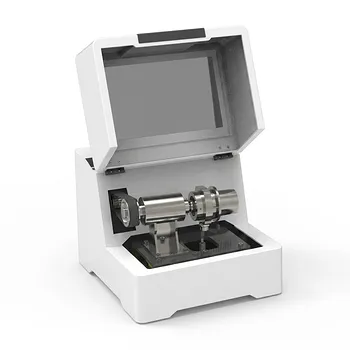
Single Tank High Energy Vibratory Ball Mill for Laboratory Grinding and Mixing
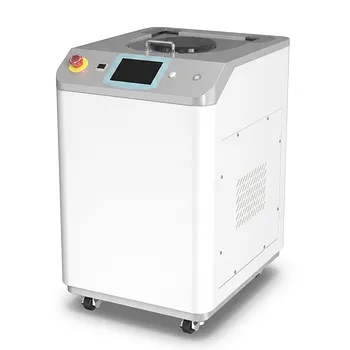
High Viscosity Planetary Centrifugal Mixing and Vacuum Defoaming Machine for Laboratory Material Preparation
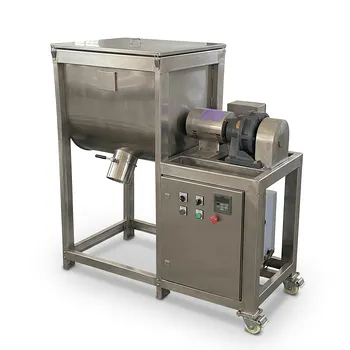
Horizontal Ribbon Mixer for Dry Powder and Slurry Blending