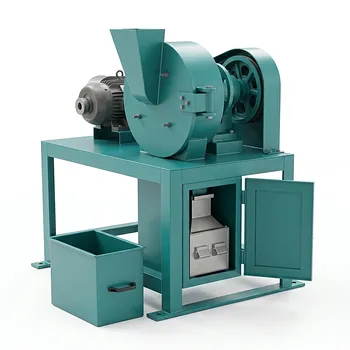
Why are zirconium oxide grinding jars and balls preferred for co-milling Praziquantel? Ensure High Purity & Efficiency
Updated 4 months ago
Zirconium oxide is preferred for co-milling Praziquantel and mesoporous silica because its exceptional hardness and density generate the high-energy impact required to break down the drug's crystal lattice. This material choice ensures high milling efficiency while its superior wear resistance prevents the introduction of impurities that would otherwise compromise the accuracy of pharmaceutical degradation studies.
Core Takeaway: Zirconia media provide the optimal balance of high kinetic energy for mechanical activation and extreme wear resistance to ensure the chemical purity of Praziquantel samples during intensive co-milling processes.
Mechanical Efficiency and Crystal Lattice Disruption
Overcoming the Praziquantel Crystal Structure
Praziquantel naturally exists in a crystalline state that can limit its solubility and bioavailability. Zirconium oxide possesses the extreme hardness necessary to deliver strong mechanical impact forces during milling. These forces are essential to accelerate the destruction of the drug's crystal lattice, facilitating its transition into a more effective amorphous form within the mesoporous silica.
High Density and Kinetic Energy
The efficiency of a ball mill is directly tied to the density of the grinding media used. Because zirconia is significantly denser than many alternative materials, it provides greater impact kinetic energy during high-frequency rotation. This energy is critical for achieving the mechanical activation required to fuse the drug particles into the silica pores effectively.
High-Frequency Durability
The co-milling process often involves high-energy settings in a planetary ball mill to achieve the desired particle size reduction. Zirconia's toughness allows the jars and balls to withstand these intense, high-frequency impacts without fracturing. This durability ensures consistent energy transfer throughout the entire milling cycle.
Maintaining Analytical Purity and Research Accuracy
Eliminating Material Contamination
In pharmaceutical research, even trace amounts of foreign material can invalidate a study. Zirconia’s superior wear resistance prevents material loss from the grinding media and jar walls during processing. This ensures that the resulting Praziquantel-silica composite remains free from metal or oxide impurities that could interfere with downstream testing.
Accuracy in Degradation Research
When researching Praziquantel degradation products, maintaining a "clean" sample is paramount. Contaminants from lower-quality grinding media can act as catalysts or create false peaks during analytical testing (such as HPLC or LC-MS). Using zirconium oxide ensures that any observed degradation is a result of the process or the drug itself, rather than equipment interference.
Chemical Inertness and Stability
Zirconia is characterized by its excellent chemical stability, meaning it does not react with the drug or the silica matrix. This chemical inertness prevents unintended side reactions during the high-energy milling process. Consequently, the phase purity of the Praziquantel remains intact, and the precise elemental ratios of the formulation are preserved.
Understanding the Trade-offs
Cost and Resource Investment
The primary trade-off when selecting zirconium oxide is the initial cost, as it is significantly more expensive than stainless steel or alumina media. However, this is typically offset by the media's longevity and the reduction in failed batches due to contamination. For high-stakes pharmaceutical research, the cost of a contaminated sample far outweighs the price of premium grinding media.
Thermal Sensitivity and Cleaning
While zirconia is extremely hard, it can be sensitive to thermal shock if subjected to extreme temperature fluctuations during cleaning or processing. It is also heavier than other media, requiring equipment that can handle the increased mechanical load. Proper handling and maintenance are required to prevent micro-cracking over long periods of use.
How to Apply This to Your Project
Selecting Media Based on Your Research Goals
- If your primary focus is Praziquantel bioavailability: Prioritize high-density zirconia balls to ensure maximum disruption of the crystal lattice and optimal loading into the silica.
- If your primary focus is impurity profiling or degradation studies: Utilize high-purity Yttria-stabilized zirconia (YSZ) to virtually eliminate the risk of metallic or oxide contamination.
- If your primary focus is high-throughput production efficiency: Choose zirconia for its low wear rate, which reduces the frequency of media replacement and ensures consistent particle size distribution across batches.
By leveraging the unique physical and chemical properties of zirconium oxide, researchers can ensure that the co-milling process is both efficient and analytically sound.
Summary Table:
| Feature | Advantage for Praziquantel Co-milling | Impact on Research |
|---|---|---|
| High Density | Delivers maximum kinetic energy to disrupt drug crystal lattices. | Faster amorphization and higher bioavailability. |
| Extreme Hardness | Resists high-frequency impacts in planetary ball mills. | Consistent particle size reduction without media failure. |
| Wear Resistance | Prevents the introduction of metallic or oxide impurities. | Accurate impurity profiling and degradation studies. |
| Chemical Inertness | No reaction with Praziquantel or mesoporous silica. | Preserves phase purity and precise elemental ratios. |
Achieve Uncompromising Purity in Your Pharmaceutical Formulations
Precision in drug development starts with the right equipment. At [Company Name], we provide complete laboratory sample preparation solutions tailored for material science and pharmaceutical research.
Whether you are co-milling Praziquantel or processing advanced powders, our equipment ensures maximum efficiency and sample integrity:
- High-Performance Milling: Our range includes planetary ball mills, jet mills, and cryogenic grinders designed for use with high-purity zirconia media.
- Powder Processing: We offer sieve shakers (vibratory/air-jet), mixers, and defoaming solutions to ensure perfect consistency.
- Advanced Compaction: Explore our full spectrum of hydraulic presses, including Cold/Warm Isostatic Presses (CIP/WIP), vacuum hot presses, and XRF pellet presses.
Ready to optimize your sample preparation workflow? Contact our application experts today to find the perfect solution for your lab's needs.
References
- Ivana Šagud, Irena Škorić. Impact of mesoporous silica on the chemical degradation of Praziquantel upon grinding. DOI: 10.5802/crchim.82
Mentioned Products
- Vertical Semi Circular Planetary Ball Mill for Laboratory Precision Grinding
- High Energy Omnidirectional Planetary Ball Mill 16L
- 8L Planetary Ball Mill for Laboratory Grinding and Sample Preparation
- Heavy Duty Horizontal Planetary Ball Mill for Efficient Industrial Grinding and Sample Preparation
- Vertical Square Planetary Ball Mill for Laboratory Sample Preparation and Nanoscale Grinding
People Also Ask
- What role does a planetary ball mill play in the synthesis of Li6PS5Cl (LPSCl)? Unlock High Ionic Conductivity
- Why is a planetary ball mill essential for SiBCN-rGO wet-spinning? Achieve Superior Dispersion and Spinnability
- Why is an intermittent grinding process required for perovskites in a planetary ball mill? Ensure Stability & Purity
- Why is a planetary ball mill required for PET micronization? Ensure Accurate Chemical Analysis of Reprocessed PET
- How does mechanized planetary ball milling compare to manual agate grinding? Optimize sulfide standard material precision.

Tech Team · PowderPreparation
Last updated on May 14, 2026
Related Products
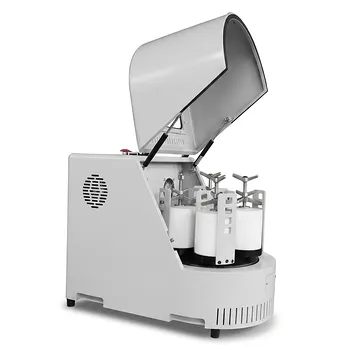
Vertical Semi Circular Planetary Ball Mill for Laboratory Precision Grinding

High Energy Omnidirectional Planetary Ball Mill 16L

8L Planetary Ball Mill for Laboratory Grinding and Sample Preparation

Heavy Duty Horizontal Planetary Ball Mill for Efficient Industrial Grinding and Sample Preparation

Vertical Square Planetary Ball Mill for Laboratory Sample Preparation and Nanoscale Grinding

High Energy Laboratory Planetary Ball Mill for Nano Grinding and Material Science Sample Preparation
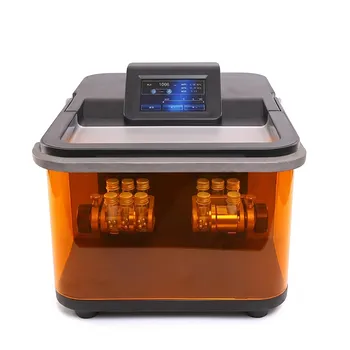
High Throughput Micro Ball Mill for Cryogenic Grinding and Laboratory Cell Disruption

360° Rotating Omnidirectional Laboratory Planetary Ball Mill for Homogeneous Ultra-Fine Grinding and Mixing

Miniature Planetary Ball Mill with Vacuum Grinding and High Efficiency for Laboratory Sample Preparation
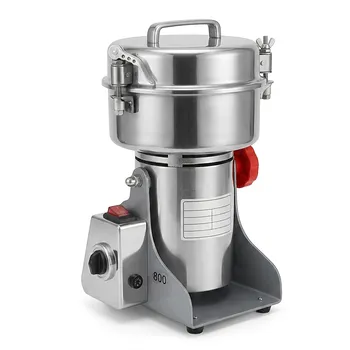
Small High-Speed Laboratory Grinder for Rapid Sample Preparation