Why are large-diameter grinding balls, such as those measuring 2.0 cm, typically selected for Simvastatin grinding experiments?
Updated 5 months ago
The selection of large-diameter grinding balls is driven by the need for high impact energy. In Simvastatin experiments, 2.0 cm balls provide the necessary mass to generate powerful impact and shear forces at a consistent vibration frequency. This specific energy level is required to overcome the lattice energy of Simvastatin molecules, facilitating solid-state disordering and mechanochemical reactions within a condensed timeframe of 10 to 60 minutes.
Core Takeaway: Large-diameter media (2.0 cm) maximize kinetic energy within small milling containers to effectively break down the crystalline structure of Simvastatin, ensuring efficient mechanochemical transformation that smaller media cannot achieve in the same duration.
The Physics of Mechanochemical Disordering
Overcoming Lattice Energy
Simvastatin exists in a stable crystalline state held together by specific lattice energy. To induce solid-state disordering or amorphization, the milling process must deliver enough mechanical energy to disrupt these molecular bonds.
Maximizing Impact Kinetic Energy
The kinetic energy of a grinding ball is directly proportional to its mass. By using a 2.0 cm diameter ball instead of smaller media, researchers increase the force of each collision, ensuring the energy threshold for molecular disruption is met.
Shear Force and Vibration Frequency
At a constant vibration frequency, the larger mass of a 2.0 cm ball translates into stronger shear forces. This combination of impact and friction is essential for driving the mechanochemical reactions necessary for pharmaceutical research.
Optimizing the Grinding Environment
Efficiency in Small Containers
In laboratory settings, containers are often small, limiting the "travel distance" of the grinding media. Large-diameter balls compensate for this limited space by providing maximum energy per hit, ensuring the sample is processed thoroughly despite the small volume.
Temporal Efficiency in Research
Large media allow for significant disordering in a short milling duration, typically between 10 and 60 minutes. This efficiency is critical for high-throughput testing and preventing the thermal degradation that can occur during longer milling cycles.
Simulating Industrial Conditions
Using larger media can help simulate the media environment found in industrial-scale mills. This makes the kinetic evaluation and modeling performed in the lab more representative of real-world pharmaceutical manufacturing.
Understanding the Trade-offs
Impact vs. Surface Area
While 2.0 cm balls provide high impact energy, they offer less total surface area than an equivalent weight of smaller balls. In some applications, this can lead to less "refinement" of intermediate particles, though for Simvastatin, the priority is usually the initial lattice disruption.
Risk of Localized Heat
The high kinetic energy generated by large balls can produce localized heat at the point of impact. If the experiment is not monitored, this heat can potentially lead to unintended thermal degradation of sensitive pharmaceutical compounds.
Media Graduation and Voids
Using only large balls can leave "voids" in the milling jar where material may escape processing. In complex formulations, researchers sometimes use grinding media graduation—mixing large balls for impact with smaller balls for friction—to ensure a more uniform particle size distribution.
Applying Media Selection to Your Grinding Protocol
Selecting the right media depends entirely on the physical properties of your starting material and your desired end state.
- If your primary focus is breaking crystalline structures: Use large-diameter balls (2.0 cm) to ensure the impact energy exceeds the material's lattice energy.
- If your primary focus is achieving a narrow particle size distribution: Consider a graded mix of large and small media to balance high-energy impact with high-surface-area attrition.
- If your primary focus is dispersing fine additives without damage: Opt for smaller diameter media (e.g., 5mm) to provide high-frequency, low-energy collisions that break up agglomerates gently.
By matching the kinetic energy of the grinding media to the molecular resistance of the drug, you can achieve precise control over the mechanochemical state of your sample.
Summary Table:
| Feature | 2.0 cm Grinding Media Impact | Research Benefit |
|---|---|---|
| Kinetic Energy | Maximized mass-to-volume ratio | Overcomes Simvastatin lattice energy |
| Force Type | Powerful impact and shear forces | Facilitates solid-state disordering |
| Processing Time | High energy delivery per hit | Efficient transformation in 10–60 mins |
| Application | High-energy mechanochemistry | Ideal for amorphization & pharmaceutical R&D |
| Space Efficiency | High energy in small containers | Optimizes results for lab-scale milling |
Elevate Your Powder Processing with Precision Lab Solutions
Are you looking to optimize your mechanochemical reactions or achieve perfect sample amorphization? At [Company Name], we provide complete laboratory sample preparation solutions tailored for material science. Whether you are researching pharmaceutical compounds like Simvastatin or developing advanced ceramics, our equipment ensures consistent, high-energy performance.
Our specialized product line includes:
- Advanced Milling: Planetary ball mills, jet mills, and cryogenic grinders for precise particle size reduction.
- Media & Sizing: A wide selection of grinding media and vibratory/air-jet sieve shakers.
- Compaction Excellence: A full spectrum of hydraulic presses, including Cold/Warm Isostatic Presses (CIP/WIP), vacuum hot presses, and XRF pellet presses.
- Mixing: High-efficiency powder and defoaming mixers.
Ready to enhance your lab's efficiency and research accuracy? Contact our experts today to find the perfect milling or pressing solution!
References
- Dattatray Modhave, Amrit Paudel. Understanding Concomitant Physical and Chemical Transformations of Simvastatin During Dry Ball Milling. DOI: 10.1208/s12249-020-01687-z
Mentioned Products
- Vertical Semi Circular Planetary Ball Mill for Laboratory Precision Grinding
- Vertical Square Planetary Ball Mill for Laboratory Sample Preparation and Nanoscale Grinding
- Heavy Duty Horizontal Planetary Ball Mill for Efficient Industrial Grinding and Sample Preparation
- High Energy Laboratory Planetary Ball Mill for Nano Grinding and Material Science Sample Preparation
- 8L Planetary Ball Mill for Laboratory Grinding and Sample Preparation
People Also Ask
- What role does a planetary ball mill play in the synthesis of Li6PS5Cl (LPSCl)? Unlock High Ionic Conductivity
- Why is a planetary ball mill essential for SiBCN-rGO wet-spinning? Achieve Superior Dispersion and Spinnability
- Why is an intermittent grinding process required for perovskites in a planetary ball mill? Ensure Stability & Purity
- Why is a planetary ball mill required for PET micronization? Ensure Accurate Chemical Analysis of Reprocessed PET
- How does mechanized planetary ball milling compare to manual agate grinding? Optimize sulfide standard material precision.

Tech Team · PowderPreparation
Last updated on May 14, 2026
Related Products
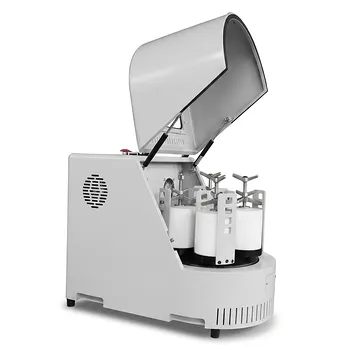
Vertical Semi Circular Planetary Ball Mill for Laboratory Precision Grinding

Vertical Square Planetary Ball Mill for Laboratory Sample Preparation and Nanoscale Grinding

Heavy Duty Horizontal Planetary Ball Mill for Efficient Industrial Grinding and Sample Preparation
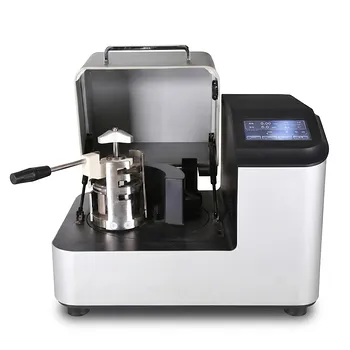
High Energy Laboratory Planetary Ball Mill for Nano Grinding and Material Science Sample Preparation
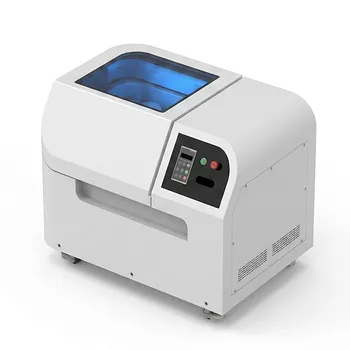
8L Planetary Ball Mill for Laboratory Grinding and Sample Preparation

High Energy Planetary Ball Mill for Nano Scale Grinding and Mechanical Alloying
High Energy Hybrid Vibratory Ball Mill for Grinding Mixing and Cell Disruption
360° Rotating Omnidirectional Laboratory Planetary Ball Mill for Homogeneous Ultra-Fine Grinding and Mixing

Miniature Planetary Ball Mill with Vacuum Grinding and High Efficiency for Laboratory Sample Preparation
High Throughput Micro Ball Mill for Cryogenic Grinding and Laboratory Cell Disruption
High Energy Omnidirectional Planetary Ball Mill 20L

High Energy Omnidirectional Planetary Ball Mill 16L
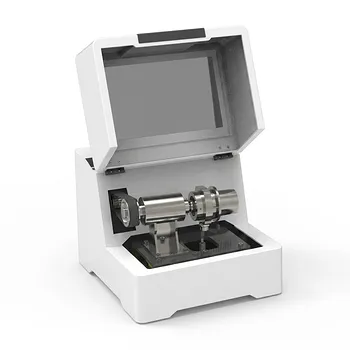
Single Tank High Energy Vibratory Ball Mill for Laboratory Grinding and Mixing
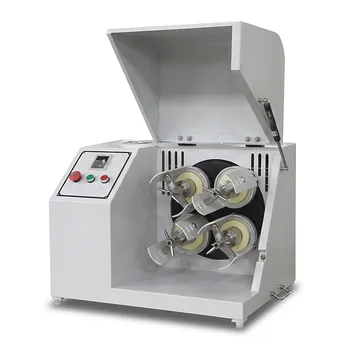
Horizontal Light Duty Planetary Ball Mill for Laboratory Sample Preparation
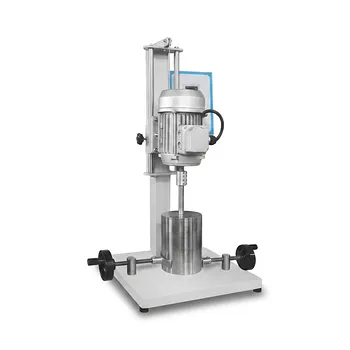
Laboratory Basket Sand Mill for Wet Grinding and Dispersion of Viscous Slurries
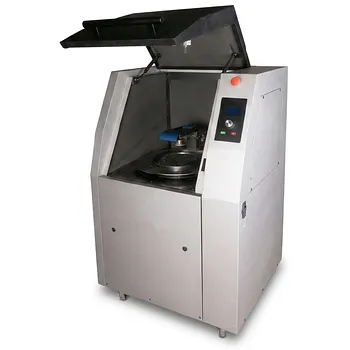
High Speed Vibratory Disc Mill for Spectral Analysis Sample Preparation and Rapid Powder Grinding
Multifunctional High Efficiency High Speed Laboratory Grinder
Small High-Speed Laboratory Grinder for Powder Processing

Vertical Production Planetary Ball Mill for High Throughput Powder Processing