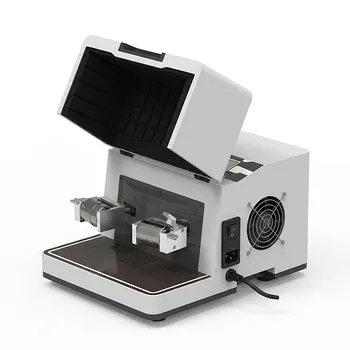
Why are zirconia grinding balls preferred for milling Cr2O3/Fe2O3/glass composites? Achieve Pure, High-Energy Results
Updated 3 months ago
Zirconia grinding balls are the preferred choice for milling $Cr_2O_3/Fe_2O_3/glass$ composites due to their high density, exceptional hardness, and superior wear resistance. These properties allow the media to provide the necessary impact force to refine hard oxide particles while ensuring the final composite remains free from metallic or chemical contamination.
Zirconia media optimizes the planetary ball milling process by delivering high-intensity kinetic energy for particle refinement while maintaining the strict chemical purity required for high-performance oxide-glass systems.
The Mechanical Advantage: Energy Transfer and Refinement
High Density for Maximum Impact Force
Planetary ball mills generate significant centrifugal forces through simultaneous rotation and revolution. The high density of zirconia ensures that these forces translate into powerful impact and shear energy, which is essential for breaking down the tough structures of chromium and iron oxides.
Superior Hardness for Efficient Crushing
Chromium oxide ($Cr_2O_3$) and iron oxide ($Fe_2O_3$) are naturally abrasive materials that require media with extreme hardness to achieve nanometer-level dispersion. Zirconia’s hardness allows it to effectively crush these oxides into the glass matrix without the media itself being deformed or destroyed during the process.
Stable Kinetic Energy over Time
During long-duration milling cycles that may last several hours, zirconia balls provide stable kinetic energy. This consistency is vital for achieving a uniform particle size distribution, which directly influences the structural integrity of the final glass composite.
Preserving Chemical Integrity and Phase Purity
Minimal Media Wear and Contamination
High-energy milling inherently causes friction, but zirconia’s superior wear resistance drastically reduces the amount of media material shed into the powder. This prevents the introduction of foreign metallic impurities, such as iron ions from steel media, which could compromise the intended electrical or mechanical properties of the composite.
Chemical Inertness in Oxide Systems
Zirconia is chemically inert, meaning it does not react with $Cr_2O_3$, $Fe_2O_3$, or the glass components during the high-energy collisions. This ensures that the phase purity of the composite is maintained and that no unintended chemical reactions alter the material's final characteristics.
Material Compatibility and Homogeneity
Using zirconia media often aligns with the goal of maintaining a homologous environment, especially if the composite itself contains ceramic elements. This compatibility prevents performance degradation that typically occurs when heterogeneous contaminants are introduced through physical wear.
Understanding the Trade-offs
Higher Initial Investment
Zirconia media is significantly more expensive than alumina or hardened steel alternatives. While the long-term value is found in reduced contamination and longer media lifespan, the initial procurement cost can be a barrier for budget-constrained projects.
Thermal Management Requirements
The high energy generated by dense zirconia balls can lead to significant heat buildup within the grinding jar. If the glass transition temperature of the composite is low, operators must implement cooling breaks or lower speeds to prevent unintended phase changes or melting.
Sensitivity to Thermal Shock
While chemically robust, zirconia can be sensitive to rapid temperature fluctuations. Improper cleaning or cooling procedures can lead to micro-cracking in the balls, eventually causing media failure during high-speed milling operations.
How to Optimize Your Milling Strategy
Strategic Implementation for Material Synthesis
- If your primary focus is maximum chemical purity: Utilize high-purity zirconia balls and matching zirconia-lined jars to eliminate the risk of metallic cross-contamination.
- If your primary focus is rapid particle size reduction: Prioritize a higher ball-to-powder ratio (such as 10:1) using dense zirconia media to maximize the frequency of high-energy impacts.
- If your primary focus is cost-efficiency in large batches: Consider using zirconia-toughened alumina (ZTA) as a middle-ground option that balances performance with lower material costs.
By leveraging the mechanical strength and chemical stability of zirconia, you ensure that your $Cr_2O_3/Fe_2O_3/glass$ composites achieve the precise microstructural characteristics necessary for advanced technical applications.
Summary Table:
| Feature | Advantage for Composites | Impact on Milling Result |
|---|---|---|
| High Density | Maximum impact and shear energy | Efficient breakdown of tough $Cr_2O_3/Fe_2O_3$ particles |
| Superior Hardness | Resistance to abrasive wear | Achieves nanometer-level dispersion without media deformation |
| Chemical Inertness | Zero reaction with oxide/glass phases | Maintains strict phase purity and intended material properties |
| Wear Resistance | Minimal media shedding | Eliminates metallic contamination (e.g., iron ions) |
Elevate Your Material Synthesis with Precision Engineering
Achieve uncompromising results in your composite research with professional-grade laboratory solutions. At [Company Name], we provide complete laboratory sample preparation solutions for material science, specializing in high-performance powder processing and compaction equipment.
Our extensive product range is designed to handle every stage of your workflow:
- Advanced Milling: Planetary ball mills, jet mills, and cryogenic grinders paired with high-purity zirconia media for contamination-free refinement.
- Processing & Sizing: Jaw/roll crushers, sieve shakers, and high-efficiency powder mixers.
- Compaction Excellence: A full spectrum of hydraulic presses, including Cold/Warm Isostatic Presses (CIP/WIP), vacuum hot presses, and XRF pellet presses.
Whether you are refining hard oxide-glass composites or preparing dense ceramic pellets, our equipment ensures the consistency and purity your research demands.
Contact our technical experts today to find the perfect solution for your lab!
References
- Dina H.A. Besisa, Amira M.M. Amin. Synthesis of new Cr2O3/Fe2O3/glass composites from industrial wastes; from undesired to advanced optical products. DOI: 10.1007/s11356-022-21694-w
Mentioned Products
- Vertical Semi Circular Planetary Ball Mill for Laboratory Precision Grinding
- High Energy Laboratory Planetary Ball Mill for Nano Grinding and Material Science Sample Preparation
- Heavy Duty Horizontal Planetary Ball Mill for Efficient Industrial Grinding and Sample Preparation
- Vertical Square Planetary Ball Mill for Laboratory Sample Preparation and Nanoscale Grinding
- 8L Planetary Ball Mill for Laboratory Grinding and Sample Preparation
People Also Ask
- What role does a planetary ball mill play in the synthesis of Li6PS5Cl (LPSCl)? Unlock High Ionic Conductivity
- Why is a planetary ball mill essential for SiBCN-rGO wet-spinning? Achieve Superior Dispersion and Spinnability
- Why is an intermittent grinding process required for perovskites in a planetary ball mill? Ensure Stability & Purity
- Why is a planetary ball mill required for PET micronization? Ensure Accurate Chemical Analysis of Reprocessed PET
- How does mechanized planetary ball milling compare to manual agate grinding? Optimize sulfide standard material precision.

Tech Team · PowderPreparation
Last updated on Jun 03, 2026
Related Products
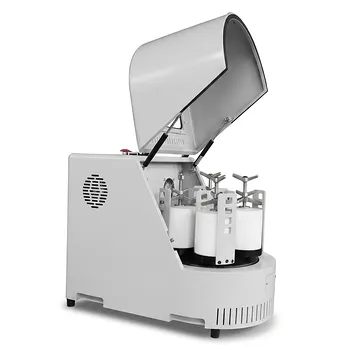
Vertical Semi Circular Planetary Ball Mill for Laboratory Precision Grinding
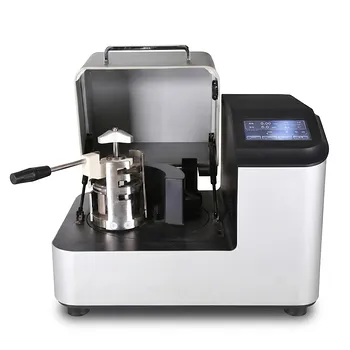
High Energy Laboratory Planetary Ball Mill for Nano Grinding and Material Science Sample Preparation
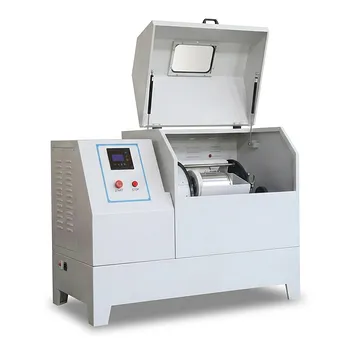
Heavy Duty Horizontal Planetary Ball Mill for Efficient Industrial Grinding and Sample Preparation
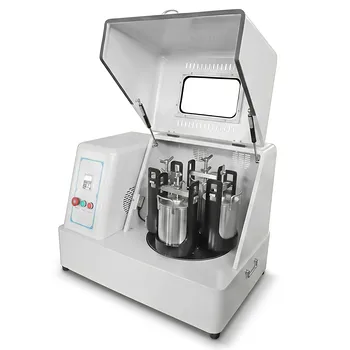
Vertical Square Planetary Ball Mill for Laboratory Sample Preparation and Nanoscale Grinding
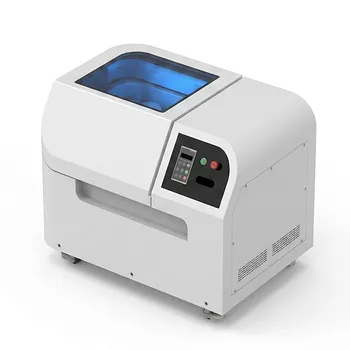
8L Planetary Ball Mill for Laboratory Grinding and Sample Preparation
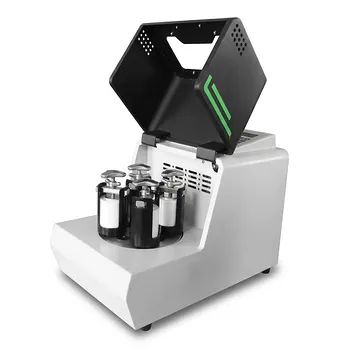
Miniature Planetary Ball Mill with Vacuum Grinding and High Efficiency for Laboratory Sample Preparation
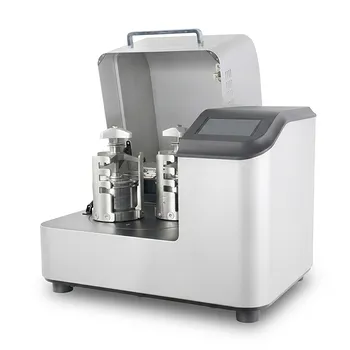
High Energy Planetary Ball Mill for Nano Scale Grinding and Mechanical Alloying
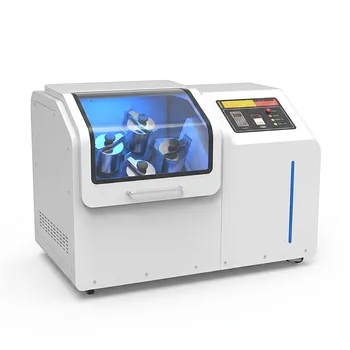
High Energy Omnidirectional Planetary Ball Mill 16L
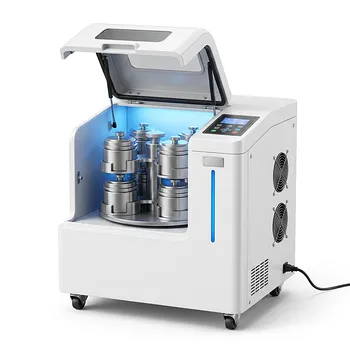
High Energy Omnidirectional Planetary Ball Mill 20L
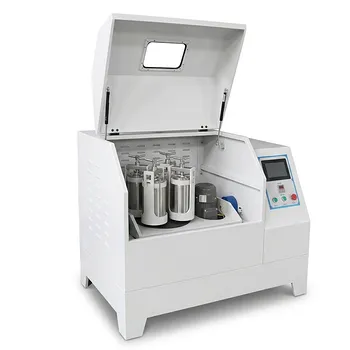
360° Rotating Omnidirectional Laboratory Planetary Ball Mill for Homogeneous Ultra-Fine Grinding and Mixing