Why is a high ball-to-material ratio of 8:1 utilized when grinding alumina-titanium (Al2O3/Ti) composite slurries? Guide
Updated 4 months ago
Optimizing collision frequency and energy distribution is the primary driver behind selecting an 8:1 ball-to-material ratio for alumina-titanium (Al2O3/Ti) composite slurries. This specific ratio ensures a high frequency of mechanical impacts, which is necessary to overcome the cohesive forces of powder agglomerates. By achieving a high degree of dispersion, this process effectively eliminates internal micropores in the final molded parts, ensuring a dense and structurally sound composite.
The 8:1 ratio serves as the critical threshold for balancing mechanical energy transfer with material volume, ensuring that every particle is subjected to sufficient shear and impact forces. This high-energy environment is essential for creating the uniform, agglomerate-free suspension required for high-performance ceramic-metal composites.
Maximizing Mechanical Energy Transfer
Optimizing Collision Frequency
A ratio of 8:1 provides a dense population of grinding media within the mill chamber, significantly increasing the number of collision events per second. These frequent impacts are necessary to provide the cumulative energy required to refine hard ceramic and metallic particles. Without this high ratio, the material may "cushion" the balls, leading to inefficient grinding and leftover clusters of unrefined powder.
Utilizing Mixed Media Diameters
The effectiveness of the 8:1 ratio is often enhanced by using a mixture of ball sizes, such as 10mm and 12mm diameters. This variety allows smaller balls to fill the interstitial spaces between larger ones, increasing the effective contact area during the milling cycle. This configuration ensures that even the smallest powder agglomerates are caught and broken down by the grinding media.
Enhancing Material Properties through Dispersion
Breakdown of Powder Agglomerates
High-energy milling at an 8:1 ratio provides the shear forces necessary to break the strong physical bonds of powder agglomerates. By reducing these clusters to primary particles, the slurry achieves a state of molecular-level uniform mixing. This is particularly vital for composites like Al2O3/Ti, where the metallic and ceramic phases must be perfectly interleaved.
Minimizing Internal Micropores
The ultimate goal of high-dispersion grinding is the reduction of internal micropores in the final sintered body. Agglomerates in the slurry often lead to "voids" during the molding process, which translate into structural weaknesses in the finished part. A well-dispersed slurry ensures a higher filling density, resulting in a more robust and reliable material.
Promoting Mechanical Activation
Beyond simple size reduction, the intense energy of an 8:1 milling environment provides mechanical activation to the powder surfaces. This increase in surface energy creates more active sites, which can facilitate better bonding between the alumina matrix and titanium reinforcements. This activation is a precursor to achieving superior mechanical properties and chemical stability in the final product.
Understanding the Trade-offs
Media Wear and Contamination
While a high ratio increases grinding efficiency, it also increases the wear rate of the grinding balls. To mitigate this, engineers typically select balls with a chemical composition similar to the matrix, such as high-purity alumina balls, to ensure that any wear debris does not act as a foreign impurity. If purity is the absolute priority, the trade-off involves accepting slower processing times for a slightly lower ratio.
Heat Generation and Energy Costs
High ball-to-material ratios generate significant frictional heat within the milling chamber. This can potentially degrade organic additives like dispersants and binders if not properly managed through cooling systems. Additionally, the increased mass of the grinding media requires higher power consumption, making the 8:1 ratio a balance between processing speed and operational cost.
How to Apply This to Your Project
When determining the optimal milling parameters for your specific composite system, consider your primary performance metrics:
- If your primary focus is Maximum Density: Utilize the 8:1 ratio with mixed-diameter balls to eliminate interstitial gaps and ensure the breakdown of all micro-agglomerates.
- If your primary focus is Chemical Purity: Ensure the grinding media is of the same material as the matrix (e.g., alumina balls for Al2O3 composites) to prevent the introduction of heterogeneous impurities during high-energy cycles.
- If your primary focus is Structural Integrity: Prioritize the high collision frequency provided by the 8:1 ratio to minimize microporosity in the final molded parts, which prevents premature mechanical failure.
By precisely controlling the ball-to-material ratio, you transform a simple mixing process into a sophisticated tool for engineering the microstructure and performance of advanced composite materials.
Summary Table:
| Optimization Factor | Technical Mechanism | Benefit to Al2O3/Ti Composite |
|---|---|---|
| Collision Frequency | Increases mechanical impacts/sec | Overcomes cohesive forces in agglomerates |
| Energy Distribution | Uses mixed ball diameters (10/12mm) | Eliminates voids and ensures uniform mixing |
| Mechanical Activation | Increases particle surface energy | Enhances bonding between alumina and titanium |
| Dispersion Quality | High shear force application | Minimizes micropores for a dense sintered body |
Elevate Your Material Research with Precision Powder Solutions
Achieving the perfect 8:1 ball-to-material ratio requires robust and reliable equipment. We provide complete laboratory sample preparation solutions for material science, specializing in high-performance powder processing and compaction equipment.
Our extensive product lines are designed to help you achieve superior dispersion and structural integrity:
- Advanced Mills: Planetary ball mills, jet mills, sand/bead mills, and rotor mills for high-energy grinding.
- Preparation Tools: Jaw/roll crushers and liquid nitrogen cryogenic grinders for difficult materials.
- Sizing & Mixing: Vibratory/air-jet sieve shakers, powder mixers, and defoaming mixers.
- Compaction Excellence: A full spectrum of hydraulic presses, including Cold/Warm Isostatic Presses (CIP/WIP), XRF pellet presses, and vacuum hot presses.
Whether you are refining ceramic-metal composites or developing new alloys, our equipment ensures the mechanical activation and uniform mixing your project demands. Contact our technical experts today to find the ideal solution for your laboratory needs!
References
- Marcin Wachowski, Lucjan Śnieżek. Study on Manufacturing via Slip Casting and Properties of Alumina-Titanium Composite Enhanced by Thialite Phase. DOI: 10.3390/ma16010079
Mentioned Products
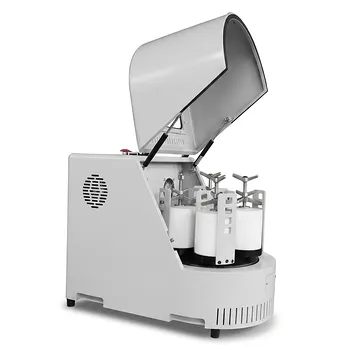
- Vertical Semi Circular Planetary Ball Mill for Laboratory Precision Grinding
- High Energy Planetary Ball Mill for Nano Scale Grinding and Mechanical Alloying
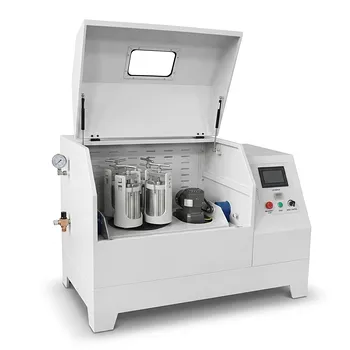
- Vertical Production Planetary Ball Mill for High Throughput Powder Processing
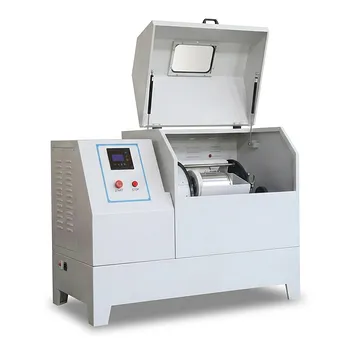
- Heavy Duty Horizontal Planetary Ball Mill for Efficient Industrial Grinding and Sample Preparation
- 360° Rotating Omnidirectional Laboratory Planetary Ball Mill for Homogeneous Ultra-Fine Grinding and Mixing
People Also Ask
- What role does a planetary ball mill play in the synthesis of Li6PS5Cl (LPSCl)? Unlock High Ionic Conductivity
- Why is a planetary ball mill essential for SiBCN-rGO wet-spinning? Achieve Superior Dispersion and Spinnability
- Why is an intermittent grinding process required for perovskites in a planetary ball mill? Ensure Stability & Purity
- Why is a planetary ball mill required for PET micronization? Ensure Accurate Chemical Analysis of Reprocessed PET
- How does mechanized planetary ball milling compare to manual agate grinding? Optimize sulfide standard material precision.

Tech Team · PowderPreparation
Last updated on Jun 03, 2026
Related Products
Vertical Semi Circular Planetary Ball Mill for Laboratory Precision Grinding

High Energy Planetary Ball Mill for Nano Scale Grinding and Mechanical Alloying
Vertical Production Planetary Ball Mill for High Throughput Powder Processing
Heavy Duty Horizontal Planetary Ball Mill for Efficient Industrial Grinding and Sample Preparation
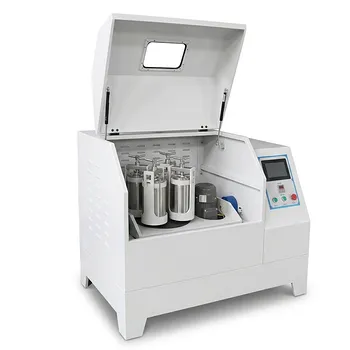
360° Rotating Omnidirectional Laboratory Planetary Ball Mill for Homogeneous Ultra-Fine Grinding and Mixing

Vertical Square Planetary Ball Mill for Laboratory Sample Preparation and Nanoscale Grinding

Miniature Planetary Ball Mill with Vacuum Grinding and High Efficiency for Laboratory Sample Preparation

High Energy Laboratory Planetary Ball Mill for Nano Grinding and Material Science Sample Preparation
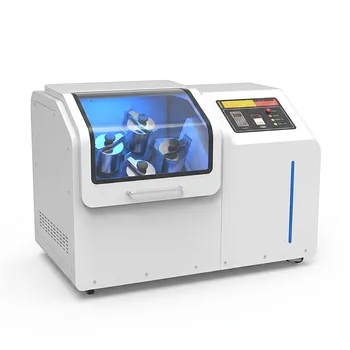
High Energy Omnidirectional Planetary Ball Mill 16L
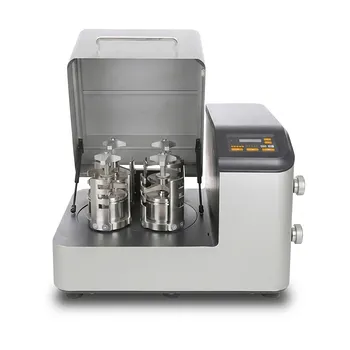
High Energy Planetary Ball Mill for Nano Scale Grinding and Colloidal Mixing in Material Science Research
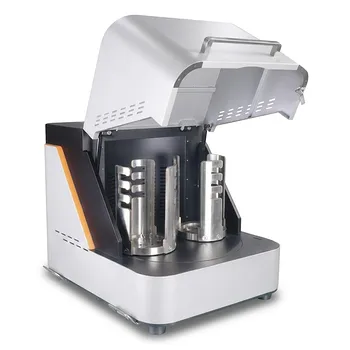
High Energy Laboratory Planetary Ball Mill for Nano Grinding and Colloidal Mixing of Hard and Brittle Materials
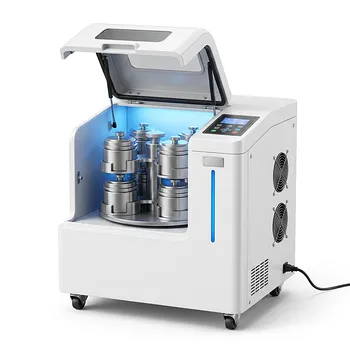
High Energy Omnidirectional Planetary Ball Mill 20L
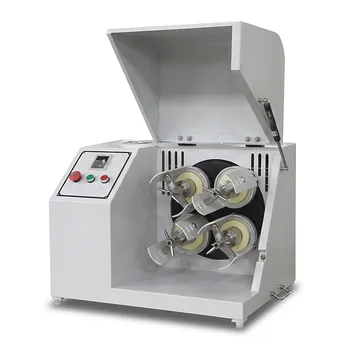
Horizontal Light Duty Planetary Ball Mill for Laboratory Sample Preparation
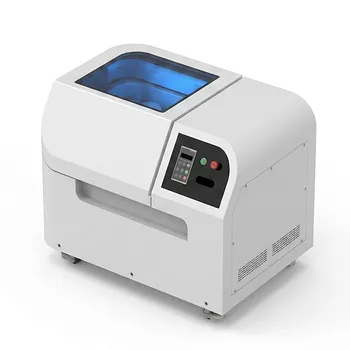
8L Planetary Ball Mill for Laboratory Grinding and Sample Preparation
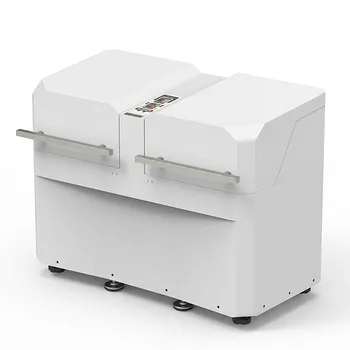
Dual Station Planetary Ball Mill 24L
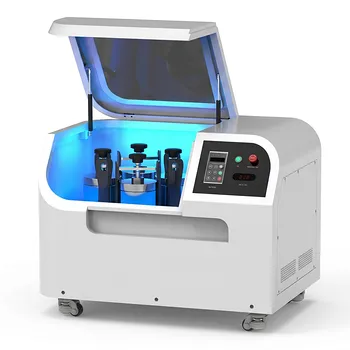
Planetary Ball Mill 12L
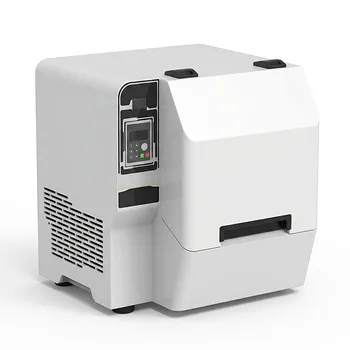
Nano High Energy Vibratory Ball Mill for Laboratory Sample Preparation
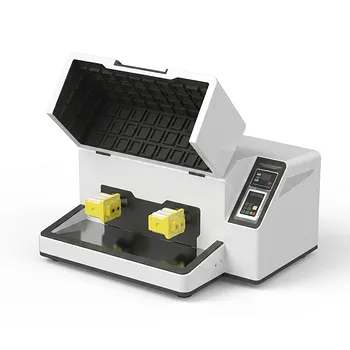
Multi-Platform Nanoscale High-Energy Vibratory Ball Mill
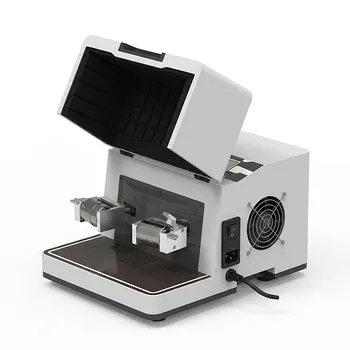
High Energy Hybrid Vibratory Ball Mill for Grinding Mixing and Cell Disruption