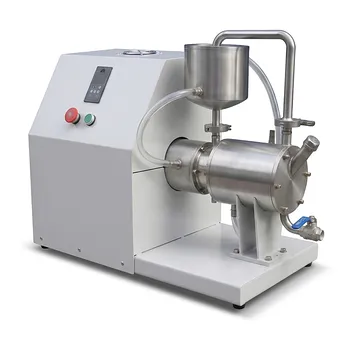
What is the role of industrial crushers and mills in water hyacinth biomass prep? Boost Surface Area and Efficiency
Updated 4 months ago
Industrial crushers and mills serve as the critical mechanical bridge between raw water hyacinth plants and high-efficiency biomass processing. These machines pulverize dried tissues—specifically leaves and stems—into fine particles to maximize the biomass's specific surface area. This physical transformation is essential for optimizing subsequent stages, such as fungal pretreatment and pyrolysis, by ensuring the material is reactive and uniform.
Mechanical size reduction is a fundamental pretreatment that enhances chemical, biological, and thermal reaction rates. By maximizing the specific surface area, these tools ensure that subsequent processes—whether biological inoculation or thermal decomposition—occur with maximum efficiency and consistency.
Optimizing Biological and Chemical Interaction
Maximizing Specific Surface Area
The primary role of crushing is to break down the complex cellular structure of water hyacinth into fine particles. This process significantly increases the specific surface area, which is the total area available for reactions relative to the mass of the material.
Enhancing Inoculation Efficiency
In fungal pretreatment, the increased surface area allows for better inoculation contact efficiency. This means fungal spores and enzymes can colonize the biomass more rapidly and thoroughly, accelerating the breakdown of lignocellulosic structures.
Improving Reagent Penetration
For processes involving chemical soaking or purification, pulverized biomass allows for uniform reagent penetration. Smaller particles ensure that cleaning agents or chemical catalysts reach the core of the material, preventing the "unreacted core" phenomenon often seen in larger biomass chunks.
Improving Thermal and Physical Properties
Accelerating Heat and Mass Transfer
During pyrolysis, the rate at which heat enters the biomass and gases escape is determined by particle size. Fine particles produced by industrial mills enhance heat and mass transfer rates, leading to more predictable and efficient thermal decomposition.
Facilitating Briquetting and Densification
Mechanical fragmentation is vital for creating tight bonding between particles during the briquetting process. Reducing the particle size minimizes internal porosity in the final product, resulting in denser, more durable fuel pellets or briquettes.
Ensuring Homogeneity for Analysis
Industrial mills standardize the biomass into a homogeneous powder, which is essential for accurate laboratory testing. This uniformity ensures that samples used for calorific value determination or ash content analysis are truly representative of the entire batch.
Understanding the Trade-offs
Energy Consumption vs. Particle Size
While finer particles generally improve reaction rates, the energy required for milling increases exponentially as the target size decreases. Operators must find the economic equilibrium between the cost of electricity for the mill and the efficiency gains in the subsequent process.
Moisture Content Sensitivity
Industrial crushers are most effective on dried biomass; high moisture levels in water hyacinth can cause clogging and mechanical "gumming" in the mill. This necessitates a robust drying stage prior to crushing to ensure the machinery operates within its design parameters.
Dust Management and Safety
The production of fine biomass powder introduces significant dust explosion risks and respiratory hazards. Implementing industrial-grade filtration and explosion suppression systems is a non-negotiable requirement when processing water hyacinth into fine particles.
Applying This to Your Biomass Project
Recommendations Based on Your Goal
- If your primary focus is Biofuel Production (Pyrolysis): Prioritize mills that can achieve a consistent fine particle size to ensure rapid and uniform heat conduction throughout the reactor.
- If your primary focus is Biological Pretreatment: Focus on shear-based crushing that opens the fiber structure without necessarily over-pulverizing, which balances surface area with the energy costs of milling.
- If your primary focus is Laboratory Analysis: Utilize high-speed impact grinders to produce a standardized fine powder (typically 1-3 mm) to ensure repeatable and accurate chemical characterization.
Proper mechanical preparation is the foundation upon which all successful water hyacinth valorization strategies are built.
Summary Table:
| Biomass Processing Stage | Role of Crushing/Milling | Primary Advantage |
|---|---|---|
| Biological Pretreatment | Increases specific surface area | Faster fungal inoculation and enzyme action |
| Chemical Soaking | Ensures uniform reagent penetration | Prevents unreacted cores in biomass particles |
| Pyrolysis/Thermal | Accelerates heat & mass transfer | Predictable and efficient thermal decomposition |
| Pelleting/Briquetting | Enables tight particle bonding | Higher density and durable fuel pellets |
| Laboratory Analysis | Standardizes into homogeneous powder | Accurate calorific and ash content results |
Elevate Your Biomass Processing with Precision Equipment
Successful water hyacinth valorization starts with perfect sample preparation. At our core, we provide complete laboratory sample preparation solutions designed for material science and bio-resource engineering. Whether you are conducting initial research or scaling up production, our specialized equipment ensures your materials meet the exact specifications required for high-efficiency processing.
Our specialized equipment line includes:
- Size Reduction: Heavy-duty jaw/roll crushers and high-precision mills (planetary ball, jet, sand/bead, and rotor mills) for achieving optimal particle size.
- Material Densification: A full spectrum of hydraulic presses, including Cold/Warm Isostatic Presses (CIP/WIP), standard lab presses, and vacuum hot presses for high-quality briquetting.
- Analysis & Mixing: Vibratory/air-jet sieve shakers for size characterization and advanced powder/defoaming mixers for uniform blending.
Ready to optimize your biomass workflow? Contact our technical experts today to discuss how our powder processing and compaction technology can enhance your laboratory's efficiency and result accuracy.
References
- Obianuju Patience Ilo, Mulala Danny Simatele. Water hyacinth biorefinery: Improved biofuel production using <i>Trichoderma atroviride</i> pretreatment. DOI: 10.1002/bbb.2694
Mentioned Products
- Low Temperature Water Cooled Continuous Feed Grinder Two Stage Coarse and Fine Grinding System
- 500g Capacity Water Cooled Low Temperature Grinder with Variable Speed and Safety Cover
- Water Cooled High Speed Grinder with Cryogenic Option for Laboratory Sample Preparation
- Water Cooled Pulse Jet Ultrafine Grinder
- Laboratory Basket Sand Mill for Wet Grinding and Dispersion of Viscous Slurries
People Also Ask
- What is the primary function of grinding equipment during the raw material preparation stage for aluminum matrix composites?
- Why are agate grinding elements preferred when preparing plant powder samples through micronization? For Purity
- Why is Warm Isostatic Pressing (WIP) used for laser-sintered parts? Maximize Density & Structural Integrity
- Why is laboratory hydraulic pressing necessary for Bi-2212 specimens? Achieve High Density & Grain Alignment
- What is the primary purpose of using grinding equipment during the pretreatment of natural fiber raw materials? Boost Surface Area

Tech Team · PowderPreparation
Last updated on May 14, 2026
Related Products
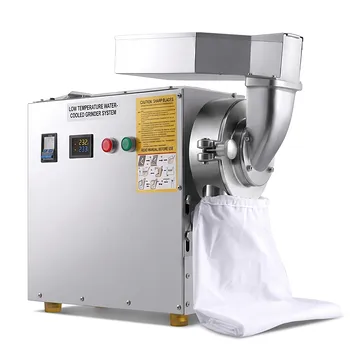
Low Temperature Water Cooled Continuous Feed Grinder Two Stage Coarse and Fine Grinding System
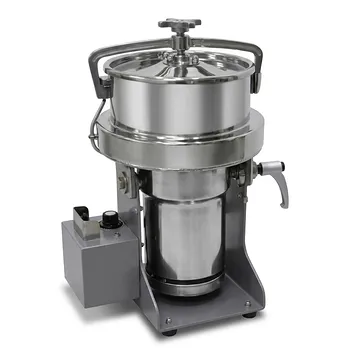
500g Capacity Water Cooled Low Temperature Grinder with Variable Speed and Safety Cover
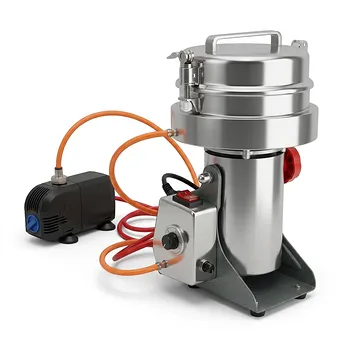
Water Cooled High Speed Grinder with Cryogenic Option for Laboratory Sample Preparation
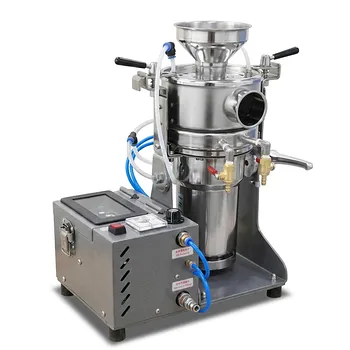
Water Cooled Pulse Jet Ultrafine Grinder
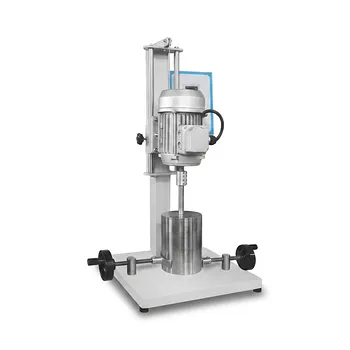
Laboratory Basket Sand Mill for Wet Grinding and Dispersion of Viscous Slurries
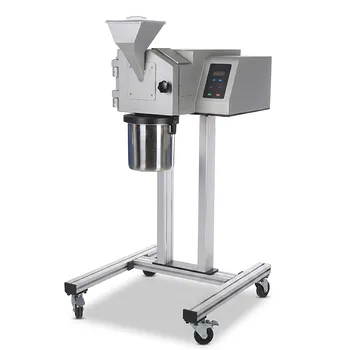
Cross Beater Mill for Brittle Material Grinding and Continuous Fine Crushing Industrial Sample Preparation