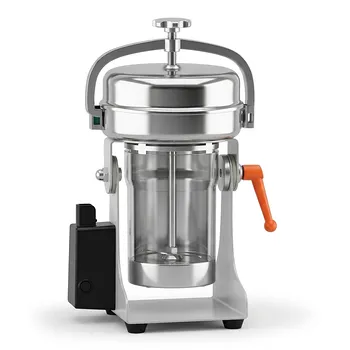
What is the role of mechanical pulverization tools in the preparation stage of clay modification experiments? Ensure Accuracy
Updated 4 months ago
Mechanical pulverization tools are the primary mechanism for transforming raw soil blocks into a homogenized particulate state during the preparation phase. These tools crush air-dried clay to increase its specific surface area and facilitate uniform contact between the soil and chemical or mineral additives. This refinement is essential for ensuring that subsequent physical and mechanical property tests yield accurate, representative data.
The mechanical pulverization of soil is a critical preprocessing step that standardizes particle size to maximize chemical reactivity and mixture homogeneity. By eliminating inconsistent material texture, it ensures that experimental results reflect the true impact of clay modifiers rather than sample variability.
Achieving Material Homogeneity
Increasing Surface Area for Reaction
Mechanical pulverization reduces coarse, air-dried soil clods into fine particles, significantly increasing the specific surface area of the sample. This expanded surface area is vital for promoting complete chemical reactions between the clay and stabilizing agents like volcanic ash or rice husk ash.
Ensuring Uniform Additive Distribution
A refined particle state allows modifiers to integrate seamlessly throughout the soil matrix. This homogeneity prevents the formation of localized concentrations, ensuring that the mixture remains consistent for subsequent physical and mechanical property testing.
Standardizing Experimental Foundations
Facilitating Reliable Geotechnical Testing
Pulverization provides a consistent foundation for standardized procedures such as sieve analysis and liquid limit testing. By reducing samples to a predictable state of their coarsest particles, researchers can ensure that experimental data is reproducible across different trials.
Preserving Mineral Integrity
Specialized soil pulverizers are designed to break down cohesive clods without damaging the individual mineral grains. Maintaining the integrity of these grains is crucial for achieving a standardized sample that accurately represents the soil's natural geological properties.
Understanding the Trade-offs
Risk of Grain Degradation
Excessive mechanical force or high-speed impact can lead to the accidental grinding of primary mineral grains. If the natural grading of the soil is altered by over-pulverization, the resulting data regarding the soil's structural behavior may be misleading or inaccurate.
Impact of Moisture Content
Mechanical pulverization is most effective on air-dried samples; processing moist soil often leads to clumping and equipment fouling. This necessitates a strict pre-drying stage, which can increase the overall duration of the experimental preparation phase.
Applying Pulverization to Your Experiment
To achieve the best results in your clay modification research, tailor your pulverization strategy to your specific testing requirements.
- If your primary focus is Chemical Reactivity: Utilize high-speed pulverization to maximize the contact area between the soil and additives for more complete reactions.
- If your primary focus is Geotechnical Integrity: Employ low-impact pulverization techniques to break down soil clods while strictly preserving the size of individual mineral grains.
Proper mechanical preparation is the fundamental step that transforms raw soil into a reliable, scientific medium for innovation.
Summary Table:
| Function | Benefit | Impact on Research |
|---|---|---|
| Surface Area Increase | Higher chemical reactivity | Promotes complete reactions with additives like ash. |
| Homogenization | Uniform additive distribution | Prevents localized concentration and ensures consistent test data. |
| Standardization | Predictable particle sizing | Enables reproducible sieve analysis and liquid limit testing. |
| Grain Preservation | Maintains mineral integrity | Ensures experimental results reflect natural geological properties. |
Elevate Your Clay Research with Precision Sample Prep
High-quality experimental data starts with superior sample preparation. At our core, we provide complete laboratory sample preparation solutions for material science, specializing in the powder processing and compaction equipment you need to transform raw clay into a standardized scientific medium.
Our extensive product line is designed to meet the rigorous demands of clay modification experiments:
- Refine & Pulverize: Achieve the perfect specific surface area with our planetary ball mills, rotor mills, and jaw/roll crushers.
- Classify & Grade: Ensure standardized particle distribution using our vibratory/air-jet sieve shakers and precision test sieves.
- Homogenize: Create seamless mixtures of soil and modifiers with our advanced powder and defoaming mixers.
- Consolidate: Prepare specimens for mechanical testing using our full spectrum of hydraulic presses (CIP/WIP) and standard lab presses.
Whether you are focusing on chemical reactivity or geotechnical integrity, our equipment provides the reliability and uniformity your research deserves. Contact our experts today to find the perfect equipment solution for your laboratory!
References
- Ika Puji Hastuty, Muhammad Iqbal Abidin. The Utilization of Volcanic Ash and High Rusk Ash as Material Stabilization in Clay by Unconfined Compression Test (UCT) and California Bearing Ratio (CBR). DOI: 10.1088/1757-899x/180/1/012141
Mentioned Products
- High Speed Laboratory Grinder Efficient Stainless Steel Powder Pulverizer Universal Material Science Mill for Sample Preparation
- Laboratory Desktop Ultra Fine Powder Grinder High Speed Micronizing Pulverizer
- Industrial High Speed Small Sample Pulverizer Swing Type Laboratory Grinder for Powder Processing
- Universal Laboratory Pulverizer Grinder for Small Batch Powder Processing and Material Science Research
- Laboratory Disc Pulverizer for Coal Coke Ore and Medium Hard Materials Sample Preparation
People Also Ask
- What role does a laboratory grinder play in the pretreatment of sunflower seed shell-based adsorbents? Boost Efficiency.
- How does a laboratory grinder or mill enhance the adsorption performance of agricultural waste materials? Boost Surface Area
- What is the function of a laboratory high-speed pulverizer in the preparation of eggshell powder? Essential Pretreatment
- What are the technical advantages of using a high-speed laboratory pulverizer for grinding tablets into powders? 20K RPM
- Why must soil samples be ground before XRD or XRF analysis? Ensure Precision & Homogeneity in Lab Results

Tech Team · PowderPreparation
Last updated on May 14, 2026
Related Products
High Speed Laboratory Grinder Efficient Stainless Steel Powder Pulverizer Universal Material Science Mill for Sample Preparation
Laboratory Desktop Ultra Fine Powder Grinder High Speed Micronizing Pulverizer
Industrial High Speed Small Sample Pulverizer Swing Type Laboratory Grinder for Powder Processing
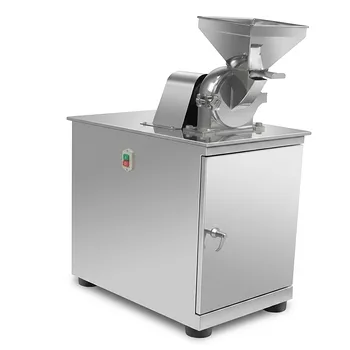
Universal Laboratory Pulverizer Grinder for Small Batch Powder Processing and Material Science Research
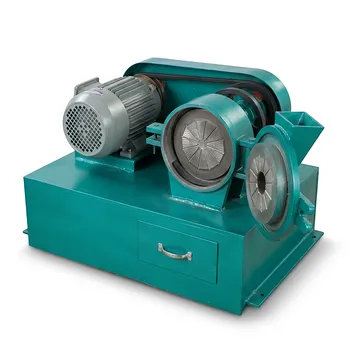
Laboratory Disc Pulverizer for Coal Coke Ore and Medium Hard Materials Sample Preparation
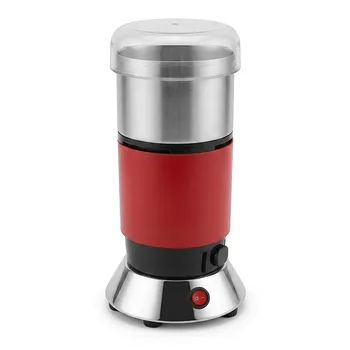
Micro Solid Sample Grinder High Speed Pulverizer for Laboratory Small Batch Grinding
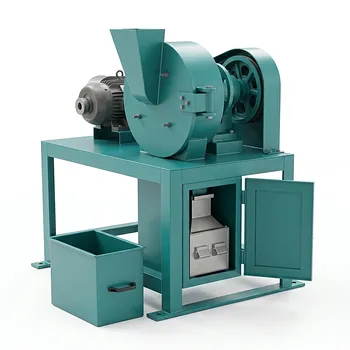
Sealed Disc Pulverizer Customized Model
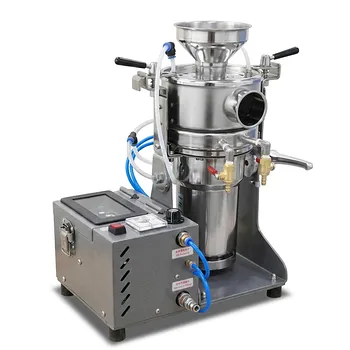
Water Cooled Pulse Jet Ultrafine Grinder
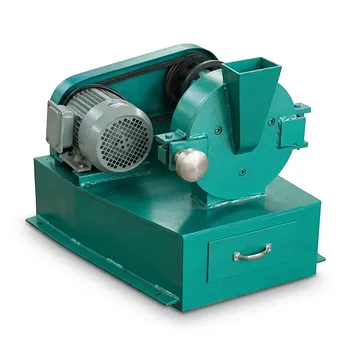
Medium Hardness Material Disc Pulverizer for Coal Ore Sample Preparation
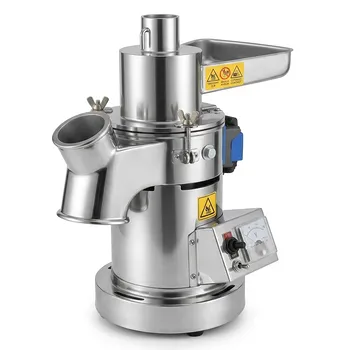
Continuous Feeding Grinder High Efficiency Pulverizer for Lab Sample Preparation
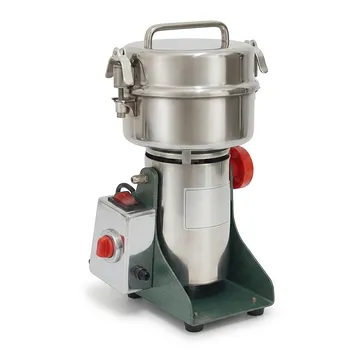
Small High Speed Grinder for Laboratory Sample Preparation
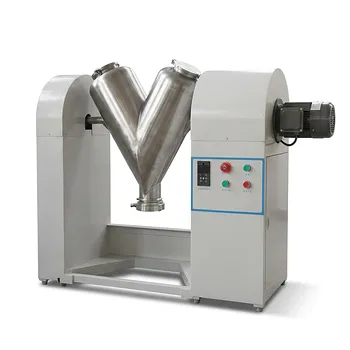
V-Type Powder Mixer for Uniform Blending of Dry Powders and Granules
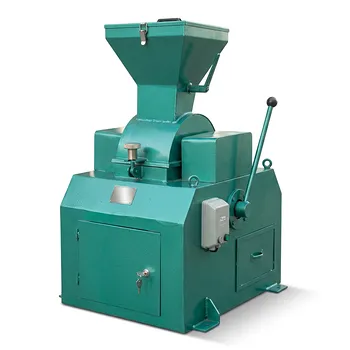
Laboratory Sealed Hammer Blade Crusher Divider for High Hardness Sample Preparation
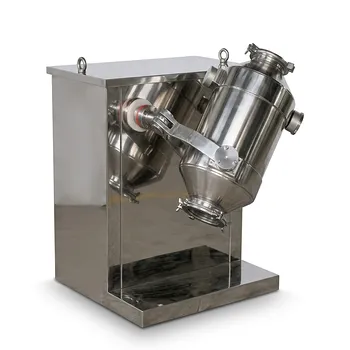
Three-Dimensional Motion Mixer for Laboratory Powder and Granule Blending
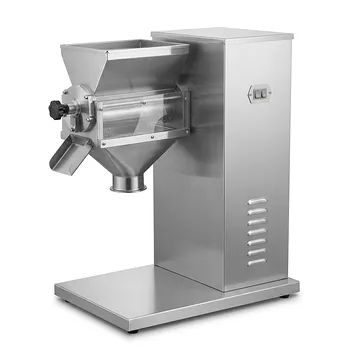
Small Swing Granulator Efficient Powder Granulation for Pharmaceutical Chemical Food Industries

Laboratory Vibratory Test Sieve Shaker for Precision Particle Size Analysis and Powder Grading
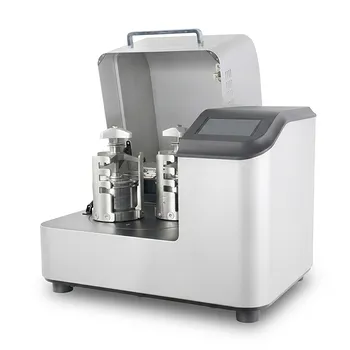
High Energy Planetary Ball Mill for Nano Scale Grinding and Mechanical Alloying
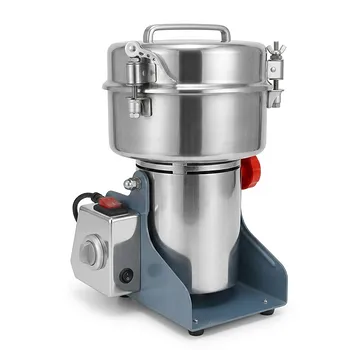
Small High-Speed Grinder for Efficient Laboratory Sample Preparation
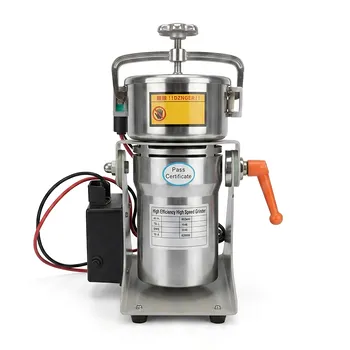
High Efficiency High Speed Grinder Laboratory Mill 1300W 25000rpm