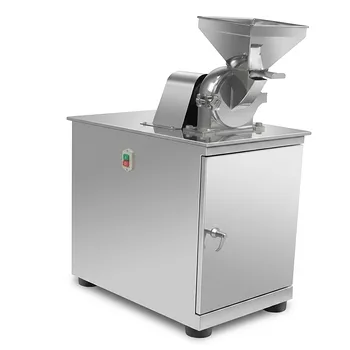
What is the necessity of using an industrial-grade grinder for orange peel filler? Optimize Particle Geometry & Bonding
Updated 4 months ago
Industrial-grade grinders are the only viable solution for achieving the precise morphological control required for orange peel fillers. They allow for the systematic transformation of raw organic waste into highly uniform particles with specific surface characteristics, ensuring the structural integrity of the final composite material. By using mechanical force to break down dried peels, these machines provide the consistency needed for high-performance green composites.
Using an industrial-grade grinder is not merely about size reduction; it is about engineering the particle's surface and shape to ensure optimal resin bonding, flowability, and moisture resistance.
Enhancing Structural Performance Through Particle Geometry
Optimizing Flowability and Packing Efficiency
Industrial grinders allow operators to adjust specific parameters to control the shape and surface roughness of the resulting particles. This precision directly impacts how particles move against one another, known as flowability, during the manufacturing process. Consistent particle shapes ensure higher packing efficiency during the tapping and densification stages, leading to a more stable final product.
Maximizing Specific Surface Area for Resin Contact
The pulverization process significantly increases the specific surface area of the orange peel particles. A higher surface area is critical because it allows for maximum contact between the reinforcement particles and the epoxy resin matrix. This ensures that the filler is uniformly distributed, preventing weak spots or voids within the composite material.
Controlling Material Properties and Longevity
Influencing Moisture Absorption and Swelling
The grinding process alters how particles interact with their environment, specifically regarding water molecule contact efficiency. By controlling the refinement of the powder, manufacturers can predict and manage the water absorption and swelling performance of the composite. This is a fundamental step in ensuring the material remains durable when exposed to humidity.
Precision in Particle Size Distribution
Unlike manual or low-grade methods, industrial milling provides a controlled particle size distribution. This consistency is vital for the production of "green" composites, where the filler must act as a reliable reinforcement agent. Precise sizing ensures that the mechanical properties of the composite remain predictable and repeatable across different batches.
Understanding the Trade-offs
Mechanical Heat and Material Degradation
The intense mechanical force used in industrial grinding generates significant frictional heat. If not carefully managed, this heat can potentially degrade the organic compounds within the orange peel, affecting the chemical bond with the resin. It is essential to monitor temperature thresholds to maintain the organic integrity of the filler.
Energy Consumption vs. Particle Refinement
Achieving extremely fine particles requires higher energy inputs and longer processing times. There is a diminishing return where the cost of increased energy consumption may outweigh the marginal gains in particle surface area. Finding the "sweet spot" between particle fineness and operational efficiency is a key challenge for manufacturers.
Selecting the Grinding Protocol for Your Project
How to Apply This to Your Project
To achieve the best results with orange peel fillers, your grinding strategy must align with your material requirements.
- If your primary focus is maximizing mechanical strength: Prioritize a high-intensity grind that maximizes specific surface area to ensure the strongest possible bond with the resin matrix.
- If your primary focus is manufacturing speed and flow: Optimize your grinder settings for spherical particle shapes to improve flowability and packing efficiency during densification.
- If your primary focus is environmental durability: Use a controlled milling process to produce particles that minimize water absorption and swelling potential.
By mastering the mechanical pulverization of organic waste, you transform a raw byproduct into a high-value engineering component.
Summary Table:
| Key Factor | Impact on Orange Peel Filler | Industrial Grinding Advantage |
|---|---|---|
| Particle Shape | Enhances flowability and packing efficiency | Precise morphological control and uniformity |
| Surface Area | Maximizes resin matrix contact for strength | High-intensity pulverization for bonding |
| Size Distribution | Ensures predictable mechanical properties | Consistent, repeatable milling protocols |
| Moisture Control | Reduces water absorption and swelling | Controlled refinement of particle surfaces |
| Thermal Integrity | Prevents degradation of organic compounds | Managed frictional heat during processing |
Elevate Your Material Research with Precision Sample Preparation
Transforming organic waste like orange peel into high-performance engineering fillers requires more than just size reduction—it requires precise control over particle morphology and surface chemistry. At [Company Name], we specialize in providing complete laboratory sample preparation solutions tailored for material science and green composite development.
Our extensive equipment lineup is designed to handle the toughest organic and inorganic materials with ease:
- Advanced Milling: Planetary ball mills, jet mills, and disc/rotor mills for achieving optimal particle fineness.
- Crushing & Sizing: Jaw/roll crushers and vibratory sieve shakers for perfect size distribution.
- Powder Processing: High-performance powder mixers and a full spectrum of hydraulic presses, including Cold/Warm Isostatic Presses (CIP/WIP) and vacuum hot presses for superior material densification.
Whether you are optimizing resin bonding or managing moisture resistance, our expert-grade tools ensure your research is backed by consistent, repeatable data.
Ready to refine your composite fillers? Contact our technical team today for a customized equipment consultation!
References
- Oluwaseyi Ayodele Ajibade, Sunday Ayoola Oke. A Tapped Density Taguchi Optimization for Orange Peel Particulate Green Fillers. DOI: 10.22441/ijiem.v5i2.22415
Mentioned Products
- Cross Beater Mill for Brittle Material Grinding and Continuous Fine Crushing Industrial Sample Preparation
- Laboratory Ultrafine Impact and Airflow Grinder for Precise Particle Size Control
- Heavy Duty Horizontal Planetary Ball Mill for Efficient Industrial Grinding and Sample Preparation
- Stainless Steel Coarse Crusher for Pharmaceutical Food and Plastic Material Processing
- Laboratory Desktop Ultra Fine Powder Grinder High Speed Micronizing Pulverizer
People Also Ask
- Why use lab mills for corncob size reduction? Boost activated carbon surface area and activation efficiency.
- How does an industrial grinding mill contribute to groundnut shell powder preparation? Enhance Polymer Filler Performance
- What is the technical significance of the relative collision velocity of grinding media? Maximize Milling Efficiency
- What is the role of industrial crushers and grinding equipment in waste glass pretreatment for eco-friendly bricks?
- What Role Does Lab Grinding Play in Banana Fiber Thermal Coatings? Optimize Waste Into High-Performance Barriers

Tech Team · PowderPreparation
Last updated on Jun 03, 2026
Related Products
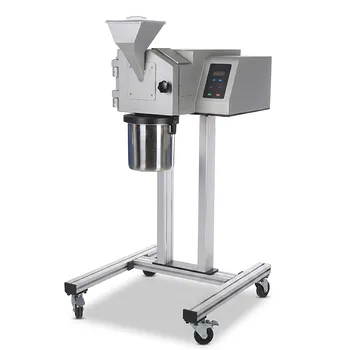
Cross Beater Mill for Brittle Material Grinding and Continuous Fine Crushing Industrial Sample Preparation
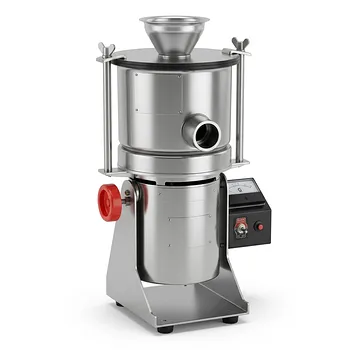
Laboratory Ultrafine Impact and Airflow Grinder for Precise Particle Size Control
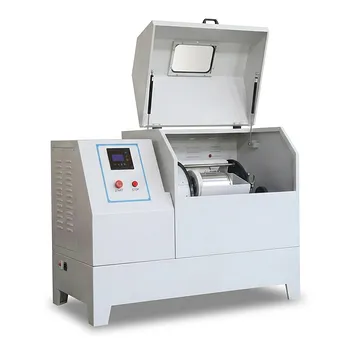
Heavy Duty Horizontal Planetary Ball Mill for Efficient Industrial Grinding and Sample Preparation
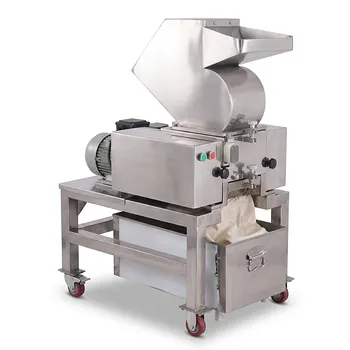
Stainless Steel Coarse Crusher for Pharmaceutical Food and Plastic Material Processing
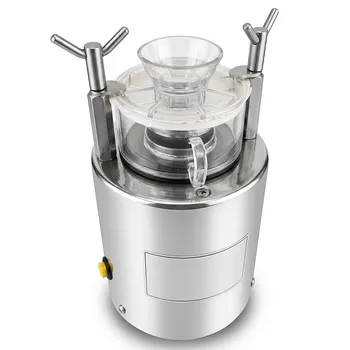
Laboratory Desktop Ultra Fine Powder Grinder High Speed Micronizing Pulverizer
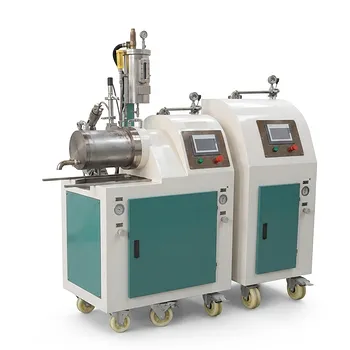
Mass Production Nano Sand Mill for Industrial Nanomaterial Grinding and Dispersion
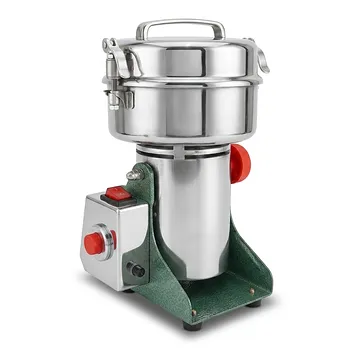
Small High-Speed Laboratory Grinder for Powder Processing
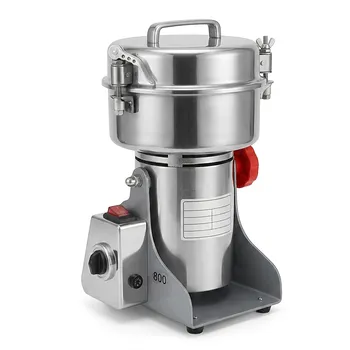
Small High-Speed Laboratory Grinder for Rapid Sample Preparation