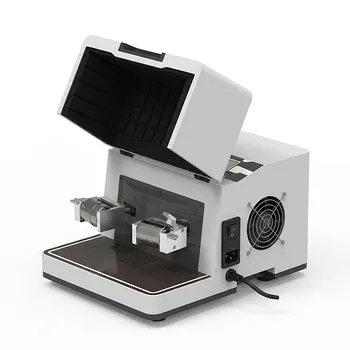
How does the diameter of grinding balls affect the processing of steel slag? Optimize Energy & Particle Refinement
Updated 5 months ago
The diameter of grinding balls in a planetary ball mill serves as the primary control mechanism for energy delivery, where larger balls provide the high-impact energy needed for hard slag and smaller balls provide the collision frequency required for fine refinement. Selecting the appropriate diameter is a function of the raw material’s initial particle size and its inherent hardness. For large, dense materials like Basic Oxygen Furnace (BOF) slag, diameters of 5 to 10 mm are typically required to achieve the necessary breakage energy, whereas finer slags like Argon Oxygen Decarburization (AOD) slag benefit from smaller media that maximize surface area contact.
Core Takeaway: Grinding efficiency is determined by the balance between individual impact energy and total collision frequency. Matching ball diameter to slag hardness ensures that particles reach the energy threshold for breakage while maximizing the reactive surface area necessary for downstream applications.
Impact Energy vs. Collision Frequency
The Role of Larger Balls in Coarse Crushing
Larger diameter grinding balls, generally ranging from 5 mm to 15 mm, are essential for processing hard or large-grained slag like BOF slag. These media possess the mass required to generate high single-impact energy, which is necessary to overcome the structural integrity of dense ore and slag particles.
The Role of Smaller Balls in Fine Refinement
Smaller grinding balls, often down to 1 mm to 3 mm, are used to increase the collision frequency and the number of contact points within the mill. This high frequency is more effective for refining softer AOD slag or previously crushed particles, as it accelerates the increase of the material's specific surface area.
Energy Transfer and Reaction Thresholds
The diameter of the balls determines the kinetic energy of individual impacts and the overall energy density within the milling system. Reaching the "reaction trigger threshold" for chemical processes like carbonation or geopolymerization often requires the high energy dose provided by larger balls to shorten the induction period.
The Impact on Slag Properties and Reactivity
Enhancing Reactive Surface Area
For materials intended for use in construction, such as geopolymer gels, high-density balls are used to grind slag into micron-scale fine powders. This refinement promotes the rapid dissolution of active silica and alumina by ensuring the grinding energy is efficiently released across a vast number of particle contact sites.
Achieving High Phase Content and Homogeneity
In specialized powder processing, smaller balls provide a finer shearing action that helps achieve a smaller average particle size and a more uniform microstructure. This precision is critical when the slag is being prepared for use in coatings or high-performance composite materials where surface activity is paramount.
Optimizing Particle Size Distribution
Utilizing a standardized distribution or a mixture of different ball sizes can create a combination of impact and shear forces. This approach ensures that the breakage kinetics are consistent across different slag types, allowing for a more predictable and ideal fineness distribution in the final product.
Understanding the Trade-offs and Pitfalls
The Risk of Excessive Ball Diameter
Using balls that are excessively large for the target particle size can actually decrease efficiency. Large diameters may limit the graded movement of the media within the mill, leading to a drop in average acceleration and total collision frequency.
Collision Frequency vs. Energy Waste
While smaller balls provide more contact points, they may lack the individual mass to break larger, harder particles. If the ball size is too small for the material's hardness, the energy is dissipated as heat and wear rather than contributing to particle breakage, leading to inefficient energy consumption.
Balancing Antagonistic Effects
The milling process often involves "antagonistic effects" where increasing one metric (like impact force) decreases another (like contact frequency). Success requires a calculated sample-to-ball ratio (SBR) and a media size distribution that balances these forces to prevent material cushioning or excessive mill wear.
How to Apply This to Your Grinding Project
Choosing the Right Media Strategy
The selection of grinding media should be driven by the specific mineralogical characteristics of your slag and your desired end-product fineness.
- If your primary focus is rapid size reduction of hard BOF slag: Utilize larger diameter balls (10 mm to 15 mm) to maximize single-impact kinetic energy for initial breakage.
- If your primary focus is increasing chemical reactivity for carbonation: Opt for smaller diameter balls to maximize collision frequency and generate the highest possible specific surface area.
- If your primary focus is a narrow and uniform particle size distribution: Use a graded mixture of ball diameters (e.g., 5 mm, 10 mm, and 15 mm) to provide a balance of impact and shear forces.
- If your primary focus is producing micron-scale powders for geopolymers: Employ high-density steel balls with a smaller diameter to ensure high energy transfer and fine shearing actions.
By precisely matching the grinding ball diameter to the physical resistance of the slag, you can optimize energy efficiency and unlock the full reactive potential of the processed material.
Summary Table:
| Ball Diameter | Slag Type Example | Primary Mechanism | Target Outcome |
|---|---|---|---|
| Large (5–15 mm) | BOF Slag (Hard/Dense) | High Impact Energy | Initial breakage & coarse crushing |
| Small (1–3 mm) | AOD Slag (Softer/Fine) | High Collision Frequency | Fine refinement & reactive surface area |
| Mixed Sizes | Variable/Complex Slag | Combined Impact & Shear | Uniform particle size distribution |
Achieve Precision in Your Material Science Research
At [Insert Brand Name], we provide complete laboratory sample preparation solutions specifically engineered for advanced powder processing and material science. Whether you are tackling the structural integrity of dense BOF slag or aiming for the high reactive surface area of refined geopolymers, our equipment ensures peak performance.
Our extensive product line is designed to support every stage of your workflow:
- Advanced Milling: Planetary ball mills, jet mills, and cryogenic grinders for precise size reduction.
- Preparation & Analysis: Jaw/roll crushers and vibratory sieve shakers for consistent feed and grading.
- Compaction Solutions: A full spectrum of hydraulic presses, including Cold/Warm Isostatic Presses (CIP/WIP), vacuum hot presses, and XRF pellet presses.
- Mixing Technology: Specialized powder and defoaming mixers for homogeneous material blends.
Ready to optimize your grinding efficiency and unlock the full potential of your materials? Contact our technical experts today for a tailored solution!
References
- Anthony de Schutter, Tom Van Gerven. Improving the Carbonation of Steel Slags Through Concurrent Wet Milling. DOI: 10.1007/s40831-024-00895-2
Mentioned Products
- Vertical Semi Circular Planetary Ball Mill for Laboratory Precision Grinding
- High Energy Planetary Ball Mill for Nano Scale Grinding and Mechanical Alloying
- Heavy Duty Horizontal Planetary Ball Mill for Efficient Industrial Grinding and Sample Preparation
- Vertical Production Planetary Ball Mill for High Throughput Powder Processing
- 360° Rotating Omnidirectional Laboratory Planetary Ball Mill for Homogeneous Ultra-Fine Grinding and Mixing
People Also Ask
- What role does a planetary ball mill play in the synthesis of Li6PS5Cl (LPSCl)? Unlock High Ionic Conductivity
- Why is a planetary ball mill essential for SiBCN-rGO wet-spinning? Achieve Superior Dispersion and Spinnability
- Why is an intermittent grinding process required for perovskites in a planetary ball mill? Ensure Stability & Purity
- Why is a planetary ball mill required for PET micronization? Ensure Accurate Chemical Analysis of Reprocessed PET
- How does mechanized planetary ball milling compare to manual agate grinding? Optimize sulfide standard material precision.

Tech Team · PowderPreparation
Last updated on May 14, 2026
Related Products
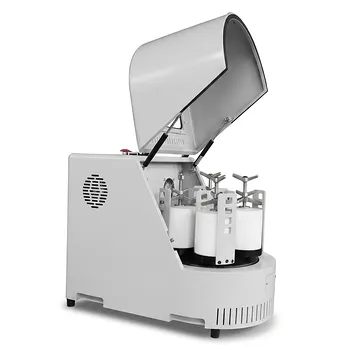
Vertical Semi Circular Planetary Ball Mill for Laboratory Precision Grinding

High Energy Planetary Ball Mill for Nano Scale Grinding and Mechanical Alloying
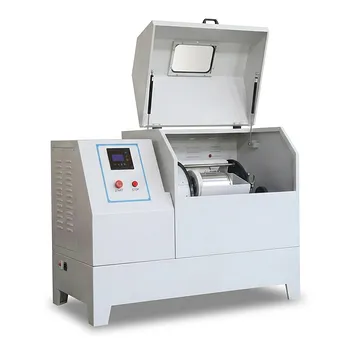
Heavy Duty Horizontal Planetary Ball Mill for Efficient Industrial Grinding and Sample Preparation

Vertical Production Planetary Ball Mill for High Throughput Powder Processing
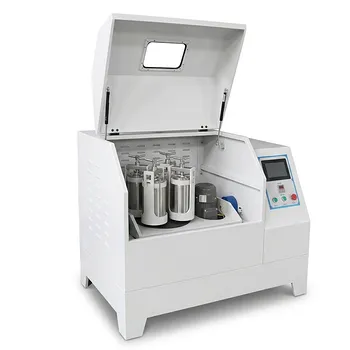
360° Rotating Omnidirectional Laboratory Planetary Ball Mill for Homogeneous Ultra-Fine Grinding and Mixing

Vertical Square Planetary Ball Mill for Laboratory Sample Preparation and Nanoscale Grinding

Miniature Planetary Ball Mill with Vacuum Grinding and High Efficiency for Laboratory Sample Preparation

High Energy Omnidirectional Planetary Ball Mill 16L

High Energy Laboratory Planetary Ball Mill for Nano Grinding and Material Science Sample Preparation
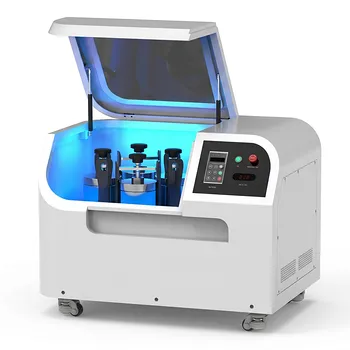
Planetary Ball Mill 12L
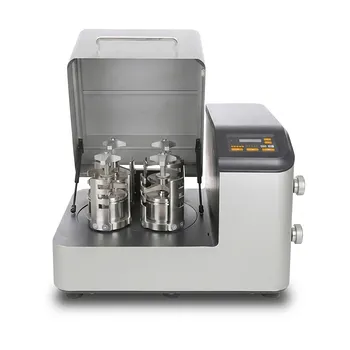
High Energy Planetary Ball Mill for Nano Scale Grinding and Colloidal Mixing in Material Science Research
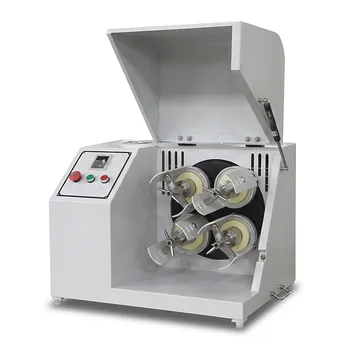
Horizontal Light Duty Planetary Ball Mill for Laboratory Sample Preparation

High Energy Omnidirectional Planetary Ball Mill 20L
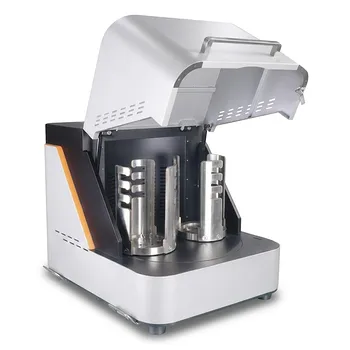
High Energy Laboratory Planetary Ball Mill for Nano Grinding and Colloidal Mixing of Hard and Brittle Materials
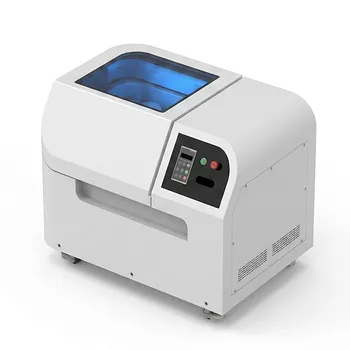
8L Planetary Ball Mill for Laboratory Grinding and Sample Preparation
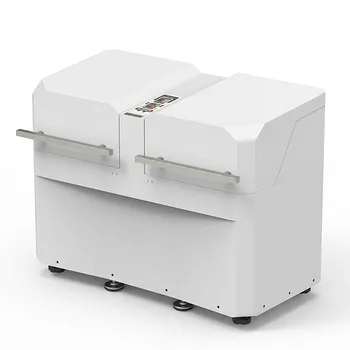
Dual Station Planetary Ball Mill 24L
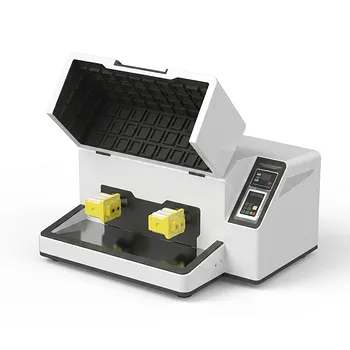
Multi-Platform Nanoscale High-Energy Vibratory Ball Mill
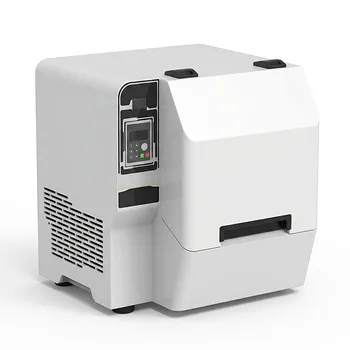
Nano High Energy Vibratory Ball Mill for Laboratory Sample Preparation
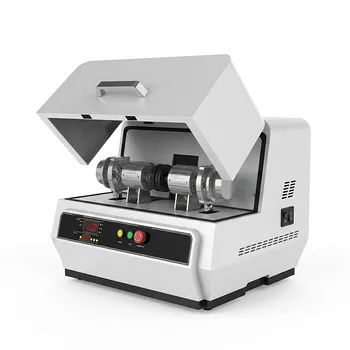
Dual Jar High Energy Vibratory Ball Mill